
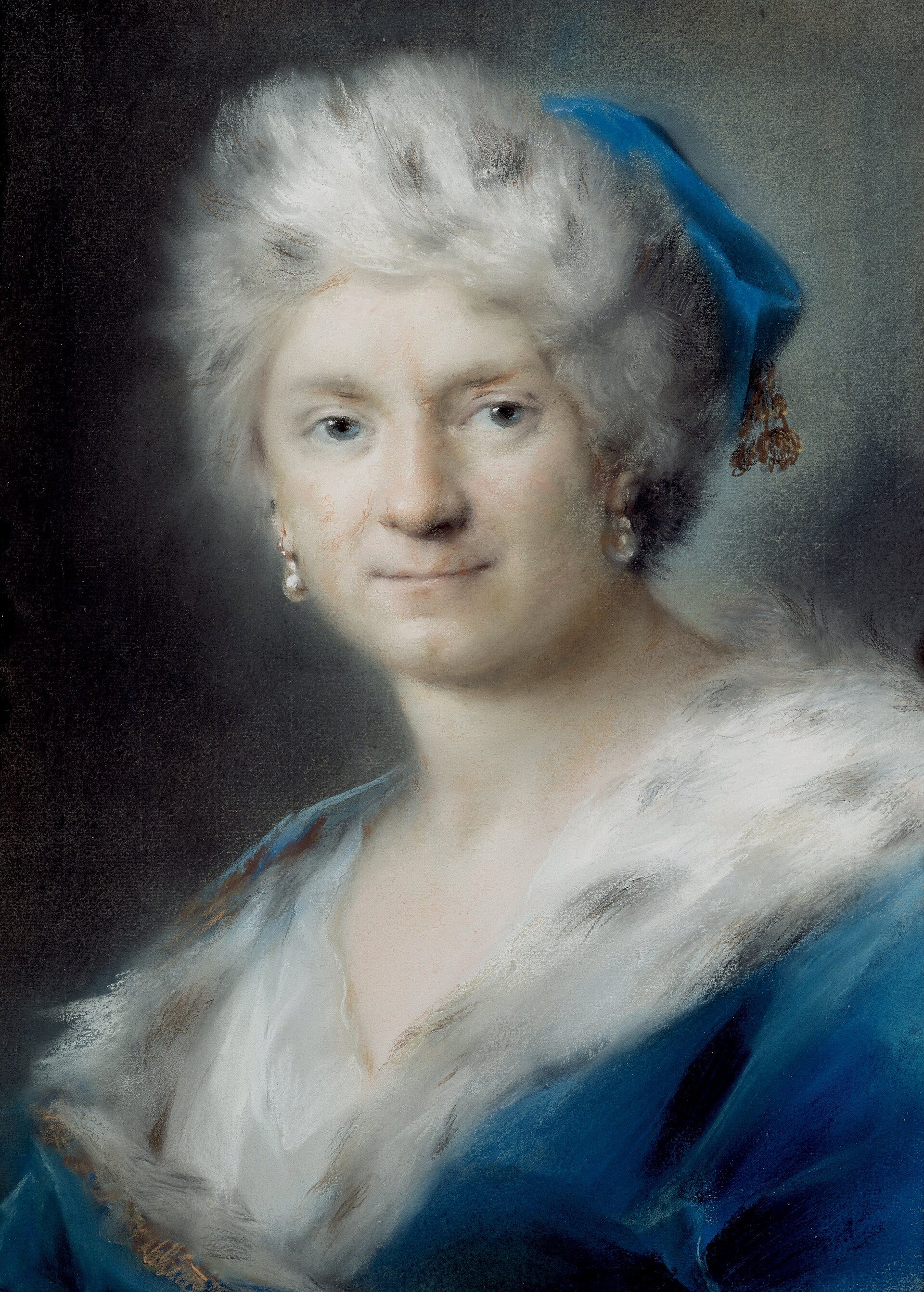
Rosalba Carriera (1673 to 1757) was a Venetian painter whose portraits in pastel, drawn with sticks of powdered color, became the fashion of European courts. Her best-known works include her Self-Portrait as "Winter" and a portrait of the boy king Louis XV of France.
Cool Stories About Art is a newsletter to learn art the fun way.
Join 200,000+ readers and get:
10 new art stories / month
The entire archive of content (140+ articles)
Comment, ask questions, and chat with other readers
Rosalba Carriera, the daughter of a lacemaker, drew the faces of kings, princes and rich travelers who passed through Venice. In 1720, the royal academy of France made her a member. In 1749, she lost her sight for good.
Rosalba was born in Venice on January 12, 1673. Venice was then the capital of an independent state, the Republic of Venice, and a favorite stop for foreign travelers.
Her father, Andrea Carriera, was a lawyer and a public official. Her mother, Alba Foresti, made lace, the delicate openwork fabric that rich men and women wore at their collars and cuffs, and she taught the craft to her three daughters.
Rosalba was the eldest. Giovanna, two years younger, would spend her life working at Rosalba's side. Angela, the youngest, would marry a Venetian painter, Giovanni Antonio Pellegrini.
The lace trade of Venice was declining, and as a young woman Rosalba found other work. She painted miniatures, portraits small enough to fit in the palm of a hand, on the lids of snuffboxes.
Snuff, powdered tobacco sniffed up the nose, was the fashion of the day, and the most prized boxes for it were made of ivory. The work was poorly paid, but foreign visitors bought the painted boxes as souvenirs and carried them home.
Other painters made their miniatures on vellum, a fine animal skin. Rosalba became one of the first to paint them on ivory. In 1705, when she was thirty-two, a miniature on ivory made her a member of the Accademia di San Luca, the academy of painters in Rome.
Around that time, an English diplomat in Venice, Christian Cole, came to have his miniature painted. Cole drew in pastel for his own pleasure, and he gave Rosalba the sticks he had left over.
With pastel, an artist draws straight onto paper, with no paint to mix and no layers to dry. Rosalba tried Cole's sticks during a stay at a country house, first on a maid, then on the family who lived there.
From around 1708, pastel took more and more of her time, and her portraits grew from a few inches wide to nearly two feet tall. Soon she was drawing the king of Denmark, and German princes sent her orders.
How far would those leftover sticks carry a lacemaker's daughter, and what became of her pastels once she could no longer see them?
In the rest of the story
Which portrait opened a Paris door no woman had entered for almost forty years.
Why Rosalba still had a Scottish banker's wig the week he fled Paris.
Which famous painter, already very ill, she drew in Paris.
What a king in Dresden did for her pastels while her sight faded.