
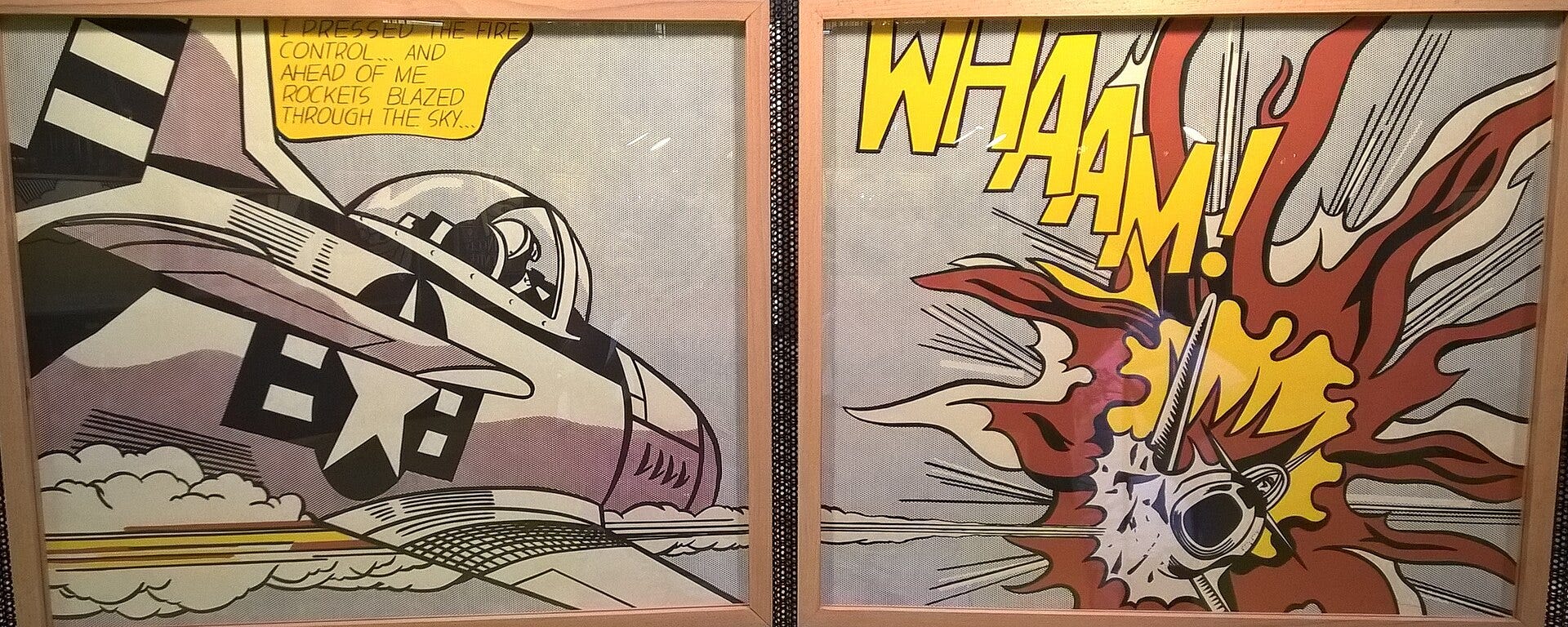
Roy Lichtenstein was an American painter, born in New York in 1923, who died there in 1997. In 1961 he began painting enlarged comic-book panels, down to the coarse printing dots of cheap newsprint, and became one of the central figures of Pop art. He is remembered for Whaam! and Drowning Girl, and for a question that followed him all his life: did he simply copy comics?
He answered it himself in one sentence: "I am nominally copying, but I am really restating the copied thing in other terms."
Cool Stories About Art is a newsletter to learn art the fun way.
Join 200,000+ readers and get:
10 new art stories / month
The entire archive of content (1,000+ articles)
Comment, ask questions, and chat with other readers
The copying was real, and the comics had authors. Whaam! takes a panel from All-American Men of War, issue 89, published by DC Comics in February 1962 and credited to Irv Novick and Russ Heath. Drowning Girl takes the opening page of a romance comic, Secret Hearts, issue 83, drawn by Tony Abruzzo. Lichtenstein named none of them.
But look at what he took out. In the comic, the drowning woman's boyfriend clings to a capsized boat behind her. Lichtenstein cropped the page to leave only the woman and the wave, and cut her caption from "I don't care if I have a cramp!" to "I don't care!"
He also changed the boyfriend's name from Mal to Brad. The name stayed in her thought balloon, where she says she would rather sink than call him for help. The man himself was gone.
So was it theft or invention? Museums still argue about it. The story of how a college teacher in New Jersey came to paint Mickey Mouse starts with a legend, and with one fact that contradicts it.
What You'll Discover
What he did before the comics.
Why the Mickey Mouse story is shaky.
How he made the dots.
Who drew the panels he copied.
What he painted after the comics.