
Shape in art is a flat, enclosed area, and it comes in two families: geometric shapes, with names and rules, and organic shapes, borrowed from living things. Here are twelve artists who built on shape itself; the six most recent appear in words only, for rights reasons.
Shape in 30 seconds
A shape is flat: two dimensions and a boundary. Give it volume and it becomes form; we drew that border in our page on form in art.
Geometric shapes are the nameable ones: circle, square, triangle. Organic shapes are the nameless ones: puddle, leaf, cloud.
A shape is born the instant a line closes on itself, or one color meets another.
Geometric reads as human-made and deliberate; organic reads as grown and found. Painters pick a family the way writers pick a tense.
The silhouette test: if you can recognize it filled with flat black, shape is doing the work.
Exekias, Achilles and Ajax (c. 540-530 BC): the silhouette age
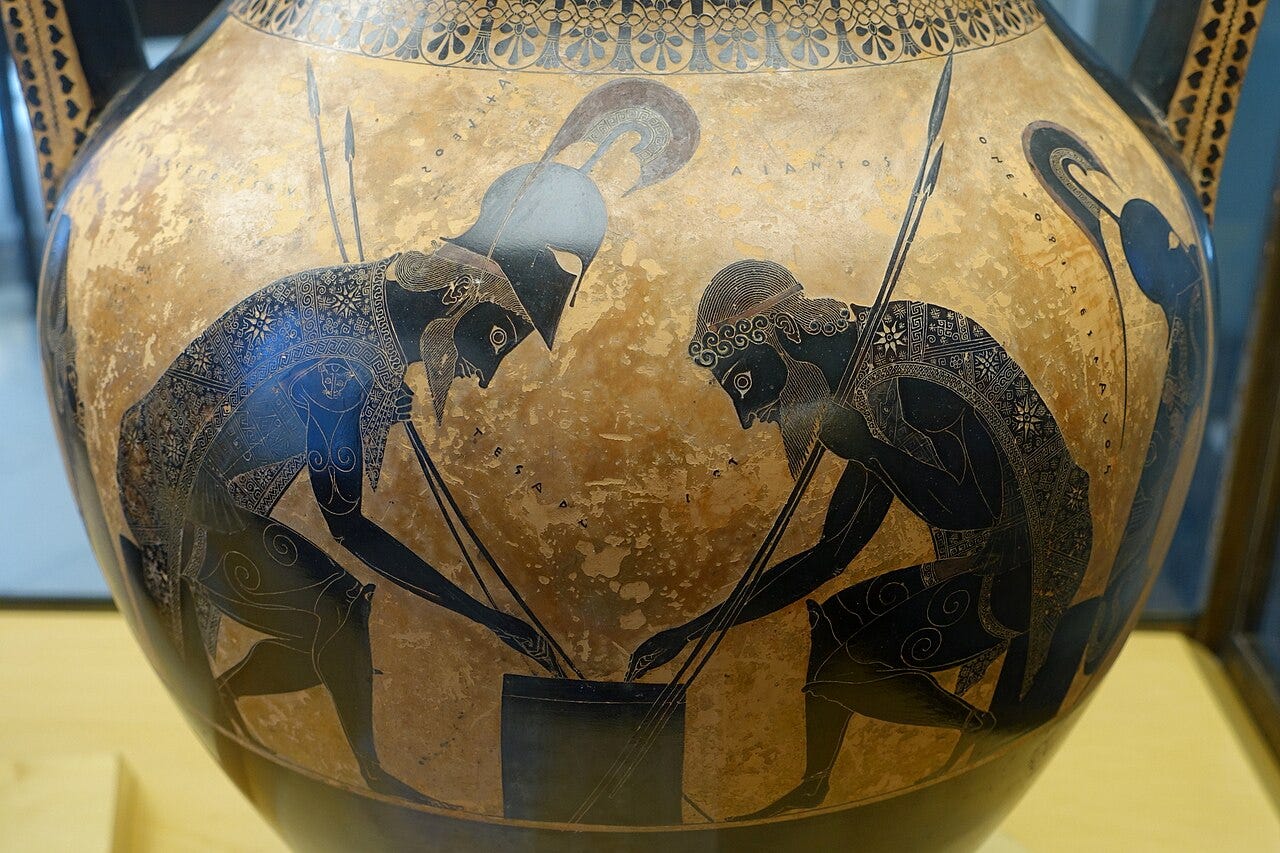
Greek black-figure painting is shape at its purest: two warriors bent over a dice game, rendered as flat black silhouettes on orange clay, details scratched through with a needle.
The scene is quieter than it looks: Exekias painted the two heroes gaming in the calm before the battle in which one would die and the other lose his mind.
The silhouette portrait (18th-19th century): a face in one shape
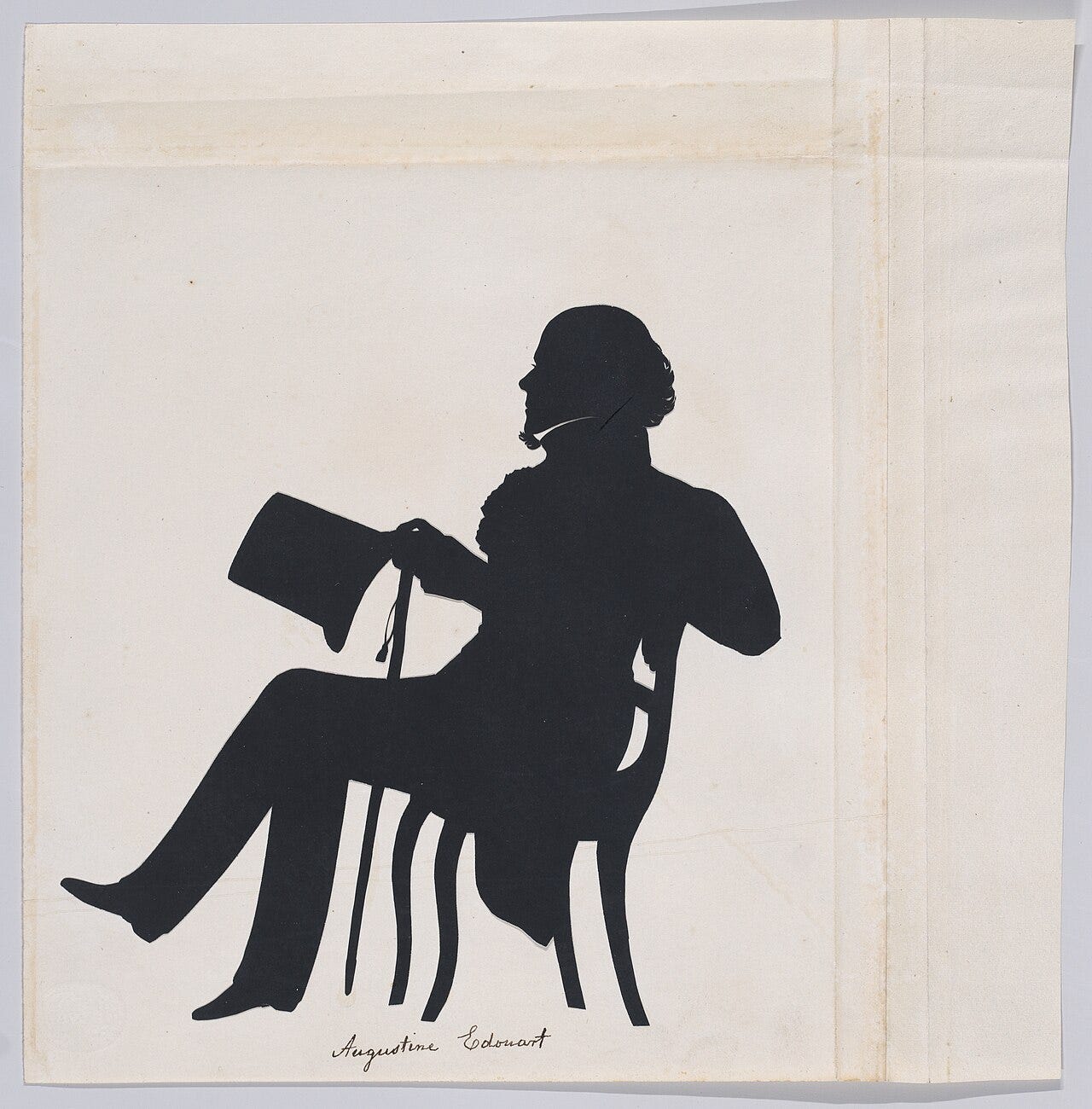
Cut from black paper in minutes, the profile portrait proved how much identity survives in a single flat shape: no eyes, no shading, and still unmistakably your aunt.
The name is an insult. Étienne de Silhouette, a French finance minister notorious for cheapness, gave his name to the cheapest portrait money could buy.
Kandinsky, Composition VIII (1923): the geometric orchestra
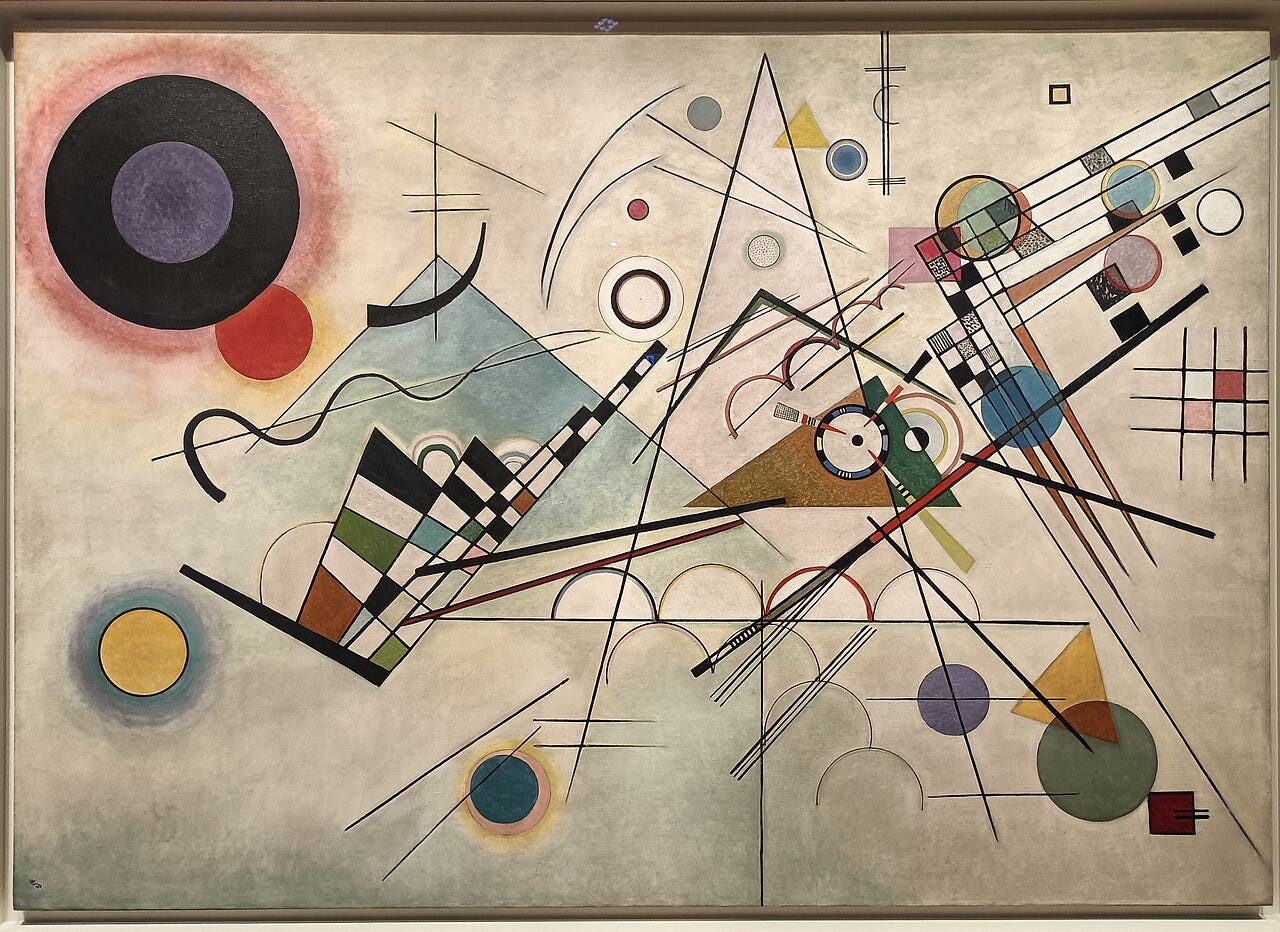
Circles, triangles, and wedges replace horses and riders: by his Bauhaus years Kandinsky had traded subjects for shapes, and wrote that the circle now carried the spiritual charge his early riders once did. It is a founding document of abstract art.
Learn art the fun way


Malevich, Black Square (1915): shape as zero
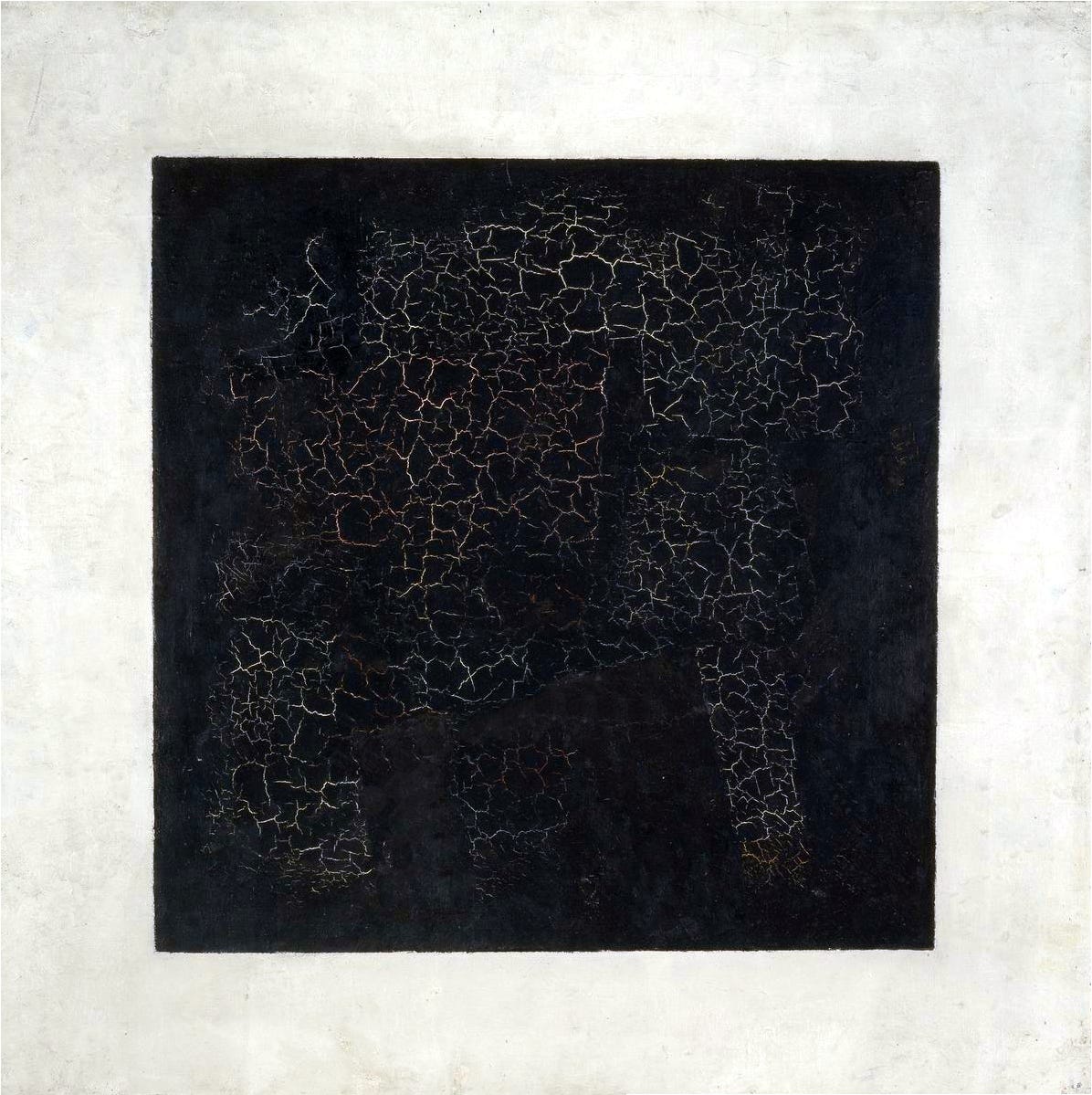
One geometric shape, alone, presented as a complete artwork. Malevich called the square the zero of form, the point where painting starts over from nothing.
Mondrian, Composition (1921): the rectangle, and nothing else
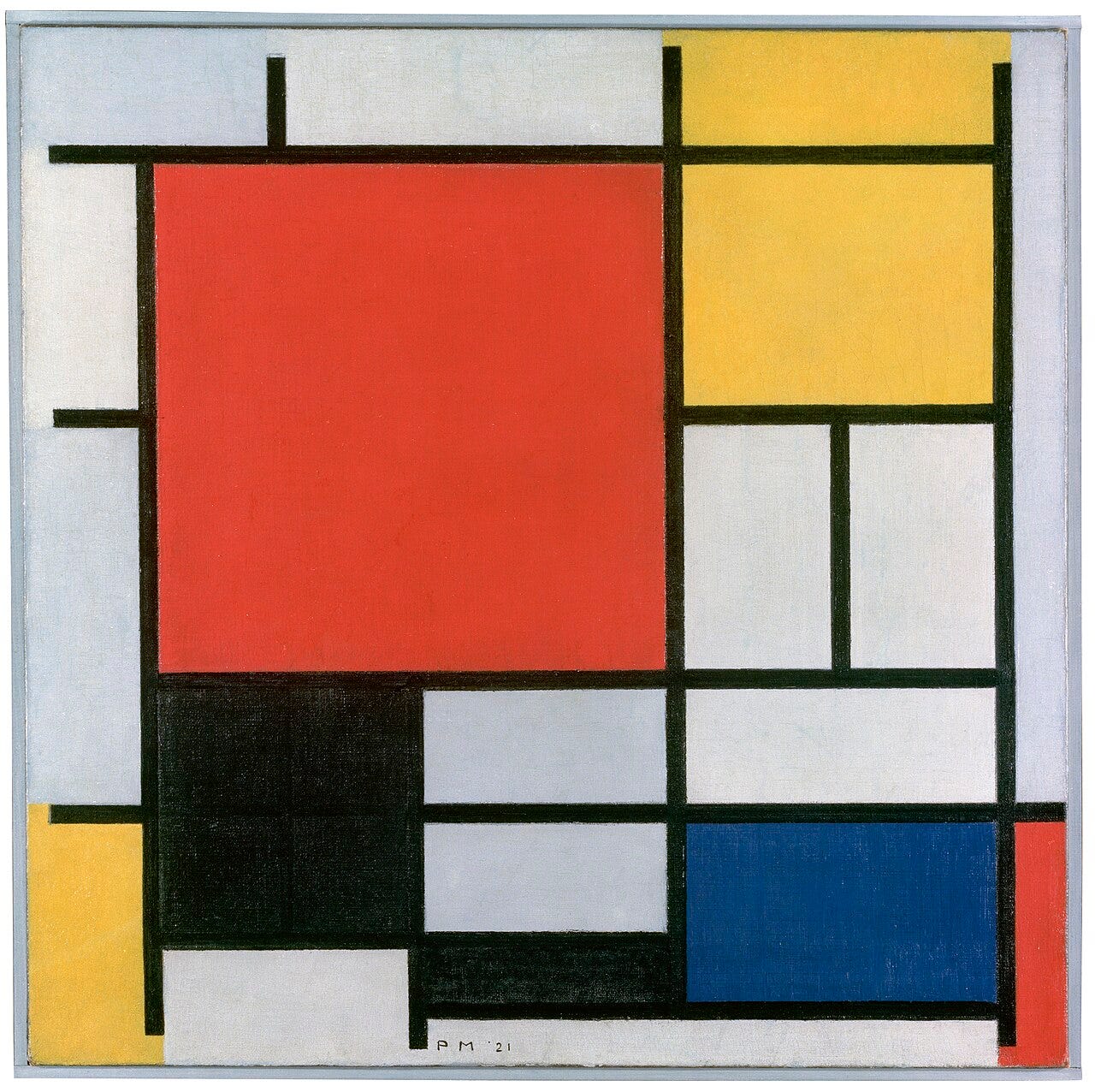
One shape family, used exclusively: rectangles of primary color locked in black lines. Mondrian bet his whole art on the right angle.
He meant it literally. When his fellow De Stijl painter Van Doesburg introduced diagonals, Mondrian treated it as heresy and walked out of the movement.
Delaunay, The First Disc (1913): the circle as subject
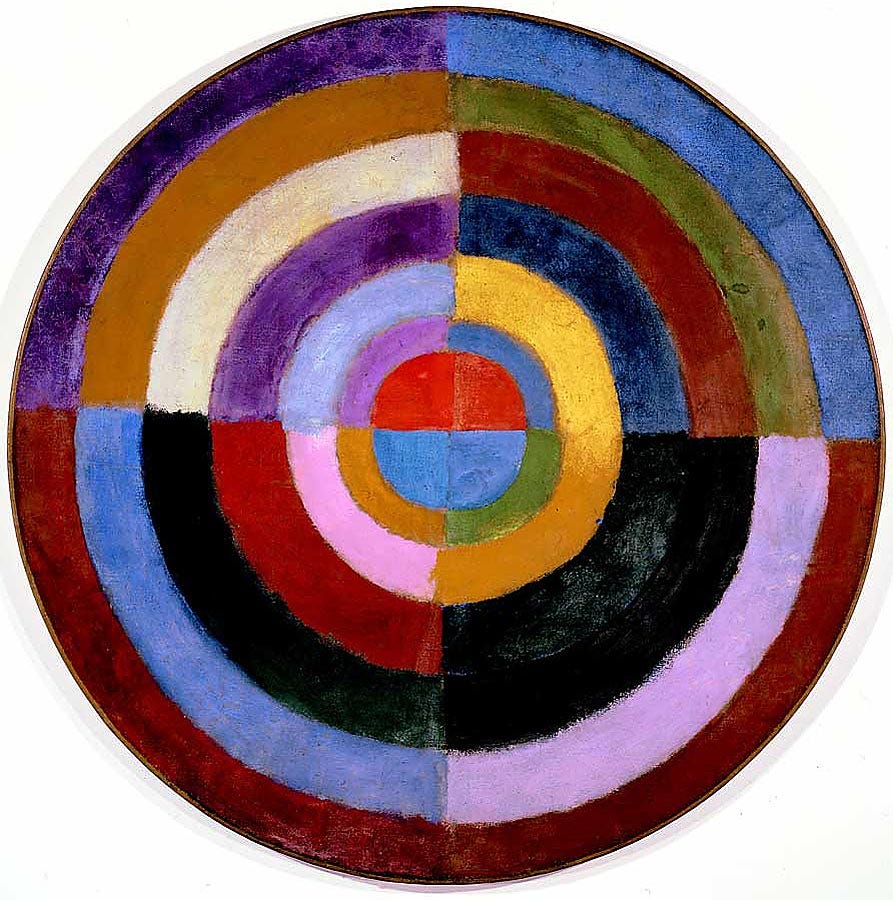
A disc of concentric color rings, no figure, no ground, no story: the shape is the entire painting. Delaunay shares the obsession with his wife Sonia, who ran the same circles across dresses, scarves, and book covers.
Matisse: drawing with scissors
Bedridden in his last decade, Matisse cut painted paper directly into organic shapes, leaves, dancers, coral, calling it drawing with scissors and cutting into color itself. The cut-outs are recent enough that rights are still enforced in some countries, so words only.
The biomorphs: Arp and Miró
Jean Arp sanded organic abstraction into ambiguous blobs he refused to name, and once composed collages by dropping torn papers and gluing them where they fell. Miró floated a whole vocabulary of biomorphic shapes, part amoeba, part star, part eye, across his blue fields.
The hard edges: Léger, Kelly, Calder
Fernand Léger built bodies from machine shapes, cylinders and cogs. Ellsworth Kelly cropped shapes from shadows and plant leaves and presented each as a single flat color, sometimes on a shaped canvas. And Alexander Calder cut shapes free of the wall entirely, hanging them in the air as mobiles.
Between them, the twentieth century finished the argument: a shape needs no subject, no volume, and finally no canvas.
You Might Also Like


Shape is one of eight elements that build a composition. See how it fits with the rest in the guide to every element and principle of art.
Quick answers
What is shape in art? A flat, enclosed area defined by lines, edges, or color changes. With only two dimensions, it is the simpler sibling of form.
What is the difference between shape and form? A shape is flat; a form has, or fakes, volume. A circle is a shape, a sphere is a form, and our page on form in art walks the whole leap.
What are organic and geometric shapes? Geometric shapes follow rules and have names: squares, circles, triangles. Organic shapes are irregular and lifelike: leaves, puddles, bodies. Most compositions mix the two on purpose.
What artists use shape as their main tool? Malevich, Mondrian, and Kandinsky on the geometric side; Matisse, Arp, and Miró on the organic side; Kelly and Calder at the point where shape leaves the canvas altogether.
Where to see these works
The Exekias amphora is in the Vatican Museums, and silhouette portraits fill period rooms and print cabinets across Europe and America.
Composition VIII is at the Guggenheim in New York, Black Square at the Tretyakov in Moscow, Mondrian across The Hague, and The First Disc in private hands, touring often. The Matisse cut-outs are best at the Musée Matisse in Nice and MoMA.
One last fact
When Malevich died in 1935, mourners followed a hearse decorated with a black square, and his grave was marked with one. The man is gone, the marker was lost in the war, but the shape did exactly what he promised: it outlived everything it was supposed to represent.