Shepard Fairey: The Complete Story
A red, white and blue portrait of a calm, hopeful face under one word: HOPE. In 2008 it became the unofficial image of a presidential campaign and one of the most famous political posters in American history.
The artist was Shepard Fairey, who came up from skateboarding and street stickers.
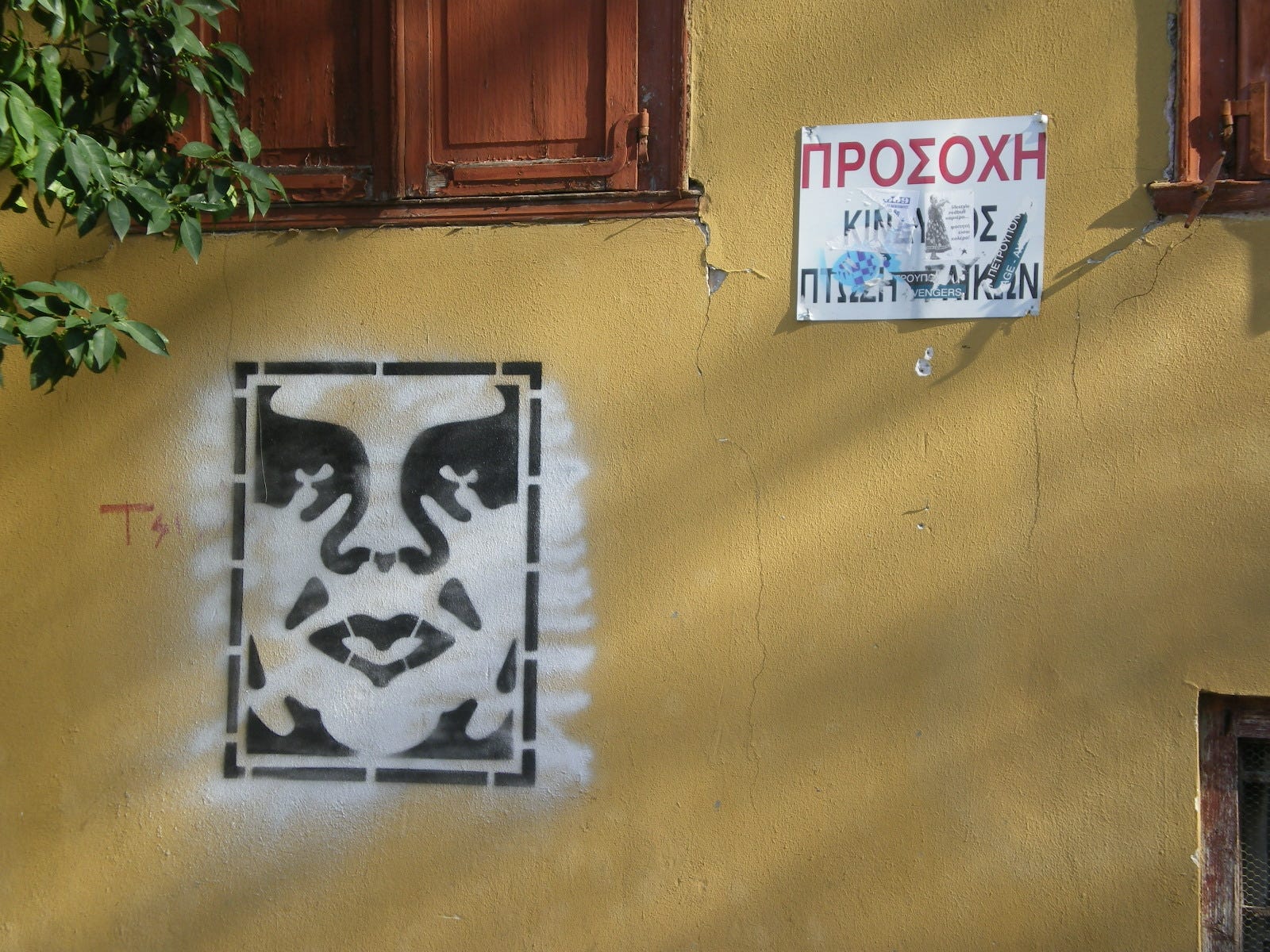
He is an American street artist and designer behind the Obama Hope poster and the OBEY Giant campaign, working in strong, graphic, propaganda inspired imagery.
The paid archive, if you are curious
If you want the detail rather than the summary:
The darker truth about Gauguin, the part of the Tahiti story that never makes the wall label
Vermeer, Woman Holding a Balance, what is actually on those scales
Inside Monet house at Giverny, room by room, including his own bedroom
OBEY and the sticker
Fairey began in the late 1980s by plastering stickers of the wrestler Andre the Giant, with the word OBEY, across cities, an experiment in how an image with no clear meaning could still grab attention.
That campaign grew into a global street art brand, rooted in the loud, graphic language of Pop art and political posters.
The Hope poster
In 2008 Fairey made a stylised portrait of Barack Obama in red, white and blue, captioned Hope. It spread everywhere, becoming the defining image of the campaign.
As a piece of portrait painting turned into mass propaganda, it showed how a single street artist could shape a national moment.
Borrowed images and a lawsuit
The Hope image was based on a press photograph, and the resulting legal fight over rights and fair use became almost as famous as the poster itself.
The case put a hard question at the centre of street art: when so much of it remixes existing images, where does borrowing end and theft begin?
The activist on the wall
Fairey has kept his work political, making posters and murals on climate, race, peace and protest, and selling affordable prints to spread the message.
He has also been arrested many times for putting work up illegally, holding on to the outlaw roots of street art even as his images hang in museums.
What people ask about Shepard Fairey
What is he known for?
The Obama Hope poster and the OBEY Giant street campaign.
What does OBEY mean?
A deliberately empty command, testing how images grab attention.
Was there a legal fight?
Yes, over the photograph behind the Hope poster.
Where is he from?
Charleston, South Carolina, born in 1970.
Why the Hope poster still matters
Fairey proved that a street artist with a stencil could enter the centre of national politics, and the Hope image now hangs in the Smithsonian.
Yet the lawsuit that followed left a lasting warning about the cost of building powerful pictures on borrowed ones.
He started Studio Number One and a clothing line to fund his street work, turning the OBEY brand into a business that pays for the activism.
The original Hope collage now lives in the National Portrait Gallery in Washington, an outlaw image that ended up hanging beside official portraits of the presidents it once campaigned for.
His murals now cover walls in cities around the world, and he funds much of his activism by selling affordable prints rather than relying on the gallery system alone.
He has designed countless album covers and concert posters, keeping one foot in music culture even as his work entered the country leading museums.
His OBEY clothing line and design studio fund much of his street work, turning a teenage sticker prank into a self sustaining business that bankrolls his murals.
He has been arrested many times over the years for putting work up without permission, holding on to the outlaw spirit of street art even as galleries and museums lined up to show him.