
Shoes in painting tell you who is standing there when the face will not. Van Gogh painted a pair of worn boots and philosophers have argued about them for a century, a Flemish couple removed theirs to mark holy ground, and a lost slipper became the most famous flirtation in French art.
What the shoes are saying
One pair of boots started a philosophical fight between two major thinkers of the twentieth century.
In one wedding portrait, the shoes are off because the ground is considered sacred.
Clogs and bare feet mark class faster than any face in Dutch painting.
One painter put his own worn out shoes on canvas four separate times.
Learn art the fun way
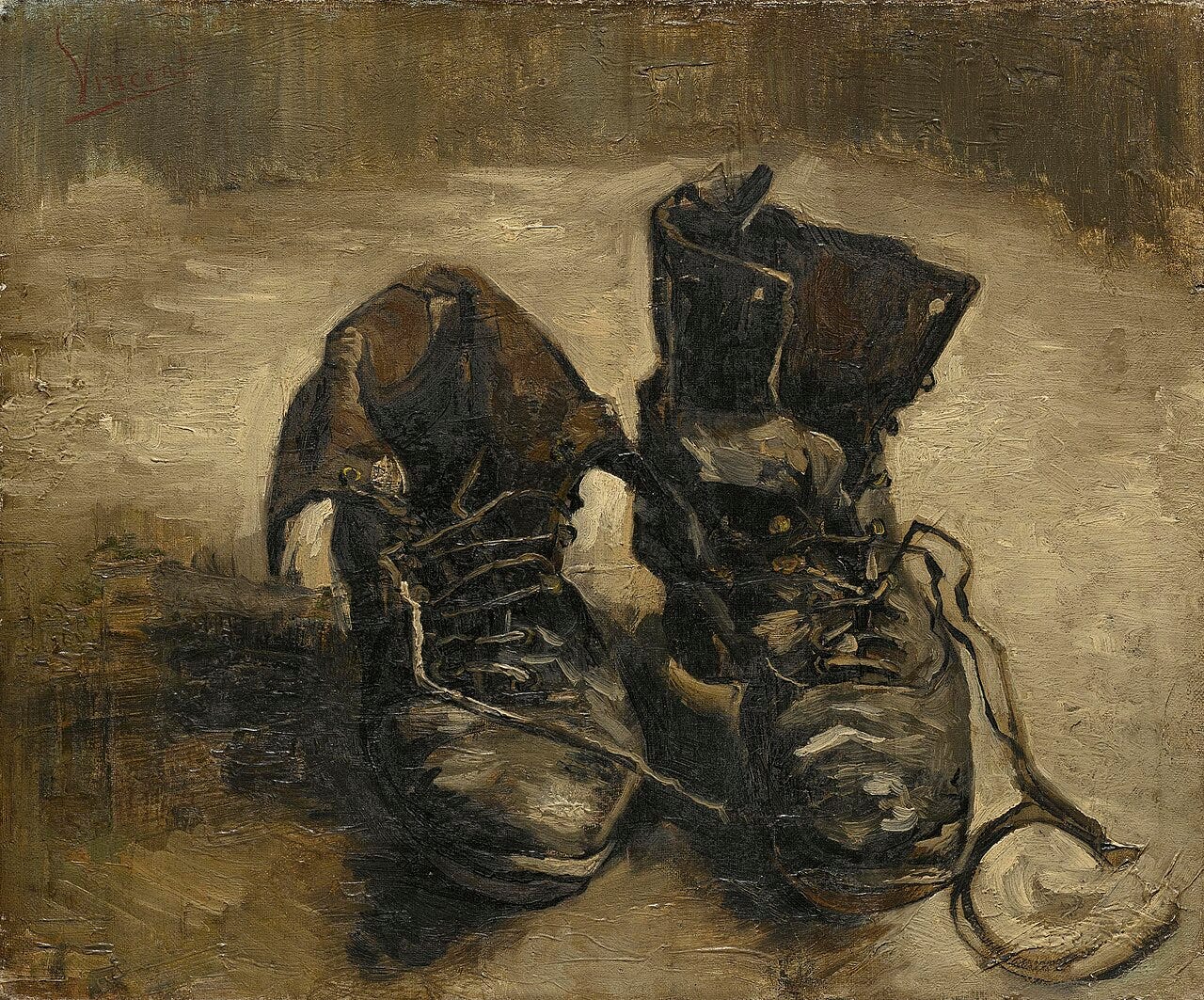
1 | A Pair of Shoes, Vincent van Gogh (1886)
Van Gogh bought worn boots at a flea market in Paris, walked them through mud to make them look used, and painted them at least seven times.
Heidegger wrote that they revealed the world of a peasant woman. The art historian Meyer Schapiro replied that they were the painter’s own city boots, and the argument never really ended. I go into his whole story in Vincent van Gogh.
2 | The Arnolfini Portrait, Jan van Eyck (1434)
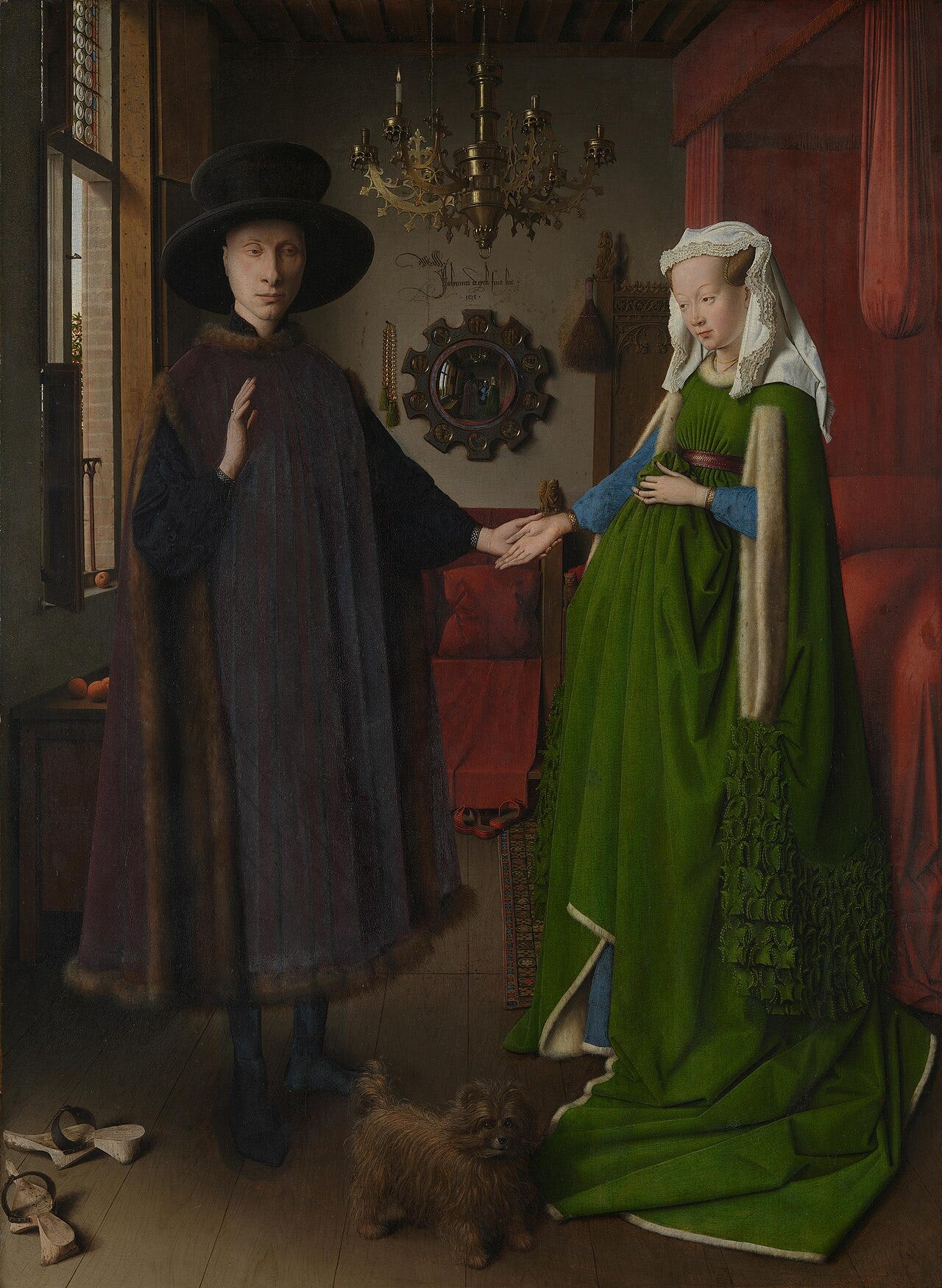
A pair of wooden pattens lies discarded in the foreground and red slippers sit at the back of the room. Both figures are barefoot on the floorboards.
The usual reading is that removing shoes marks holy ground, as in Exodus. The full room is in the Arnolfini Portrait.
3 | The Swing, Jean Honore Fragonard (1767)
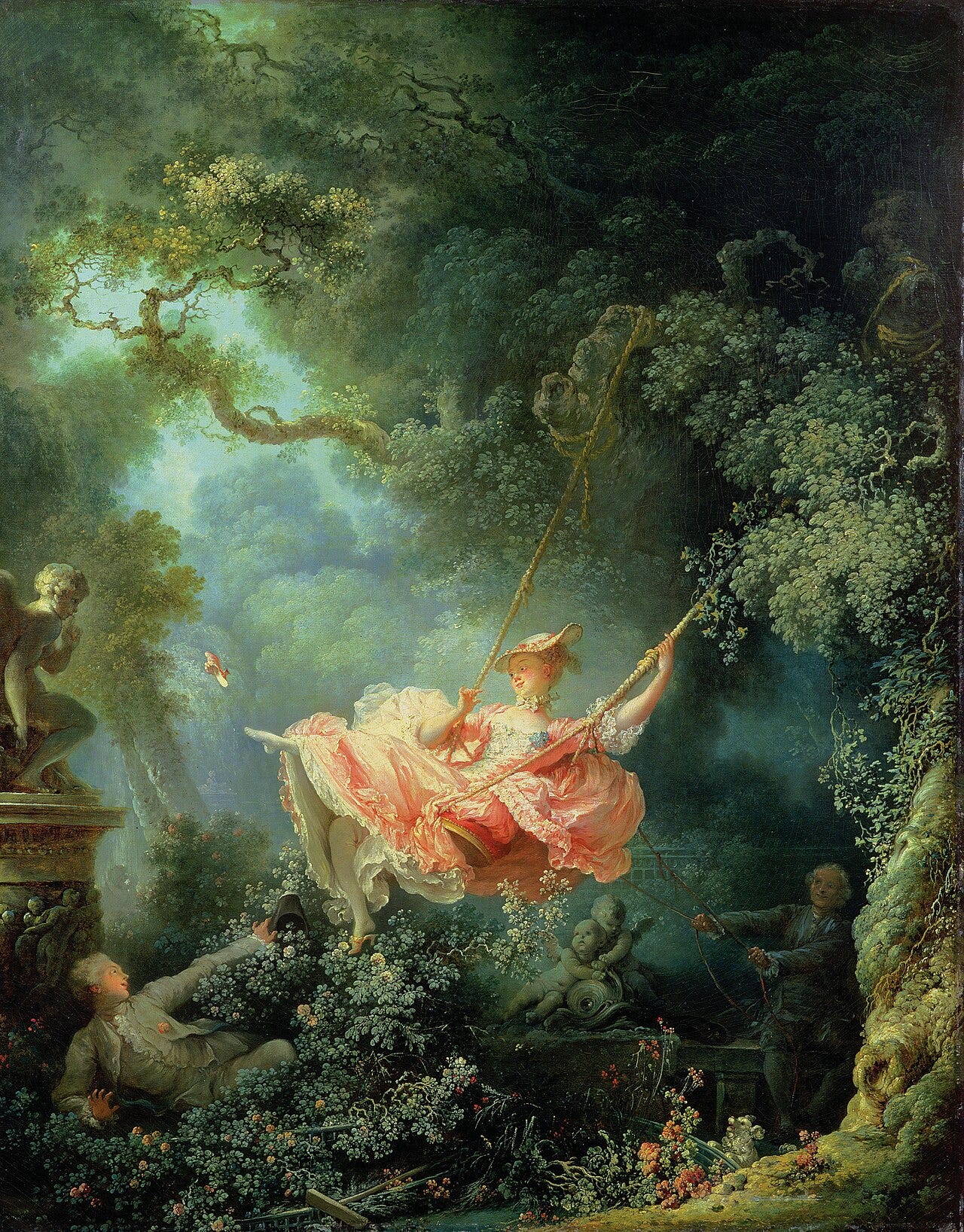
A young woman kicks off one satin slipper mid swing, and it flies toward a statue while her lover watches from the bushes below.
Nothing is shown and nothing is left to guess. The whole Rococo ran on that deniability. More of it in erotic art through history.
4 | The clog, and what it meant
Dutch and Flemish painters used wooden clogs as instant shorthand for peasant. A leather shoe meant town, a clog meant field.
Van Gogh drew clogs constantly during his Brabant years. More of that world in beggars and the poor in painting.
Wooden clogs were the footwear of people who worked outdoors on wet ground, across the Netherlands and northern France. In a painting they place the wearer instantly, which is why van Eyck put a pair on the floor of a rich interior as a contrast.
5 | The Ambassadors and the shoe nobody notices (1533)
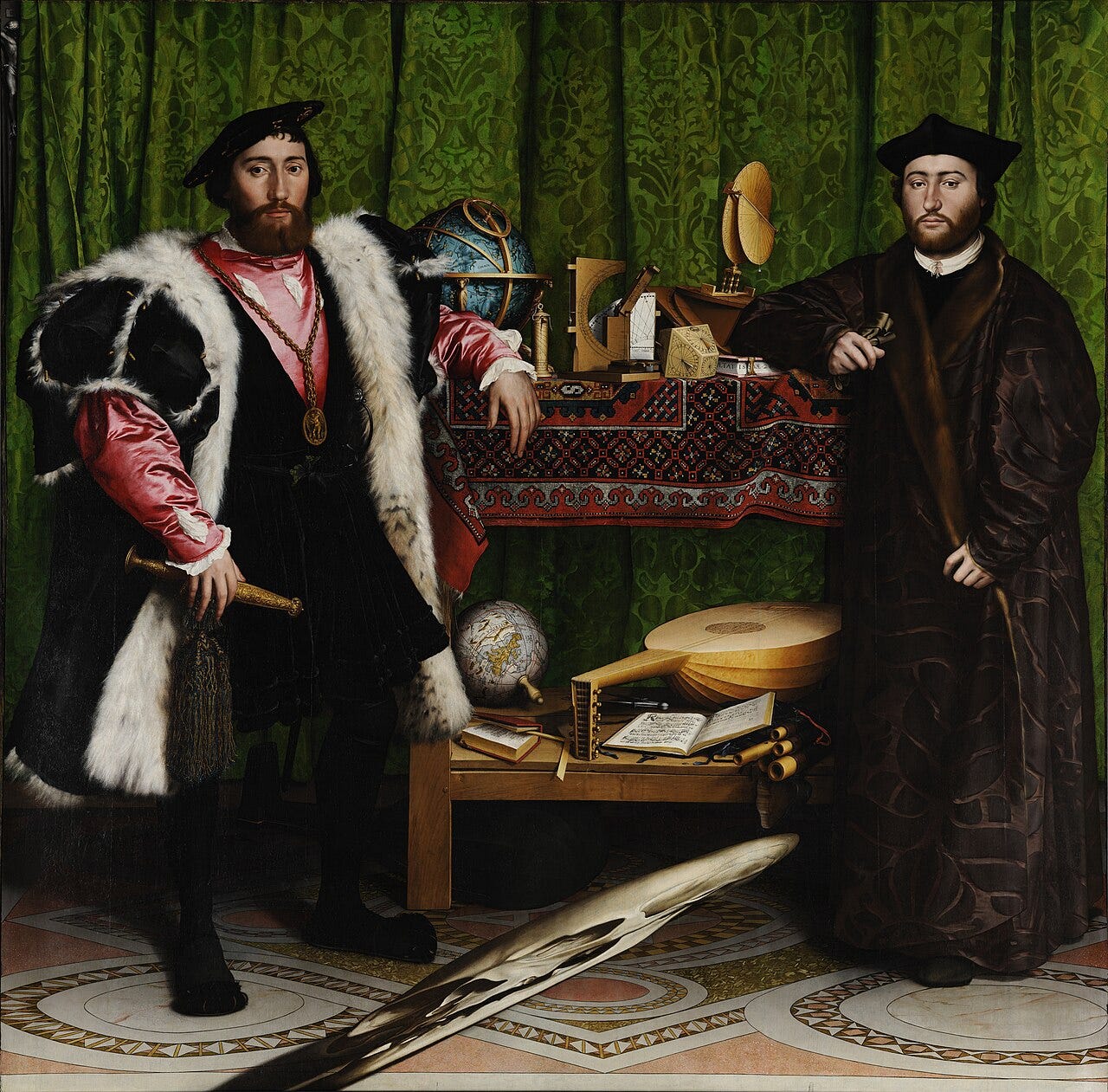
Both diplomats wear soft black leather with slashed uppers, the height of court fashion in 1533, standing on a mosaic floor copied from Westminster Abbey.
Holbein dressed status from the floor up. The coded objects are in The Ambassadors.
Both men wear soft leather shoes with a squared toe, the fashion Henry VIII made popular. Holbein painted the floor as the Cosmati pavement of Westminster Abbey, so we know exactly what they are standing on.
6 | Bare feet and sainthood
Caravaggio painted the dirty soles of pilgrims’ feet at the front of an altarpiece and the clergy objected. Bare feet meant poverty, which meant holiness, which became scandal when painted honestly.
That fight defined his career. More on him in Caravaggio.
The discalced orders went unshod or in simple sandals as a rule of life. Zurbaran and Ribera painted them that way, and the calloused foot in the foreground is a statement of the order, not an accident of pose.
7 | The red heels of Louis XIV
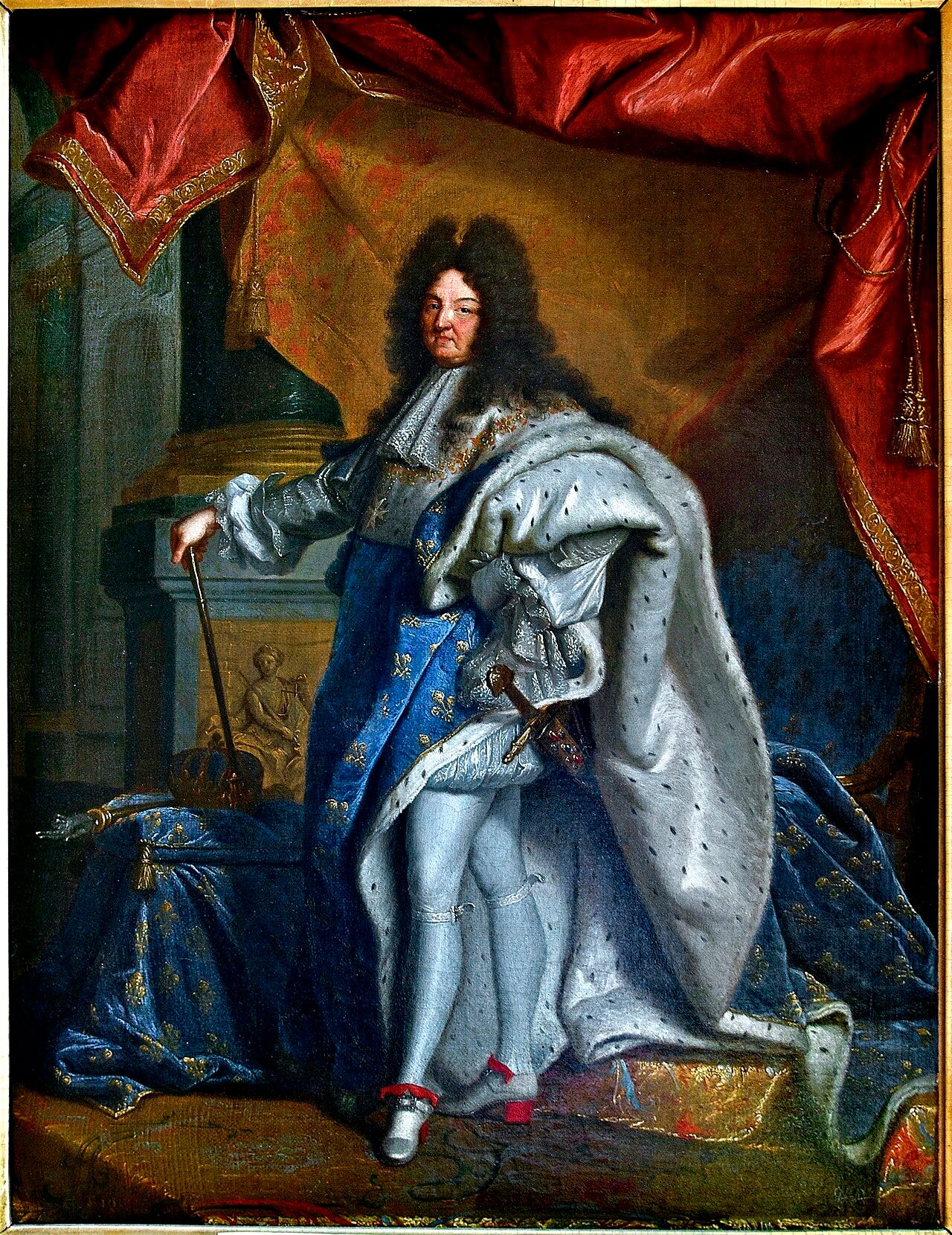
Rigaud painted the Sun King in white stockings and red heeled shoes, a colour the king restricted to courtiers he favoured.
A red sole was a legal privilege long before it was a luxury brand. More royal coding in famous paintings of kings and queens.
8 | The shoemaker at his bench
Dutch genre painters and later Millet painted cobblers surrounded by lasts and leather, as the emblem of patient work.
It is one of the few trades painted with neither pity nor mockery.
Cobbling was one of the few trades a poor man could enter with almost no capital, and it produced an unusual number of self taught writers and radicals. Genre painters used the shoemaker as a figure of independent thought.
9 | The chopines of Venice
Venetian genre painting records these platform shoes because they were a scandal of their own, banned and then tolerated by the city.
Venetian women wore platform shoes up to fifty centimetres high, and paintings show them leaning on servants in order to walk.
Sumptuary laws repeatedly tried to limit the height and repeatedly failed.
10 | Millet, Van Gogh and the peasant boot
Millet drew wooden shoes and heavy boots as the sign of labour, and Van Gogh copied him obsessively for years.
The boots are where the two painters meet: How Millet Shaped Van Gogh.
Van Gogh copied Millet obsessively, particularly during his year at Saint Remy in 1889 and 1890, working from black and white prints and inventing the colour himself.
11 | Boots in the trenches
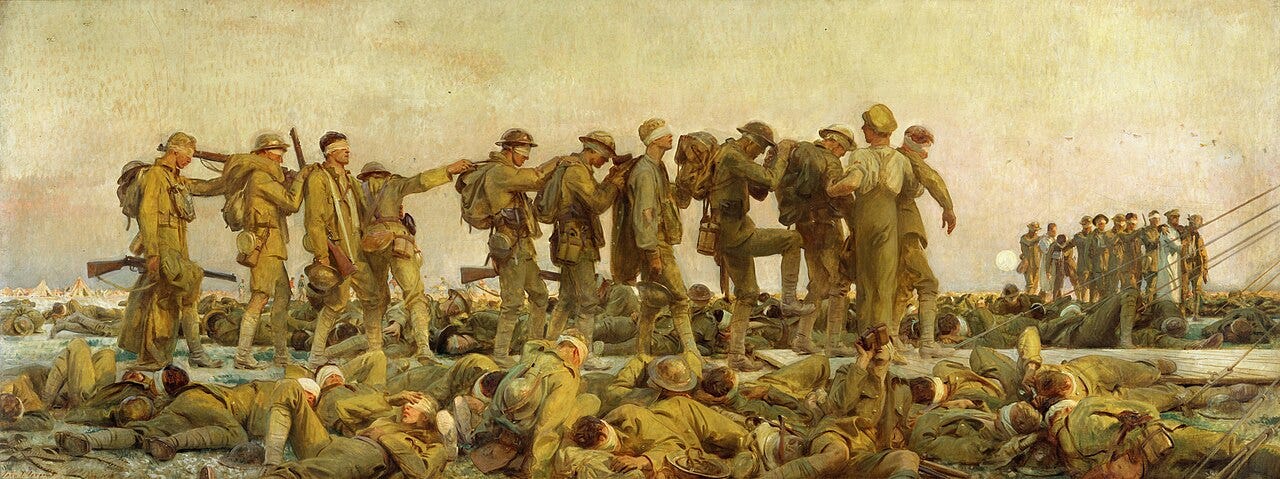
War artists after 1914 painted boots more often than faces: mud, duckboards, feet that never dried, and boots left behind.
Sargent’s Gassed shows a line of men who cannot see where they are stepping. More of it in famous battle paintings.
The official war artists of 1914 to 1918 painted mud and feet more than faces. Trench foot disabled tens of thousands of men, and the boot became the subject rather than the detail.
12 | The Red Model, Rene Magritte (1935)
Magritte belongs to Surrealism, where an ordinary object is made impossible rather than strange.
A pair of boots whose toes turn into bare human toes, laces and all, standing on gravel against a plank wall.
Magritte said the marriage of a foot and a shoe is a monstrous custom nobody notices. Once you see it you cannot unsee it. The bare toes poking out of the leather are the closest this shoe list comes to painting the foot itself, a subject with its own long history I collect in feet in painting.
The most asked questions on footwear
Whose shoes did Van Gogh paint? Most likely his own, bought secondhand in Paris. Heidegger thought they belonged to a peasant, and Meyer Schapiro corrected him.
Why are the Arnolfini figures barefoot? The usual reading is that shoes are removed because the ground is holy, echoing the Book of Exodus.
What does the flying slipper mean in The Swing? It is the whole seduction in one object. Rococo painting worked by implication rather than display.
Why did red heels matter at Versailles? Louis XIV restricted them to courtiers he favoured, so the colour marked access to the king.
Where is A Pair of Shoes today? The Van Gogh Museum for the boots, the Wallace Collection for The Swing, the National Gallery for the Arnolfini.
A footnote worth keeping: Van Gogh painted those boots in Paris, in a room he shared with his brother, at a moment when he had no money for models. The cheapest subject in the studio became the most argued about object of the century.
Real footwear beside the painted kind sits in the Met and the Rijksmuseum.
This subject is one thread in a wider theme. See how it fits into Objects and Symbols in Painting.
Magritte's bowler and Van Eyck's red turban belong to the same wardrobe of painted clues, gathered separately in our guide to hats in art.