
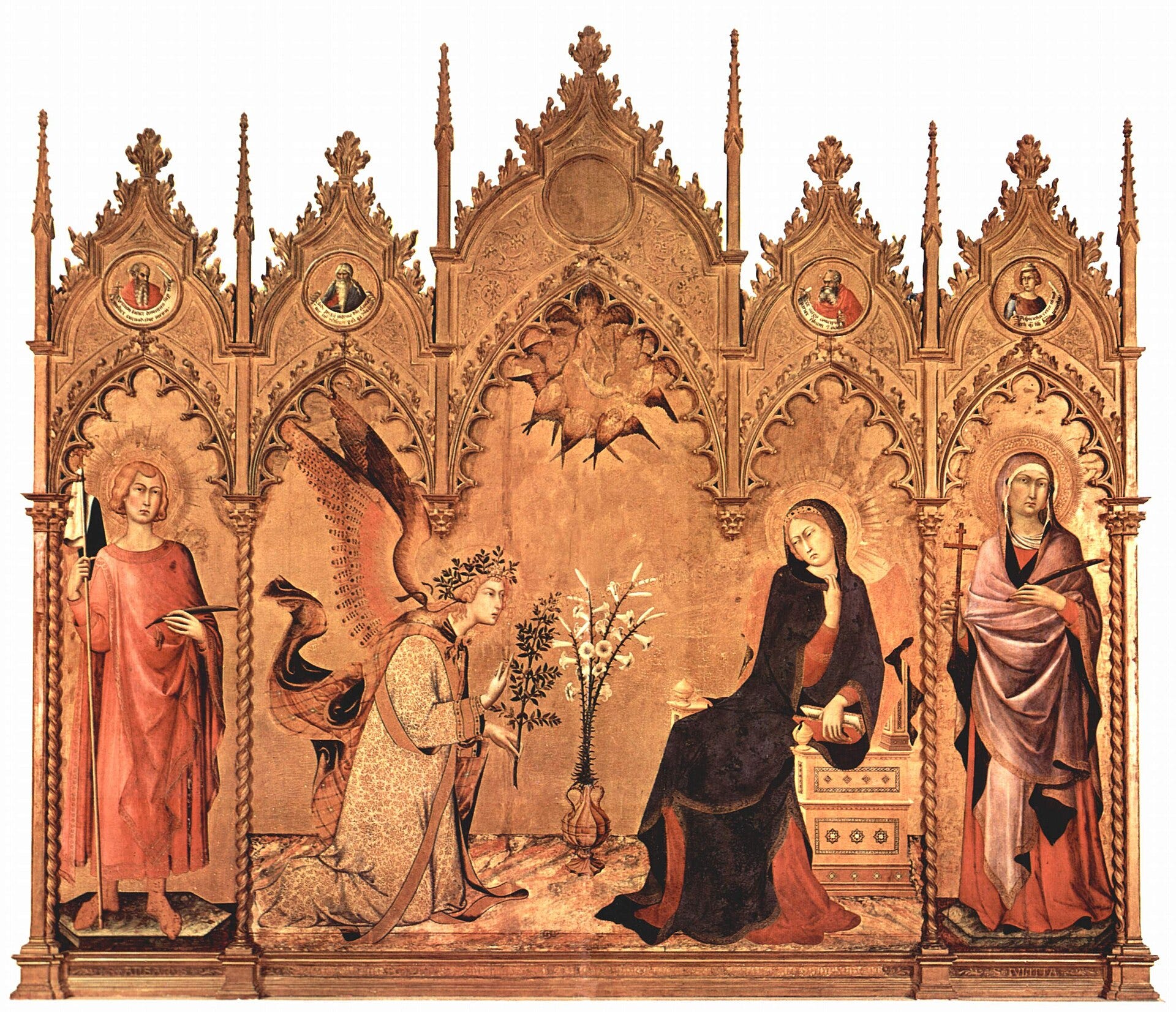
Simone Martini (around 1284 to 1344) was a painter from Siena, Italy, who died in Avignon, France. He painted the Maestà, a fresco of the Virgin Mary in Siena's town hall, and the Annunciation, at the Uffizi in Florence.
Cool Stories About Art is a newsletter to learn art the fun way.
Join 200,000+ readers and get:
10 new art stories / month
The entire archive of content (140+ articles)
Comment, ask questions, and chat with other readers
Simone Martini worked for men with power: the council that ruled his city and the king of Naples, then the churchmen of the pope's court. Late in his life, he painted a portrait for a friend, Petrarch, the Italian poet whose love poems are still read today. The portrait showed Laura, the woman of those poems, and it has been lost for centuries.
The painter was born in Siena, then an independent republic in Tuscany, the region of central Italy around Florence. A council of merchants and bankers, known as the Nine, ruled the city from the town hall, the Palazzo Pubblico.
The leading painter of Siena was Duccio, and Simone was probably his pupil. In 1311, Duccio's huge altarpiece, a painting made to stand on a church altar, was carried in procession to the cathedral. It showed the Virgin Mary enthroned among saints and angels, a subject called a Maestà, Italian for "Majesty."
The Nine wanted a Maestà of their own, for the hall where the city's council met, and they ordered it from Simone.
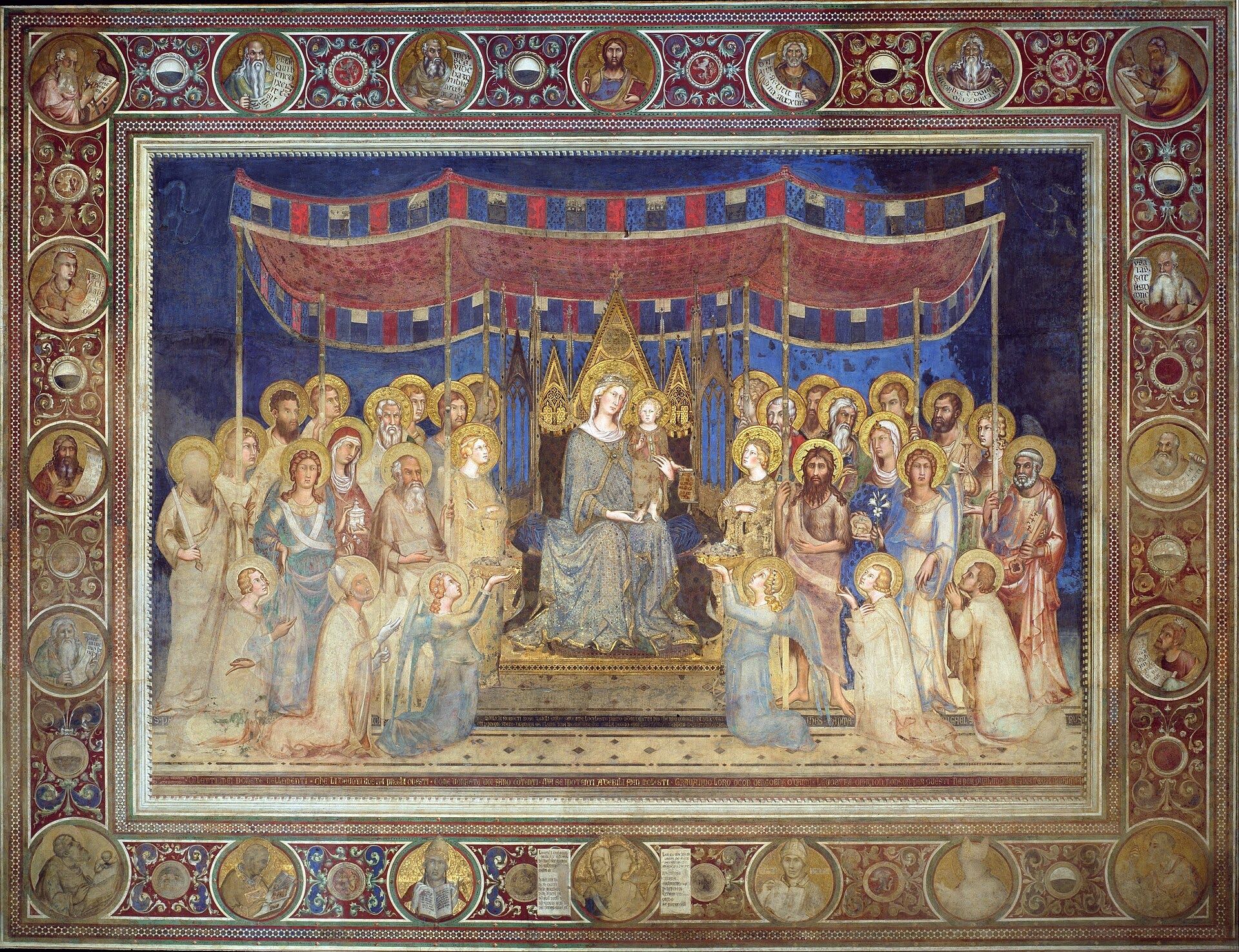
Simone Martini finished the Maestà of the town hall in 1315. He painted it in fresco, on the wet plaster of a wall more than thirty feet wide. In front of the Virgin and Child kneel the four patron saints of Siena, the saints believed to protect the city.
The painter did more than show the Virgin. He made her speak to the men who governed Siena. In verses written in Italian under her throne, she tells them that "good counsel" pleases her as much as the roses and lilies of heaven.
Then the Virgin warns the council. The saints may pray for Siena, she says, but their prayers are not for "the powerful" who harm "the weak," nor for anyone who "deceives my land."
Simone would write spoken words into his pictures again and again. More than twenty years after the Maestà, when he painted Laura for Petrarch, the poet had one complaint about the portrait.
The portrait of Laura is gone, and no one knows what it looked like. How does anyone know today that Simone Martini painted it?
In the rest of the story
What the king of Naples had Simone paint while a nephew claimed his crown.
Why a famous fresco of a horseman in Siena may not be his work.
Where Petrarch claimed Simone had gone to see Laura's face.
What Petrarch wrote about Simone in a book stolen from him years before.