
Space in art is the illusion of depth on a flat surface, and the use of emptiness itself. Painters build it with linear perspective, atmospheric haze, overlap, scale, and negative space. Here are twelve works that turned flatness into rooms, cities, and voids.
Space in 30 seconds
Linear perspective: parallel lines converge at a vanishing point, like rails meeting at the horizon.
Atmospheric perspective: distant things get paler, bluer, and softer, because air is not perfectly clear.
Overlap and scale: what covers something else is closer; what is smaller is farther.
Negative space: the empty area around subjects, which the eye reads as air, silence, or distance.
Flat can still feel deep: a surface of pure color or water can read as an immersive space.
Masaccio, The Holy Trinity (c. 1427): the first rigorous vault
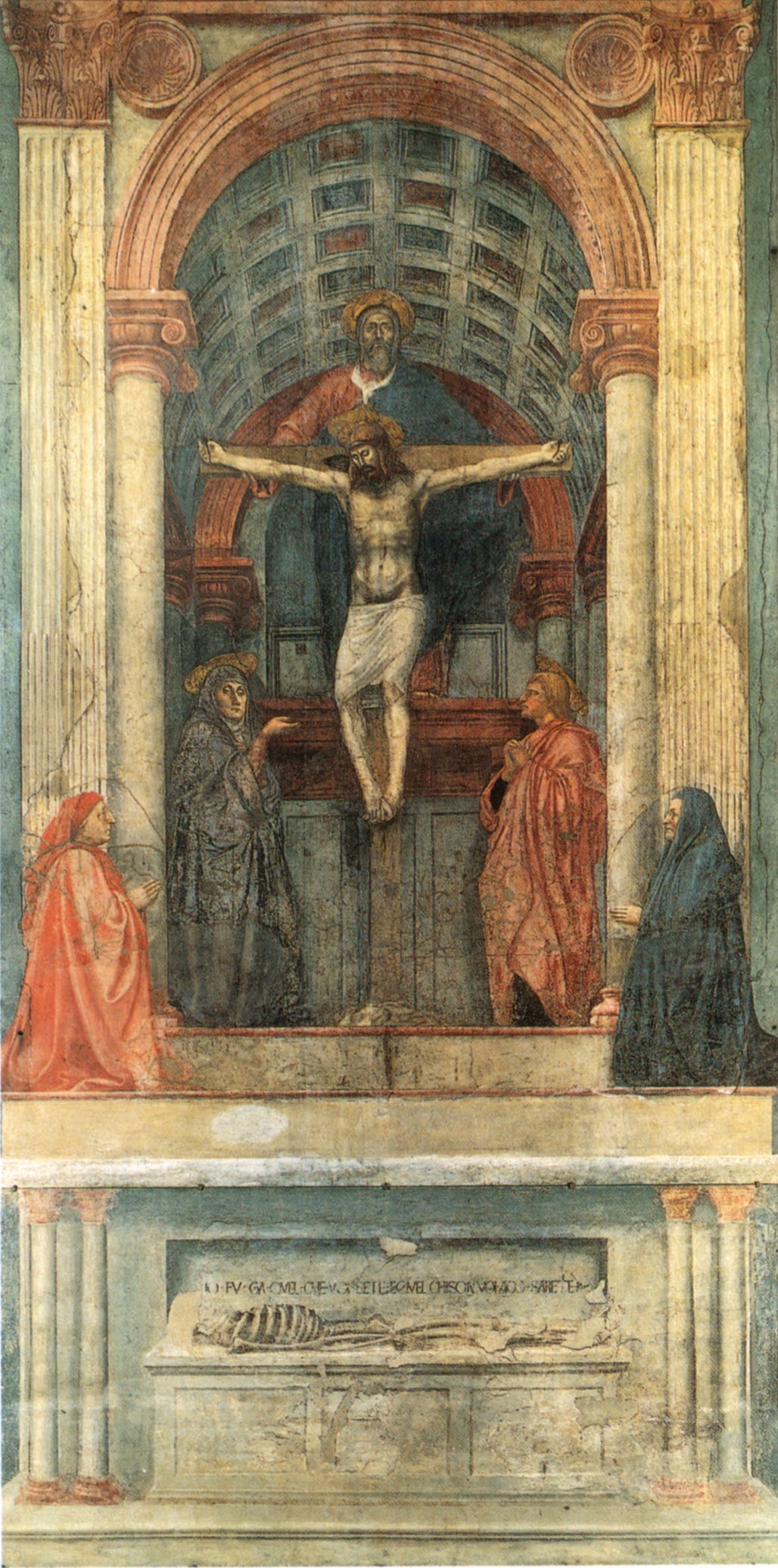
The coffered barrel vault recedes so precisely that Florentines felt the church wall had been broken open. Masaccio built the first rigorously constructed linear perspective in painting, with the vanishing point set at the viewer's own eye level.
Below the vault lies a painted skeleton with an inscription: I was once what you are, and what I am, you also will be. Depth in space, and in time.
Uccello, The Battle of San Romano (c. 1438-1440): perspective as obsession
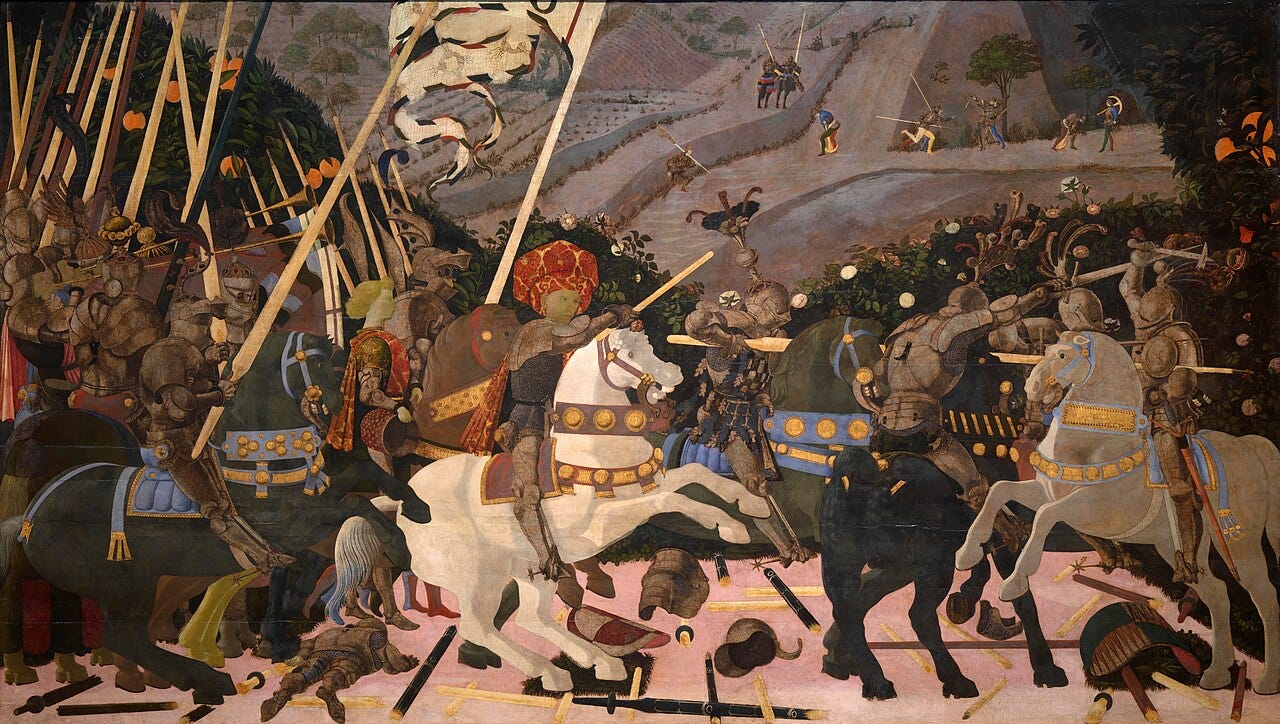
Broken lances litter the ground in a suspiciously tidy grid: they lie along the orthogonals, turning a cavalry battle into a geometry lesson. Uccello was so besotted that Vasari says he would not come to bed, muttering what a sweet thing perspective is.
Mantegna, Lamentation of Christ (c. 1483): depth in a body
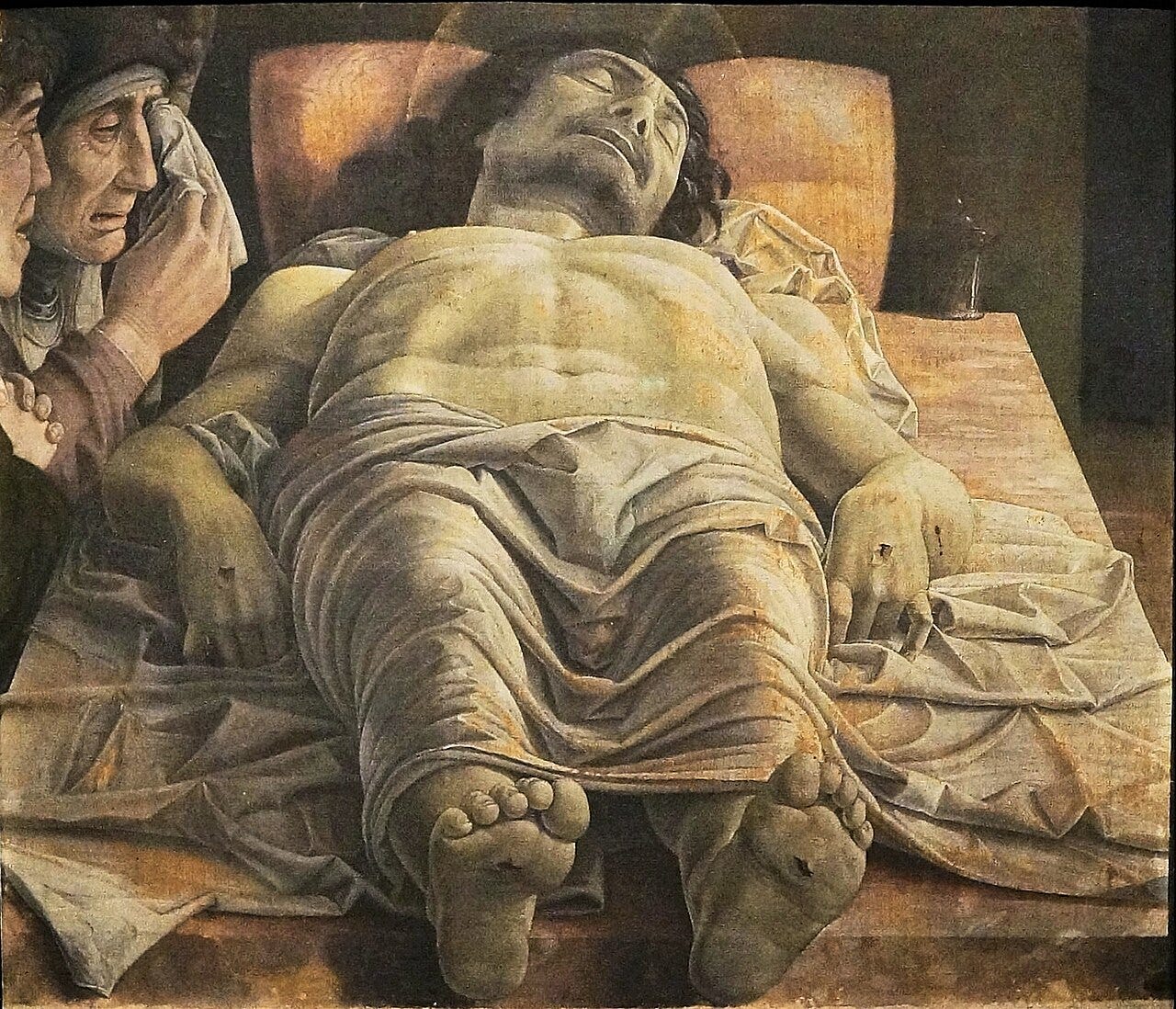
The dead Christ lies feet-first toward you, the whole body compressed into a few inches of canvas. This is foreshortening, perspective applied to anatomy, and Mantegna pushed it further than anyone had dared.
He cheated, too: the feet are painted smaller than true perspective demands, so they would not block the face. Space bends to feeling.
Raphael, The School of Athens (1509-1511): architectural depth
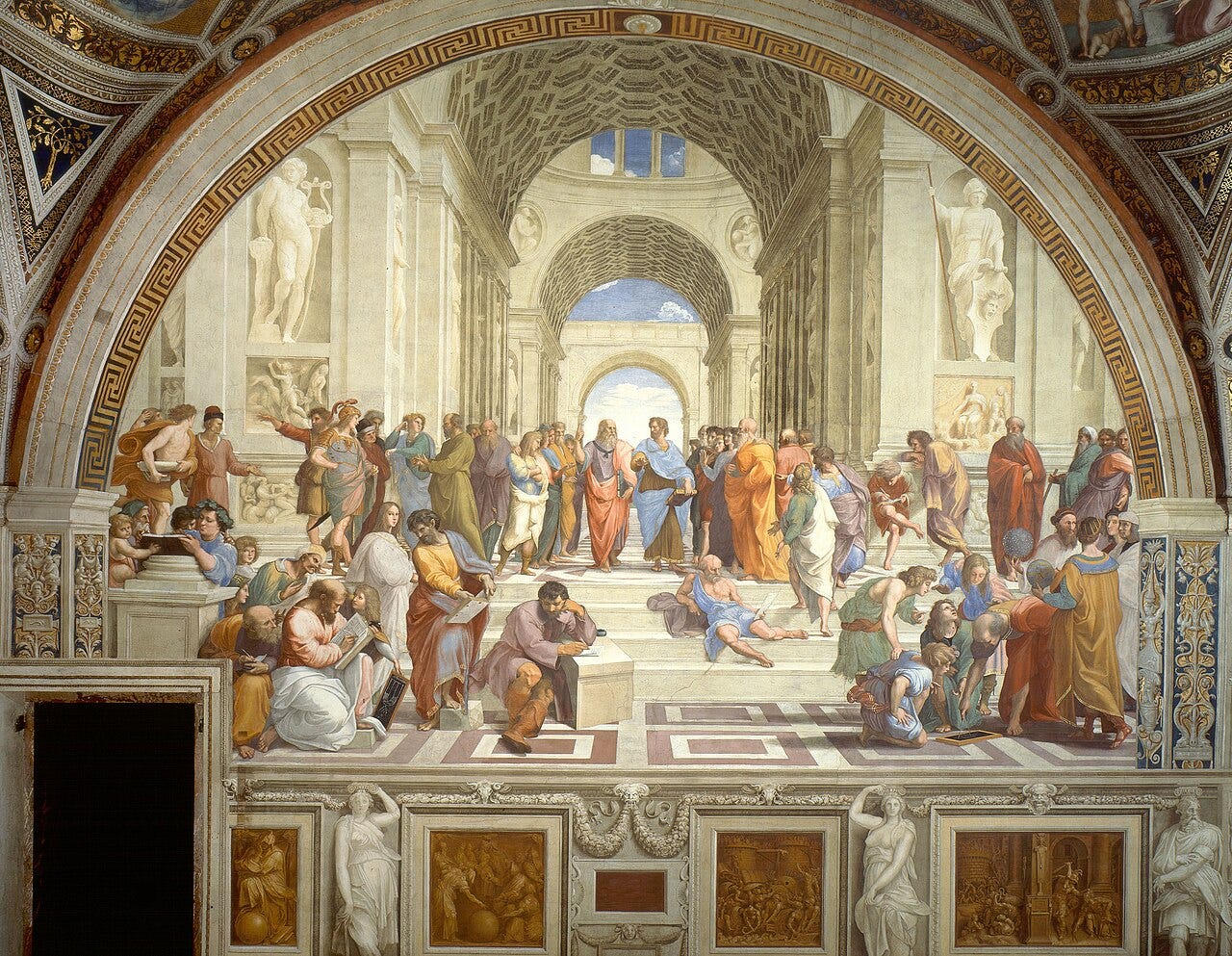
Arch behind arch behind arch, each framing the next like a telescope, until the sky opens at the back. Raphael made the architecture do the receding so the philosophers could do the thinking.
Learn art the fun way


![[GUIDE] How to Get Children Interested in a Museum](https://substackcdn.com/image/fetch/$s_!HAcD!,w_140,h_140,c_fill,f_webp,q_auto:good,fl_progressive:steep,g_auto/https%3A%2F%2Fsubstack-post-media.s3.amazonaws.com%2Fpublic%2Fimages%2F3758c46b-d95a-4806-8944-a5ee377f68a2_960x538.jpeg)
Friedrich, Wanderer above the Sea of Fog (c. 1818): the retreating haze
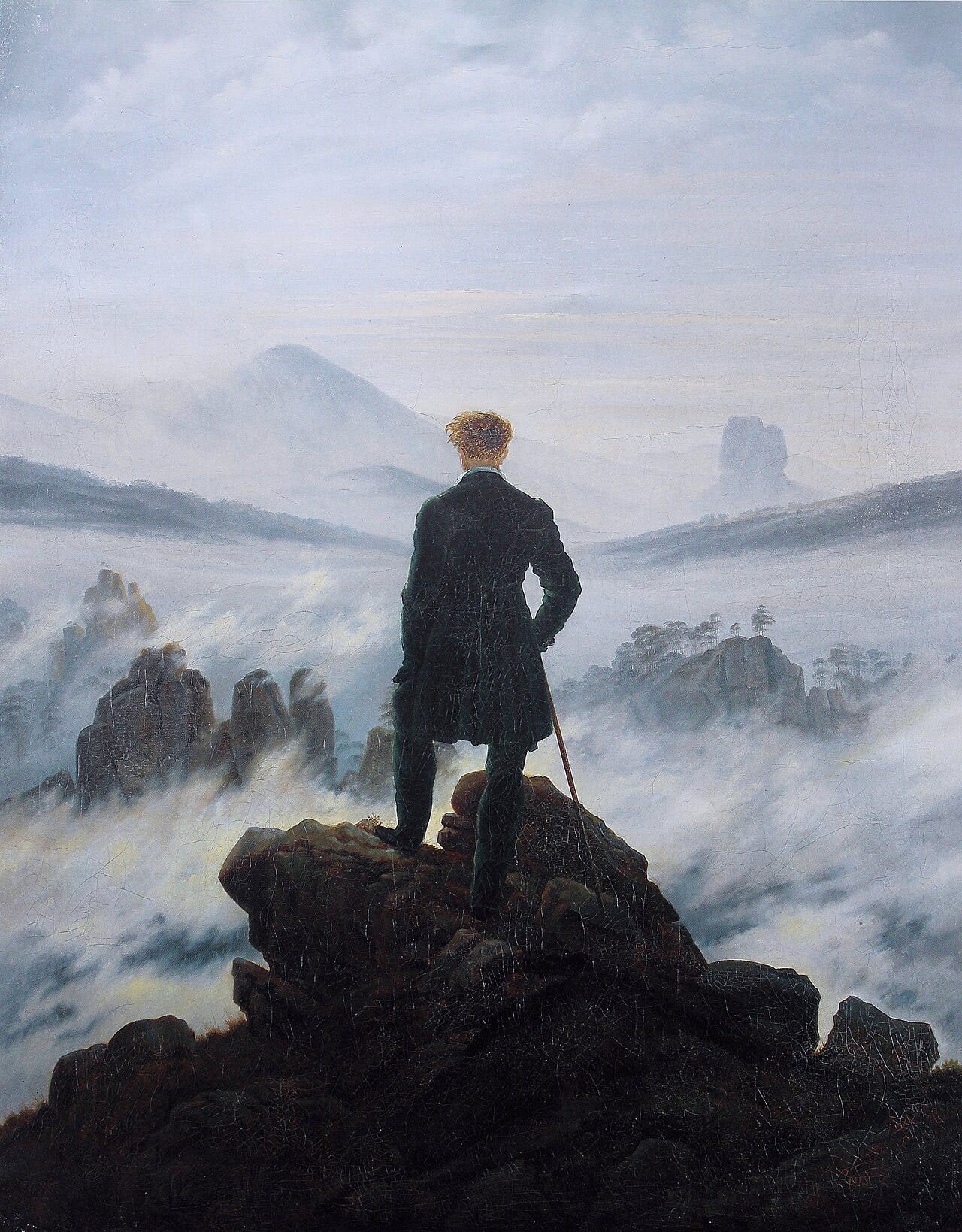
Each ridge behind the climber is paler and bluer than the last, until rock dissolves into sky. That is atmospheric perspective: air itself as a measuring stick. Friedrich turned a weather effect into a statement about how small we stand.
Hasegawa Tōhaku, Pine Trees (c. 1595): the space called ma
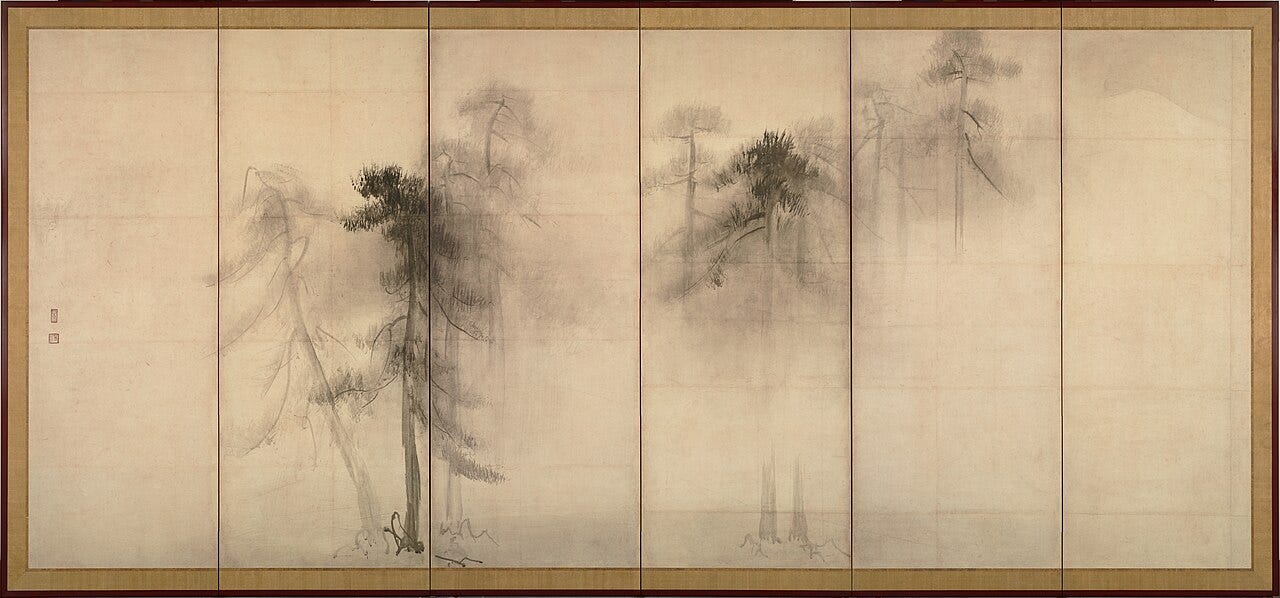
A few ink pines emerge from bare paper, and the emptiness between them is the fog, the cold, the distance, all of it unpainted. Japanese aesthetics has a word, ma, for this active emptiness.
Where Western painters filled space, Tōhaku let the paper be the space. The screens are a national treasure of Japan.
Vermeer, The Music Lesson (c. 1662-1665): a room measured in light
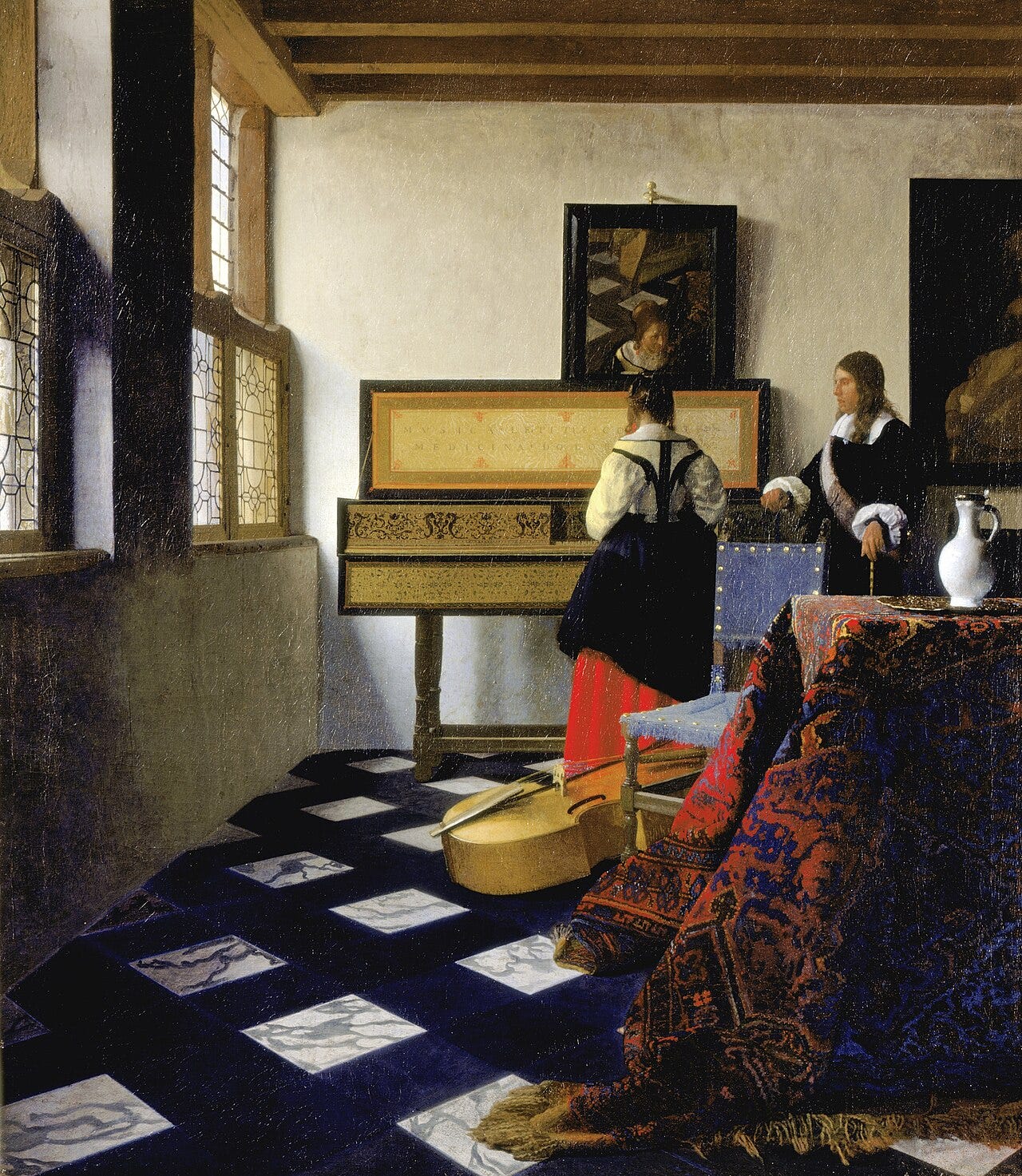
The black and white floor tiles march back tile by tile, and the light from the leaded windows grows softer with each step of depth. Vermeer measured the room twice, once with geometry, once with light.
In the mirror above the virginal you can glimpse the legs of the painter's easel. Vermeer left his own workspace inside the illusion.
Canaletto, the Venetian vedute (1730s): urban depth
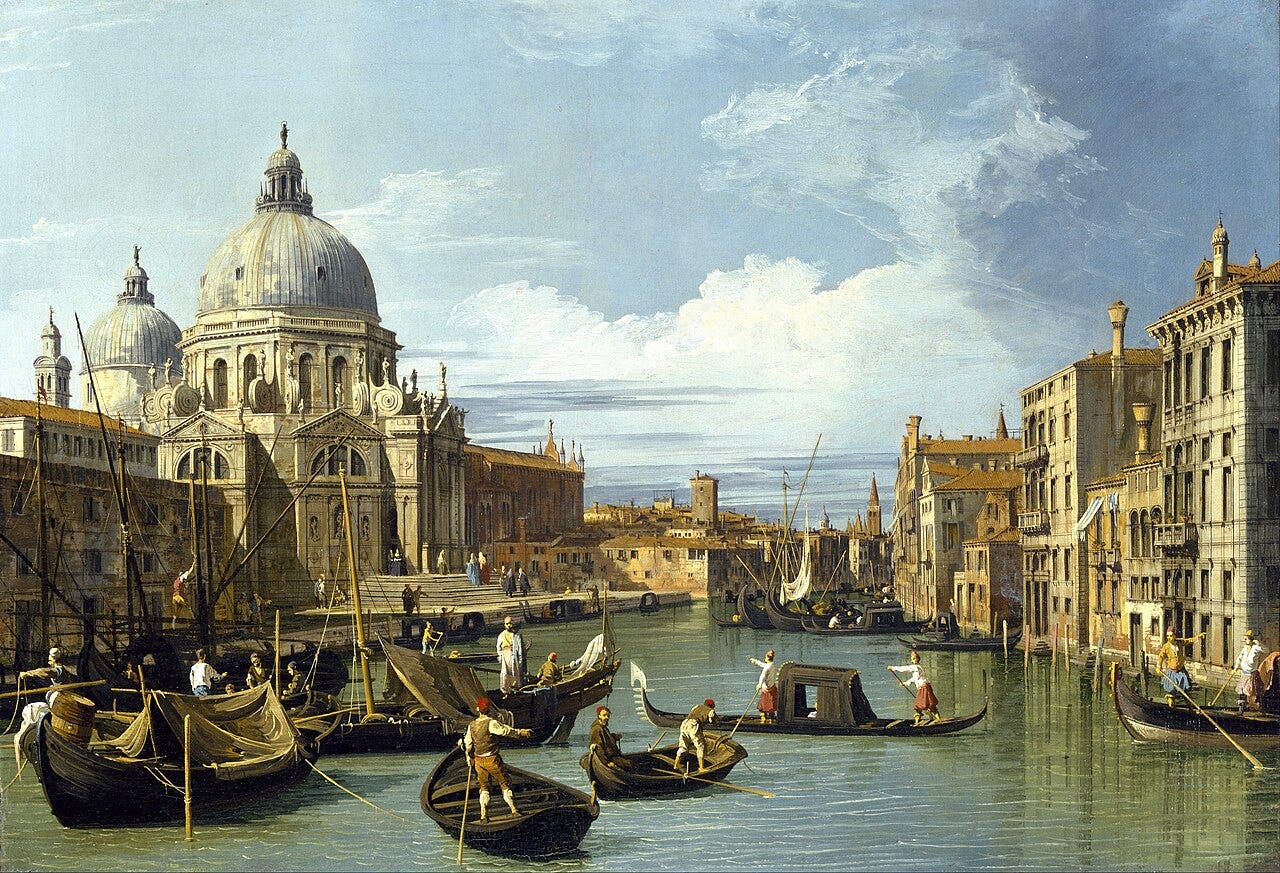
Palaces, water, and sky recede along the Grand Canal with near-surveyor accuracy. The genre is the veduta, the view, and Canaletto ruled it, sometimes drafting with a camera obscura before painting.
His best clients were English aristocrats on the Grand Tour, which is why the greatest collections of painted Venice are in Britain.
Hammershøi, Interior in Strandgade (1901): the space of solitude
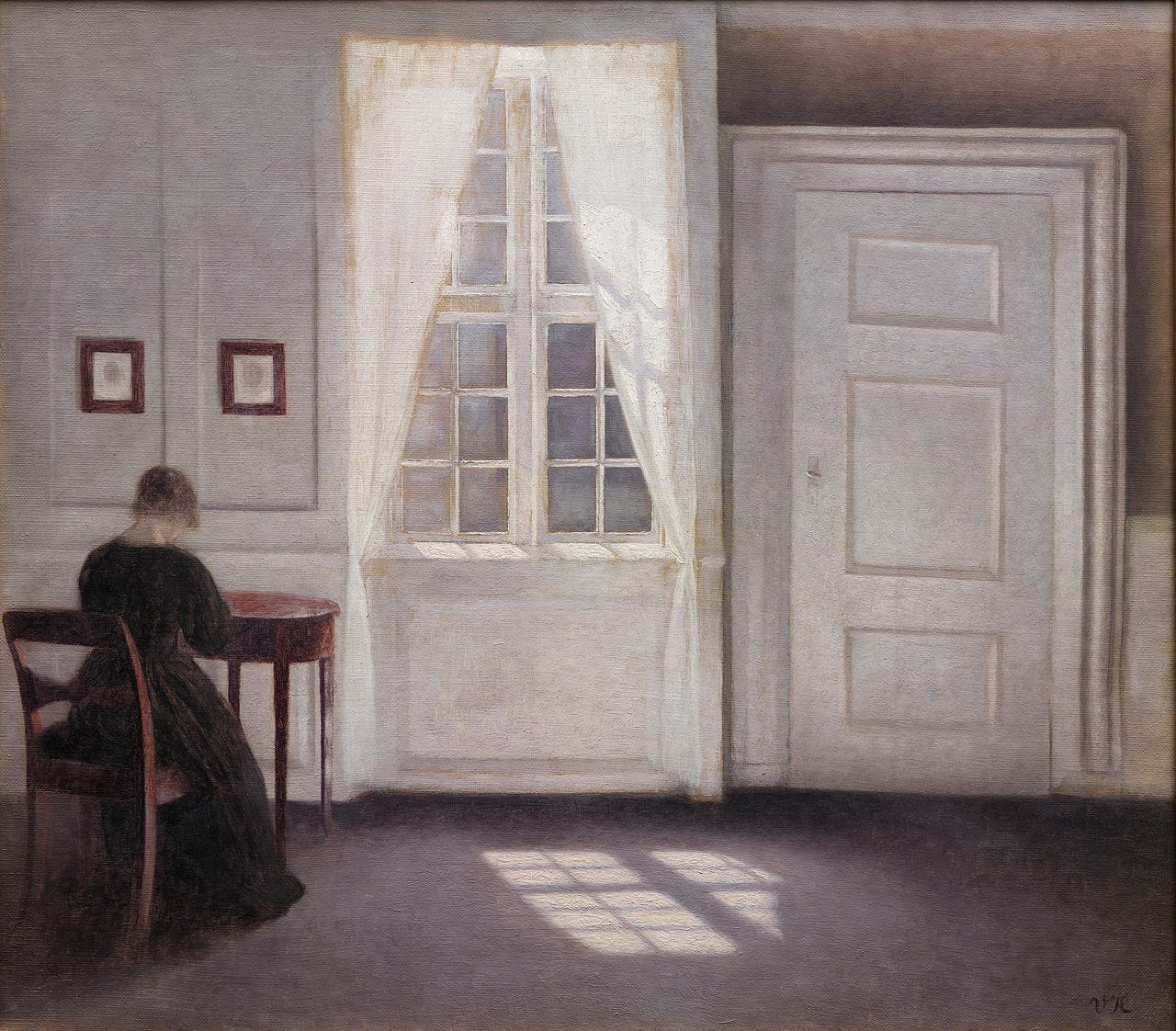
A gray Copenhagen room, a door, sunlight on the floor, and almost nothing else: the emptiness is the subject. Vilhelm Hammershøi painted the same few rooms of his apartment again and again, often with his wife Ida seen from behind.
He is the quiet Northern answer to the crowded canvases of his century: space as mood, not as measurement.
Velázquez, Las Meninas (1656): depth in layers
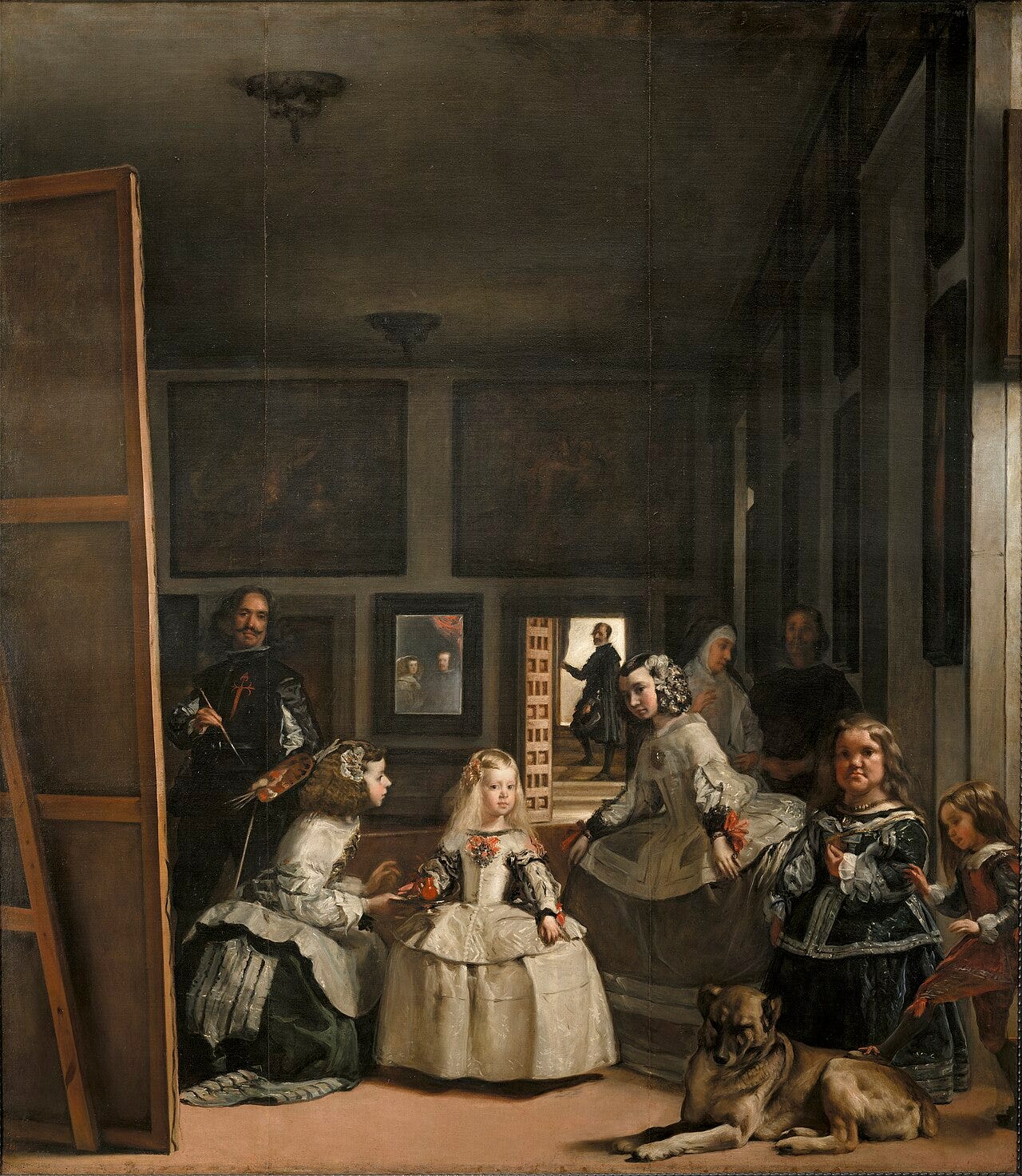
Foreground princess, mid-ground painter, background mirror, and an open door with a man on the stairs beyond: four thresholds of depth stacked like theater flats. Velázquez built a room you feel you could walk into, and then put you in the mirror.
A word on the uncanny: De Chirico
In the 1910s Giorgio de Chirico took the Renaissance toolkit and detuned it: colonnades with clashing vanishing points, shadows from impossible suns, plazas too empty to be safe.
Correct perspective feels like order. Slightly wrong perspective feels like a dream going bad, and a century of surrealists and film directors took note.
Monet, the Water Lilies (c. 1920): flat, yet bottomless
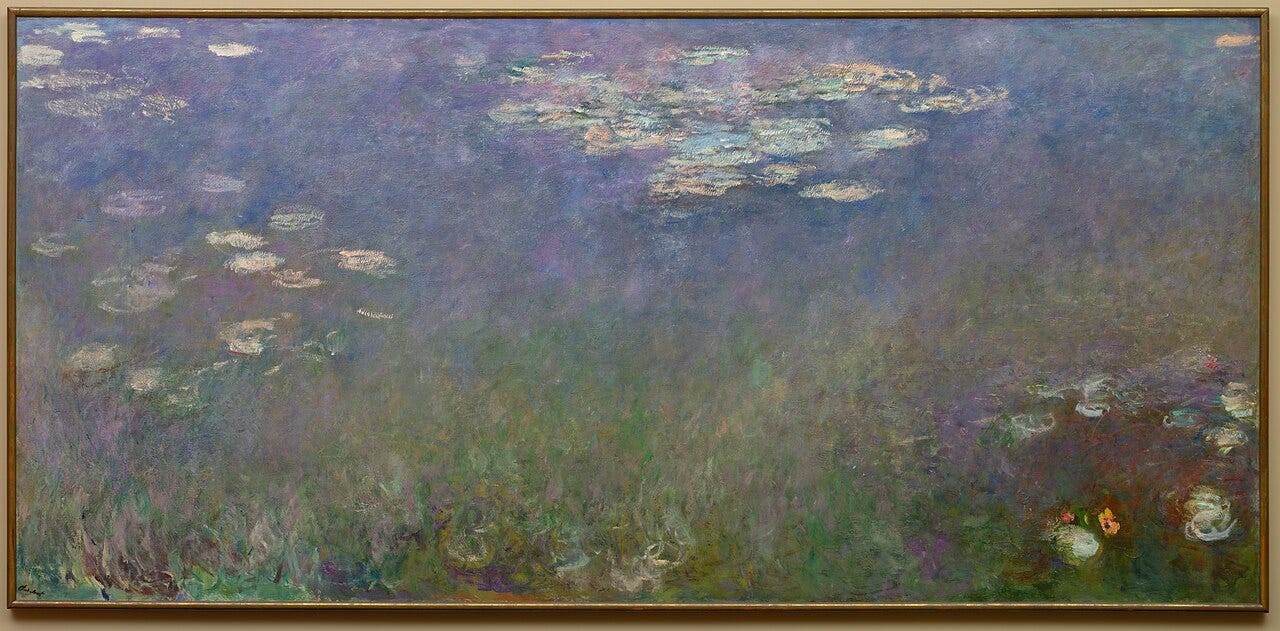
No horizon, no perspective lines, just the surface of a pond filling your whole field of view. And yet the space reads as deep: reflection, water, and flower layer into each other. Monet proved depth can survive the death of perspective.
You Might Also Like


Space is one of eight elements behind every composition. See how it connects to the rest in our complete guide to elements and principles of art. It connects closely to negative space.
Quick answers
What is space in art? The illusion of depth on a flat surface, plus the deliberate use of emptiness. It covers perspective, overlap, scale, and negative space.
What is positive and negative space? Positive space is the subject; negative space is the emptiness around it. In strong compositions the emptiness is designed as carefully as the figures.
How do artists create depth? Five main tools: linear perspective, atmospheric perspective, overlap, relative scale, and placement (higher on the canvas usually reads as farther away).
What is atmospheric perspective? The trick of making distant objects paler, bluer, and less detailed, imitating the veil of air. Friedrich's fog-bound ridges are the textbook case.
Where to see these works
The Holy Trinity is painted on the wall of Santa Maria Novella in Florence, and the three San Romano panels are split between London, Florence, and Paris. The Lamentation is in the Brera in Milan, The School of Athens in the Vatican.
The Wanderer is in Hamburg's Kunsthalle, Tōhaku's Pine Trees in the Tokyo National Museum, The Music Lesson in the British Royal Collection, Las Meninas in the Prado, and the Water Lilies at the Orangerie in Paris. Hammershøi is best seen in Copenhagen.
One last fact
Brunelleschi demonstrated perspective around 1420 with a peephole experiment: you looked through a hole in his painted panel at a mirror, and the painted Baptistery snapped into place over the real one. The discovery of pictorial space began with a trick you had to peek at.