
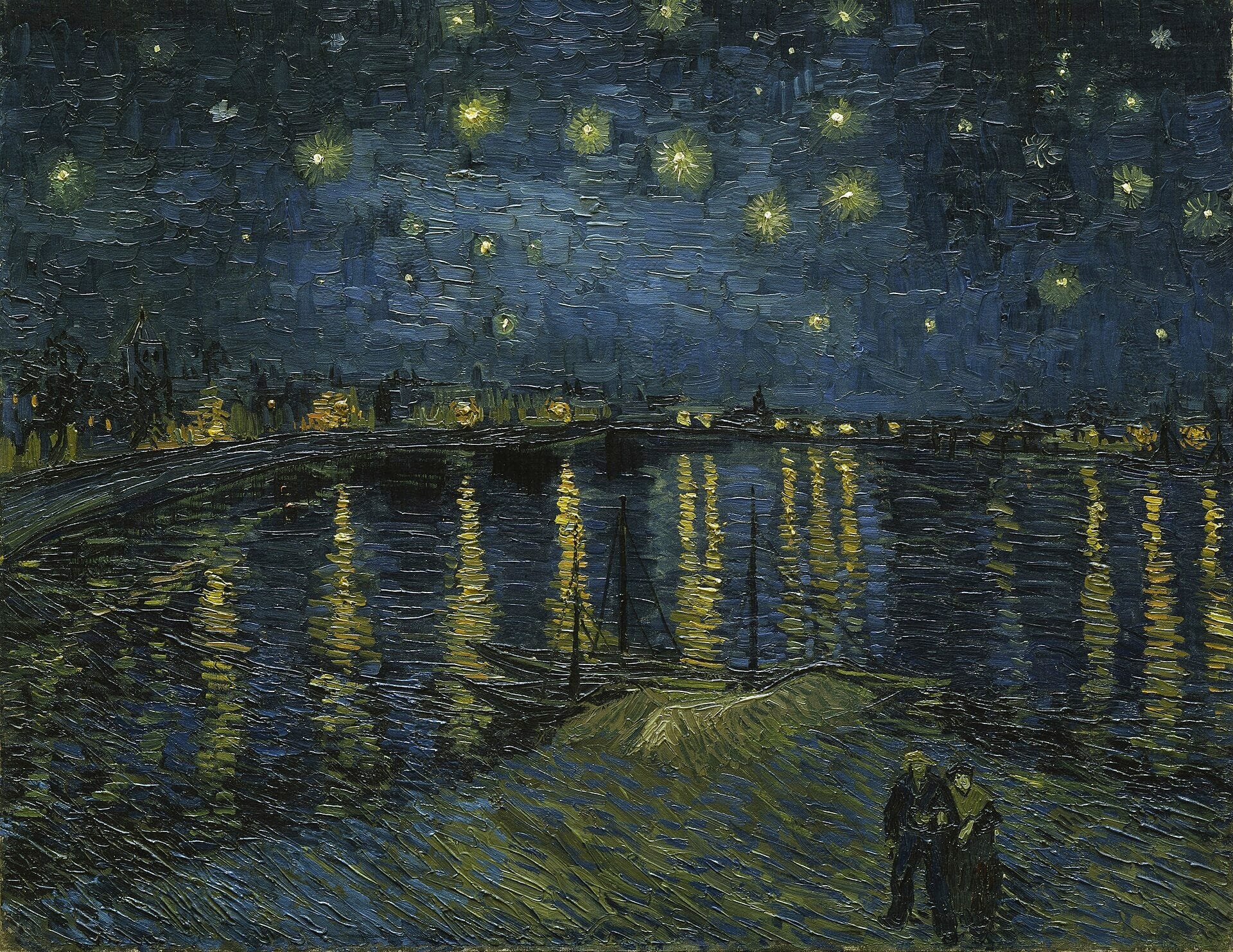
Starry Night Over the Rhône is a canvas from Vincent van Gogh's months in Arles, in Provence, painted in September 1888. It shows the Rhône River at night, with gas lamps along the far bank dropping long gold reflections into the deep blue river.
Over the rooftops, the Big Dipper's seven stars glitter in a pale turquoise sky, and a couple walks on the near bank. Van Gogh painted the scene beside a real river, nine months before the Museum of Modern Art's The Starry Night, and the canvas is famous as the other Starry Night.
The picture, now at the Musée d'Orsay in Paris, also shows how he built a night scene. He moved the Big Dipper, stretched the reflections of the lamps and repainted part of the water.
Cool Stories About Art is a newsletter to learn art the fun way.
Join 200,000+ readers and get:
10 new art stories / month
The entire archive of content (140+ articles)
Comment, ask questions, and chat with other readers
What is the meaning behind Van Gogh's Starry Night Over the Rhône?
When Van Gogh wrote to his brother about this canvas, he set the pale stars against the gold of the gas lamps, and the word he chose for that gold was a harsh one…
What You'll Discover
Where Van Gogh stood to find this view
What he moved in the sky, and why
Whether he really painted it by candlelight
Who the couple on the bank might be
What a Paris critic saw in 1889
How the canvas found its way back to Arles