
Tarot cards look ancient and secret, but part of that look was added later. The cards began around 1440 as a luxury game for the dukes of Milan.
The idea that they hid the wisdom of ancient Egypt came only in 1781, from a scholar in Paris, decades before anyone could read a hieroglyph. Twelve cards, from a fool painted in gold to a fool drawn in London, show how a game became a mystery.
Cool Stories About Art is a newsletter to learn art the fun way.
Join 200,000+ readers and get:
10 new art stories / month
The entire archive of content (140+ articles)
Comment, ask questions, and chat with other readers
From a Card Game to a Picture Language
In fifteenth-century Italy, tarot was a game. Players used an ordinary pack of four suits, cups, coins, swords and batons, or wooden clubs, each with its number cards and its court of king, queen, knight and page.
To that pack the Italians added a row of picture cards, the trumps, which beat any card of the four suits during play. The first ones were painted by hand and laid with gold leaf, like the pages of a precious book.
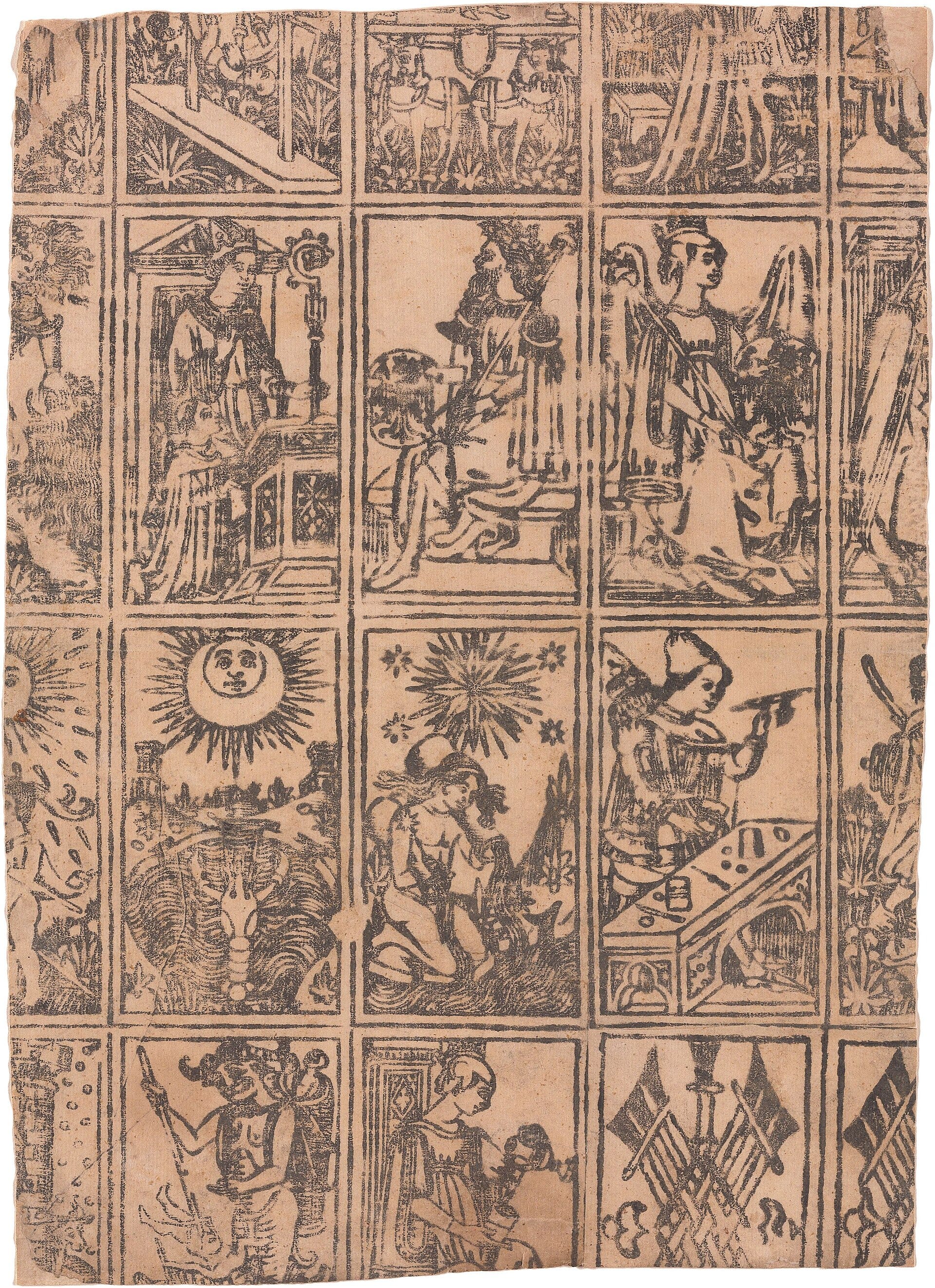
Printing then made the game cheap. By about 1500 the trumps came off the press by the sheet, and card makers kept copying the same figures for three centuries.
Reading the future in these pictures came only in the 1780s, when a few Paris writers turned the old game into a book of secrets. Most of the meanings given to tarot today date from then.
So tarot never had a single style. Each deck carries the hand of whoever made it and the taste of whoever paid for it, from a prince's gilded game to a painter's private notebook.
12. Unknown workshop, The Fool, from the so-called Charles VI tarot (about 1475 to 1500)
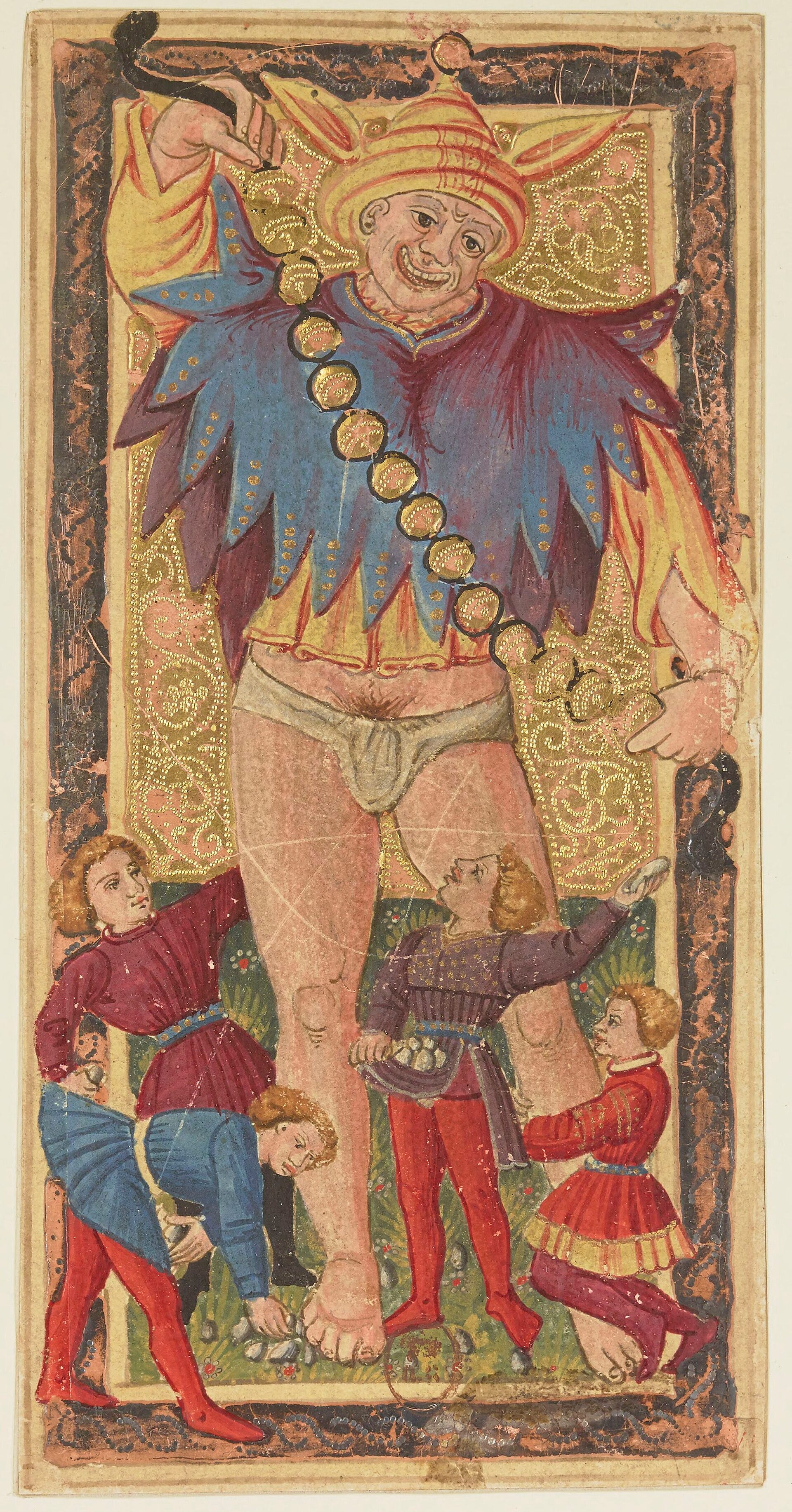
The first card is a fool, and for centuries people believed he was royal. A giant in a jester's cap grins down at four boys gathering stones around his bare feet. Below a ragged blue cape he wears only a loincloth, and a chain of gold balls hangs across his chest.
Behind him there is no sky and no wall, only gold leaf, pressed with small metal tools into a raised pattern like the brocade of a rich fabric.
The royal legend started with an account book. In 1392, a clerk of Charles VI of France, a king whose bouts of madness broke up his reign, recorded a payment to a painter, Jacquemin Gringonneur, for three packs of cards gilded and colored for the king.
Those cards are lost. But writers decided that this fool and the other survivors of its set, kept in Paris at the Bibliothèque nationale de France, the national library, were the king's. They came to be called the Charles VI tarot, or the Gringonneur deck.
A fool painted for a mad king made too good a story to drop. Yet nothing ties these cards to Charles VI. Historians now give them to an anonymous workshop in northern Italy and date them between 1475 and 1500, more than half a century after the king's death.
I prefer this fool without his king. What remains is one of the liveliest figures of the Renaissance, painted by someone whose name nobody kept, and the royal legend would not be the last grand birth invented for these cards.
At a Glance
Artist: Unknown workshop, northern Italy
Made: About 1475 to 1500
Medium: Tempera and gold on paper mounted on card
Size: Not published
Where to see it: Bibliothèque nationale de France, Paris
11. Unknown Ferrarese engraver, Saturn, from the so-called Mantegna Tarocchi (about 1465)
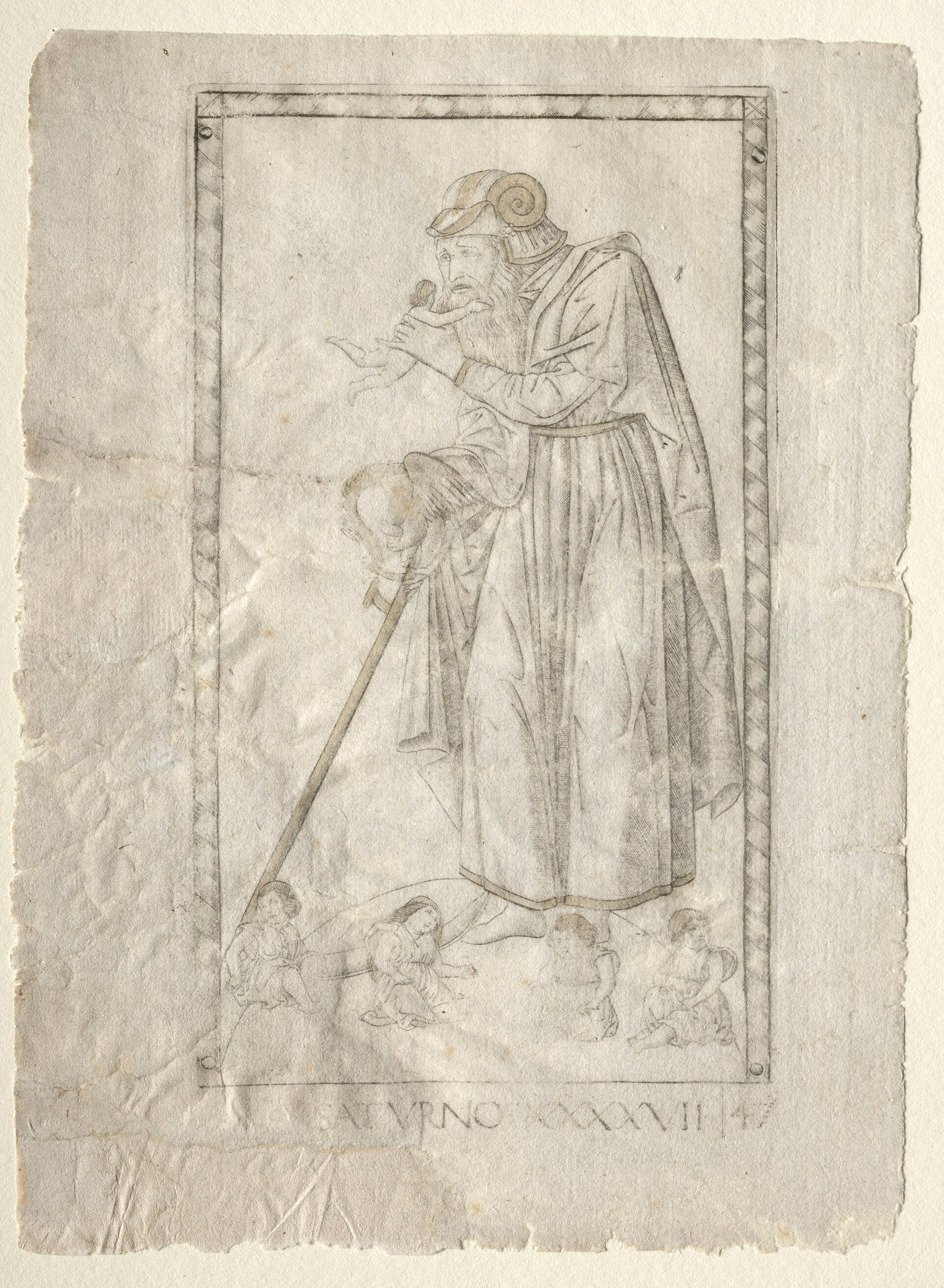
Saturn, the Roman god who ate his own children, leans on a sickle with one of them in his hands, about to devour it, while four more sit at his feet. For centuries this print has been called a tarot card, under a name that is wrong twice over.