
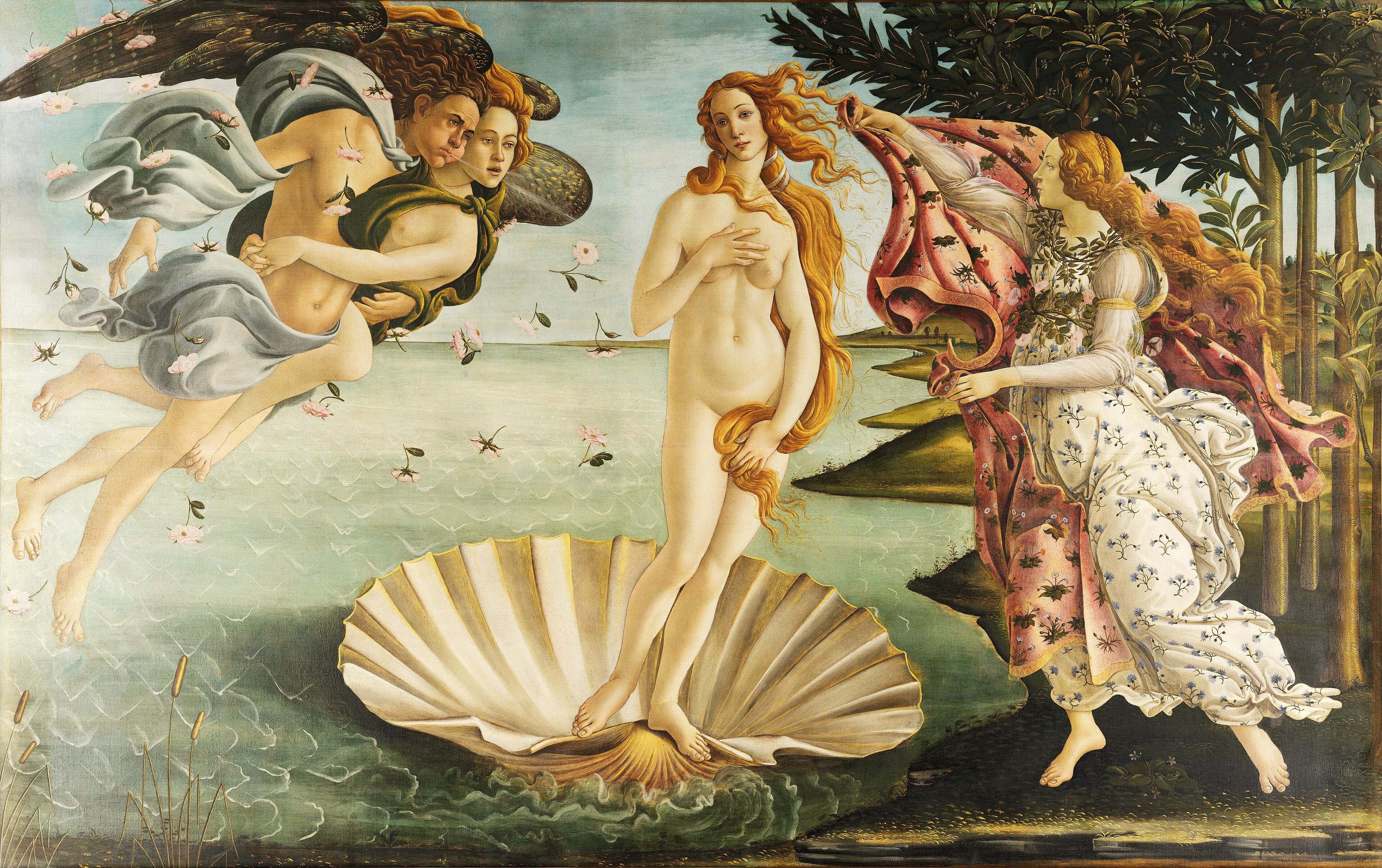
Tempera binds pigment with egg yolk, and oil binds it with a drying oil such as linseed or walnut. Egg dries quickly and has to be built up in small hatched strokes, while oil stays workable long enough to be blended into soft shadows and laid in transparent glazes. Botticelli's Birth of Venus, painted around 1485, is a good place to see egg at work.
The Uffizi records the Birth of Venus as tempera on canvas, which already makes it unusual, because egg paint is stiff and cloth is not. The usual account of the two media is a story of replacement, with oil arriving in the fifteenth century and egg disappearing in front of it.
Cool Stories About Art is a newsletter to learn art the fun way.
Join 200,000+ readers and get:
10 new art stories / month
The entire archive of content (1,000+ articles)
Comment, ask questions, and chat with other readers
Botticelli's own studio does not follow that story. In 1484 and 1485 he painted the Bardi Altarpiece, now in Berlin, and paint analysis at the National Gallery in London found walnut oil in it. The Birth of Venus belongs to the same few years, around 1482 to 1485, and the same analysis found egg in its lighter passages.
So one painter, in the same years, used the two paints on two different pictures, and in other works he used both inside a single panel. In 1500 he painted the Mystic Nativity in walnut oil, while around that same year the Saint Zenobius panels came out mainly in egg.
The choice was made picture by picture, and the reasons are more interesting than the textbook version of the switch.
What does egg tempera look like up close?
It looks drawn. The paint sets so fast that one tone cannot be pushed into the next while wet, so tone is built from short, hatched strokes laid side by side. The Metropolitan Museum's essay on oil painting links this habit to a more schematic rendition of light, shade and color, and notes that egg dries quickly to a relatively light tone.
The essay's example of the older habit is Carlo Crivelli. In his Virgin and Child he applied the egg medium in distinct, light diagonal strokes, following traditional practice, even though he may have used a little oil to modify the egg. Those strokes are the giveaway, a surface assembled from small marks.
Oil dries slowly, and the same essay says that it can be carefully blended to make soft, smooth shadows. Because it stays open so long, a painter can also lay color in thin transparent layers called glazes. Even Botticelli, the painter of the egg Venus, turned to that slower paint for some of his deepest reds.
What You'll Discover
What went into Botticelli's reds.
The Italian cities that took oil first.
Who ordered egg on purpose.
How long egg tempera held on.