
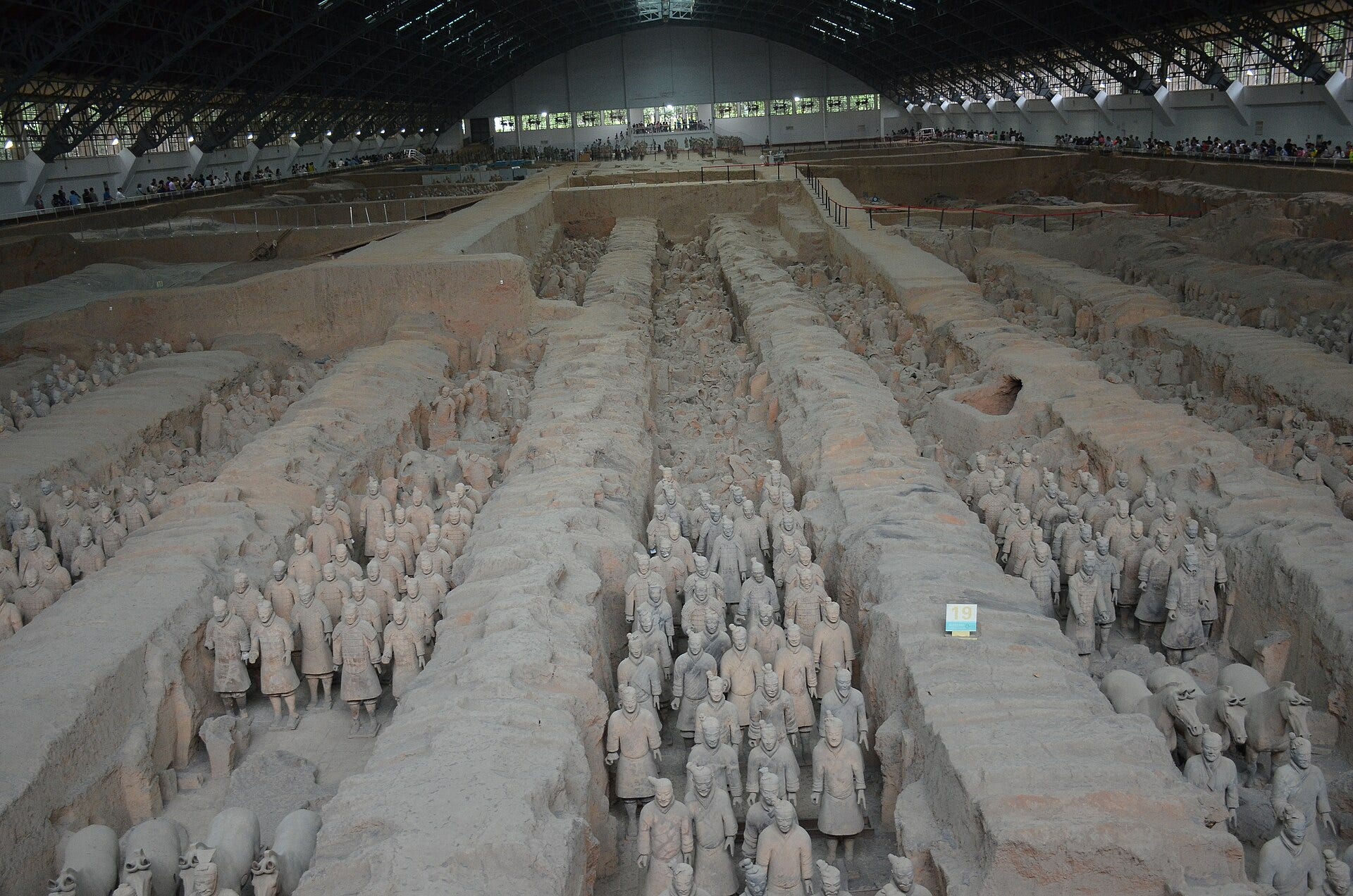
The Terracotta Army is a buried force of clay soldiers, horses and chariots made for Qin Shi Huang, the first emperor of China, who died in 210 BC. Archaeologists estimate that it holds more than 8,000 figures, each one life size and once painted.
The warriors stand in pits less than a mile east of the emperor's tomb mound, near the city of Xi'an. Farmers digging a well found the first pieces in 1974.
The army owes its fame to its scale, to faces that change from one warrior to the next, and to the tomb it guards, which has never been opened.
Cool Stories About Art is a newsletter to learn art the fun way.
Join 200,000+ readers and get:
10 new art stories / month
The entire archive of content (140+ articles)
Comment, ask questions, and chat with other readers
What does the Terracotta Army show?
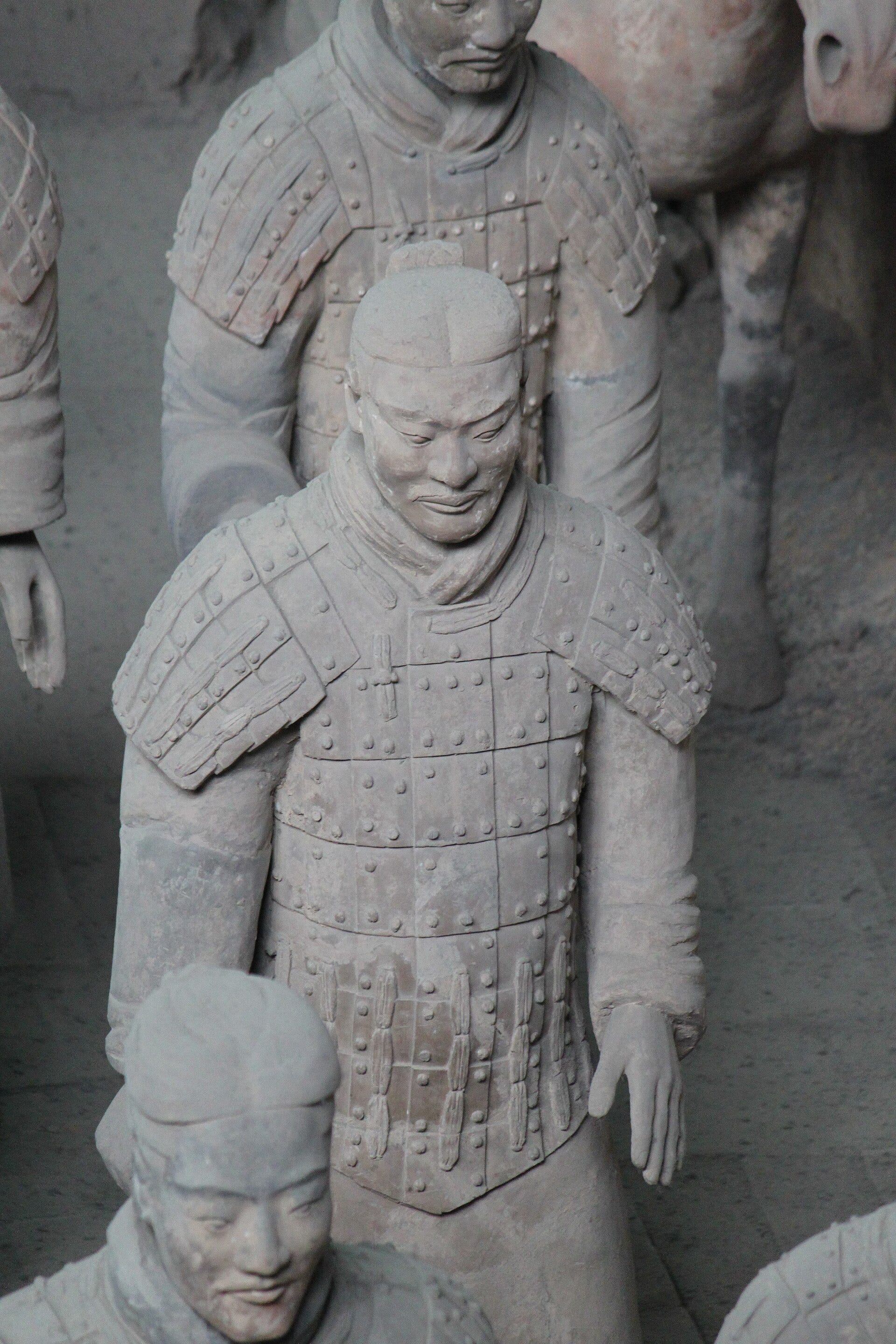
Along the rows of Pit 1, no two heads look quite the same, and a team of researchers once set out to check that impression, one left ear at a time…
What You'll Discover
What thirty clay ears revealed
Why the paint starts to curl within seconds
The rust myth that chemists overturned
What three cartloads of fragments earned the farmers
What an ancient historian said lay inside the tomb
Who was caught stealing a warrior's head