
Texture in art comes in two families: real texture, paint or gold physically raised on the surface, and implied texture, the flat illusion of silk, skin, or bread. Here are eleven works you can almost touch, and how each one was built.
Texture in 30 seconds
Real texture is matter you could feel with your fingers: thick paint, gold leaf, sand mixed into pigment.
Implied texture is an illusion: a perfectly flat surface pretending to be velvet, pearl, or fur.
Impasto is the thick-paint technique: paint applied so heavily it holds the mark of the brush or knife.
The old masters mostly simulated; the moderns increasingly let the material itself do the talking.
The giveaway is raking light: real texture throws tiny shadows, implied texture stays silent.
Van Gogh, Sunflowers (1888): paint in relief
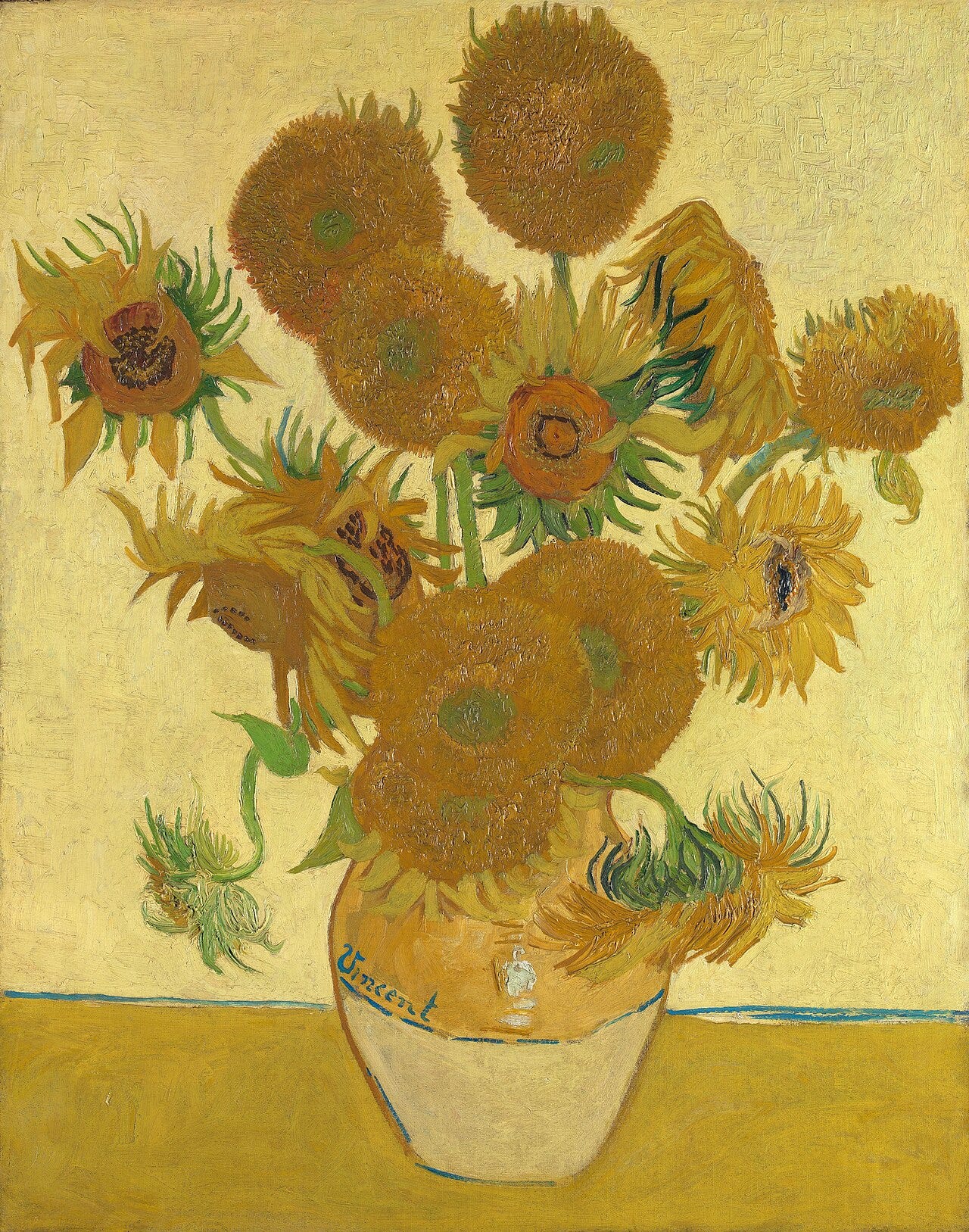
The petals are not painted so much as sculpted: ridges of yellow stand off the canvas, following the twist of each flower. This is impasto at full commitment, and Van Gogh laid it on with loaded brush and palette knife.
The blazing yellows came from chrome pigments, gifts of industrial chemistry that the old masters never had.
Rembrandt, the late self-portraits (1660s): skin built in layers
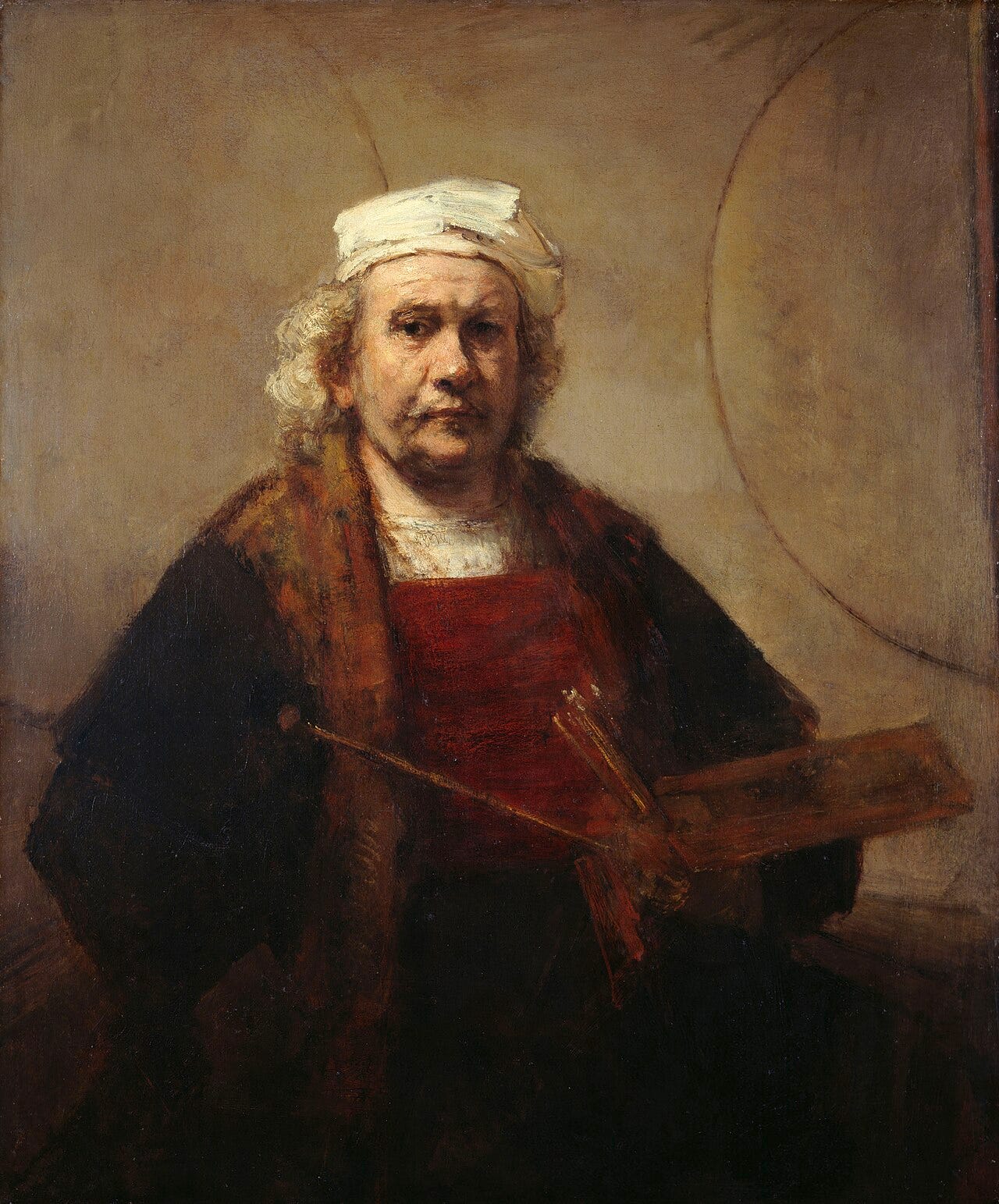
Up close, the aging face is a crust: scraped, dragged, troweled paint, thick over thin. Step back and the crust becomes skin, pores and all. Rembrandt modeled flesh the way a mason builds a wall.
A story from the century after him claimed you could pick up one of his portraits by the nose. An exaggeration, but only just.
Vermeer, The Milkmaid (c. 1658): the illusion with a secret
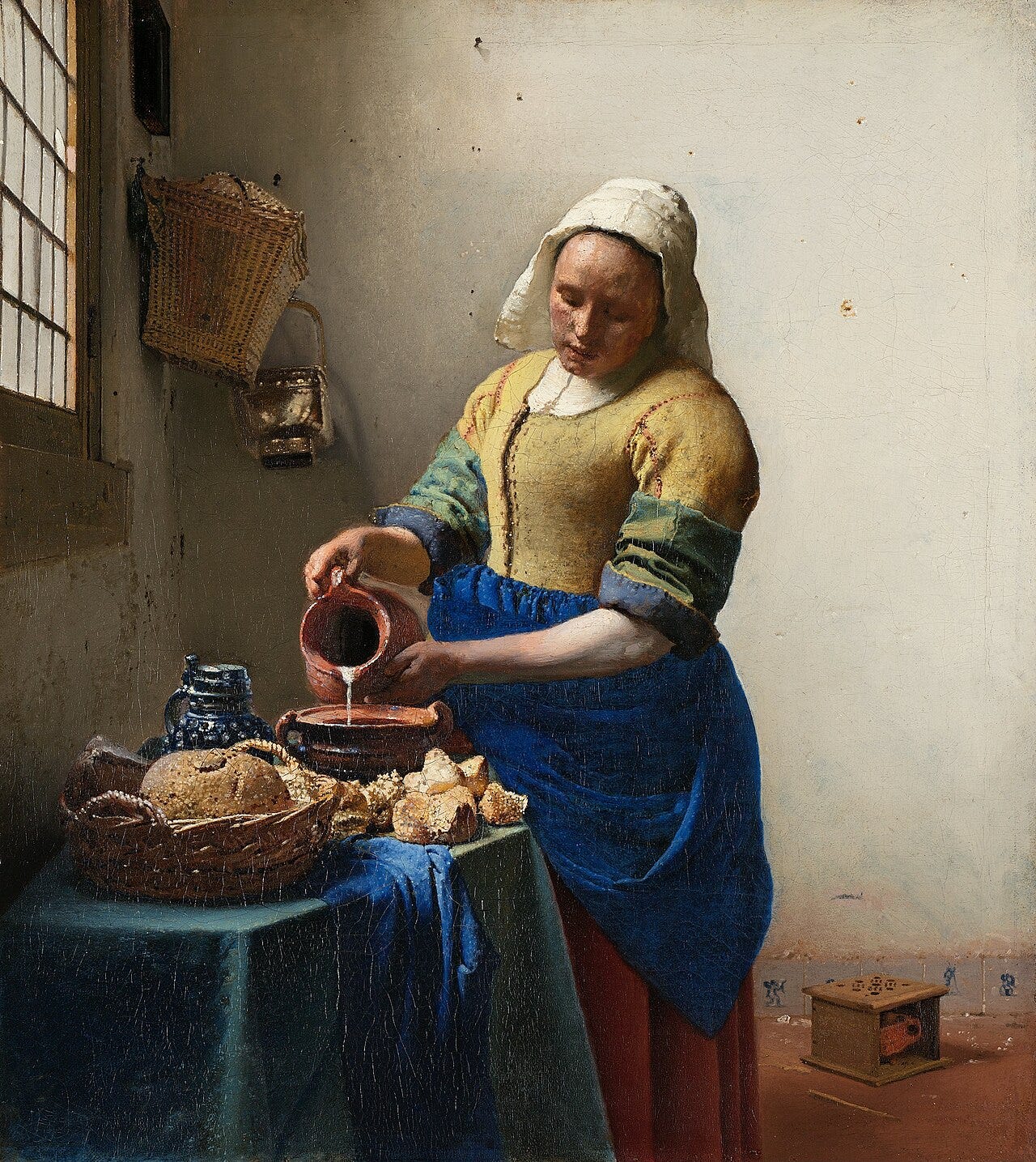
The crust of the bread sparkles with what looks like real crumb. In fact Vermeer stippled tiny raised dots of pale paint, real micro-texture deployed to fake another texture entirely.
That is the quiet trick of the Dutch masters: implied texture, secretly reinforced by real texture, one millimeter at a time.
Learn art the fun way


Klimt, The Kiss (1907-1908): gold you can touch
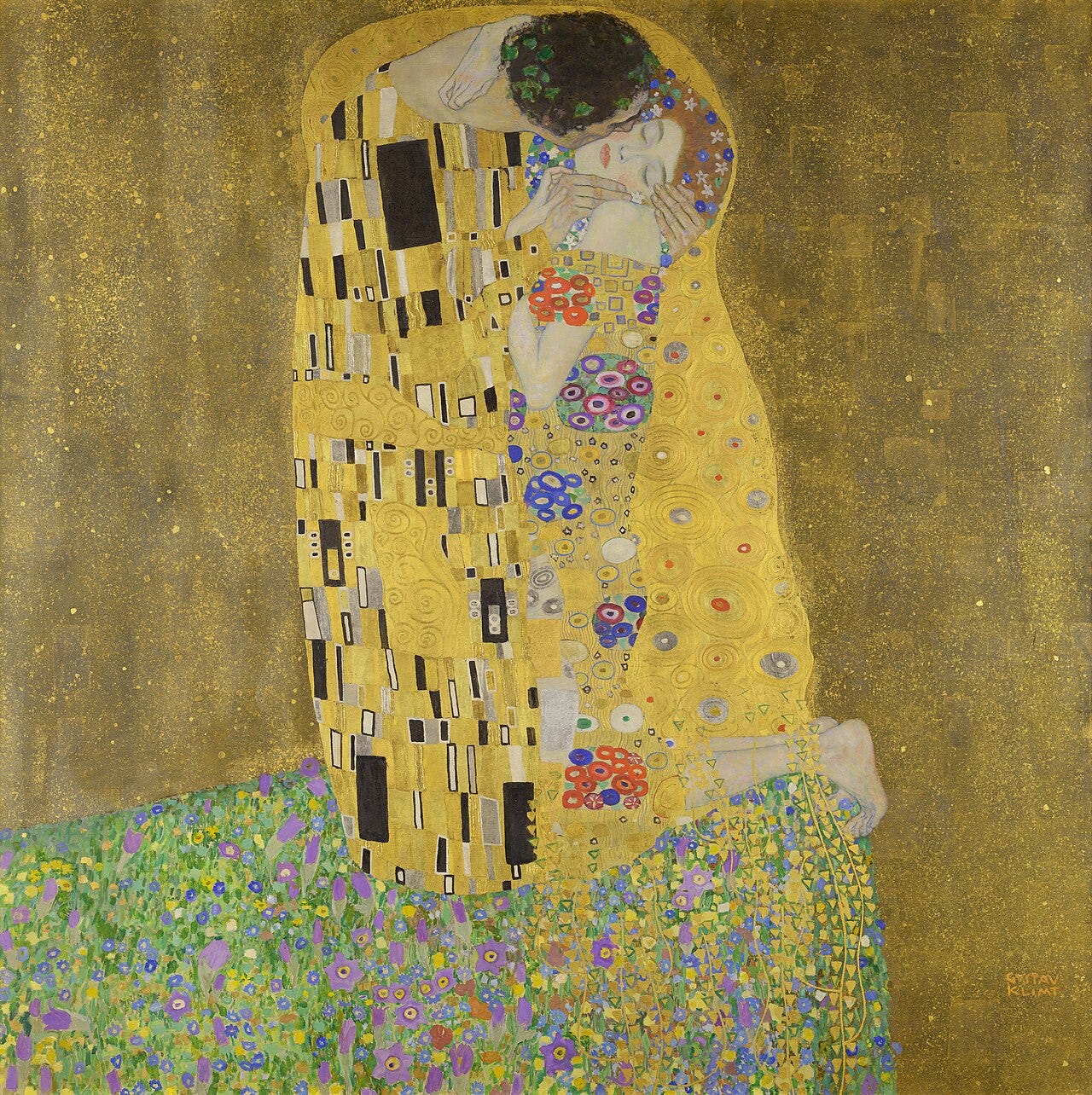
The robes are patterned in actual gold and silver leaf, applied like a Byzantine icon, so the surface catches the light and throws real, physical shadow as you walk past. Klimt made texture do the shining that paint alone could not.
Monticelli, flower pieces (1870s): paint like mortar
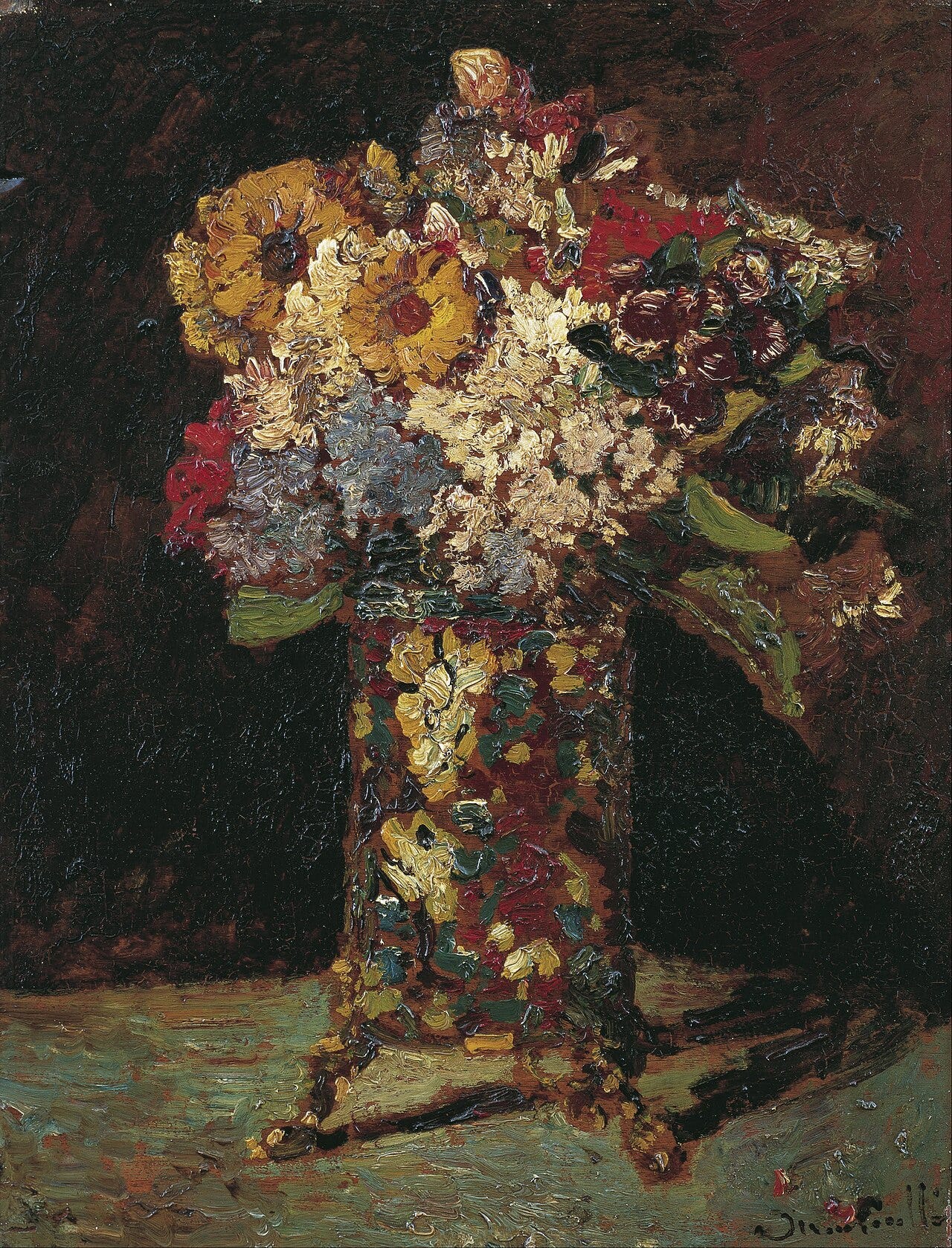
Adolphe Monticelli laid flowers on in blobs so thick they crack like plaster, decades before anyone thought that respectable. He sold little and died poor in Marseille in 1886.
Van Gogh worshiped him, bought his paintings, and told his brother his own Sunflowers were Monticelli continued. The impasto lineage runs straight through him.
Chardin, still lifes (1760s): the velvet of a peach
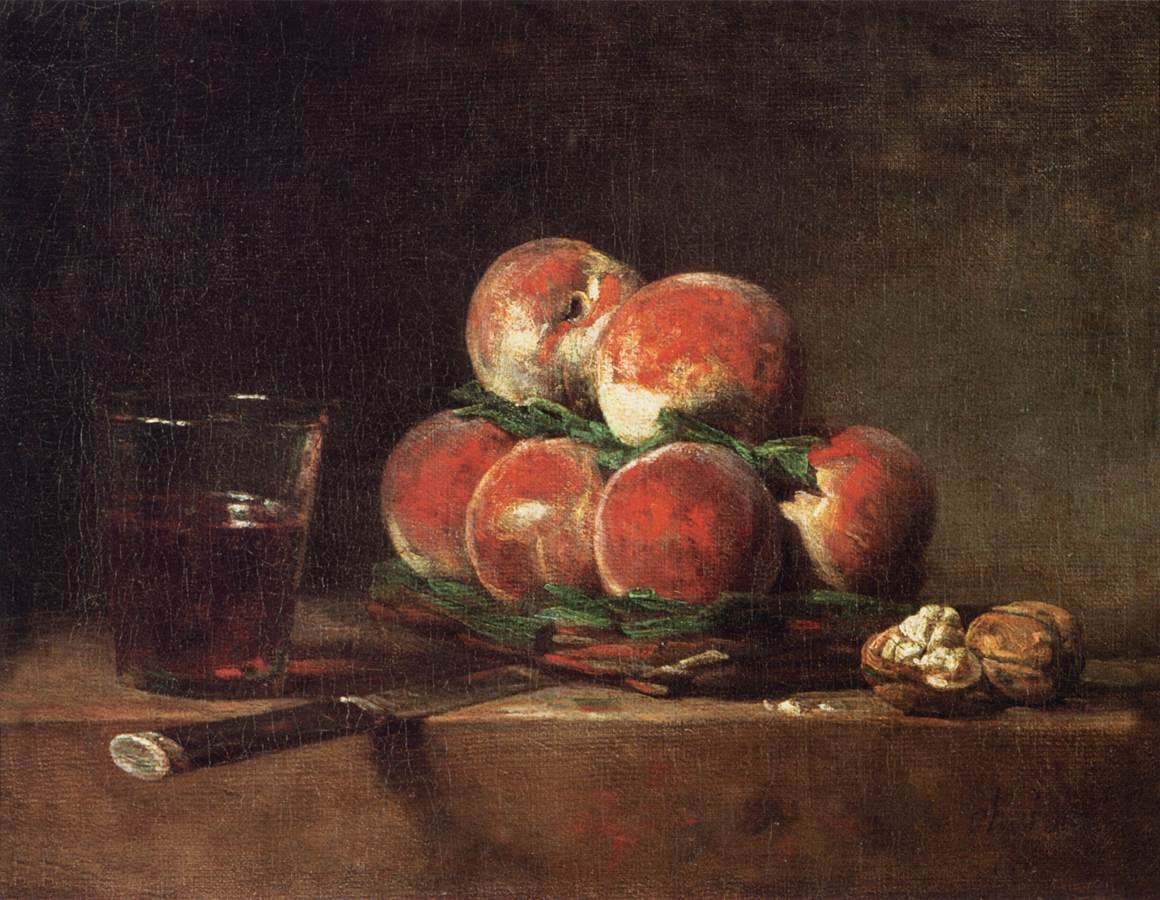
Nobody painted the fuzz of a peach or the bloom on a plum with a softer hand. Chardin worked with dry, grainy touches that blur at exactly the distance your eye expects fruit skin to blur.
Diderot, reviewing him in the 1760s, wrote that one felt like reaching into the picture for the food.
Courbet, The Wave (c. 1870): the knife that ploughs
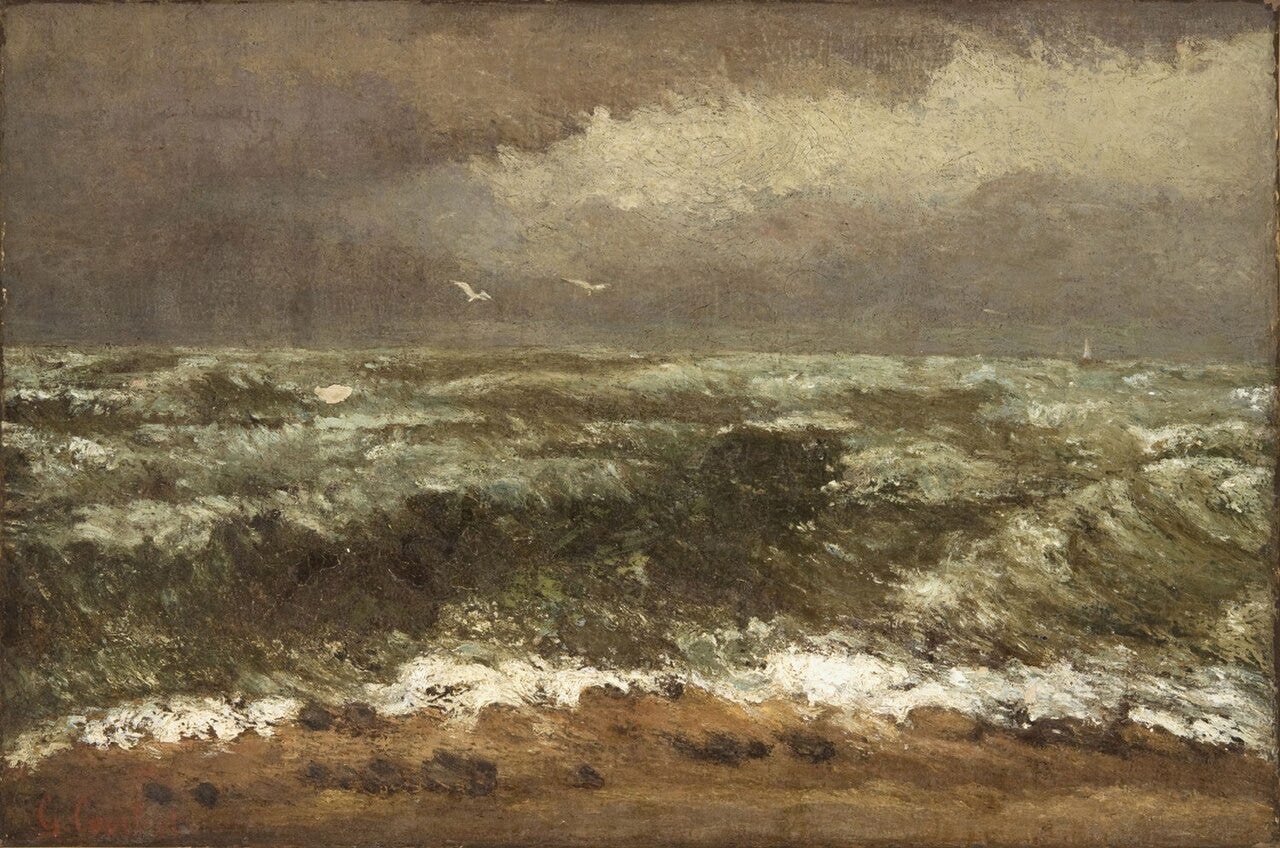
The foam is slabs of white driven on with a palette knife, the rock almost gravel. Courbet painted the sea like a laborer, and critics sneered that he worked with a trowel. He took it as a compliment.
Rubens, The Three Graces (1630-1635): pearly flesh
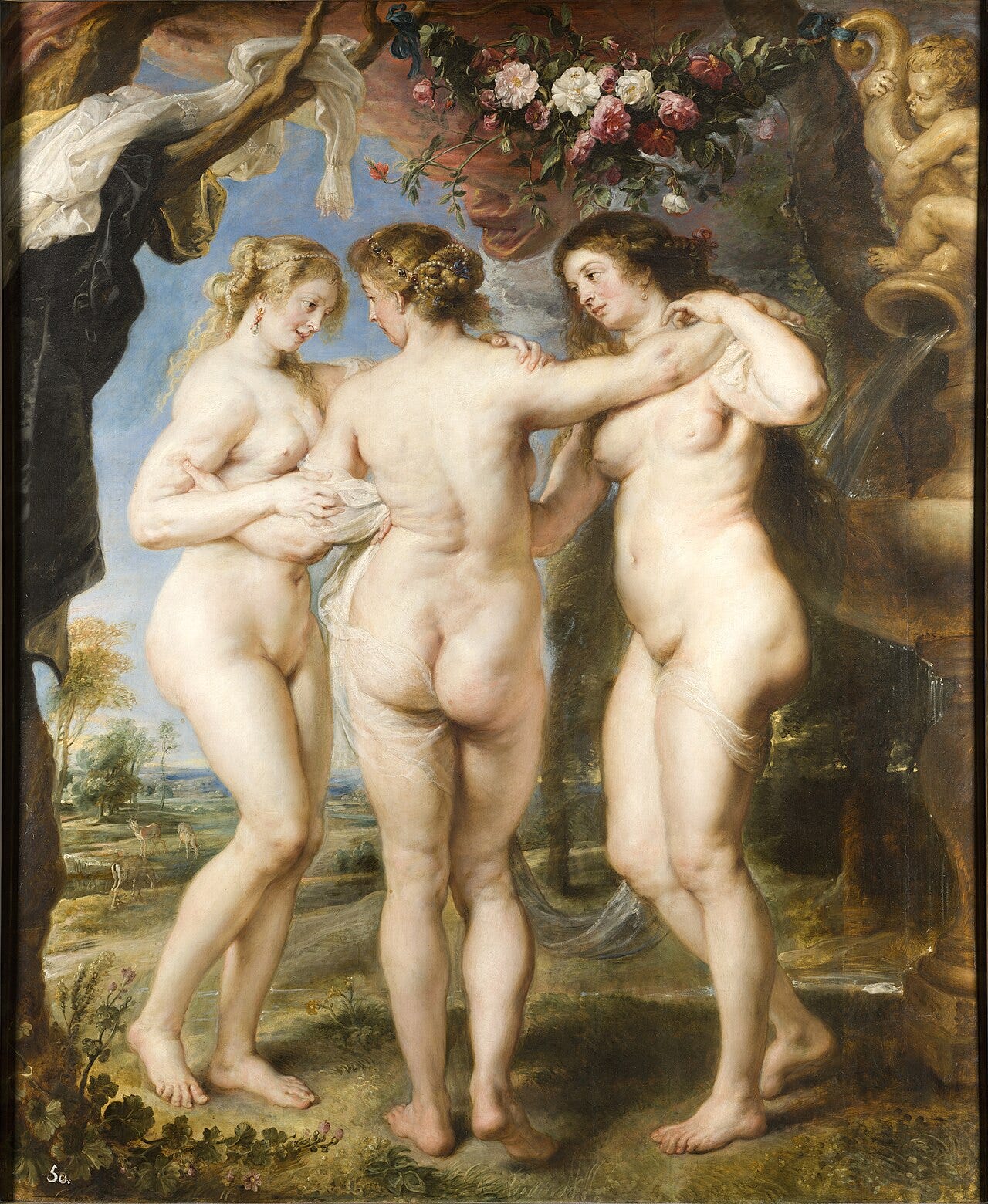
Skin in thin, translucent layers: cool underlayers glowing through warm ones, so the flesh seems lit from inside. Rubens kept the paint smooth and let the layering fake the texture of a living body.
The Grace on the left carries the features of his young second wife, Hélène, and Rubens kept the picture at home until he died.
Van Eyck, The Arnolfini Portrait (1434): every fiber counted
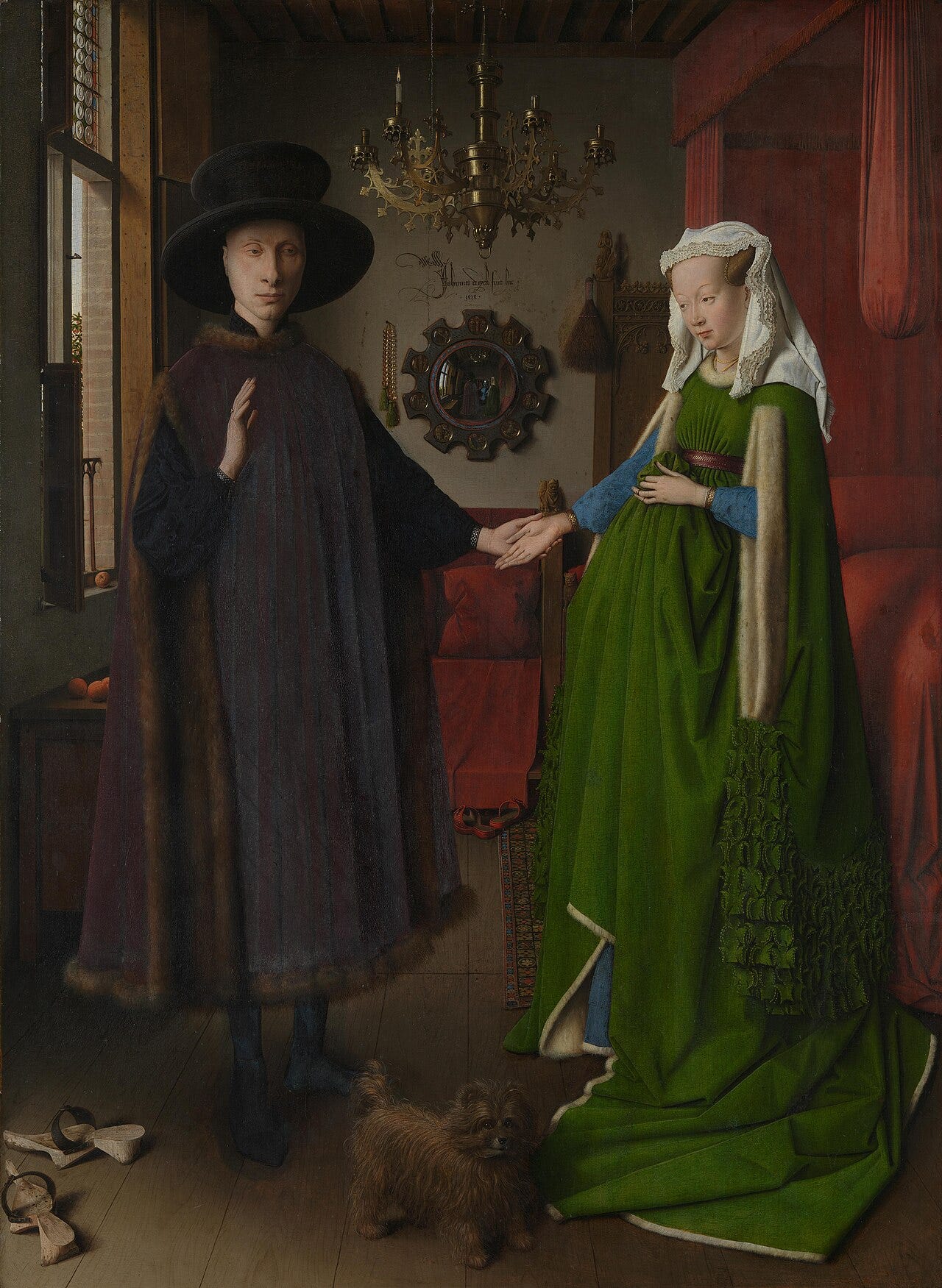
The fur is painted hair by hair, the brass chandelier gleams metal-cold, and the convex mirror at the back reflects the whole room in a circle smaller than your palm. Van Eyck pushed implied texture to the edge of sorcery, in oil glazes thinner than tissue.
Dürer, Young Hare (1502): fur, one stroke at a time
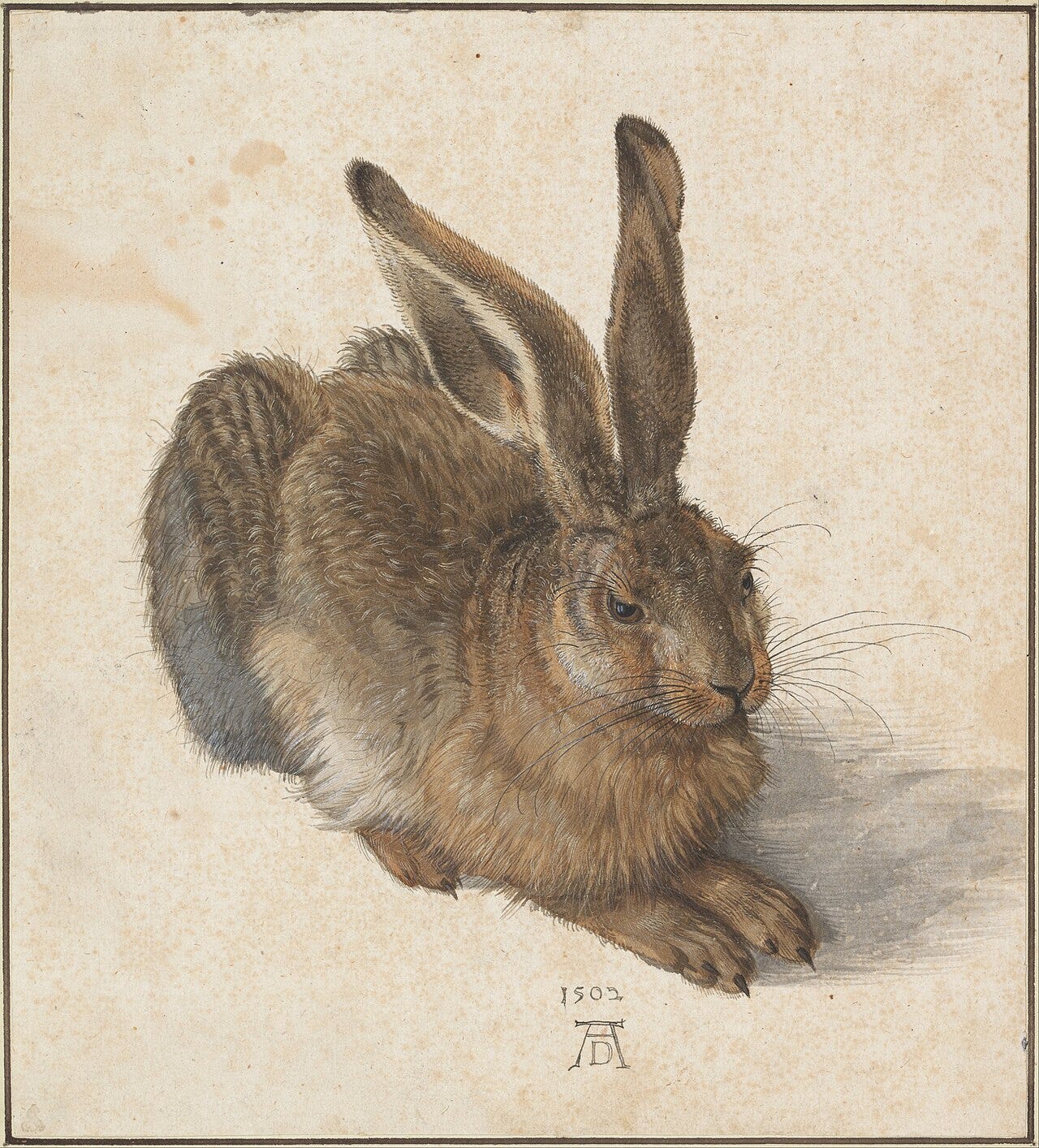
A watercolor of a hare so tactile that five centuries of viewers have wanted to pet it: soft belly, wiry ears, whiskers flicked in single hairs. Dürer built the illusion stroke by stroke over a soft wash base.
It is so fragile that the Albertina in Vienna shows the original only rarely, for conservation. Most visitors, most years, see a facsimile.
A word on the moderns: Tàpies
In the twentieth century, real texture took over: Antoni Tàpies mixed marble dust, sand, and earth into his surfaces until the painting became a wall you read with your eyes and could scratch with a nail.
The two families of texture ended up trading places: the illusionists ruled the old centuries, the materialists the new one.
You Might Also Like


Texture is one of eight elements that give a work its surface. See how it connects to the rest in the elements and principles of art guide. It connects closely to form in art.
Quick answers
What is texture in art? The surface quality of a work, either physically real (raised paint, gold leaf, added materials) or implied (a flat illusion of silk, fur, or skin).
What is the difference between real and implied texture? Real texture you could feel with your fingertips. Implied texture is painted illusion: the surface stays flat and your eye does the touching.
What is impasto? Paint applied thickly enough to stand in relief and hold the mark of the brush or knife. Van Gogh's Sunflowers is the textbook case.
How do artists create texture? For real texture: thick paint, palette knives, leaf, or added materials like sand. For implied texture: fine layered strokes, glazes, and careful control of how edges blur.
Where to see these works
A version of the Sunflowers hangs in the National Gallery in London, near the Arnolfini Portrait and Rembrandt's final self-portrait; the Two Circles hangs at Kenwood House across town. The Milkmaid is in the Rijksmuseum, The Kiss at the Belvedere in Vienna.
Chardin is best at the Louvre, Courbet's waves are in the Musée d'Orsay and Berlin's Alte Nationalgalerie among others, The Three Graces is in the Prado, and the Young Hare belongs to the Albertina in Vienna.
One last fact
Conservators studying Van Gogh's impasto found grains of sand embedded in paintings from Arles. The mistral wind salted his wet canvases as he worked outdoors: some of the texture in Van Gogh is, literally, Provence.