
Black looks like the simplest color a painter can reach for, and it is one of the hardest to handle well. These twelve paintings show how it was done, from a London critic in 1885 who counted four blacks in a single portrait to a dark square canvas so fragile that only the man who painted it could repair it.
Cool Stories About Art is a newsletter to learn art the fun way.
Join 200,000+ readers and get:
10 new art stories / month
The entire archive of content (140+ articles)
Comment, ask questions, and chat with other readers
How These Were Chosen
A painter's black is almost always burnt matter: charred bone, the soot of burning oil, charred twigs. Laid on pure, it can look flat and dead, because the eye reads black where a surface sends back almost no light.
So the best painters rarely settle for one black. They tint it, thin it or set several side by side, and they use it to make a white collar or a pale face look brighter. For centuries it was also the color of expensive cloth.
Each painting here earns its place because its black does a job that can be pointed to on the canvas: it carries a costly fashion, replaces a setting, builds an illusion, or lets a dark gray pass for white.
12. Frans Hals, Regentesses of the Old Men's Almshouse (about 1664)
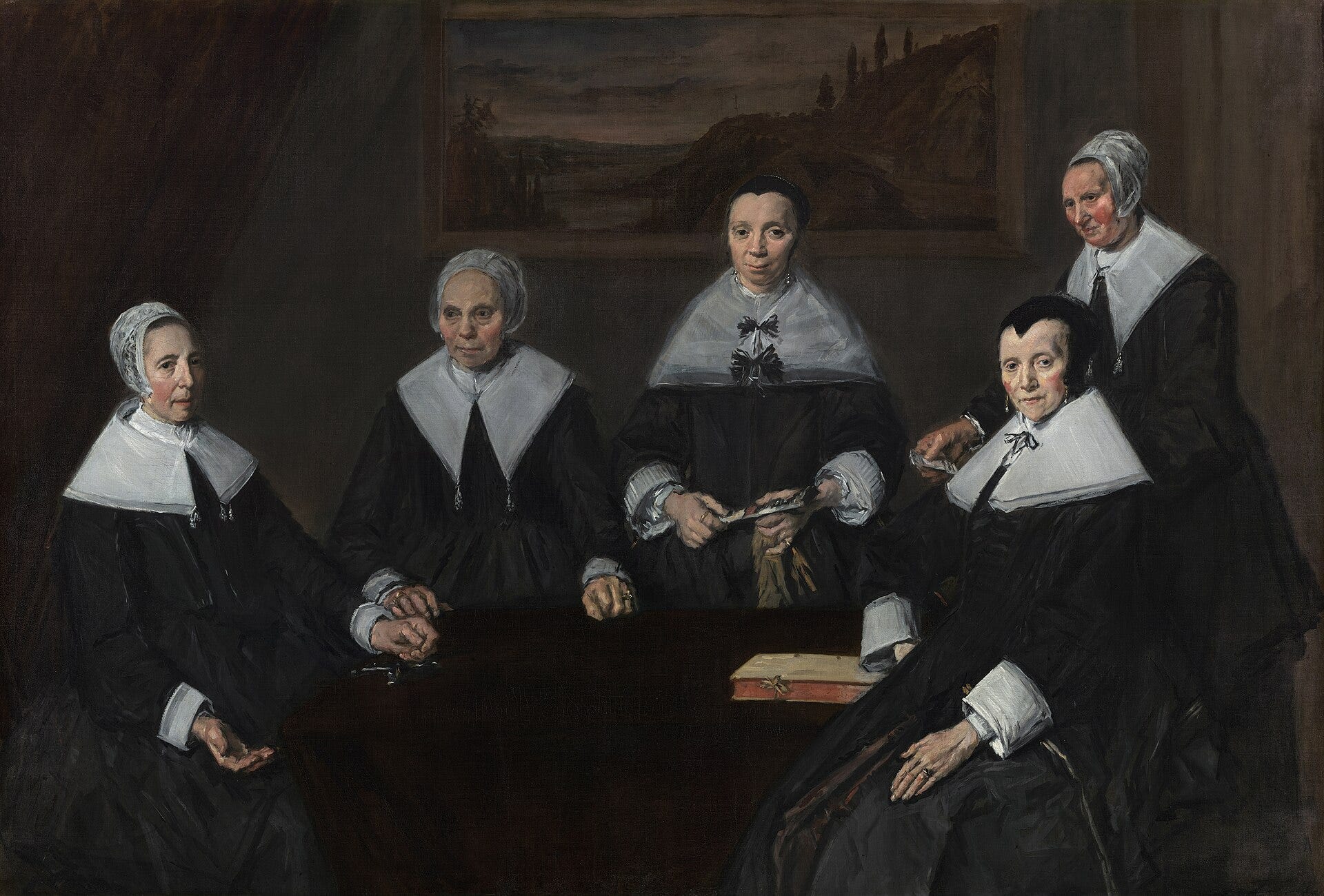
Five women dressed in black fill the canvas, four of them seated at a table under a cloth nearly as dark as their gowns. The only breaks in all that black are collars, cuffs and caps, painted as broad, flat bands of white linen.
The women ran a charity. Frans Hals painted them in Haarlem about 1664, when he was around eighty, and the four at the table governed the town's almshouse for old men. The one standing behind them, the house mother, ran its daily life. The picture belongs to his late manner, deep blacks set against silvery whites with very few colors in between.
More than two centuries later, those blacks settled an argument between two brothers. Theo van Gogh, an art dealer in Paris, had passed on the advice that a modern painter should not use black at all.
Vincent answered him in October 1885 from Nuenen, the Dutch village where he was then living. He asked whether black and white were forbidden fruit, decided they were not, and wrote that Frans Hals must have had 27 blacks.
The regentesses prove him right. The woman on the far left wears a cool black streaked with gray along her sleeve, while the cloth under her hands is a warmer, browner black. Where the two meet, a couple of Vincent's 27 can be told apart.
At a Glance
Artist: Frans Hals (1582 or 1583 to 1666)
Painted: About 1664
Medium: Oil on canvas
Size: 170.5 × 249.5 cm (67.1 × 98.2 in)
Where to see it: Frans Hals Museum, Haarlem
11. John Singer Sargent, Madame X (1883 to 1884)
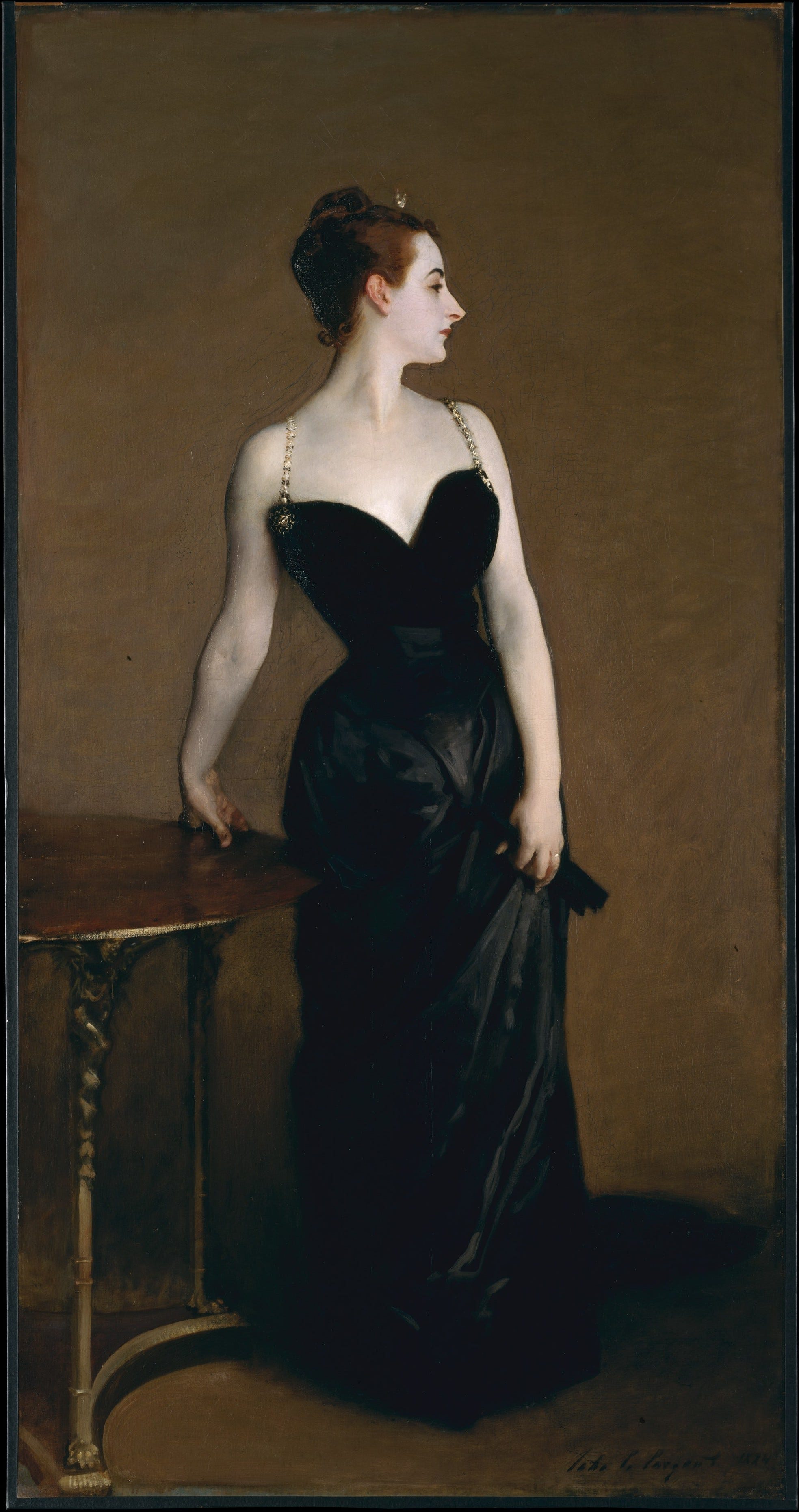
A young woman in a black evening dress rests one hand on a small mahogany table, her powdered skin almost white against the dark cloth. John Singer Sargent, an American building a career as a portraitist in Paris, worked on the picture in 1883 and 1884.
His sitter was Virginie Gautreau, a Paris society beauty married to a banker, and he expected her portrait to make his name at the Salon of 1884. He would later call what happened there "the Gautreau disaster."