The Fighting Temeraire: Meaning and the Facts Turner Changed
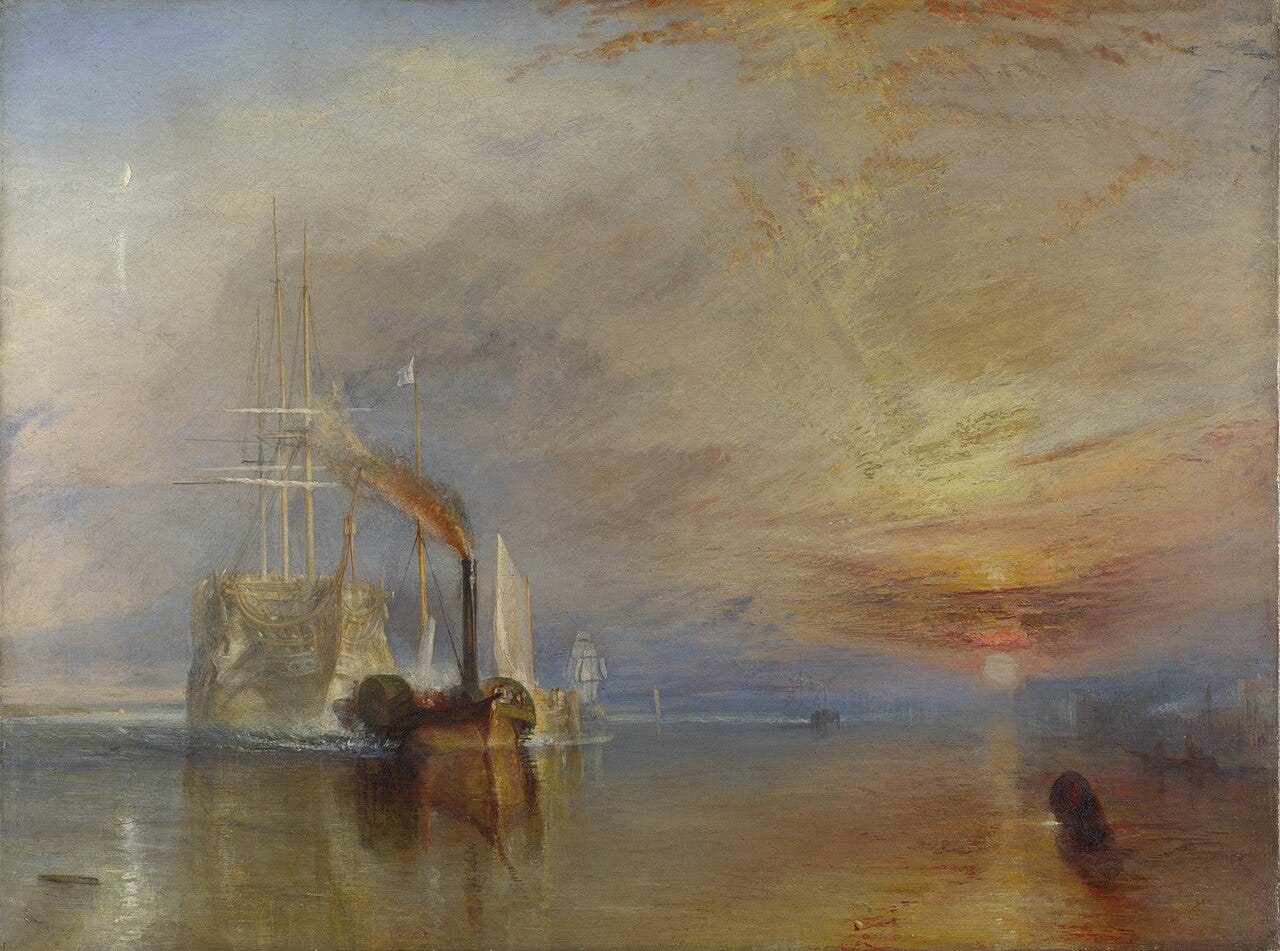
The Fighting Temeraire is an 1838 painting by J.M.W. Turner, in the National Gallery in London. A ghostly white warship, a hero of Trafalgar, is towed by a small black steam tug to the yard where it will be scrapped.
It is a picture about the death of the age of sail, and Turner rigged the facts to make it hurt more.
Britain voted it the greatest painting in any British gallery, and it now rides on the twenty pound note. Here is the real story, the liberties Turner took, and why he refused to sell it.
An old warrior towed to her death
The full title says it all: The Fighting Temeraire Tugged to her Last Berth to be Broken Up. The Temeraire was a ninety eight gun ship of the line that had fought with distinction at Trafalgar in 1805, helping save Nelson's flagship.
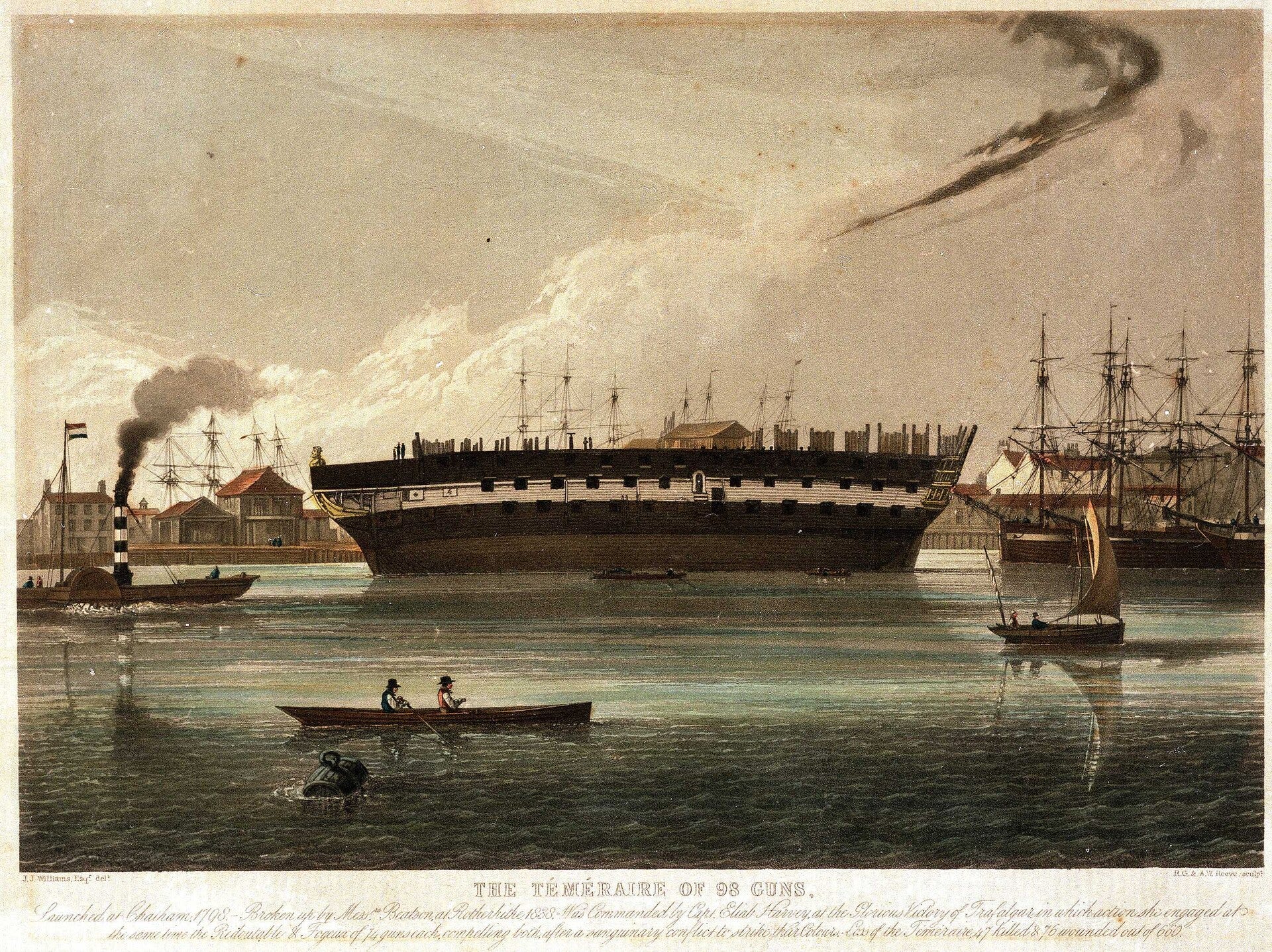
By 1838 she was obsolete, sold off, and being hauled up the Thames to a breaker's yard at Rotherhithe.
Turner paints her pale and tall, almost translucent, a phantom of the wooden navy that had ruled the seas. Dragging her is a squat little steam tug, dark and hard edged, belching fire and smoke.
The old world is being pulled to its grave by the new one, and the whole nineteenth century is in that contrast.
The facts Turner quietly changed
Almost nothing in the scene is accurate, and that is the genius of it. The real Temeraire had already been stripped of her masts and rigging before the tow; she was a bare hulk. Turner gave her back her masts so she could stand tall like a ghost.
There were two tugs, not one, on the real day. He cut it to a single black boat for a cleaner duel. And the sunset: the Temeraire was being towed west up the Thames, so the sun would really have set ahead of her, in the direction she was heading.
Turner swung it round to blaze low and red behind the ship instead, because a setting sun over a dying warship is a better ending than an accurate compass.
He was painting an elegy, not a photograph.
The darling he would not sell
Turner knew exactly what he had made. He called the painting his darling and refused every offer for it, keeping it for the rest of his life. When he died in 1851 he left it to the nation, and it has hung in the National Gallery in London ever since.
The critics agreed with him. The picture rescued Turner's standing at a moment when the press had turned on his looser late style, and the poet William Makepeace Thackeray wrote about it with open emotion.
It became, and stayed, the painting the British public loved most.
Sail against steam, sun against moon
The picture is built on pairs. The pale ship against the black tug. Warm sunset on the right against a cool new moon rising on the left. The past on one side of the canvas and the future on the other, the exact moment the balance tips.
Turner had watched steam replace sail across his own lifetime, and he did not pretend to be neutral about it. The Romantic in him mourned the tall ships even as the landscape painter in him could not look away from the raw power of the machine.
The painting holds both feelings at once, which is why, to me, it has never stopped moving people.
In the National Gallery, and on the banknote
The Fighting Temeraire is in the National Gallery in London, part of the Turner Bequest, and it is not for sale. In 2005 a BBC poll named it the greatest painting in any British gallery, ahead of Constable's Hay Wain and Van Eyck's Arnolfini Portrait.
And in 2020 the Bank of England put Turner and this ship on the new twenty pound note, so a hundred million people now carry the sunset over the Temeraire in their pockets without knowing the ship's name.
What the real ship did at Trafalgar
The Temeraire earned her fighting name in one afternoon. At the battle of Trafalgar in 1805 she came to the rescue of Nelson's Victory, then found herself lashed between two French warships at once and forced both to surrender, a feat that made her a household name across Britain.
By 1838 that hero was a rotting hulk the navy had no use for, sold to a breaker and hauled up the Thames to be taken apart. Turner painted the gap between the two facts, the glory and the scrapyard, which is why the picture aches even if you know nothing of the battle.
The turn in Turner's own painting
The Fighting Temeraire also marks a turn in Turner himself. He was moving away from solid, describable scenes toward pictures made almost entirely of light, air and color, canvases his critics complained were dissolving into nothing.
Here the ship is still sharp, but the sky and water are already melting into pure atmosphere.
The critic John Ruskin, Turner's devoted champion, held him up as the greatest landscape painter who ever lived, and Turner left this canvas and hundreds of others to the nation in what became the Turner Bequest, which is one reason it has never been for sale.
The Fighting Temeraire, quick answers
What does The Fighting Temeraire mean? It marks the end of the age of sail. A ghostly old warship from Trafalgar is towed by a steam tug to be scrapped, the past pulled to its grave by the future.
What was the real Temeraire? A ninety eight gun British warship that fought at the Battle of Trafalgar in 1805. By 1838 it was obsolete and sold for scrap.
Is the painting accurate? No. Turner restored the ship's masts, cut two tugs to one, and put the sunset in the wrong part of the sky, all for emotional effect.
Who painted it and when? J.M.W. Turner, in 1838, shown in 1839.
Where is The Fighting Temeraire? The National Gallery in London. It also appears on the British twenty pound note.
If this painting pulled you in, you will love these too:
The darker truth about Gauguin, the part of the Tahiti story that never makes the wall label
Vermeer, Woman Holding a Balance, what is actually on those scales
Inside Monet house at Giverny, room by room, including his own bedroom
The ship that outlived itself
The real Temeraire was broken up in 1838 and sold for timber; some of her oak was made into furniture and church fittings that still exist.
The wooden ship is long gone. The painted one has become an icon on a banknote and the winner of a national vote. Turner changed almost every fact about that afternoon, and by doing so he kept the Temeraire more alive than any accurate record ever could.
You can see The Fighting Temeraire in person at the National Gallery in London. For more by the artist, browse the Metropolitan Museum collection.
The Fighting Temeraire, your questions
What does the painting show? An old wooden warship, the Temeraire, being towed up the Thames by a small steam tug to be broken up for scrap. Turner painted it in 1839.
What does it mean? It marks the end of the age of sail and the rise of steam. The glowing sunset behind the ghostly ship reads as a farewell.
Is the scene accurate? Not exactly. By the time she was towed, the ship had already lost her masts, so the tall rigging Turner shows is his own poetic touch.
Where is The Fighting Temeraire? It hangs in the National Gallery in London and was once voted Britain greatest painting.
Who painted it? Joseph Mallord William Turner, a giant of British Romanticism.