
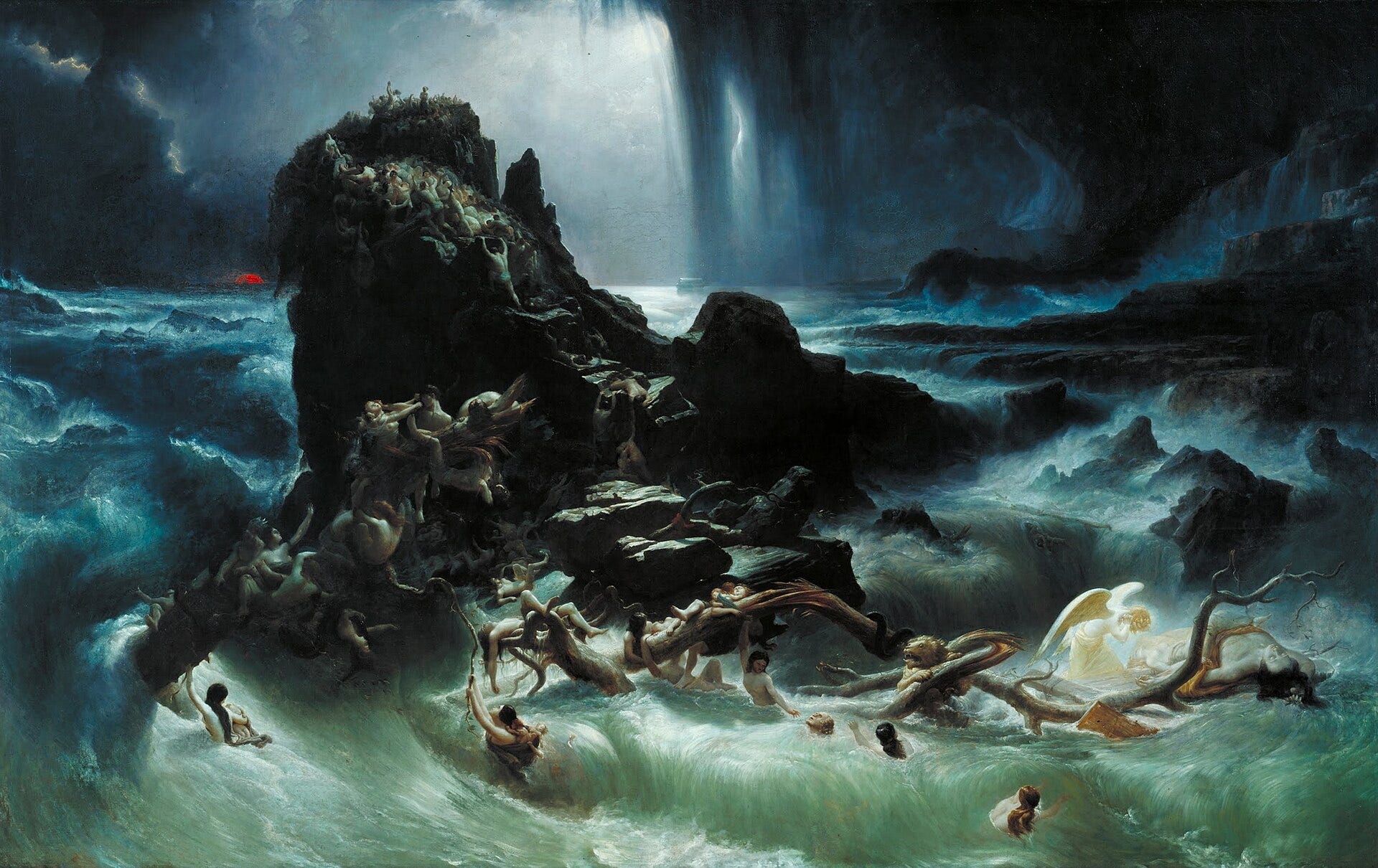
Genesis tells the Flood almost like a ship's log: forty days of rain, water over the highest mountains, a hundred and fifty days before it starts to fall. Of the drowned world itself, the text shows nothing. Painters had to invent it, and over four centuries they shrank the boat and gave the space to people, sky and light.
Cool Stories About Art is a newsletter to learn art the fun way.
Join 200,000+ readers and get:
10 new art stories / month
The entire archive of content (140+ articles)
Comment, ask questions, and chat with other readers
What the Flood Asked of Painters
In Genesis, God sends the Flood to wipe out a corrupt world. Only Noah, his family and the animals in the ark are spared. The water covers the earth for a hundred and fifty days, a dove returns with an olive leaf, and a rainbow seals God's promise that no flood will ever destroy the earth again.
Everything else is left to the painter: the storm, the crowds outside the ark, the light of the first dry morning. That freedom let artists paint bodies straining against the water, then skies and seas on a vast scale. For me, the story comes most alive in the people the text never mentions.
The twelve works chosen here run from the early 1500s to 1920, and all of them take up the Flood of Genesis, even the one whose painter refused that name. In most of them the ark is a small shape on the horizon, and in a few it has disappeared.
12. Winifred Knights, The Deluge (1920)
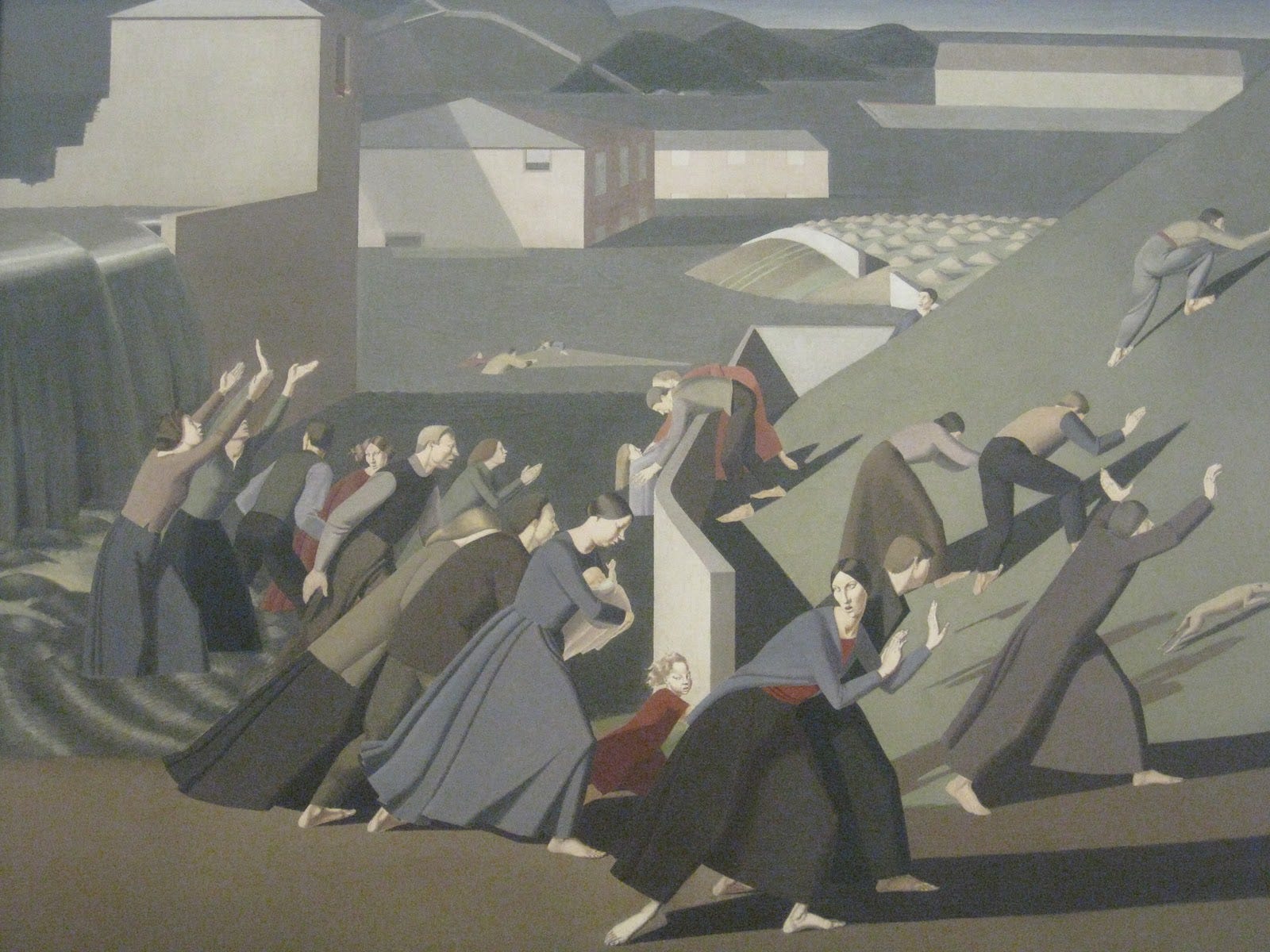
Near the center of The Deluge, a woman in red climbs a green slope at a run, and a whole crowd in the plain clothes of 1920 climbs with her. Behind them, water bursts out of a broken tower. Winifred Knights painted the picture that year, while still a student at the Slade School of Art in London, and it barely resembles a Bible scene.
She painted it for a competition. The British School at Rome offered a scholarship in decorative painting, known as the Rome Prize, and that year every finalist had to treat one set subject: Noah's ark. Knights was the only woman among the four finalists. Each received a studio six days a week, six pounds for models and eight weeks to deliver a canvas five feet by six, with a preparatory drawing.
Her first idea followed the expected scene, with Noah and the animals waiting calmly to go aboard. She abandoned it and painted people in flight. Water rushes in on the left, and the crowd heads for higher ground. Among the runners she placed herself twice, and she lent her mother's face to another woman and a painter friend's face to a man seen in profile.
The jury gave her the prize. She heard the news on September 21, 1920, on vacation in Ludlow, and the Daily Graphic ran it on its front page under the headline Girl Artist Remodels the Flood! Henry Tonks, who taught her at the Slade, said he knew no better treatment of the subject.
What she remodeled shows at once. The ark, the one safe place in the story, is a pale block on the far right, which a critic of the day likened to concrete architecture. The crowd pays it no attention and keeps climbing the green slope.
At a Glance
Artist: Winifred Knights (1899 to 1947)
Painted: 1920
Medium: Oil on canvas
Size: 152.9 × 183.5 cm (60.2 × 72.2 in)
Where to see it: Tate, London
11. Leonardo da Vinci, A Deluge (about 1517 to 1518)
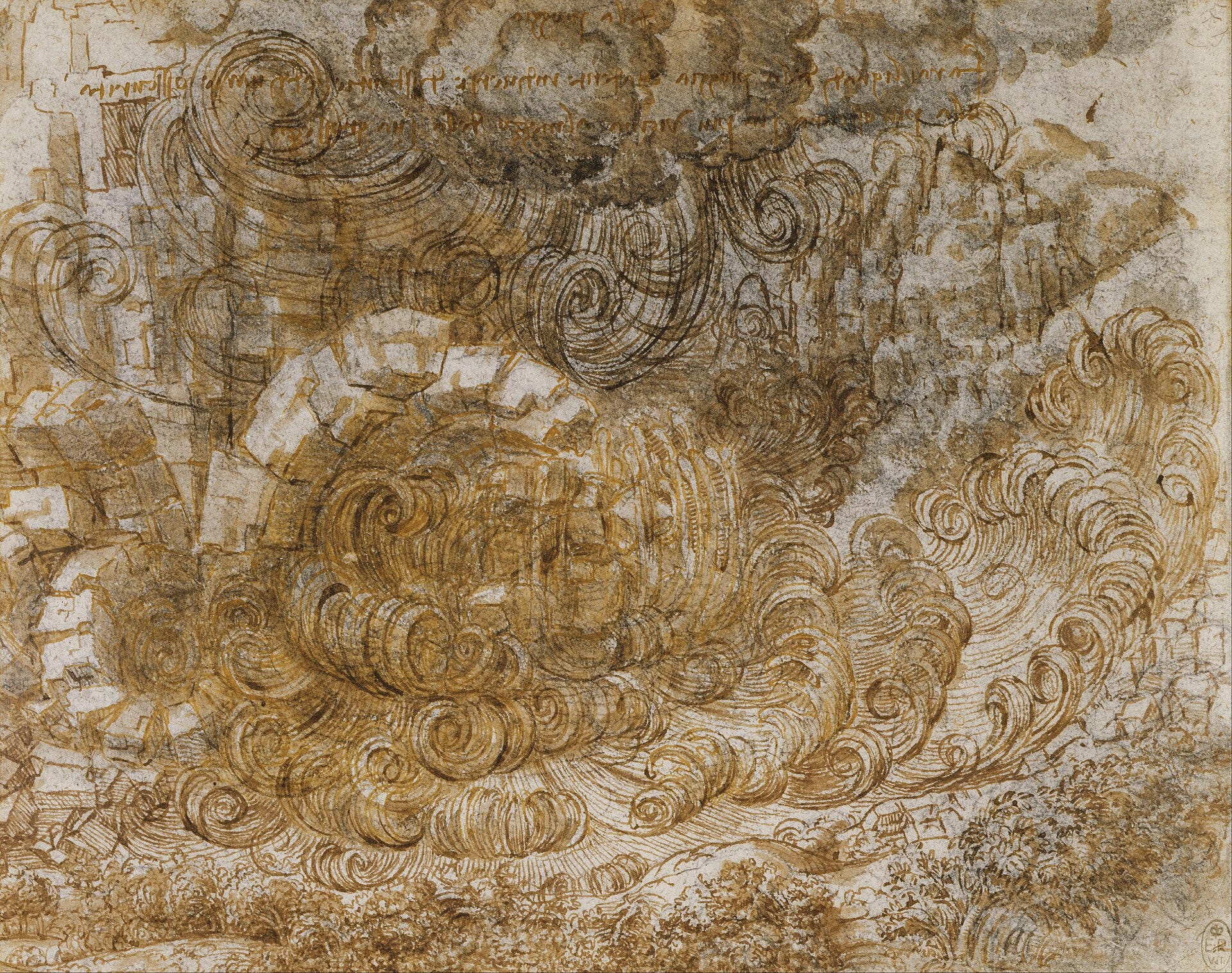
In his last years, Leonardo da Vinci had no painting left to deliver. He lived in France, at a court that kept him in comfort, under a patron who admired him. With no commission to finish, he began to draw a storm that swallows the world, and he kept returning to it, sheet after sheet.