
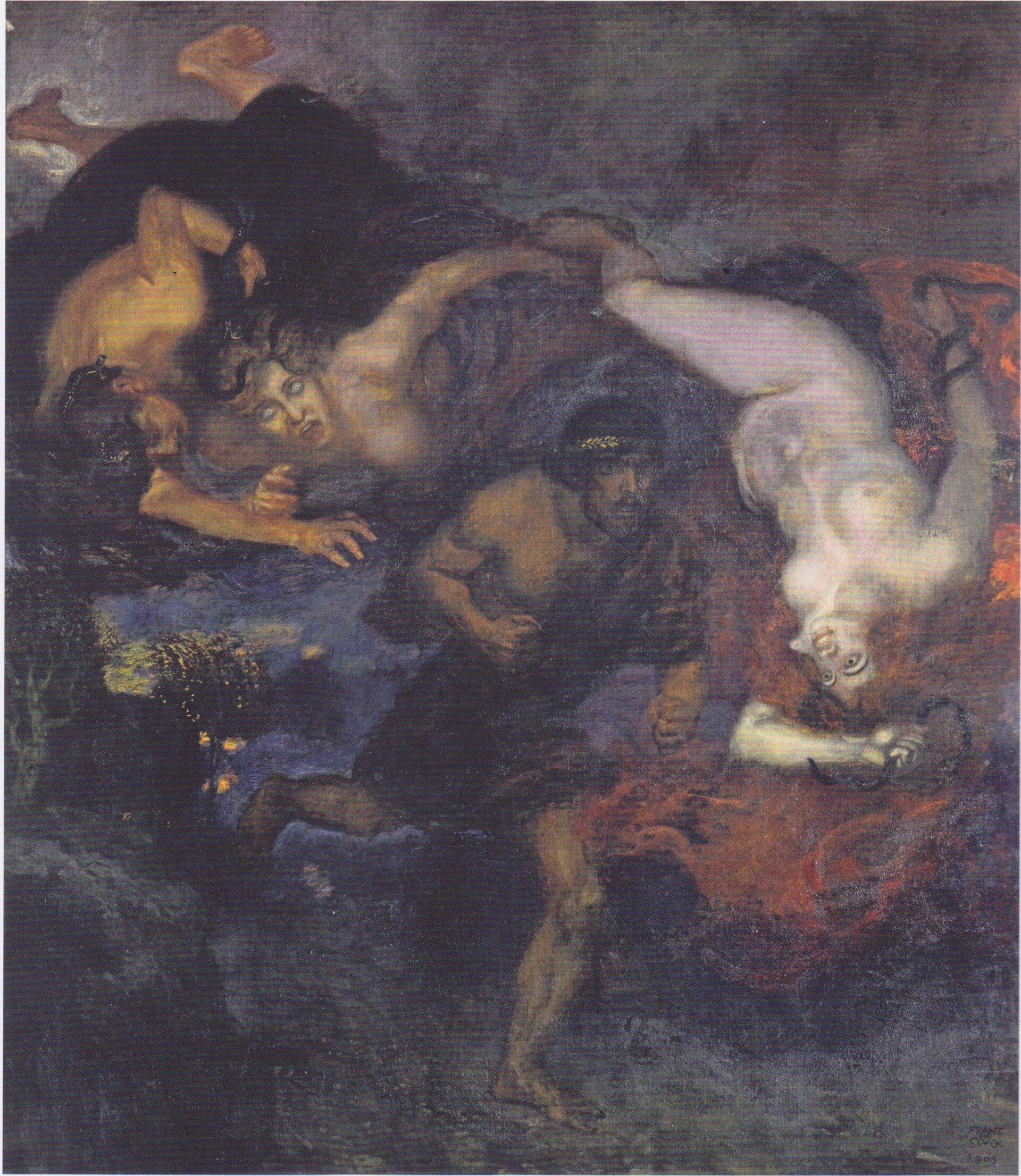
The Furies were Greek goddesses with one task: they hunted anyone who had killed a member of their own family. Their most famous quarry, Orestes, killed his mother to avenge his father. Artists followed that chase for some twenty-three centuries, from wine bowls in southern Italy to the ceiling of a Boston museum, which was installed after the artist who made it had died.
Cool Stories About Art is a newsletter to learn art the fun way.
Join 200,000+ readers and get:
10 new art stories / month
The entire archive of content (140+ articles)
Comment, ask questions, and chat with other readers
Who the Furies Were, and What Artists Chose
According to the poet Hesiod, the Furies were born from the Earth in the first generations of gods, before Zeus himself. Later writers name three of them, Alecto, Tisiphone and Megaera, and artists usually gave them snakes for hair.
Their best known story comes from Aeschylus. In his plays, staged in Athens in 458 BC, they hound Orestes until a court acquits him and Athena makes them protectors of the city, the Kindly Ones. Artists rarely painted that ending. Most chose the chase, a few the moment the dead mother wakes the sleeping Furies.
Every work chosen here comes from the Furies' story. Nine stay with Orestes and the plays about him. One swaps him for a nameless murderer. Two take the Furies elsewhere, into a poem about hell and into a picture about the law.
12. Gustav Klimt, Jurisprudence (1903 to 1907)
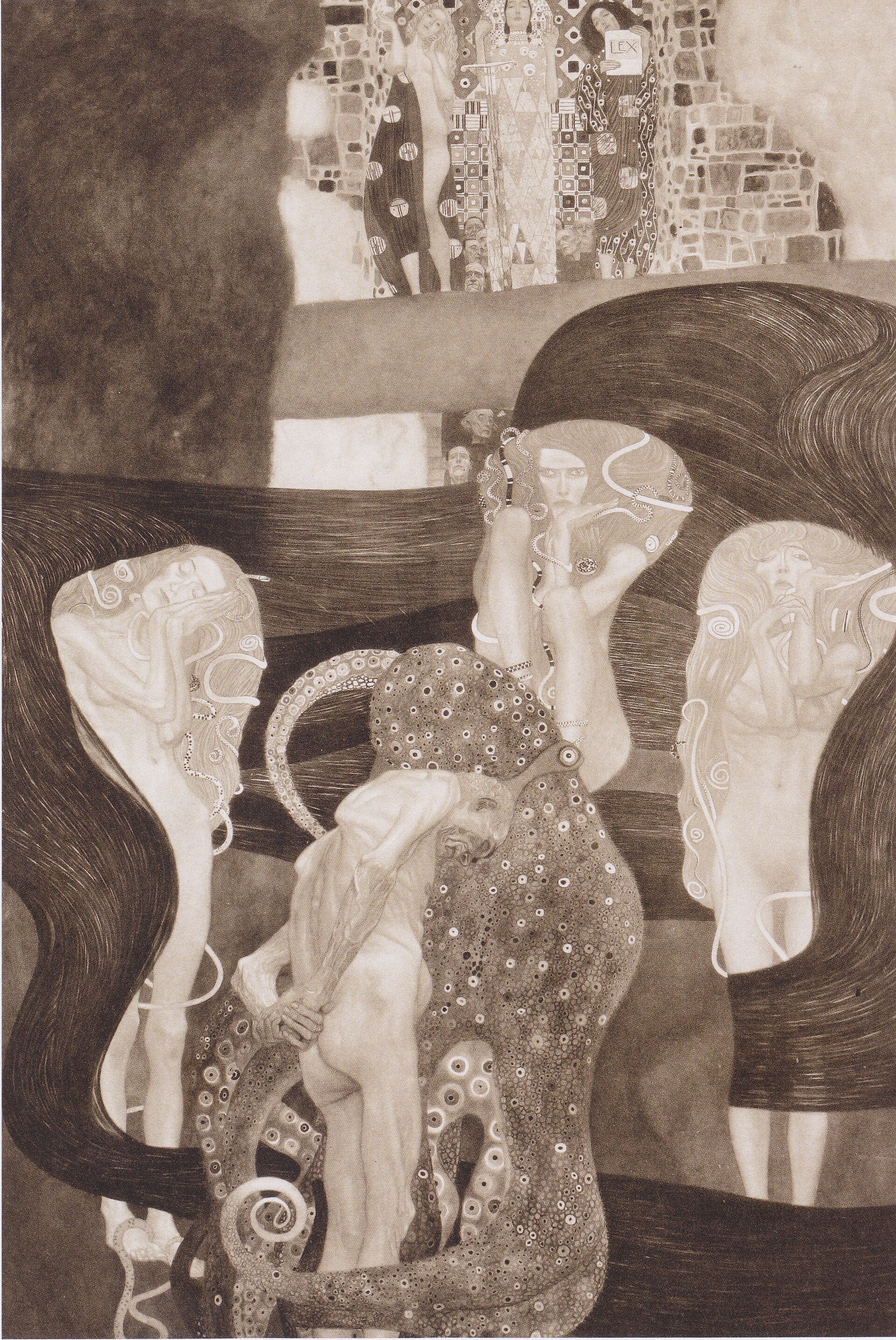
At the bottom of this picture, an old man stands naked with his head bowed, wrapped in the tentacles of a huge octopus. Three naked women with long hair surround him, one with snakes in her hair. Far above, in a band of gold mosaic, three small figures stand apart, one of them holding a tablet marked LEX, Latin for law.
The picture is called Jurisprudence, and it was made for a ceiling. In 1894, the Austrian ministry of education commissioned paintings to decorate the University of Vienna's great hall, one for each faculty, and Gustav Klimt was given three of them: Philosophy, Medicine and Jurisprudence.
The first two had already caused an uproar when Klimt showed them, from 1901 on. Jurisprudence followed in 1903. Critics read the three women around the old man as the Furies, and the small figures at the top as Truth, Justice and the Law.
That reading explains the scandal. Where the state expected a celebration of its courts, the judges the title seemed to promise had been pushed to the upper edge, and the center belonged to a condemned man and the goddesses of revenge.
The quarrel did not stop there. In 1905, Klimt refused any further help from the state and paid back the money he had received. He kept reworking the picture until 1907. In May 1945, it burned with the two others at Schloss Immendorf, a castle in Lower Austria where they had been stored during the war.
Black and white photographs are all that remain, and they still show the distance Klimt built into the picture. Truth, Justice and the Law stand calm and far away, while the Furies are close enough to touch the old man.
At a Glance
Artist: Gustav Klimt (1862 to 1918)
Painted: 1903 to 1907
Medium: Oil on canvas
Size: Not published
Where to see it: Destroyed by fire at Schloss Immendorf, Lower Austria, in 1945, and known only from photographs
11. John Downman, The Ghost of Clytemnestra Awakening the Furies (1781)
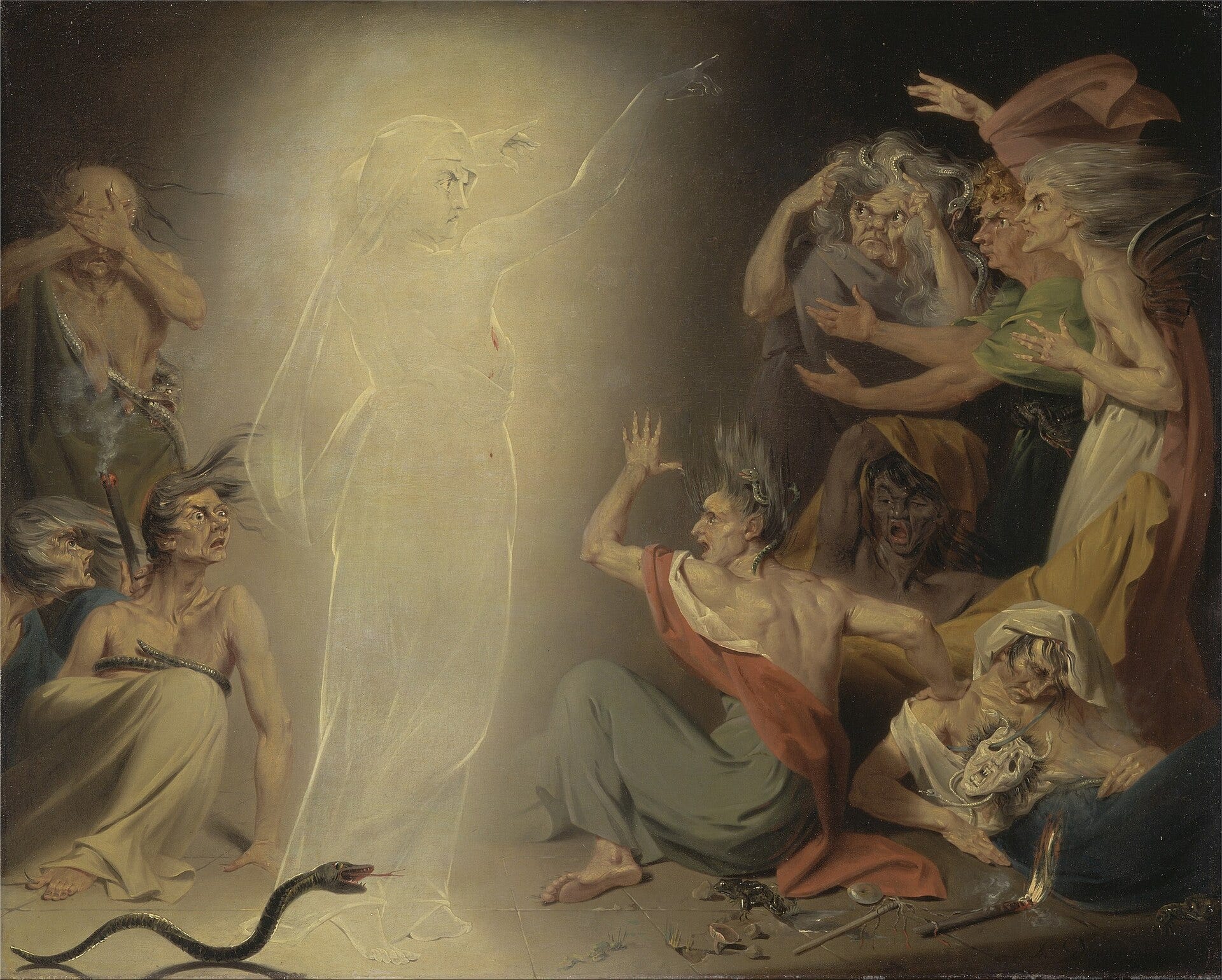
In a dark temple, figures with snakes in their hair start out of sleep. One hides her face in her hands, another throws up her arms. Between them stands a pale woman in white, lit as if from inside, one arm stretched out. She is dead, and she has come back to wake them, because the man they were sent to hunt is getting away.