

170 000+ readers. Learn art the fun way.
This is a preview. Paid subscribers get the full story.
You’ll also get:
10 new stories every month
The full archive (130+ Art stories)
Your personal art guide. Comment, ask questions, DM me anytime
iPhone user? Subscribe at coolstoriesabout.art, not via the app. Apple adds 30% to the price.
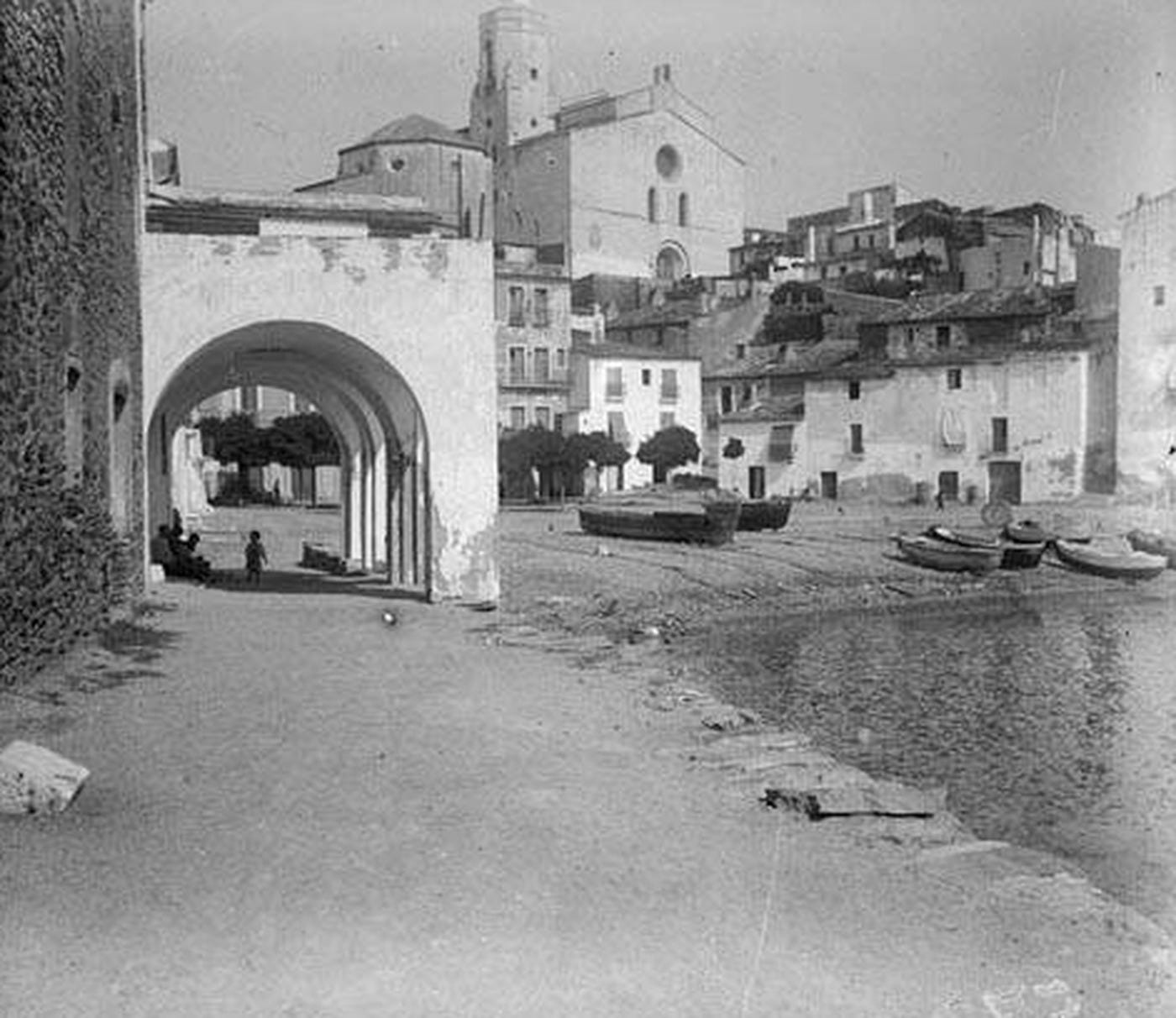
Cadaqués, July 1929. The sun is not up yet. A 25 year old man walks down the dirt path to the beach, a towel rolled up under his arm.
Down below, the beach is empty. He sets the towel down, undresses and walks into the water.
He swims straight out, then comes back and gets dressed before the village wakes.
The local boys know how to make him scream. All it takes is a grasshopper slipped down his collar, and he tears off his shirt and runs.
He climbs back up to his father's house, set apart from the village, right on the water. He goes upstairs to paint.
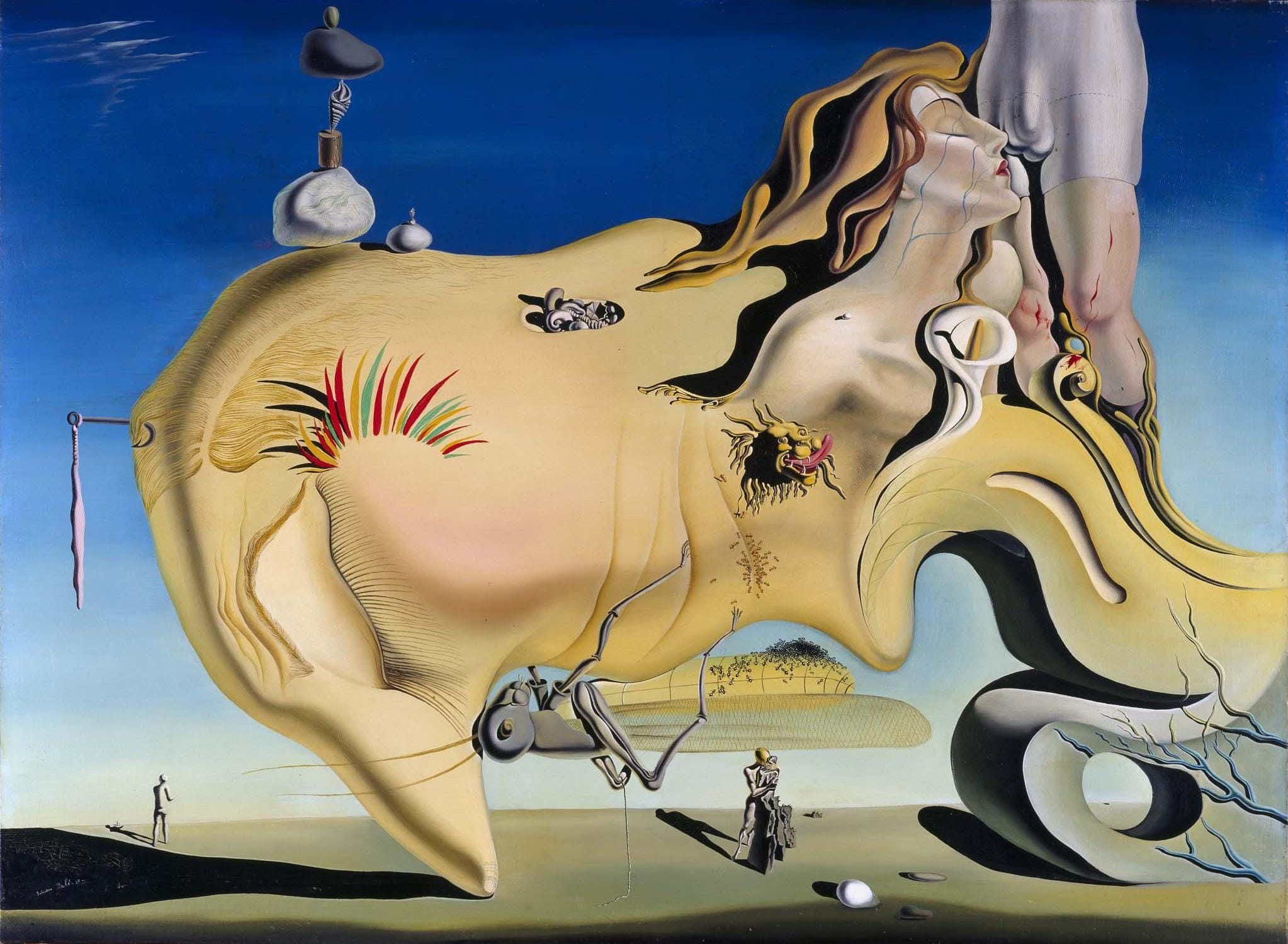
Since spring, the same shape keeps turning up on every canvas. A big yellow head, lying on its nose, its lashes enormous, its one eye closed.
Where the mouth should be, nothing.
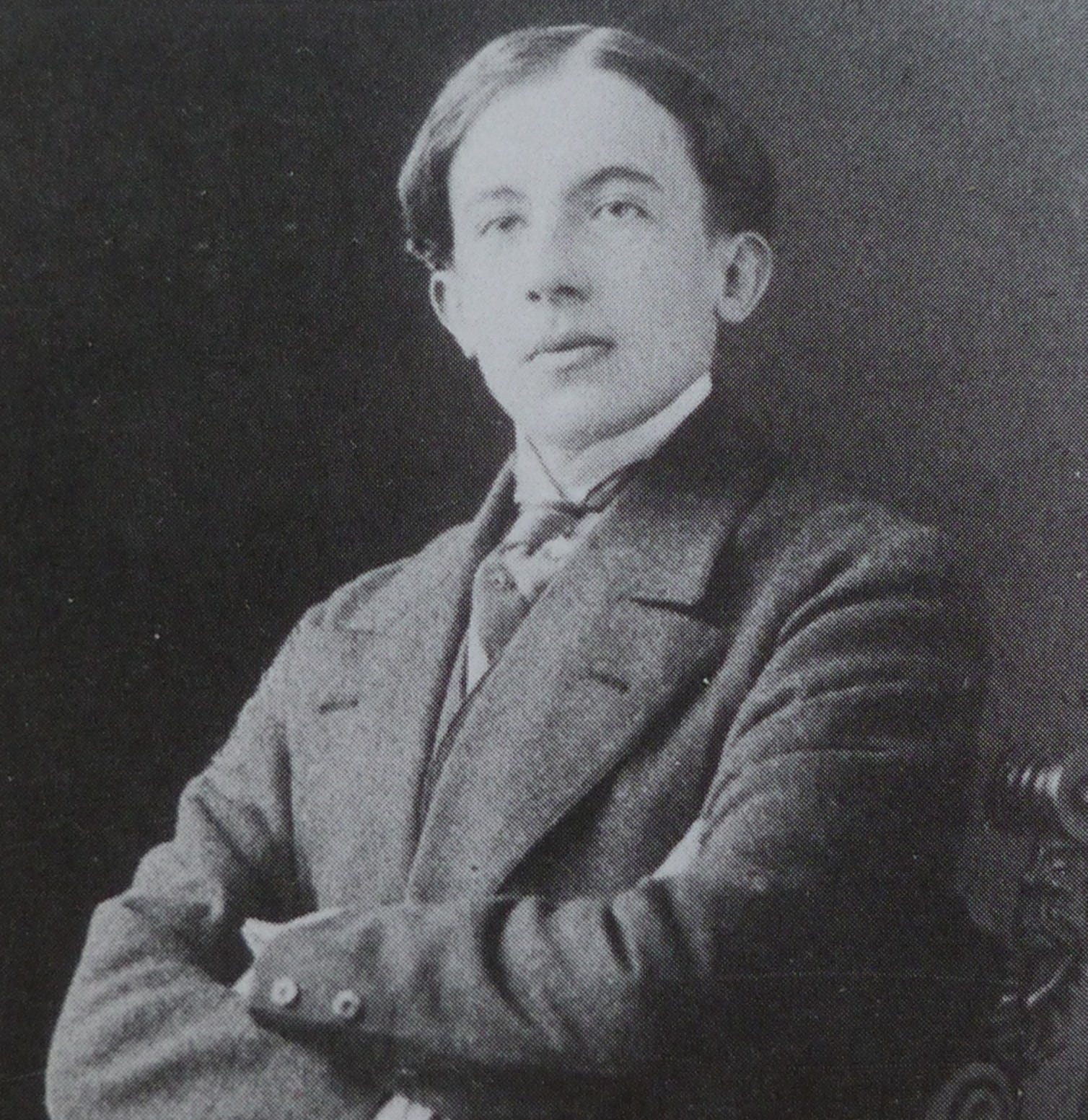
His name is Salvador Dalí. He is 25 and he has never touched a woman.
If he did, he is certain, it would kill him.
On the Gravel
One afternoon, a car comes in from Paris and stops in front of the house. Doors slam. Suitcases hit the gravel.
From an upstairs window, Dalí watches his visitors arrive.
The first one out is a Belgian dealer. He has just opened a gallery in Paris, and he wants to see what this boy paints. Paris has been talking about him since spring.
An 11 year old girl bolts for the sea ahead of everyone.
Her father climbs out behind her. 33, with a low voice. Paul Éluard, the great Surrealist poet, the one everyone in Paris reads.
And behind him, his wife.
Dalí comes down, shakes hands, helps carry a trunk. Night falls on the small house with all those people in it.
By the Boats
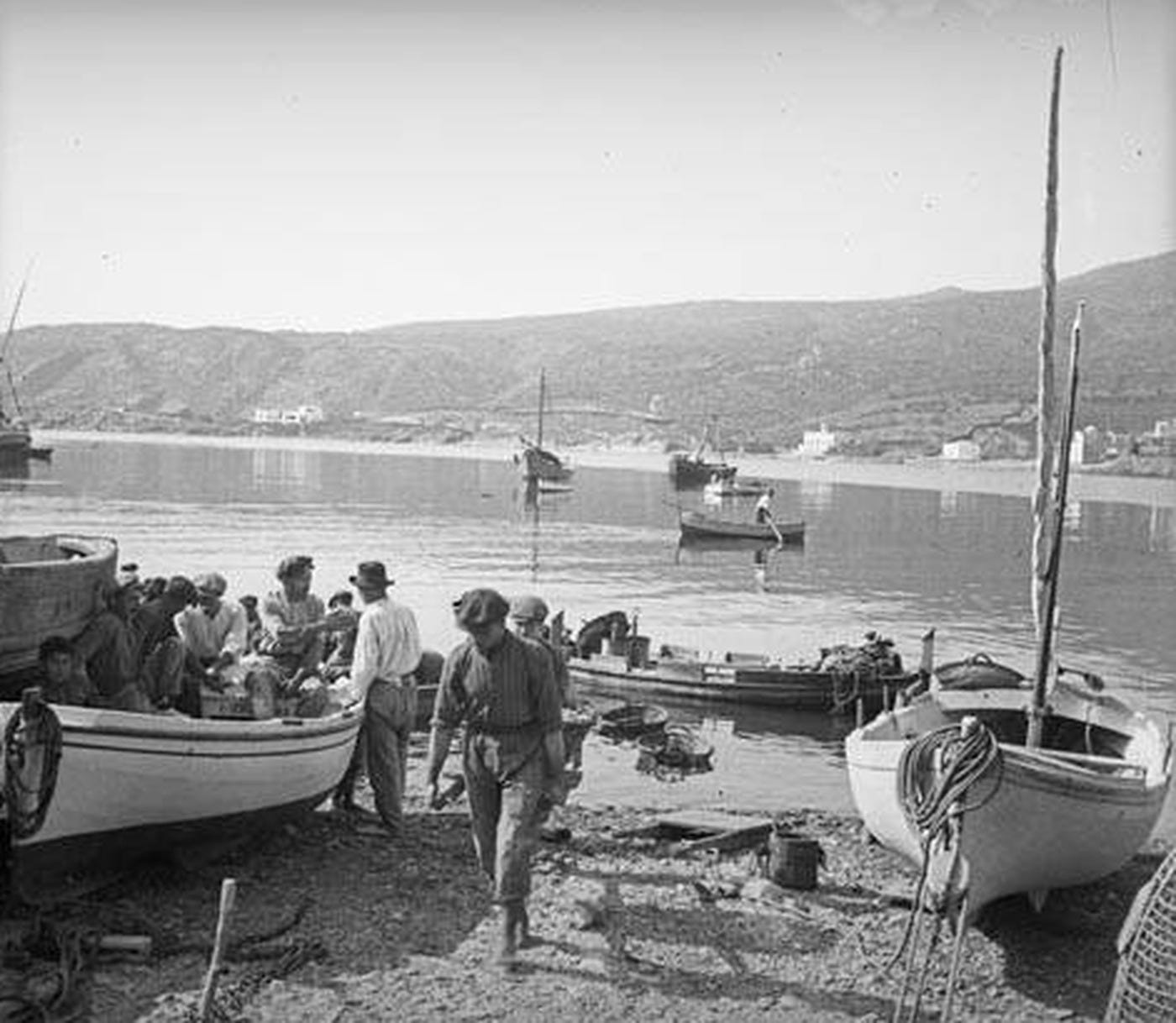
The next day, on the beach, the poet's wife lays her towel down near the boats pulled up on the sand. She pulls off her swimsuit top and walks into the water.
Two fishermen straighten up. The village talks about it for days.
Her name is Gala. Russian, 34, married to the poet since the war.
For three years she has lived with her husband and another man under the same roof, in plain view of everyone, and he has never said a word against it.
She swims far out, rolls onto her back, takes her time coming back in.
Dalí watches her from farther up the beach. He does not go into the water.
What he knows about sex he learned as a child in his parents' living room, from a medical book his father left open on the piano before leaving for work.
Full page photographs. Genitals eaten away, mouths turned to holes, noses gnawed to the bone. What syphilis does to a body.
That is what sex is to him.
He walks back up to the house without a word.
The Silk Shirt
The next morning, in his room, he gets ready for her.
He tears his best silk shirt to pieces. The razor goes under his arms until they bleed, and he spreads the blood across his chest.
He mixes fish glue and goat dung and smears it over his torso and legs. He pulls his swimsuit on inside out. A red geranium behind his ear.
Then he looks at himself in the mirror.
He stays there a long time. The red of the flower, the dried blood, the smell in the closed room.
At the last moment, he loses his nerve.
He takes it all off, puts on a clean shirt and goes down to lunch looking the way he does any other day.
She is already at the table. He opens his mouth to speak to her.
A wild laugh comes out instead. It rises on its own, doubles him over, and will not stop.
The others wait, forks in the air, and nobody knows where to look.
Gala does not laugh. She watches him the whole time.
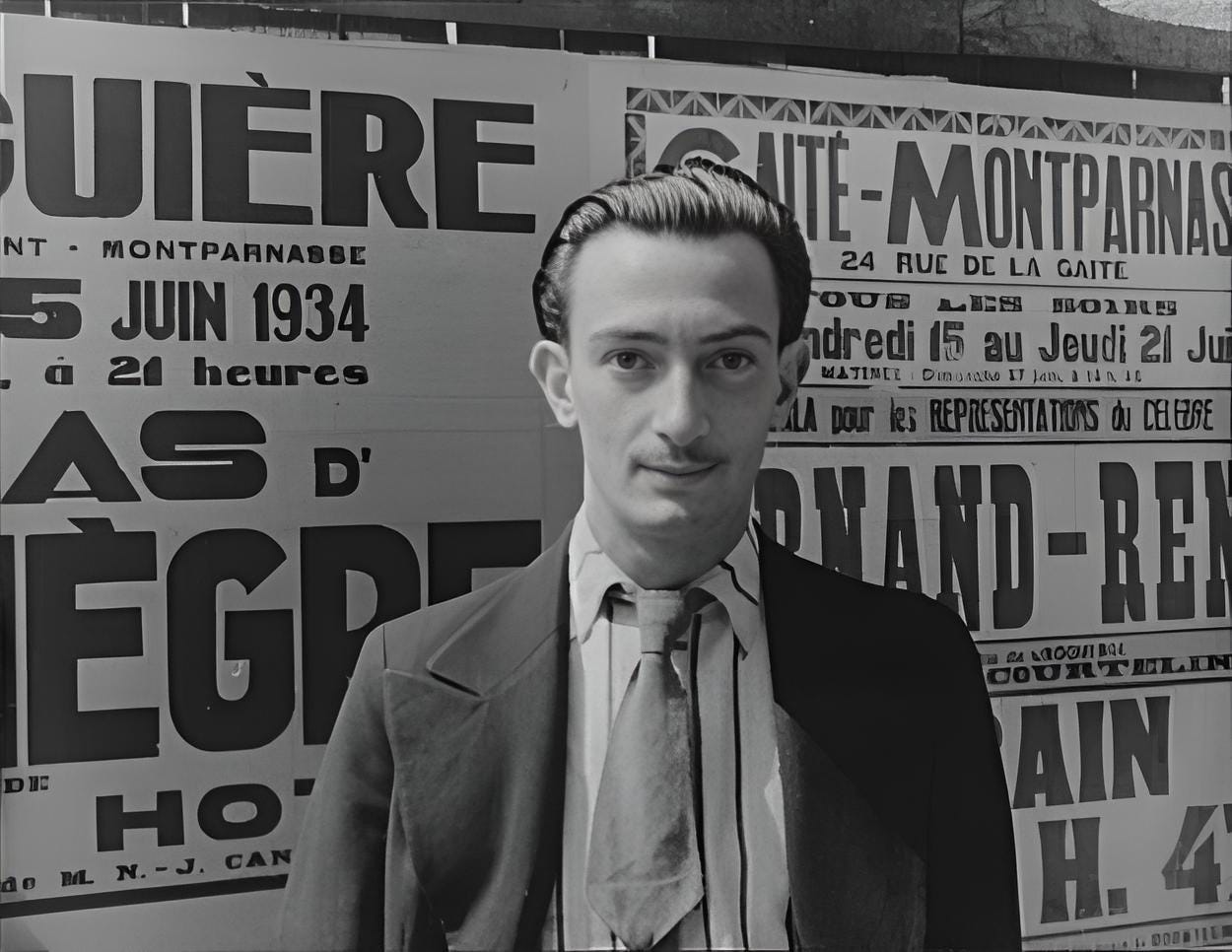
The Husband's Portrait
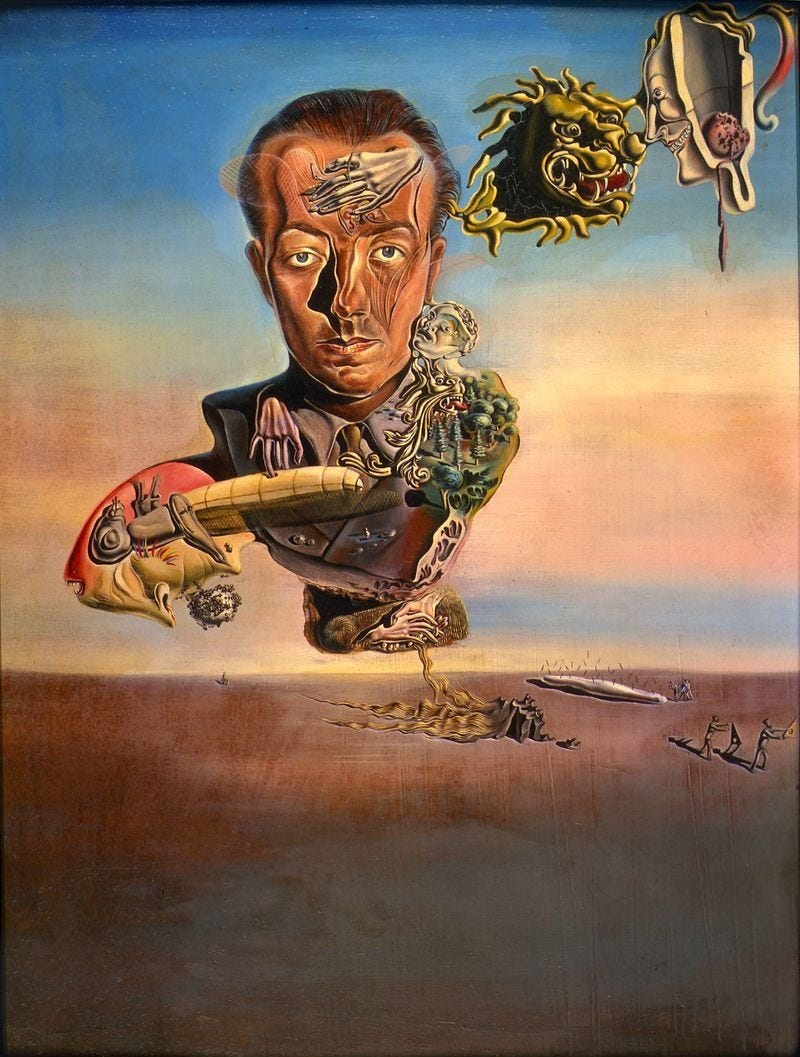
For the next few days he avoids her and comes down only for meals. Her husband, meanwhile, agrees to sit for Dalí. Éluard takes his place in the light from the window.
Dalí picks up a tiny canvas, barely bigger than a sheet of paper, and a fine brush. He paints the face of the man whose wife he has been watching for a week, the heavy eyelids, the closed mouth, the gray skin.
Behind that head, in the background of the small painting, he lays the yellow shape down again, lying on its nose.
The portrait stalls.
Through the window, he sees her look up at him.
Discover my new newsletter !

The Paris Train
In mid August, he goes down to the beach by the dirt path, out of sight.
One morning she catches up with him, takes his hand, and they walk the rest of the way side by side.
In early September, the car takes the group to the station at Figueres. Her husband climbs into the car, lowers the window, waves.
Gala stays on the platform. So does the girl.
The train pulls out, headed north. She watches it go.
In Cadaqués, the summer people head home. Shutters close along the bay. The boats stay up on the sand.
A Fresh Canvas
In the days that follow, he stretches a new canvas, larger than anything he has painted all summer.
He sets it against the wall and starts the same shape again. This time it fills the whole canvas.
An enormous head, lying on its nose, the nose crushed into the ground.
The yellow comes first, a wax yellow, a thin coat across the whole cheek. The red goes on top, at the cheekbones, laid on like rouge.
The lashes come next, long and black, set down one by one on an eyelid that will never open.
At the End of the Path
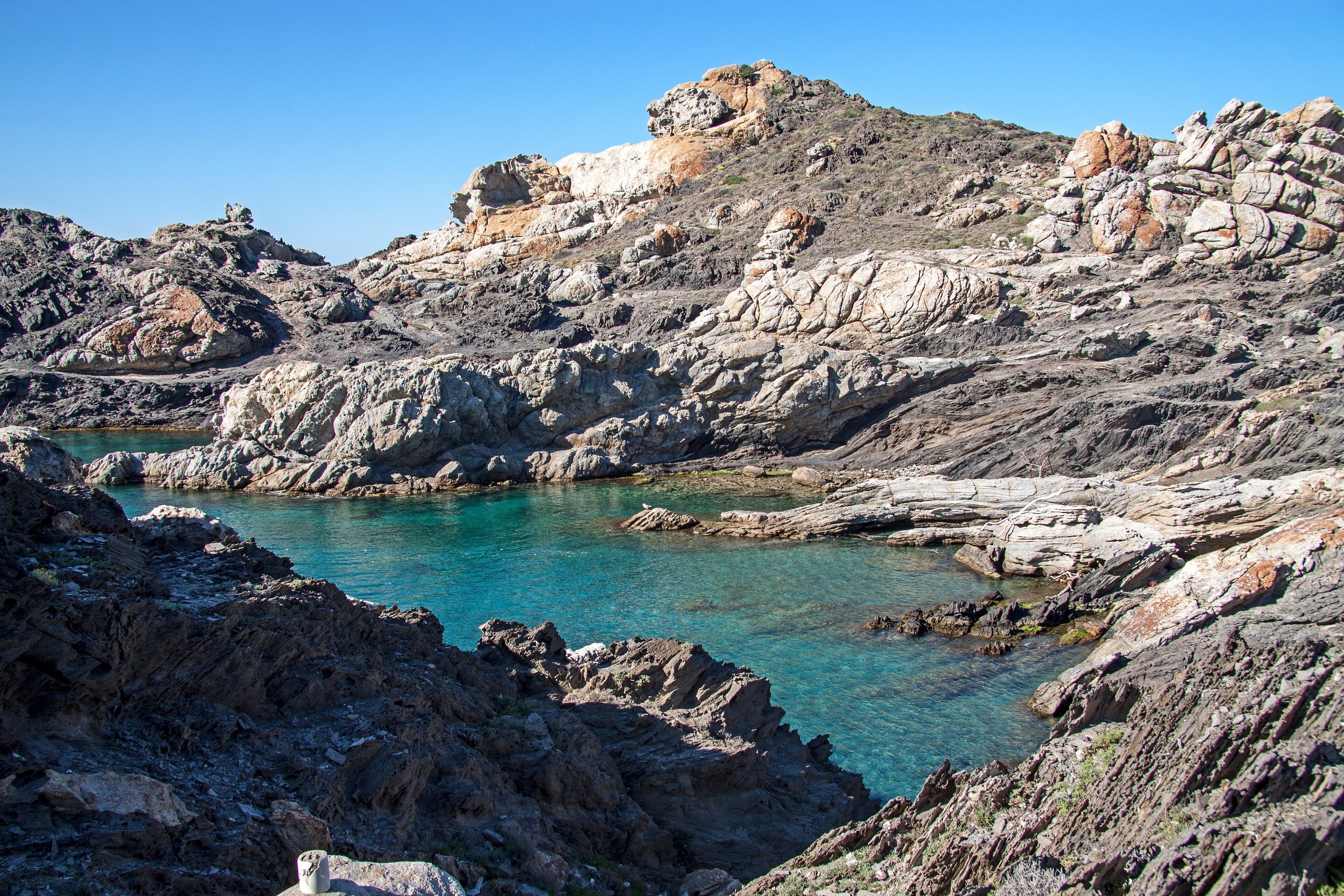
In late September, they set out on foot along the trail that follows the coast.
The path climbs. The ground is dry. Below, the water is a hard blue.
At the end, the land stops. This is the cape, a spit of schist running out into the sea. The tramontana has eaten the stone away, and the rocks there have taken the shapes of animals, skulls, bodies lying down.
He sits down in front of one of them, the way he has since he was a child.
He turns to her and asks what she wants him to do to her.