The Greatest Baroque Painters: 12 Who Changed Art
The greatest Baroque painters are Caravaggio, Rembrandt, Velazquez, Rubens and Vermeer, followed by Artemisia Gentileschi, Annibale Carracci, Frans Hals, Georges de La Tour, Ribera, Zurbaran and Poussin.
Between about 1600 and 1700, painting stopped being calm. Figures lunged out of the dark, saints bled, kings looked back at you. Here are the twelve painters who made the Baroque what it is, ranked, with a line in each entry explaining why it sits where it sits.
1. Caravaggio, the man who turned out the lights
First because everyone after him is answering him. Caravaggio put a beam of light into a black room and modern painting began. He used street people as models, painted saints with dirty feet, and worked straight onto the canvas without drawings.
In 1606 he killed a man named Ranuccio Tomassoni in Rome. The killing was blamed at the time on a dispute over a tennis wager, though scholars now think the quarrel was really over a woman.
He fled with a death sentence on his head, kept painting on the run in Naples, Malta and Sicily, and died at thirty eight on a beach at Porto Ercole.
I unpack the details he buried in his canvases in The Caravaggio Code.
2. Rembrandt, who painted his own ruin
Second because he took Caravaggio's light and made it carry a soul. The Night Watch is not a night scene at all, only a picture darkened by centuries of varnish, and in 1715 the city sliced strips off all four sides so it would fit a wall in the town hall.
Rembrandt was the greatest storyteller with paint who ever lived and the worst businessman, declared insolvent in 1656 and forced to sell his house and his collection.
He painted himself something like eighty times, following his own face from swaggering youth to swollen old age. His chiaroscuro is thicker and warmer than Caravaggio's, built out of paint you could scrape with a fingernail.
3. Velazquez, the painter of the royal household
Third because no painter has ever handled paint more intelligently, and Manet and Picasso both said so. Las Meninas puts the artist himself in the picture, staring out at the king and queen who stand exactly where you are standing.
Velazquez served the court of Philip IV for nearly forty years, and most of his time went on palace administration rather than paint, which is why he left only about a hundred and twenty canvases.
He painted the court jesters and dwarfs with the same seriousness he gave the king. The red cross of the order of Santiago on his chest in Las Meninas was added after the picture was finished, once the honor came through.
4. Rubens, the diplomat with a workshop
Fourth on sheer force. Rubens ran his Antwerp studio like a business, with assistants blocking in the canvas and the master finishing the heads and hands, and he priced pictures according to how much of them he had touched.
He spoke five languages and worked as a genuine diplomat, negotiating peace between Spain and England, and was knighted by both kings.
The Descent from the Cross in Antwerp cathedral is his engine room, a body sliding down a white sheet into waiting hands. He left around fourteen hundred works.
5. Vermeer, thirty six paintings and a mountain of debt
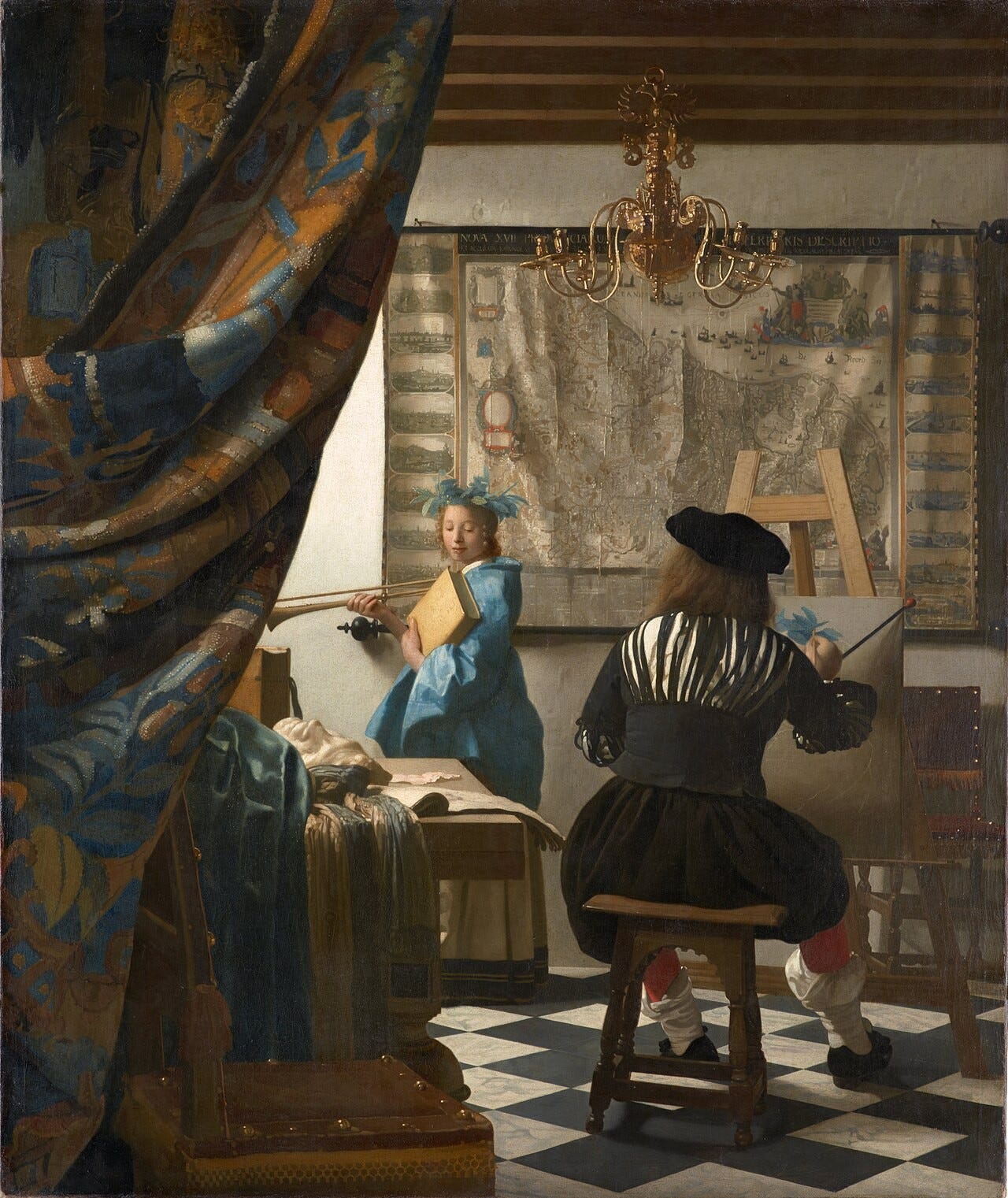
Fifth on a tiny body of work that nobody has been able to explain away. Vermeer left only about thirty six paintings, ground ultramarine from lapis lazuli that cost more than gold, and died in 1675 with eleven children and a stack of unpaid bills.
A girl turns, her mouth just open, a pearl catching the light, and that is the whole event. For nearly two centuries almost nobody knew his name, until a French critic, Theophile Thore, went looking for him in the 1860s.
One of his pictures cannot be seen at all: The Concert, taken from the Gardner Museum in Boston in 1990 and never recovered.
6. Artemisia Gentileschi, who painted Judith over and over
Sixth because her Judith is the most physically convincing violence in the century. The woman saws through a man's neck with her sleeves rolled up, treating it as work.
Artemisia was raped by her father's colleague Agostino Tassi in 1611, and at the trial the following year her hands were squeezed with cords while she gave evidence.
She went on to become the first woman admitted to the drawing academy in Florence, in 1616, corresponded with Galileo, and ran her own studio in Naples.
Reading her paintings only as revenge is far too small a frame for what she did. There were more women in the old master canon than you were taught, and I tell that story in The Old Masters Were Women Too.
7. Annibale Carracci, who drew the first caricatures
Seventh as the hinge nobody remembers. Before there was a Baroque there were the Carracci, the brothers Annibale and Agostino and their cousin Ludovico, who opened a teaching studio in Bologna and dragged painting back toward the living body.
Annibale then went to Rome and painted the Farnese gallery ceiling, gods and lovers tumbling across a false architecture, a work contemporaries set beside the Sistine.
He and his circle also invented the caricature, the cruel quick sketch that exaggerates a face. He was paid a humiliating sum for the ceiling, fell into a deep depression, and stopped painting.
Guido Reni, who came up through the Carracci academy, became one of the most admired painters in Europe.
8. Frans Hals, the fastest brush in Haarlem
Eighth for a hand nobody has matched. Hals painted with visible slashing strokes at a speed no contemporary attempted, and Manet and Van Gogh both went to Haarlem to study him.
The Laughing Cavalier neither laughs nor is a cavalier. A Victorian audience gave the picture its nickname and it stuck; the sitter has never been identified, though one theory names a Haarlem cloth merchant.
Hals made his living from group portraits of militia companies and charity boards, squeezing a likeness out of every face in a crowd of twenty.
He died in 1666 on relief money from the city.
9. Georges de La Tour, lost for three hundred years
Ninth for the strangest silence in art. La Tour built entire pictures from one flame: a candle behind a skull, a woman sitting perfectly still in the orange dark.
Then he vanished so completely from history that his name meant nothing until a German scholar, Hermann Voss, reassembled him in 1915 from a handful of canvases signed in the corner.
The documents that survive are not flattering, showing a rich, litigious lord of Luneville who hunted through his neighbors' crops.
Fewer than fifty paintings are accepted as his, and new ones still surface in French attics.
10. Jusepe de Ribera, the Spaniard who owned Naples
Tenth for making poverty monumental. Ribera painted a grinning beggar boy with a twisted foot at life size, at the scale reserved for kings, against an open sky, holding up a scrap of paper that asks in Latin for alms for the love of God.
Born near Valencia, he spent his career in Spanish ruled Naples, where the Italians called him Lo Spagnoletto, the little Spaniard.
He took Caravaggio's darkness and added a rough, granular surface you can almost feel. He also painted Magdalena Ventura, a bearded woman nursing her baby, at the duke's request.
11. Francisco de Zurbaran, painter of white wool and silence
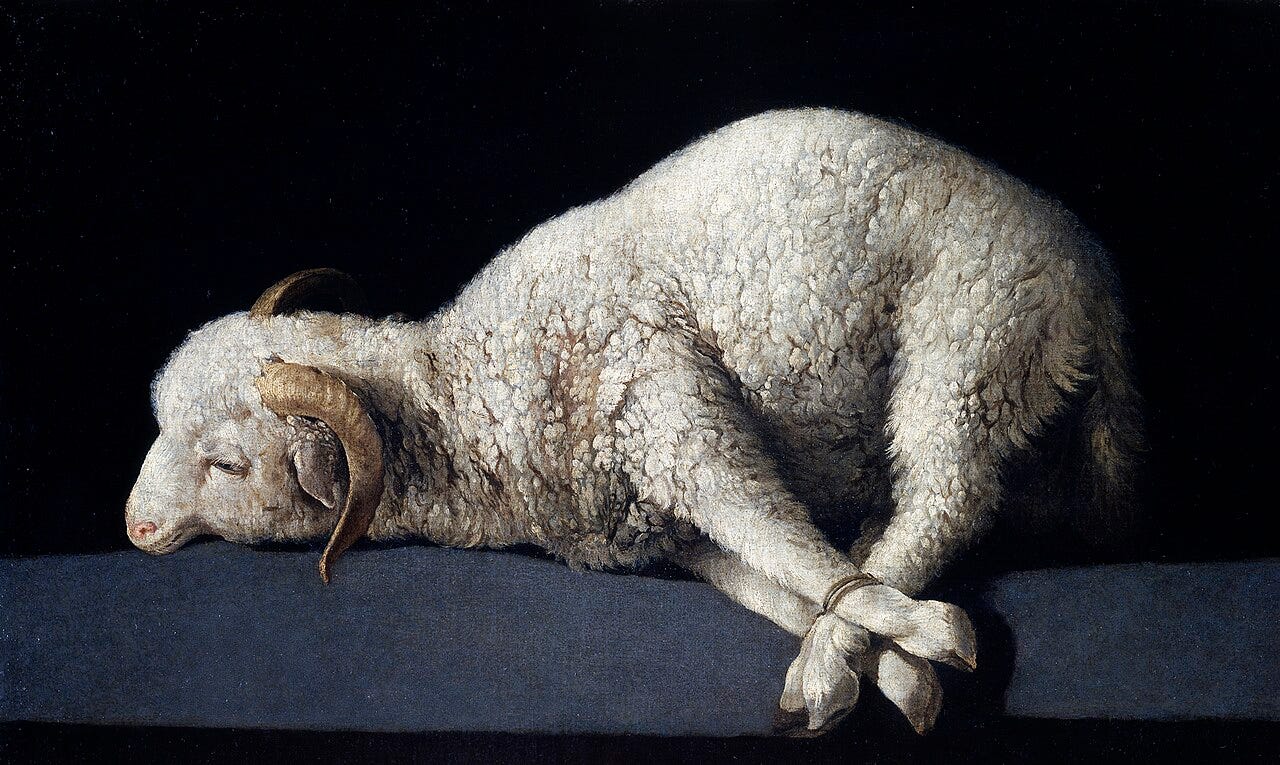
Eleventh for what he leaves out. Zurbaran painted a bound lamb lying alive on a stone slab, several times, and never explained it.
He worked mostly for the monasteries of Seville, painting monks in heavy white habits standing in an empty brown nowhere, and he treated a jug or a plate with the same reverence he gave a saint, which is why his still life pieces are among the greatest ever made.
His workshop shipped crates of paintings to the churches of colonial Peru and Mexico. When Murillo's sweeter manner took over Seville, commissions dried up and he died in 1664 with almost nothing.
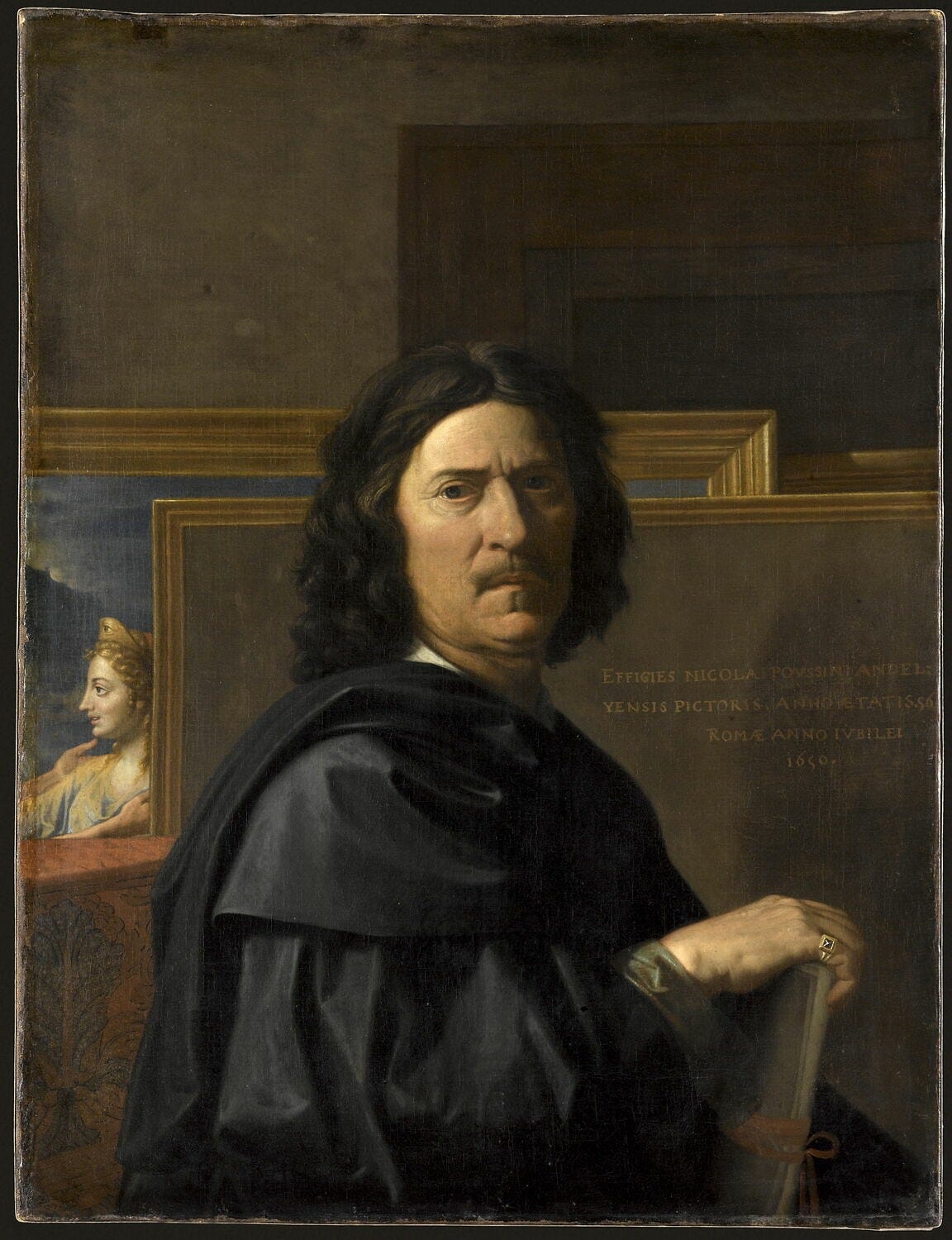
12. Nicolas Poussin, the Frenchman who ruled from Rome
Twelfth, and the odd one out, because he spent the Baroque arguing with it. Poussin was French, lived nearly all his life in Rome, and painted small canvases for a circle of learned collectors rather than altarpieces for crowds.
Shepherds crowd around a tomb in Arcadia, read the inscription, and discover that death is in paradise too. He built his compositions inside a wooden box, arranging little wax figures under a light until the shadows fell where he wanted.
His cool, ordered classicism became the official doctrine of the French Academy for two centuries, and Cezanne set out to redo him after nature.
Baroque painters, sorted out
Who is the greatest Baroque painter? Caravaggio invented the language, Rembrandt used it best. Most historians name one of the two.
When was the Baroque period in painting? Roughly 1600 to 1700, opening with Caravaggio in Rome and closing as the lighter Rococo took hold.
What makes a painting Baroque? Deep shadow and hard light, a moment caught mid action, real bodies, and a viewer pulled into the scene.
Was Vermeer a Baroque painter? Yes, of the Dutch kind. The Dutch Baroque swapped saints and kings for kitchens, maps and light on a wall.
Were there women Baroque painters? Several. Artemisia Gentileschi ran her own studio, and Elisabetta Sirani and Judith Leyster held their own workshops too.
If these painters pulled you in, you will love these too:
The Ambassadors, detail by detail, the object at the bottom that only works from one side
Luncheon of the Boating Party, detail by detail, who everybody at that table actually was
The secret behind Monet Magpie, one bird in the snow, and why it matters
The century that refused to sit still
These twelve spent a hundred years dragging painting off the wall and into the room with you. Half of them ended in debt. Two disappeared from history for centuries.
In 2021 the Rijksmuseum used a seventeenth century copy and a computer to reconstruct the strips of The Night Watch that were sawn off in 1715, and hung the missing figures back in place for the first time in three hundred years.