
Many painters are admired. Far fewer change what painting is allowed to do. Before them, a wall stayed flat, a saint looked like no one in the street, and a picture was a window seen from one fixed spot. After them, painters everywhere worked differently. Here are twelve of those turning points, each told through the painter who made it and the work that shows it best.

Cool Stories About Art is a newsletter to learn art the fun way.
Join 200,000+ readers and get:
10 new art stories / month
The entire archive of content (1,000+ articles)
Comment, ask questions, and chat with other readers
Talent and fame were not enough to make this list. Each painter here had to change what every painter after him could do. The test is a practical one: what could a painter do the day after that he could not do the day before?
The answers are concrete. One painter gave a painted body real weight. Another set his figures in a room measured with a ruler. Another modeled a face without drawing its outline, and another built a form out of color and left the brushstroke visible. One painted a village wedding as seriously as a scene from scripture, and the last showed an object from two sides at once.
Each of those moves was once unthinkable, or ruled out by habit, until one painter made it and others followed. The followers are the proof. Every painter here was copied, studied or argued with by the artists who came next, and each entry names one or two of them. When two painters made the same leap, the list keeps the one who pushed it furthest.
The numbers follow time, not merit. Number 12 is the painter closest to us, and number 1 was born more than six centuries before him. Counting down, the list travels back toward the source. Read from 1 to 12, it becomes a relay, in which each painter learns from the ones before and hands on something new.
12. Pablo Picasso (1881 to 1973)
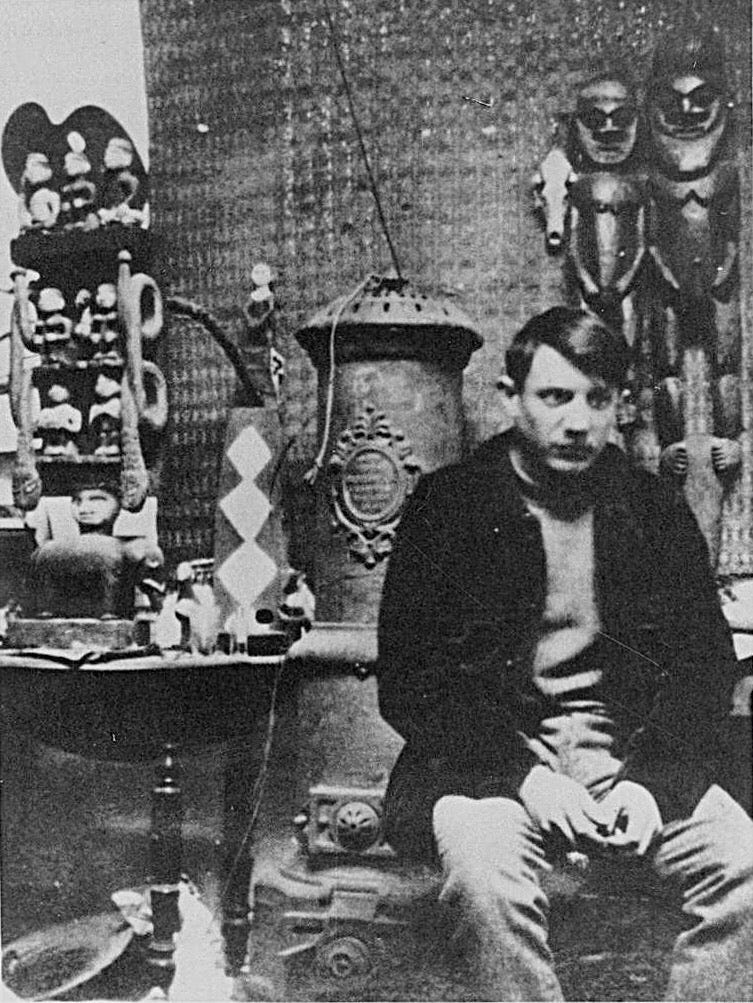
Around the edge of a small oval canvas that Pablo Picasso made in 1912, a real rope runs where a carved frame would normally be. Inside it, a piece of oilcloth printed in a factory imitates the woven cane of a chair seat.
Rope, oilcloth and paint sit side by side, and none of them pretends to be a window onto a table. That small object holds what Picasso changed: a painting could show a thing as the mind knows it, from several sides and in several materials, rather than as one eye sees it from one spot.
That idea broke a rule European painting had followed since the Renaissance. A picture worked like a window. The painter stood in one place, looked through the frame and recorded what that single fixed eye could see, near things large, far things small, every object turned the same way.
Picasso took the window apart with Georges Braque in the years before the First World War. In Cubism, a face or a guitar is broken into facets seen from different angles, then reassembled on the flat canvas. In 1912 the two men went a step further and began gluing newsprint and colored paper onto their pictures, so that a scrap of the real world could sit inside the painted one.
Still Life with Chair Caning, which measures 29 by 37 centimeters, is where both ideas meet. Painted fragments of a still life lie on the factory oilcloth, and the rope closes the oval. Paint, a printed copy of a chair seat and a real piece of rope each describe the table in their own way. A painting no longer had to be made of paint alone, or seen from a single place.
Cubism moved fast through Paris and beyond. The Italian Futurists changed their style after seeing a Cubist Picasso reproduced in a journal in 1911. Fernand Léger turned its cylinders and cubes toward the rhythm of machines. Within a few years, the broken window had led other painters to pictures with no recognizable subject at all.
At a Glance
Name: Pablo Picasso
Born and died: 1881 to 1973
Origin: Spanish, born in Málaga, worked mainly in France
Known for: Cubism and collage, the break with a single fixed viewpoint in painting
About This Painter
What is Pablo Picasso's most famous painting?
Probably Guernica, painted in 1937 in response to the bombing of the Basque town during the Spanish Civil War. Les Demoiselles d'Avignon, finished in 1907, is the other usual answer.
11. Paul Cézanne (1839 to 1906)
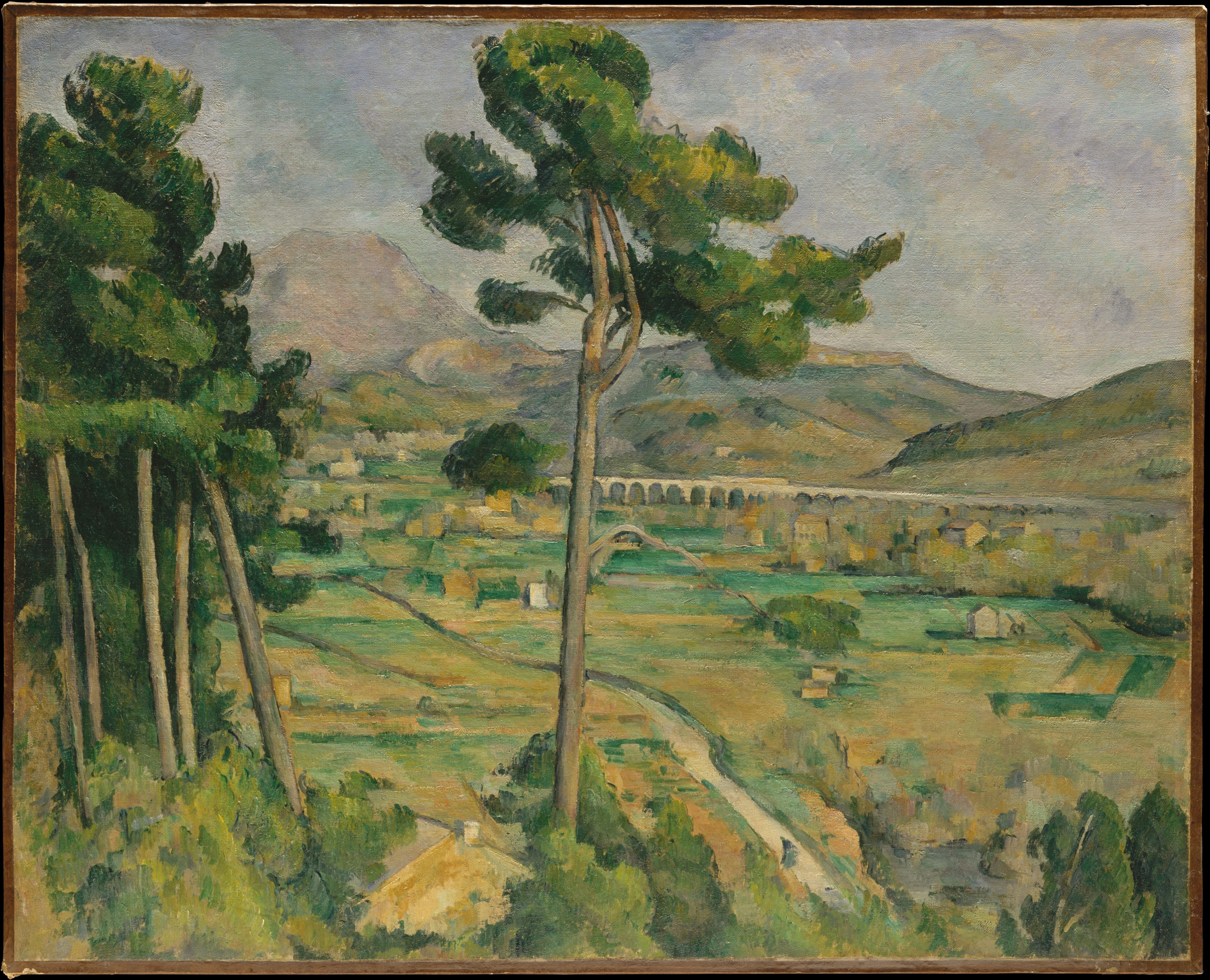
On a plate in The Basket of Apples, a still life Paul Cézanne painted around 1893, the lower cookies are seen from the side and the top two from above. The table under them tilts, the bottle leans, and nothing is quite level. Each of these shifts belongs to a method. Cézanne wanted a painting to be built rather than merely seen, a structure of colored planes holding together on a flat surface the way a wall holds together stone by stone.