
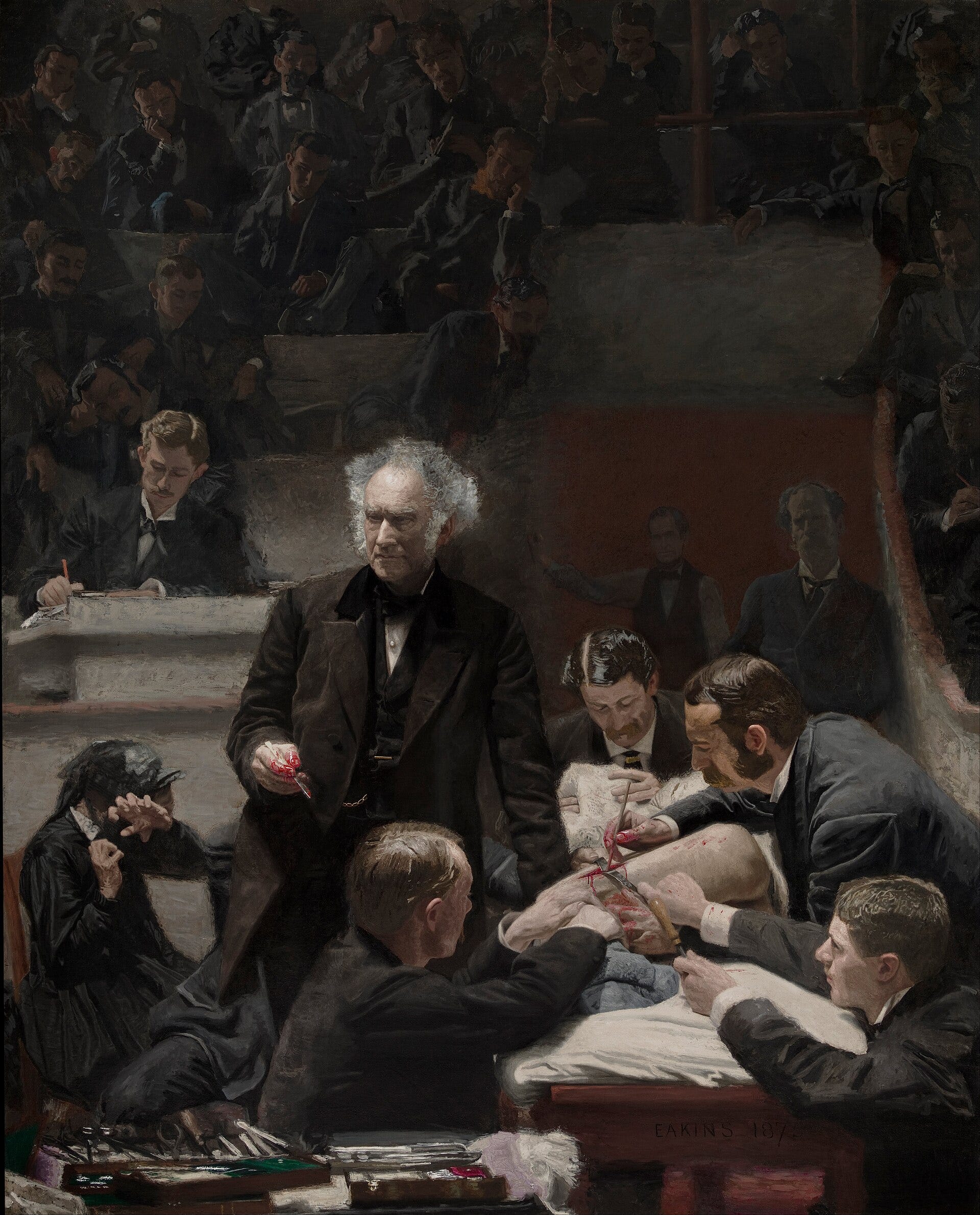
The Gross Clinic is an 1875 painting by the Philadelphia artist Thomas Eakins. It shows Dr. Samuel D. Gross, the city's most celebrated surgeon, operating before his students at Jefferson Medical College. He has turned from the table to speak, a scalpel in his red fingers, while his team works on a young patient's thigh.
At the left, a woman in black hides her eyes behind her arm. Eakins painted it for the Centennial Exhibition, the international fair held in Philadelphia in 1876 to mark a hundred years of independence, and the jury of its art section turned it down.
Today it is the best-known work of his career and a landmark of American Realism, the movement that painted modern life without softening it. In 2002, the New York Times critic Michael Kimmelman called it "hands down, the finest 19th-century American painting."
Cool Stories About Art is a newsletter to learn art the fun way.
Join 200,000+ readers and get:
10 new art stories / month
The entire archive of content (140+ articles)
Comment, ask questions, and chat with other readers
What is The Gross Clinic painting about?
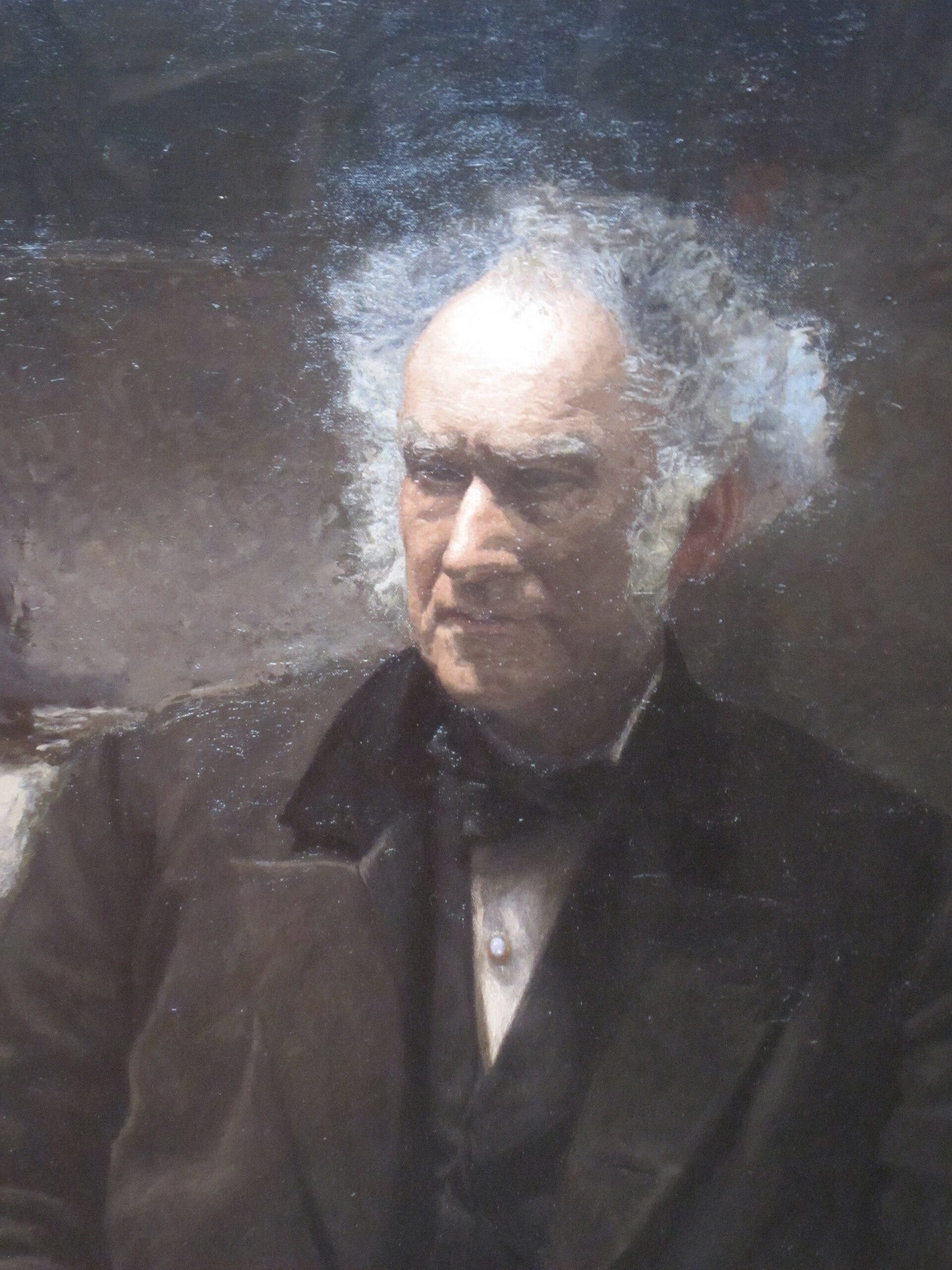
In a Philadelphia operating theater, a surgeon of seventy has stepped back from the patient to speak, and around the table his team keeps working without him…
What You'll Discover
Who the doctors around the table really were
Why a woman in black cannot bear to watch
Why it hung in an army hospital instead
What Eakins prepared for a printer in Europe
What a cleaning in the 1920s did to the canvas
Where the painting can be seen today, and until when