

170 000+ readers. Learn art the fun way.
This is a preview. Paid subscribers get the full story.
You’ll also get:
10 new stories every month
The full archive (130+ Art stories)
Your personal art guide. Comment, ask questions, DM me anytime
iPhone user? Subscribe at coolstoriesabout.art, not via the app. Apple adds 30% to the price.
My first book is out (in French only)

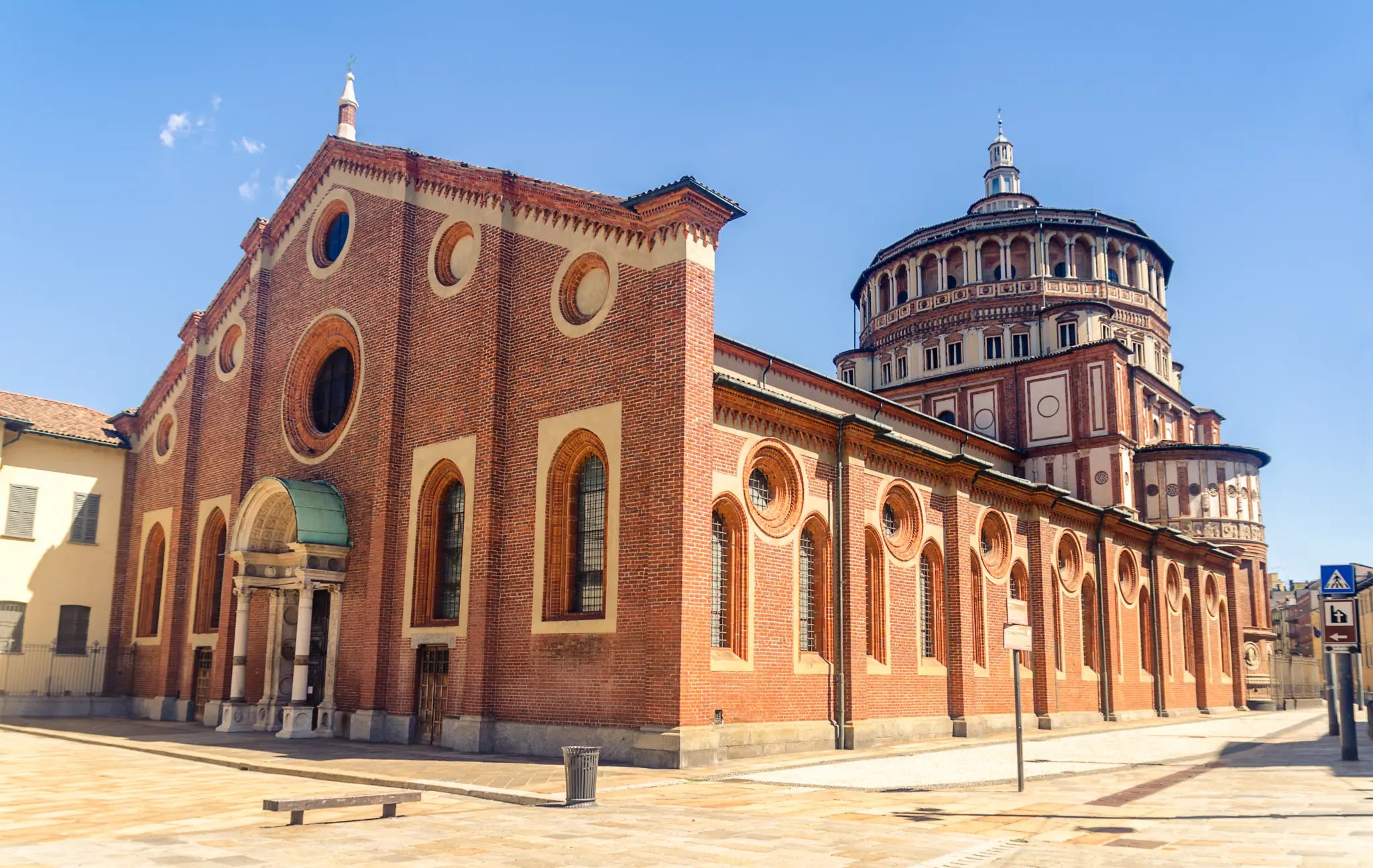
You booked your ticket three months in advance. You arrive in Milan, walk through two glass airlocks that regulate humidity, and they let you into a nearly empty room with twenty four other people.
You have fifteen minutes. Not one more.
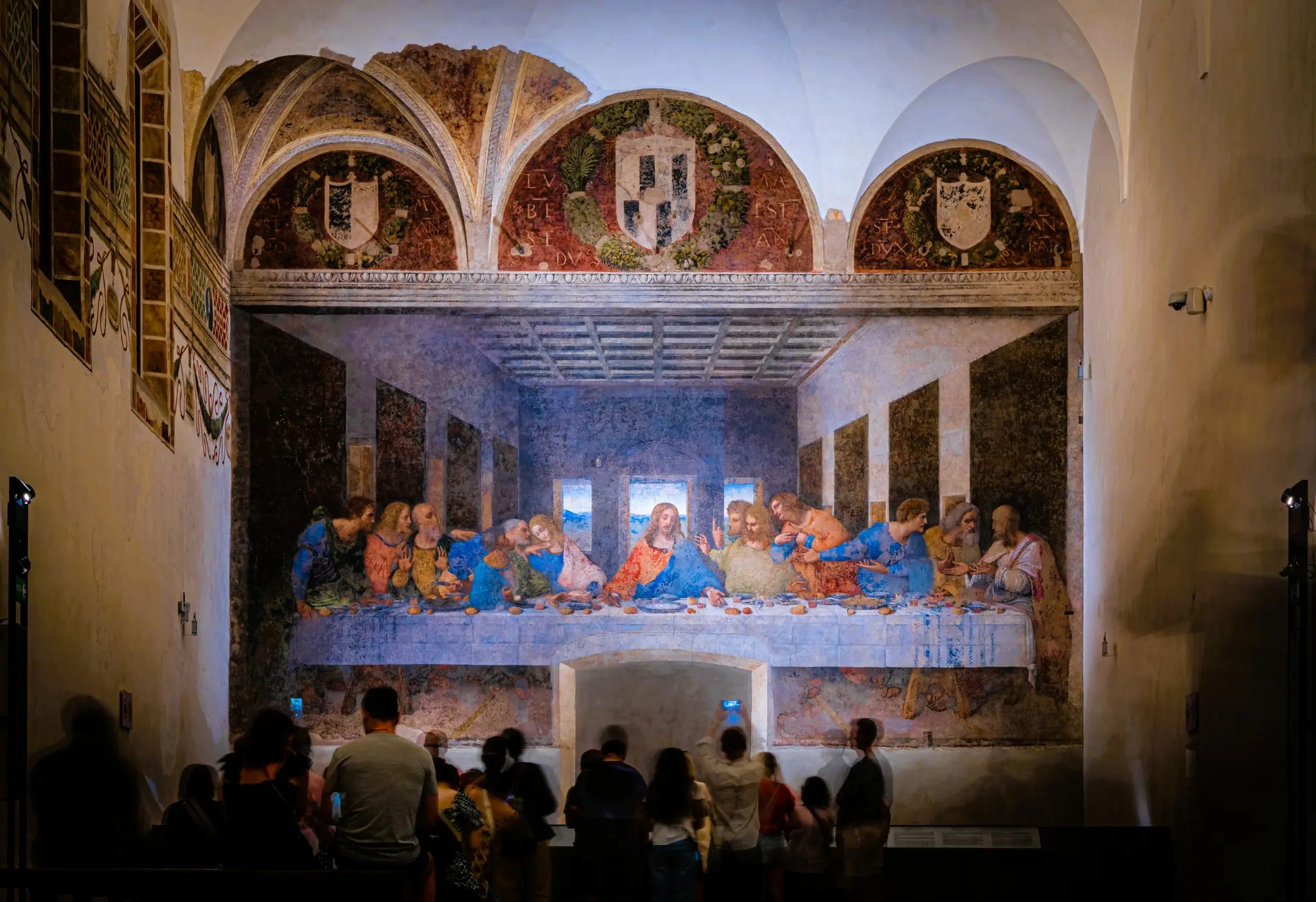
The work is there, on the far wall. It has never left this room since 1498. It never will. Leonardo painted it directly onto the wall, using a dry technique, instead of traditional fresco.
That’s what makes it so fragile, and that’s why they only give you fifteen minutes in front of it.
Most visitors look at the faces, count the apostles, try to find Judas. They leave having seen a tense meal, agitated men, Christ in the center.
They saw nothing.
Because what Leonardo painted on this wall is not a dinner. It’s a clock. Every detail, every hand, every object on the tablecloth points toward something that hasn’t happened yet.
A Thursday Evening in Jerusalem
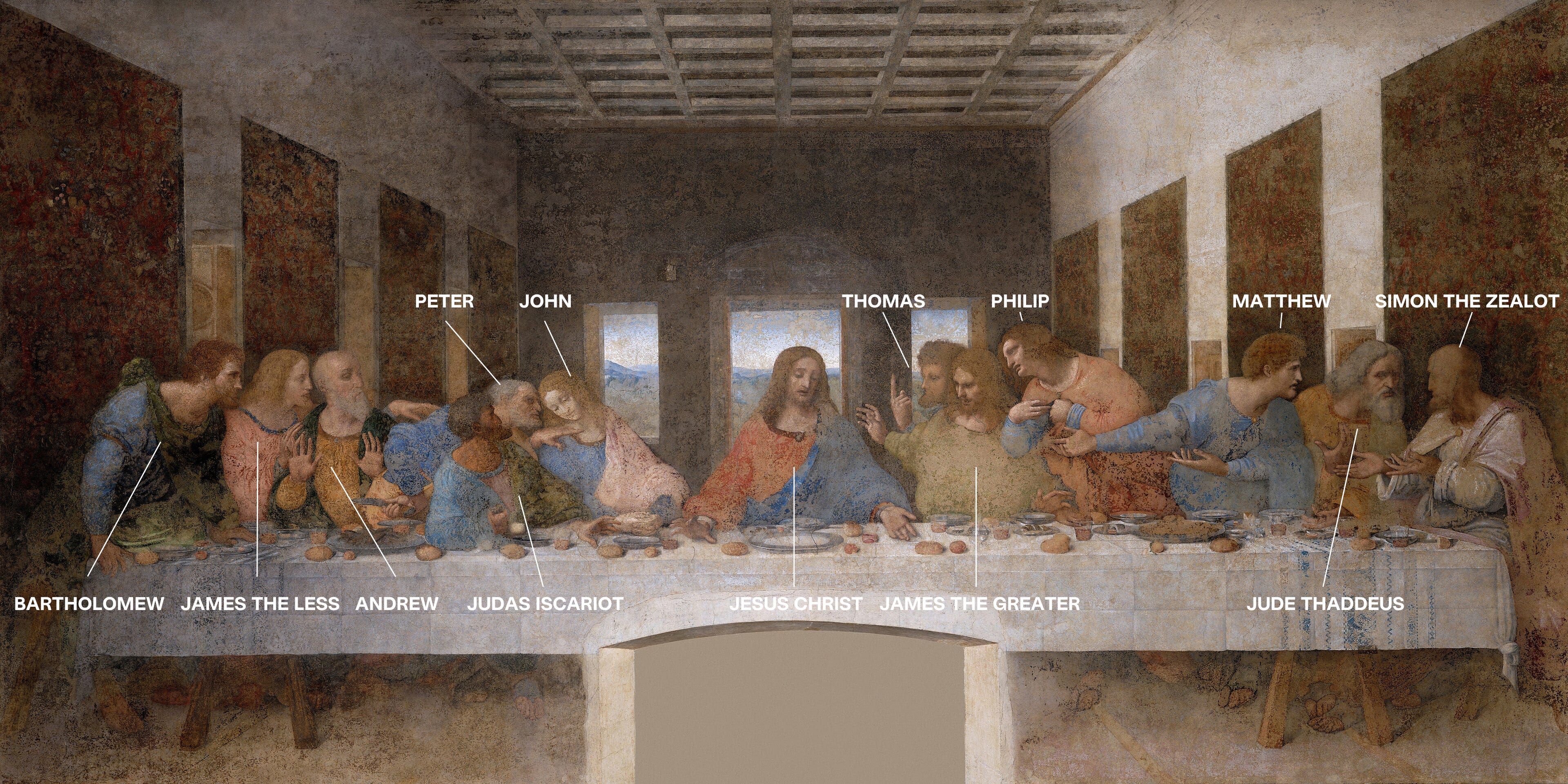
The scene takes place on a Thursday, the eve of Jewish Passover. It must be around seven in the evening, in an upper room lent for the meal.
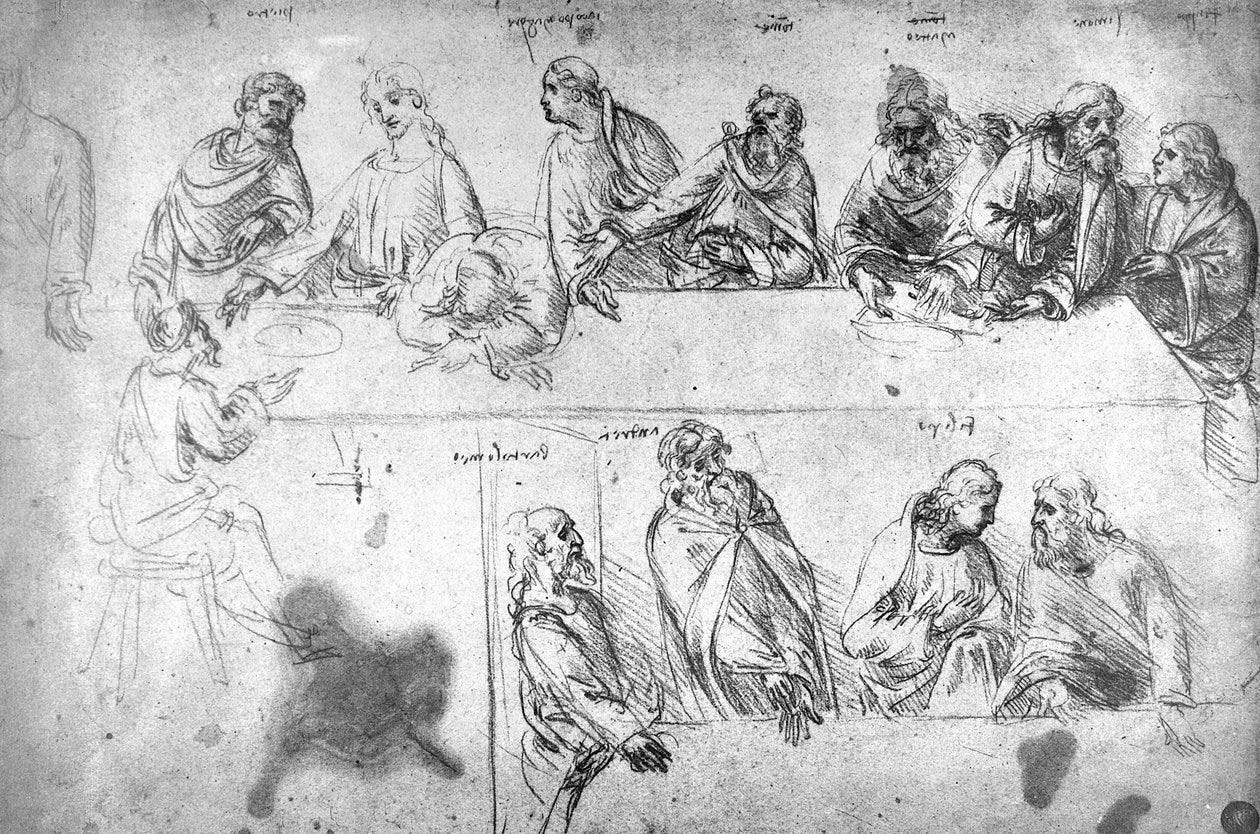
Every apostle around Christ is identified by Leonardo himself, in a handwritten note he left behind that gives their exact order around the table.
Jesus has just spoken. A few seconds before the instant Leonardo freezes, he pronounced the sentence that tears the table apart: “One of you will betray me.”
It is this exact second the work captures, and this is how Leonardo breaks with a thousand years of tradition.
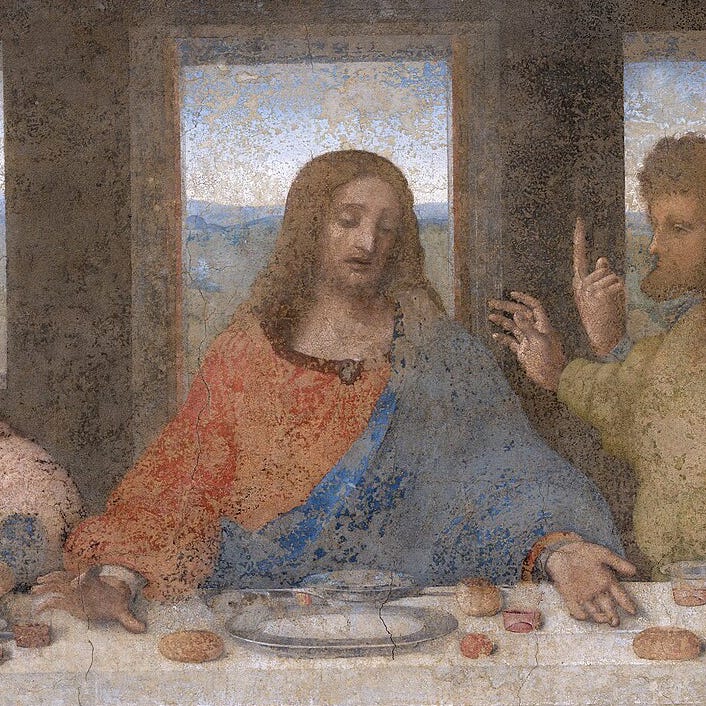
Every Last Supper painted before his depicted the Eucharist: Jesus taking the bread, blessing it, sharing it with his disciples in a calm, liturgical scene. It was the central theological moment, the institution of the sacrament that founded the Christian mass.
Leonardo set it aside.
The bread and wine remain on the table, present, sacramental, but the instant he chose to freeze is not the blessing. It’s the shockwave that follows the announcement of betrayal.
And this second falls at a very precise moment in the story. In less than twenty hours, the man at the center of the table will be dead. Arrested at night, tried in the morning, flogged, nailed to a cross, he will expire around three in the afternoon the next day.
The dinner we are looking at is the last.
Discover my new newsletter !

Keep learning art the fun way


The Knife Behind Judas’s Back
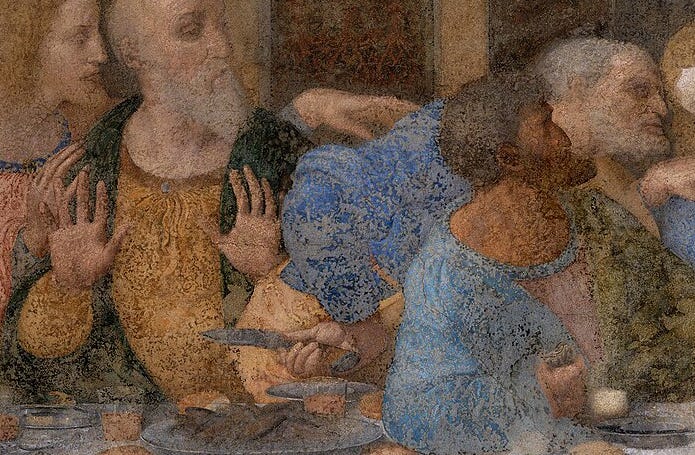
Look to Christ’s right, so to your left, just past Judas’s shoulder.
A hand grips a knife. The blade is turned outward, clenched, ready to strike. The angle is strange. Peter is leaning forward toward John, and his right arm reaches across behind Judas, almost dislocated from his own body.
At a dinner table, nobody holds a knife like this. Past someone else’s shoulder, blade out, fist clenched.
Because Peter, in a few hours, will draw a sword. When the soldiers arrive in the Garden of Gethsemane to arrest Jesus, he will be the one to pull his weapon. He will strike. He will cut off the ear of a servant of the high priest, a man the Gospels name precisely: Malchus.
The blade is already in his hand. Leonardo paints the violence before the act.
Thomas’s Raised Finger
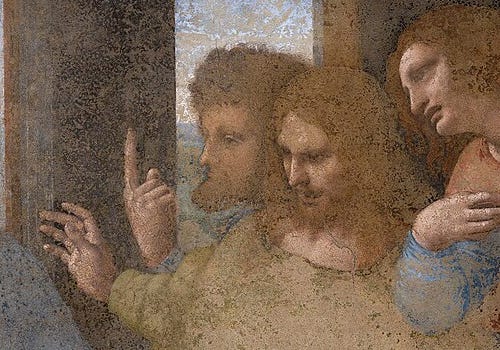
To Christ’s left, Thomas is half hidden behind James. You can barely see anything of him, except one index finger pointed straight at the ceiling.
Nobody around the table is looking up. Nobody is talking about the sky.
This finger has no reason to be raised at a dinner scene.
It will have one, three days later.
Thomas will be absent when the risen Jesus appears to the disciples. He will refuse to believe until he has touched the wounds with his own hands. Jesus will come back specifically for him, hold out his pierced palms and open side, and tell him: “Put your finger here.”
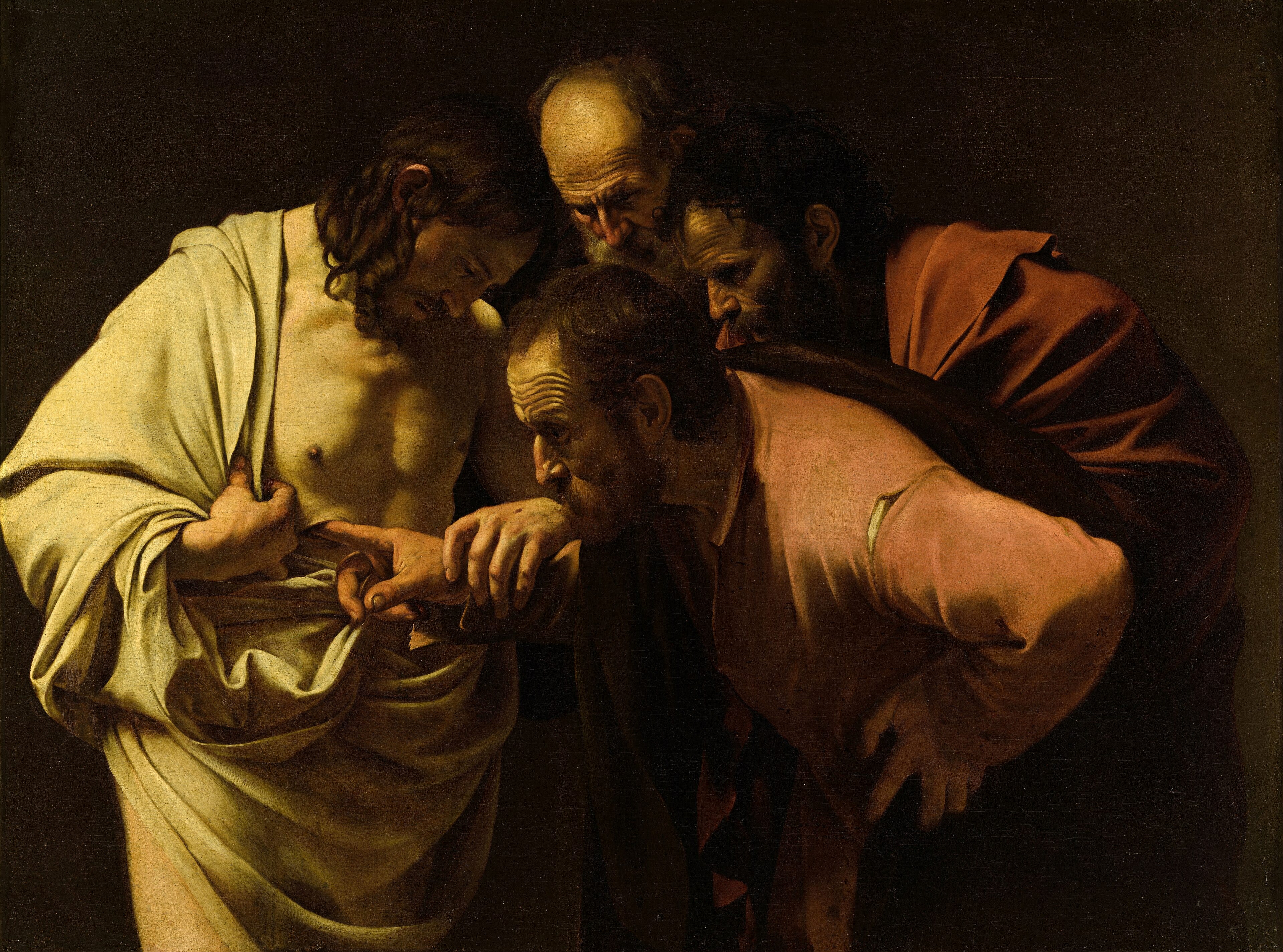
Thomas will push it into the wound. This is the exact gesture for which history will call him “Doubting Thomas.”
The finger he will point into the wound of the risen Christ is already raised. Days before it happens.
The Open Arms of James the Greater
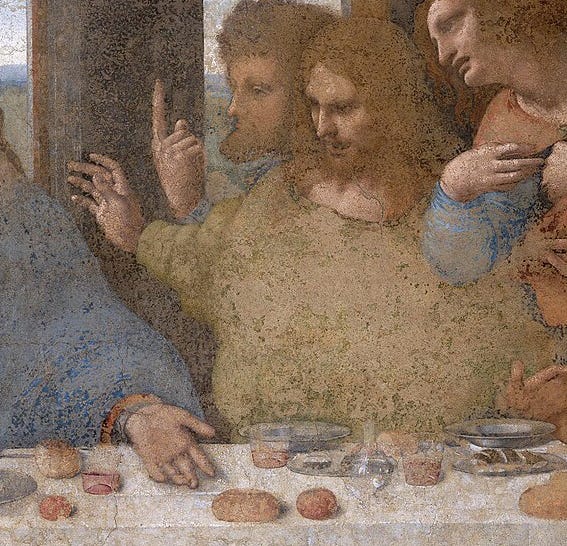
Right next to Thomas, James the Greater throws his arms back in a gesture of shock. Palms open, chest exposed, head tilted.
For a meal, it’s theatrical. Almost excessive.
In all of Christian iconography, this pose does not belong to dinner guests. It belongs to martyrs. It’s the position of the condemned man offering himself to the blade.
James the Greater will be the first of the twelve to die for his faith. Beheaded in Jerusalem by Herod Agrippa, around 44 AD. Ancient traditions have always depicted him in this posture: arms open, palms to the sky, head thrown back.
Leonardo places him immediately to Christ’s left, and paints him already in the pose he will take at the moment of the blade.
The first death after the master’s.
The Apostle Who Looks Like a Woman
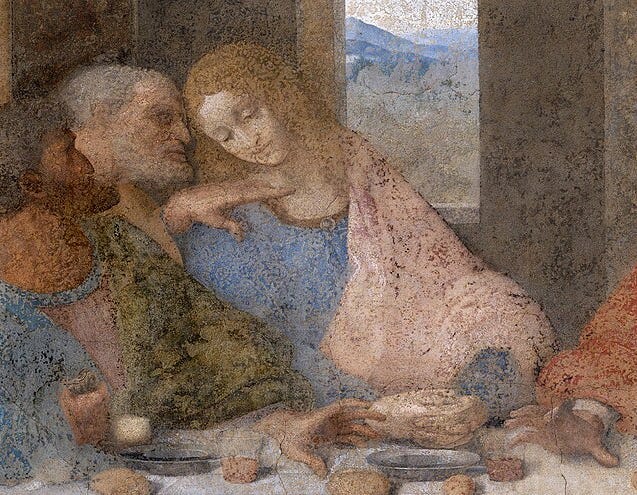
Shift your gaze to the other side of Christ, immediately to his right. The closest disciple has a strange face in this assembly of bearded men.
He is beardless. Young. Elegant. His features are soft, almost feminine. He leans gracefully toward Peter, who whispers in his ear. Everything about him stands out in the row of mature apostles.
This appearance has fueled, since the success of Dan Brown’s The Da Vinci Code in 2003, the most popular theory ever built around a work of art: this is not John pictured here, but Mary Magdalene. The wife of Jesus, mother of his daughter. An entire fictional edifice built on the fineness of this face.
Except that the truth is simpler, and more beautiful.
In the entire Italian pictorial tradition of the 15th century, John is depicted this way. The youngest of the apostles, almost adolescent, beardless, soft featured, sometimes asleep on Christ’s shoulder as the biblical text mentions. Leonardo follows the convention. He’s not hiding anyone.
But his posture tells a different story. Peter leans toward him and speaks into his ear. The Gospel of John recounts that at this precise moment, Peter whispered to him: “Ask him who he’s talking about.”
Leonardo freezes the whisper. The ear extended, the body inclined, Peter’s hand already near his. John is learning the question he will have to ask Christ.
The Purse and the Salt
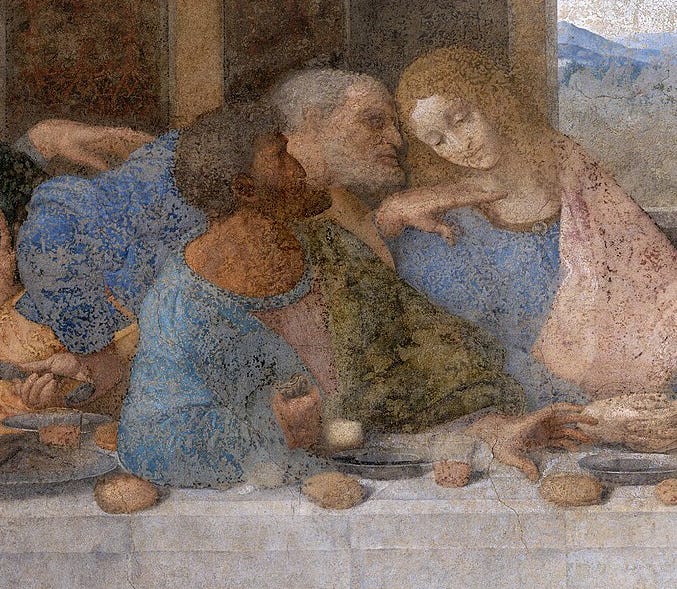
Shift your gaze toward Judas. Not his face. His hands.
His right hand clutches a small bag against the table…