

200 000+ readers learn art the fun way.
This is a preview. Paid subscribers get the full story.
You’ll also get:
10 new stories / month
The full archive (140+ Art stories)
Your personal art guide. Comment, ask questions, DM me anytime
Apple user? Subscribe at coolstoriesabout.art, not via the app. Apple adds 30% to the price.
Monet. Rembrandt. Vermeer. Warhol.
You know those names.
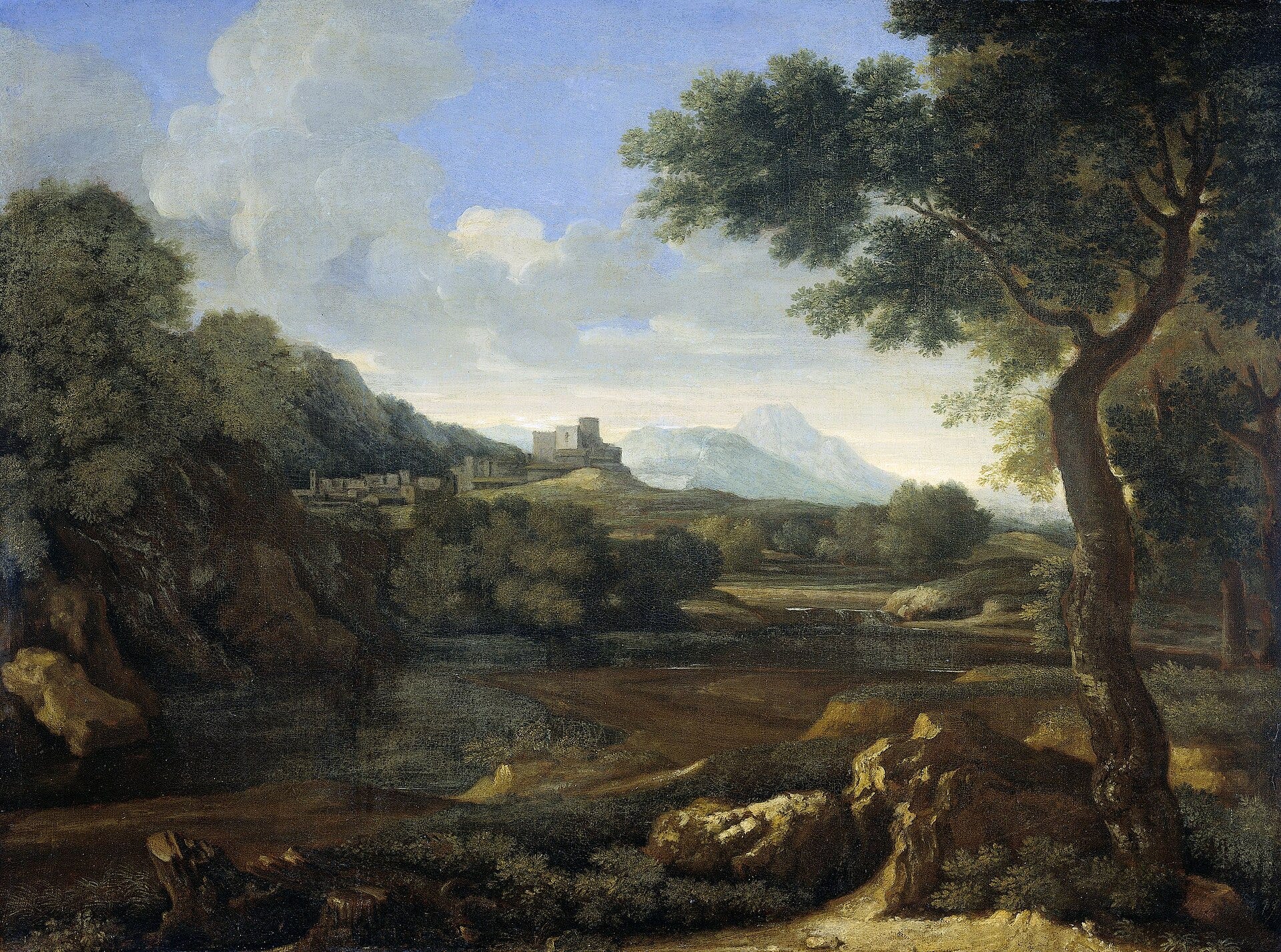
Paul Bril. Gaspard Dughet. Jan Both. Herman van Swanevelt.
Those, probably not.
And yet their paintings hang in the greatest museums in the world, often in the big rooms. You have walked right past them.
And I know what you did. You gave the first one a glance, then moved on to the next room, to see a Van Eyck, a Caravaggio or a Degas.
I don't blame you: they are the most boring paintings in the world!
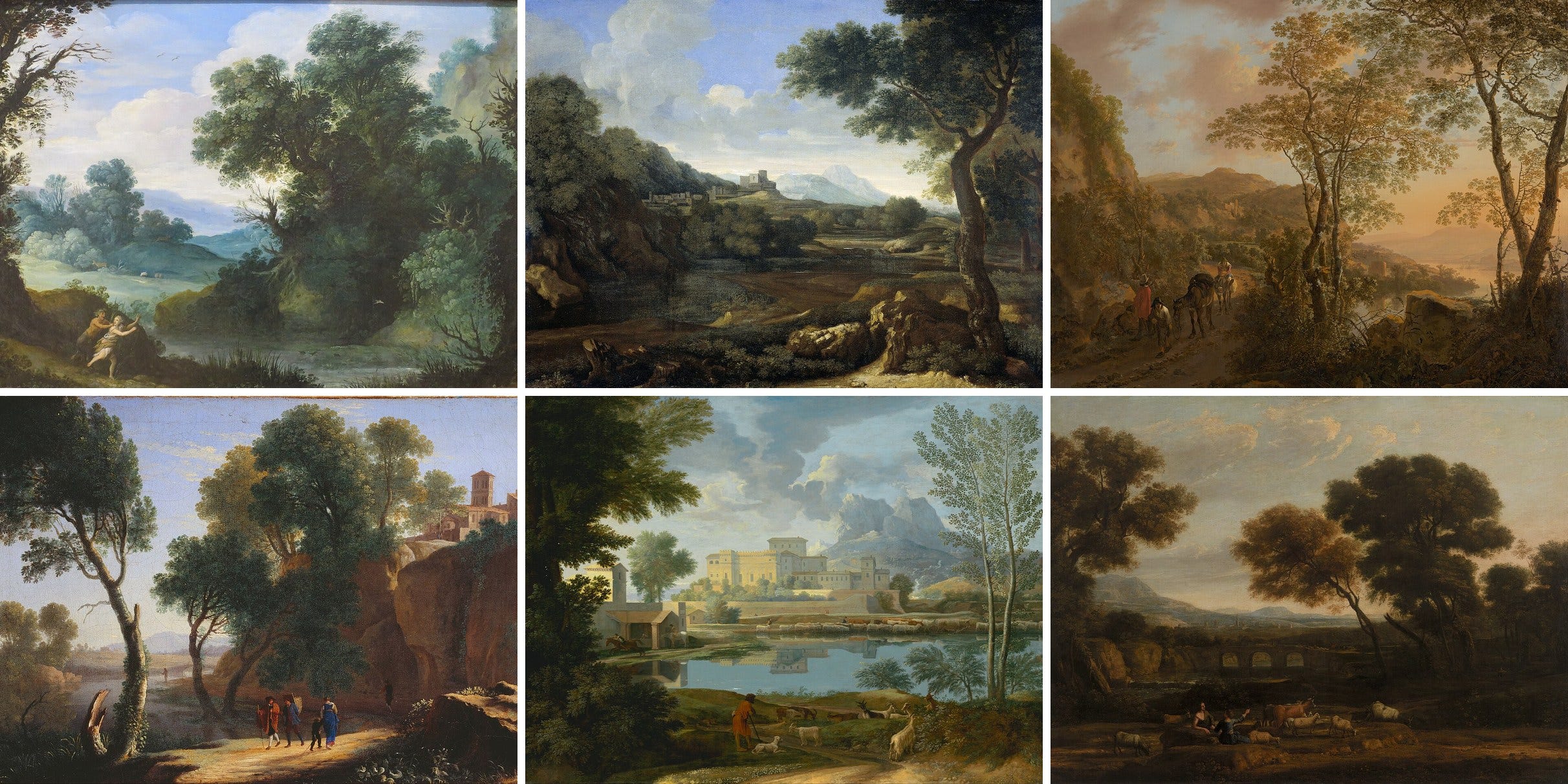
Here's what happened to me. Last Christmas, in Rome, I walked into the Doria Pamphilj Gallery. Everyone comes for Velázquez's portrait of Pope Innocent X and three Caravaggios. To get to them, you have to cross a room papered floor to ceiling with these landscapes.
The first one stops me. Golden countryside, a big tree on the left, an ancient ruin, a tiny shepherd with three sheep, a lake glinting in the distance. It's beautiful.
The second: the tree has moved to the right.
The third: the shepherd has lost a sheep, and the sky has turned pink.
By the tenth, I'm looking for the exit.
Art historians call them ideal landscapes. All through the 1600s, the painters working in Rome turn them out on an assembly line.
Four centuries later, they are everywhere. In every major museum in Europe and America, a Dughet or a Bril waits between two stars, and the crowd speeds up.
For years, I wrote them off as the wallpaper of art history. Beautifully made. Perfectly interchangeable. They all look alike. Agreed?
Know someone who would love these stories? Give them a month or a year, with a note from you. 🎁
I was wrong.
Then one day I understood why the painters working in Rome made so many of them. Soon after, I learned that these paintings had changed the history of art, and a good deal more than art.
I don't walk through those rooms the way I used to. They're even among my favorites!
These landscapes never stayed on museum walls. They walked out. You see them far more often than you think.
Come with me. After this story, you won't look at these paintings the same way again.
What You’ll Discover
Why the painters working in Rome made so many of them, and for whom
Why they always slipped tiny figures into them
The painter who invented copyright before copyright existed
How these paintings crept into your everyday life
The most romantic movie scene of the 2000s, filmed in one of them