The Most Famous Paintings of All Time

The most famous paintings in the world include the Mona Lisa, The Starry Night, The Scream, Girl with a Pearl Earring, Guernica and The Last Supper. Here are thirteen that everyone knows, and the exact reason each one became famous.

Fame is rarely about the paint alone. A theft, a slashing, a scandal or a hidden secret often did the rest.

The five second version

  • The Mona Lisa became a global icon only after it was stolen in 1911.

  • The Scream has been stolen twice and recovered twice.

  • The Night Watch shows daylight, despite its name, and was slashed in 1975.

  • The Great Wave is a print, made in thousands of copies.

  • American Gothic is the most parodied image in American art.


Learn art the fun way. Free stories every week, no boring lectures.


If you want the secrets, not the labels

If this is the kind of art history you want more of:


Mona Lisa, Leonardo da Vinci (1503 to 1519)

Mona Lisa by Leonardo
Leonardo da Vinci, Mona Lisa, 1503 to 1519

The most famous painting on earth, and for most of its life a quiet portrait by Leonardo.

In 1911 a Louvre handyman, Vincenzo Peruggia, walked out with it under his coat. The two year manhunt put her face on front pages worldwide. She came back in 1913 and never left the headlines.

It was valued at 100 million dollars in 1962 for a US tour, the highest insurance figure ever put on a painting, worth over a billion today.

The Last Supper, Leonardo da Vinci (1495 to 1498)

The Last Supper by Leonardo
Leonardo da Vinci, The Last Supper, 1495 to 1498

Reproduced more than almost any religious image, and flaking almost from the start.

Leonardo did not paint it as a true fresco. He worked on dry plaster, so it began flaking in his own lifetime and has been restored over and over, the last effort taking 21 years.

The hidden details are the real story, told in Leonardo's secret in The Last Supper.

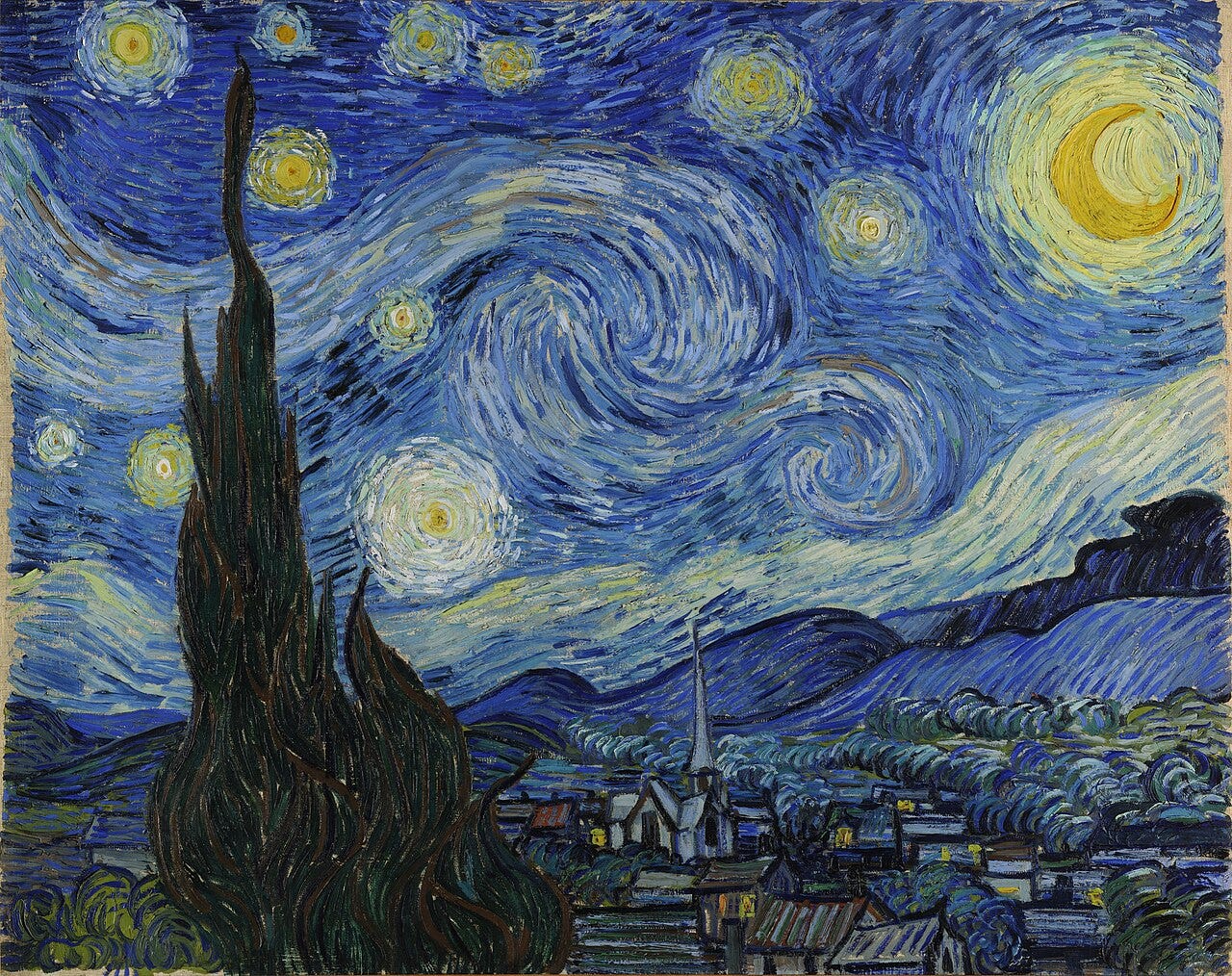
The Starry Night, Vincent van Gogh (1889)

Van Gogh The Starry Night
Vincent van Gogh, The Starry Night, 1889

A cypress against a swirling sky, painted by Van Gogh from a room in an asylum.

He made it at Saint Remy in June 1889, largely from memory, and the swirling view faces away from his barred window. He thought it a failure. It now hangs at the Museum of Modern Art in New York.

The Scream, Edvard Munch (1893)

Munch The Scream
Edvard Munch, The Scream, 1893

The face of modern anxiety, and a magnet for thieves.

Munch made four versions. One was stolen in 1994, another at gunpoint in 2004, and both were recovered. A tiny pencil line in the sky reads, could only have been painted by a madman. In 2021 the museum confirmed Munch wrote it himself.

Girl with a Pearl Earring, Johannes Vermeer (around 1665)

Vermeer Girl with a Pearl Earring
Johannes Vermeer, Girl with a Pearl Earring, around 1665

The painting people call the northern Mona Lisa, by Vermeer.

It is a tronie, a study of a type rather than a named person. It sold for about two guilders in 1881. The pearl itself is barely two strokes of white paint. For a closer read of Vermeer, see Woman Holding a Balance.

The Night Watch, Rembrandt van Rijn (1642)

Rembrandt The Night Watch
Rembrandt, The Night Watch, 1642

The giant group portrait that made Rembrandt a legend, and a target.

It shows daylight. Darkened varnish fooled later viewers into the night nickname. It was slashed with a knife in 1975 and splashed with acid in 1990. In 2019 the Rijksmuseum restored it live online for the world to watch.


Join 130,000 readers who get the secrets behind the paintings. Free.


Guernica, Pablo Picasso (1937)

A mural in black, white and grey, painted in rage after a bombing.

Picasso painted it in weeks after German planes bombed the Basque town of Guernica for Franco. He let it tour the world as protest and refused to send it to Spain until the country was a democracy again, which happened in 1981.

The Birth of Venus, Sandro Botticelli (around 1485)

Botticelli The Birth of Venus
Sandro Botticelli, The Birth of Venus, around 1485

The goddess on a shell, one of the defining images of the Italian Renaissance by Botticelli.

It survived because Botticelli sealed it with a layer of egg yolk varnish. It also survived Savonarola's Bonfire of the Vanities, when monks burned art and books in Florence. It hangs in the Uffizi.

The Creation of Adam, Michelangelo (around 1512)

Michelangelo The Creation of Adam
Michelangelo, The Creation of Adam, around 1512

The near touch between God and man on the Sistine Chapel ceiling, the most quoted gesture in art.

Michelangelo painted the ceiling in about four years, standing on scaffolding, not lying down as the myth claims. Since 1990 doctors have argued that the shape framing God matches a cross section of the human brain.

American Gothic, Grant Wood (1930)

Grant Wood American Gothic
Grant Wood, American Gothic, 1930

The stern farm couple that became the most parodied image in American art.

They were never a married couple, and never farmers. Wood posed his own sister Nan and his dentist, Dr Byron McKeeby, and imagined them as a farmer and his daughter. It lives at the Art Institute of Chicago.

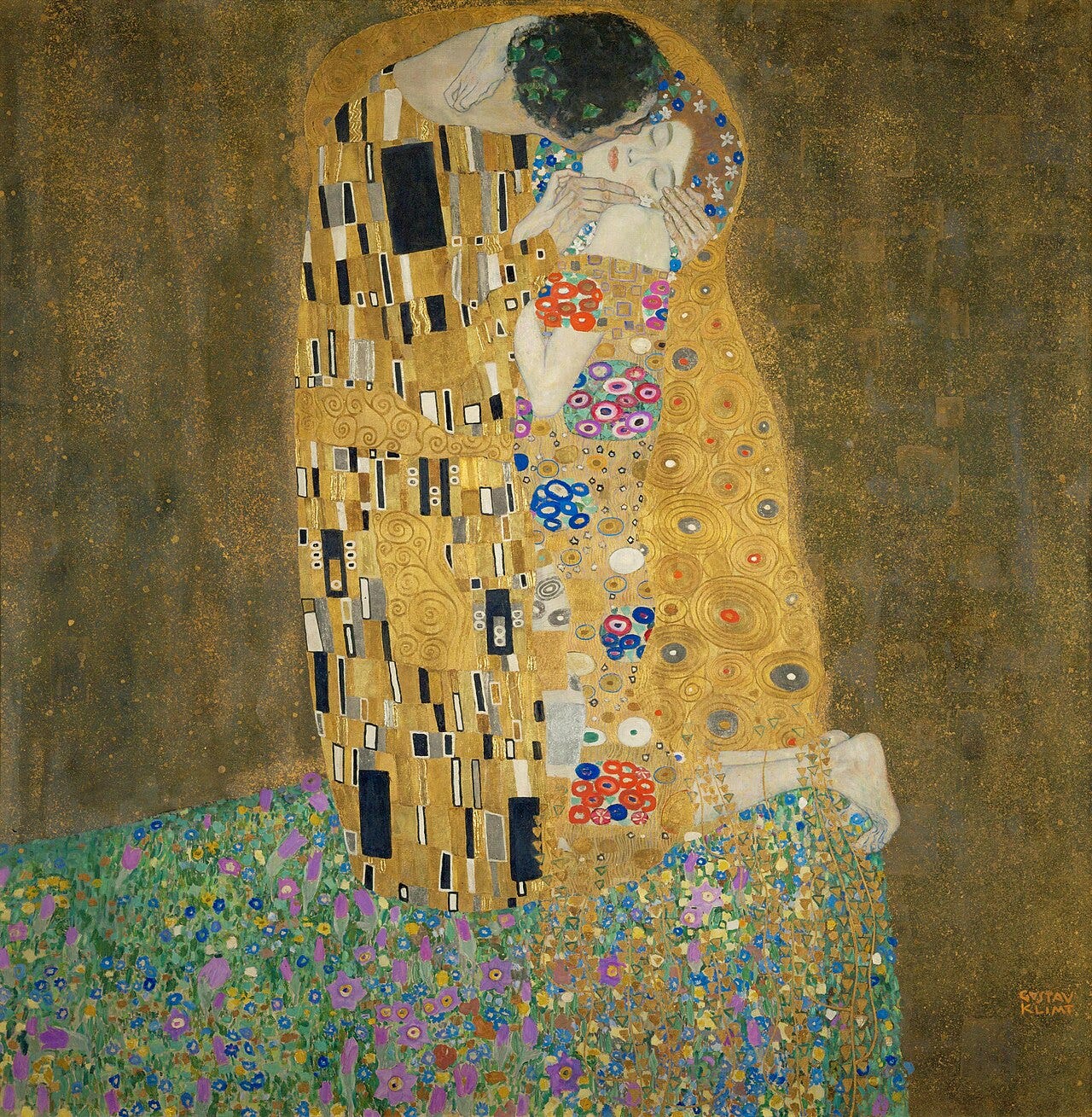
The Kiss, Gustav Klimt (1907 to 1908)

Klimt The Kiss
Gustav Klimt, The Kiss, 1907 to 1908

Two figures wrapped in gold leaf, by Klimt.

He made it at the peak of his golden phase, the son of a gold engraver. Austria bought it straight off the easel in 1908, and it has never left the country. You will find it at the Belvedere in Vienna.

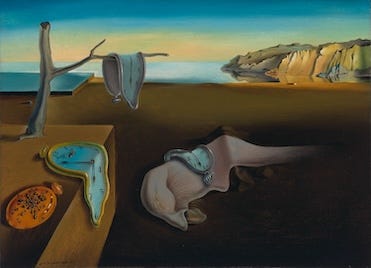
The Persistence of Memory, Salvador Dali (1931)

The melting clocks that made Surrealism famous with the public.

Dali said the soft watches came to him while staring at a runny Camembert cheese on a hot day. The small canvas, barely the size of a sheet of paper, hangs at the Museum of Modern Art in New York.

The Great Wave off Kanagawa, Katsushika Hokusai (around 1831)

Hokusai The Great Wave
Katsushika Hokusai, The Great Wave off Kanagawa, around 1831

The towering wave that became the most recognized image in Japanese art, by Hokusai.

It is a woodblock print, made in thousands of impressions. The wave dwarfs Mount Fuji in the distance. It helped spark japonisme and shaped Monet, Van Gogh and Debussy.

The museums that hold them

Many hang in the world's great museums. The Night Watch is at the Rijksmuseum, and The Starry Night is at MoMA.

What makes a painting famous, answered

  • What is the most famous painting in the world? The Mona Lisa, in the Louvre. Its fame took off after the 1911 theft.

  • Why is the Mona Lisa so famous? The 1911 robbery and the two year search made her a household name, on top of Leonardo's skill.

  • What is the most famous modern painting? Picasso's Guernica and Munch's The Scream are the usual answers.

  • Is the Great Wave a painting? No. It is a woodblock print, produced in thousands of copies.

  • What is the most parodied painting? American Gothic by Grant Wood, from 1930.

Fame has a back story

None of these became famous by hanging quietly on a wall.

A theft, a knife, a bomb or a joke pushed each one into the culture. When the Mona Lisa was stolen in 1911, crowds lined up at the Louvre just to see the empty wall where she had hung.


If the stories behind the icons pull you in, keep going:


Two new stories a week, 130+ secrets unlocked. Start free.