
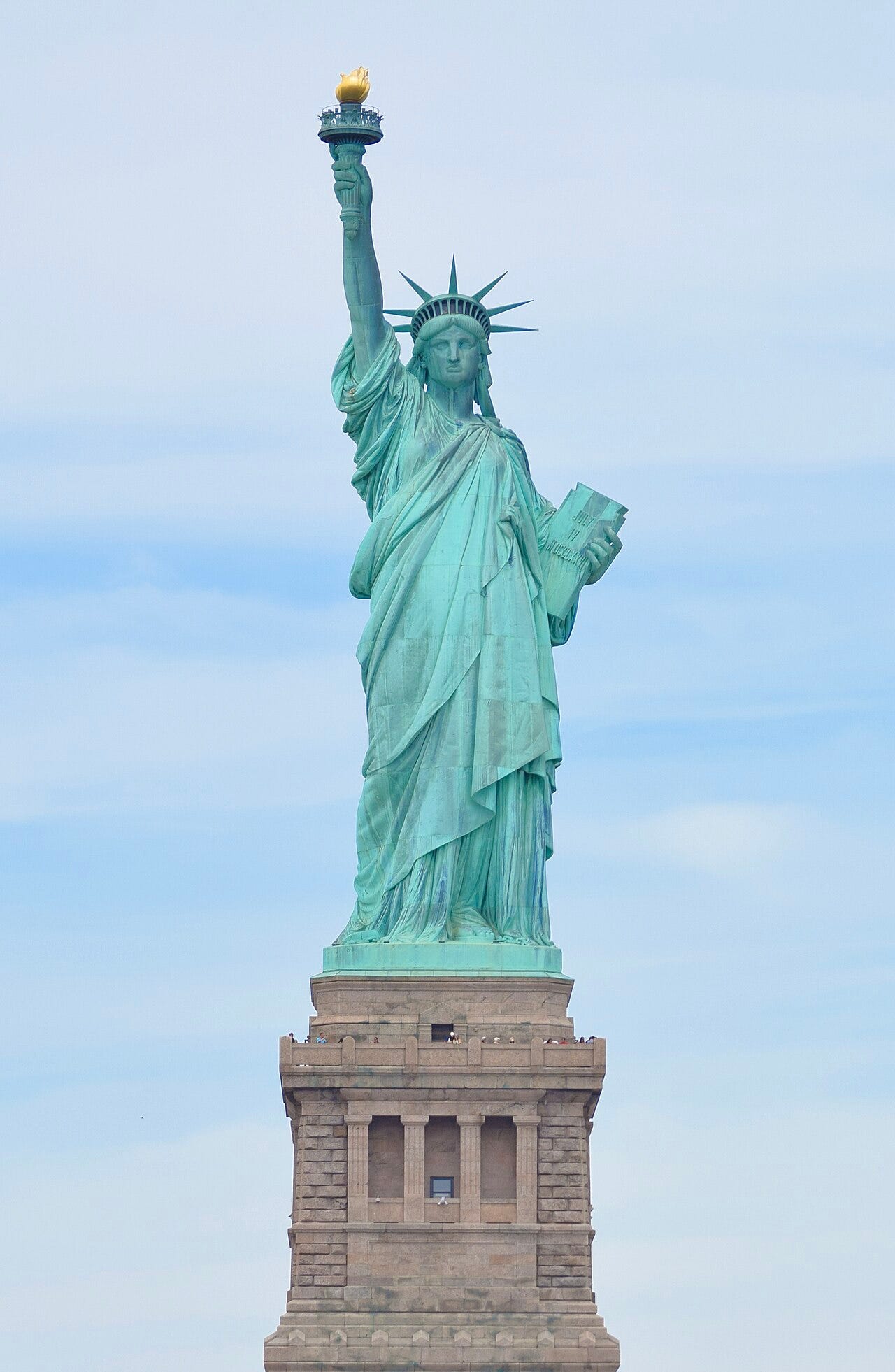
The Statue of Liberty, the Great Sphinx, Christ the Redeemer and nine other statues are the most famous in the world, and almost none lives in a museum. They stand on hilltops, waterfronts and squares, and people cross oceans to see them.
Most were paid for by a nation, a church, a city or a private patron with a message to send. Each entry follows a statue from its first idea to today, including what was broken, moved or rebuilt.
Cool Stories About Art is a newsletter to learn art the fun way.
Join 200,000+ readers and get:
10 new art stories / month
The entire archive of content (140+ articles)
Comment, ask questions, and chat with other readers
How These Were Chosen
A statue earns its place here if at least one of three things holds. It still stands in the open air and has become the emblem of its city or country. Or its making can be followed step by step in the record, from who paid for it to who carved and engineered it.
Or it has been damaged, moved or rebuilt, and that history is now part of what draws visitors. The twelve run from a bronze girl on a rock in Copenhagen to the copper woman at the entrance of New York Harbor.
12. Edvard Eriksen, The Little Mermaid (1913)
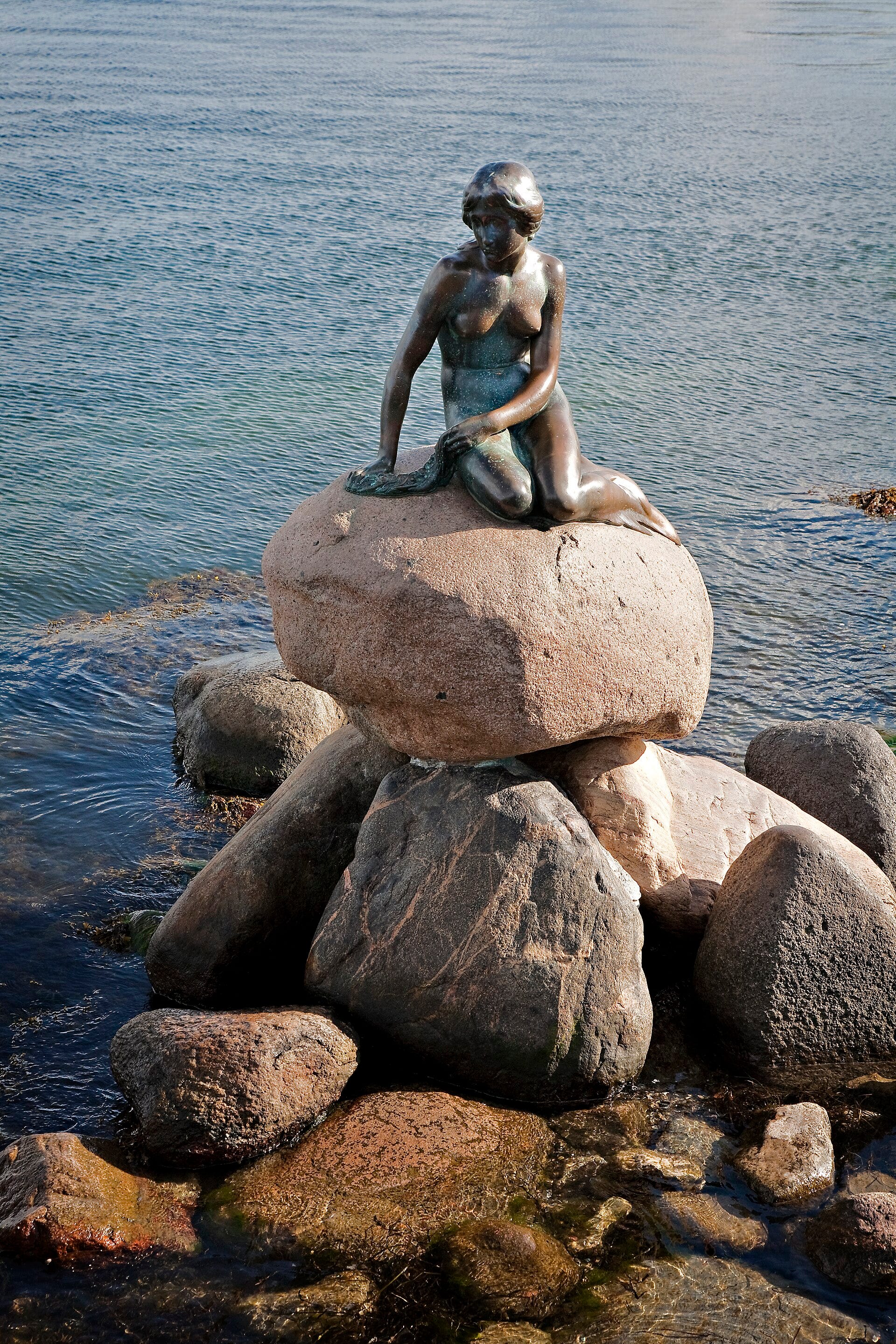
A small bronze girl sits on a rock at the water's edge in Copenhagen, and below the knees her legs give way to a fish tail. The Danish sculptor Edvard Eriksen made her, and she was unveiled on the Langelinie promenade, a waterfront walk along the harbor, on August 23, 1913.
She began with a night at the theater. Carl Jacobsen, the son of the man who founded the Carlsberg brewery, saw a ballet at the Royal Theatre based on Hans Christian Andersen's fairy tale of 1837, and in 1909 he commissioned the statue.
Jacobsen asked the ballerina who had danced the role, Ellen Price, to pose for it. Price lent the statue her face but refused to pose nude, so for the body Eriksen used his own wife, Eline Eriksen, as the model.
The mermaid sits low, right beside the path. At 1.25 meters she is barely taller than a child, and visitors can almost touch her.
She has also been attacked again and again. In 1964 her head was sawed off, an attack blamed on artists of the Situationist movement, a circle of radical artists and writers. The head was never found, and a new one was made.
In 1984 two young men cut off her right arm and brought it back two days later. In 1998 she was beheaded a second time, and this time the head turned up outside a Danish television station and was put back in place.
In 2003, explosives knocked her off her rock, and she was found in the water with holes blasted in her wrist and knee. She has also been covered in paint many times, red in 2017 in protest against whaling in the Faroe Islands.
After each attack she has been repaired and set back on the same rock, facing the same promenade.
At a Glance
Sculptor: Edvard Eriksen
Unveiled: August 23, 1913
Material: Bronze, 1.25 meters tall
Where to see it: Langelinie promenade, Copenhagen, Denmark
About This Statue
Is the Little Mermaid on the rock the original?
The German magazine Der Spiegel reported in 2008 that the bronze in the harbor is a copy, and that the sculptor's heirs keep the original at an undisclosed location.
Has the statue ever left Copenhagen?
Once. In 2010 the Little Mermaid was shipped to Shanghai and spent the six months of the World Expo in the Danish Pavilion, before returning to her rock.
Why are pictures of the statue a legal issue?
The sculpture remains under copyright until the end of 2029, seventy years after Eriksen's death in 1959. His heirs have gone to court over its use, although Denmark's Supreme Court ruled in May 2023 that a newspaper's cartoon and masked photo of her did not infringe that copyright.
11. Paul Landowski and Heitor da Silva Costa, Christ the Redeemer (1922 to 1931)
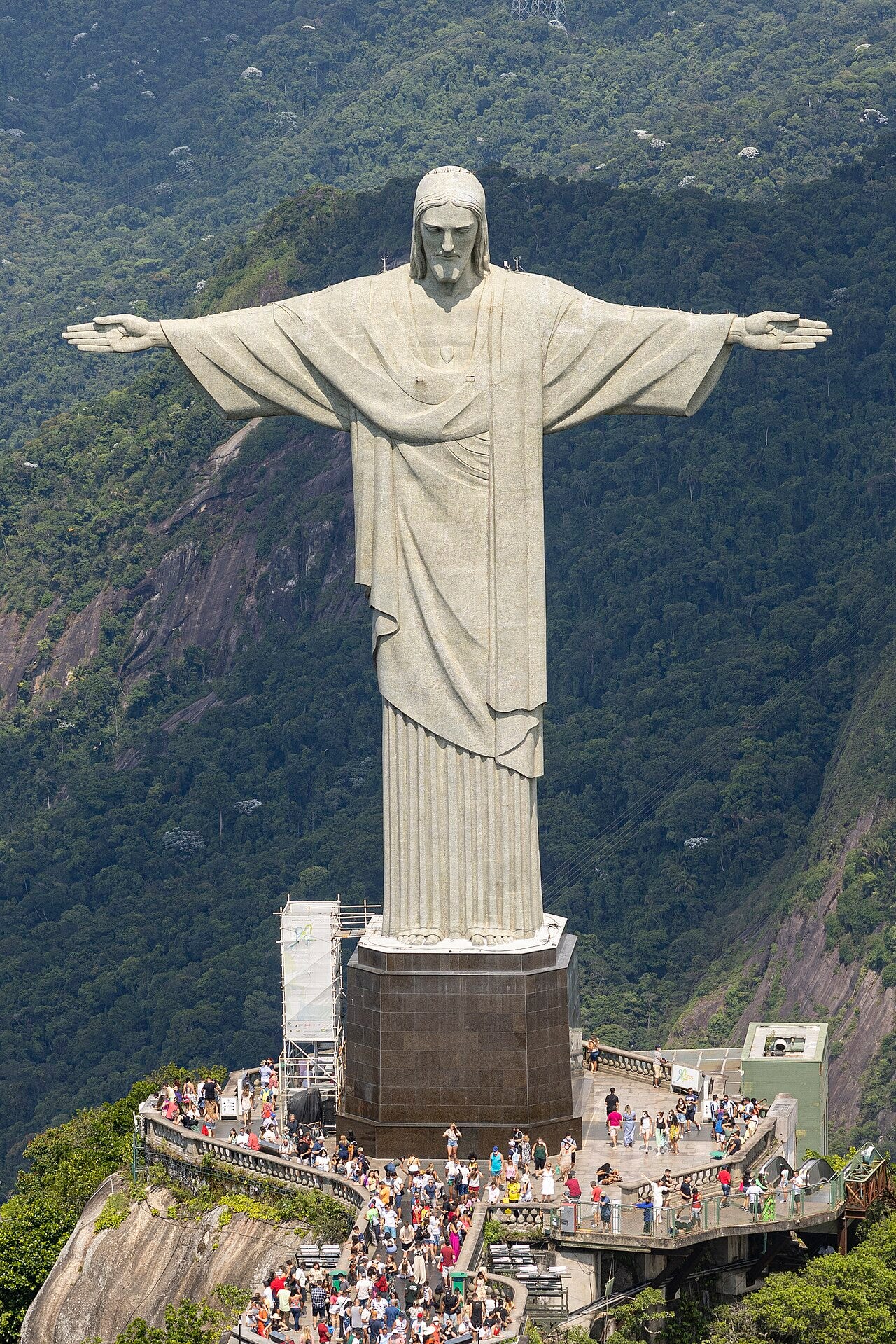
A figure of Christ stands on the summit of Corcovado, a peak about 700 meters high above Rio de Janeiro, his arms stretched wide over the city. The statue is 30 meters tall, 38 with its pedestal, and the arms span 28 meters.
It was dedicated on October 12, 1931, after nine years of work, and those wide open arms were not part of the first design that was accepted.