The Old Masters Were Women Too
Why did their names vanish for 3 centuries? Discover the incredible journey of 4 masters from Antwerp to Amsterdam and how they finally reclaimed their legacy.
Ghent, March 2026.
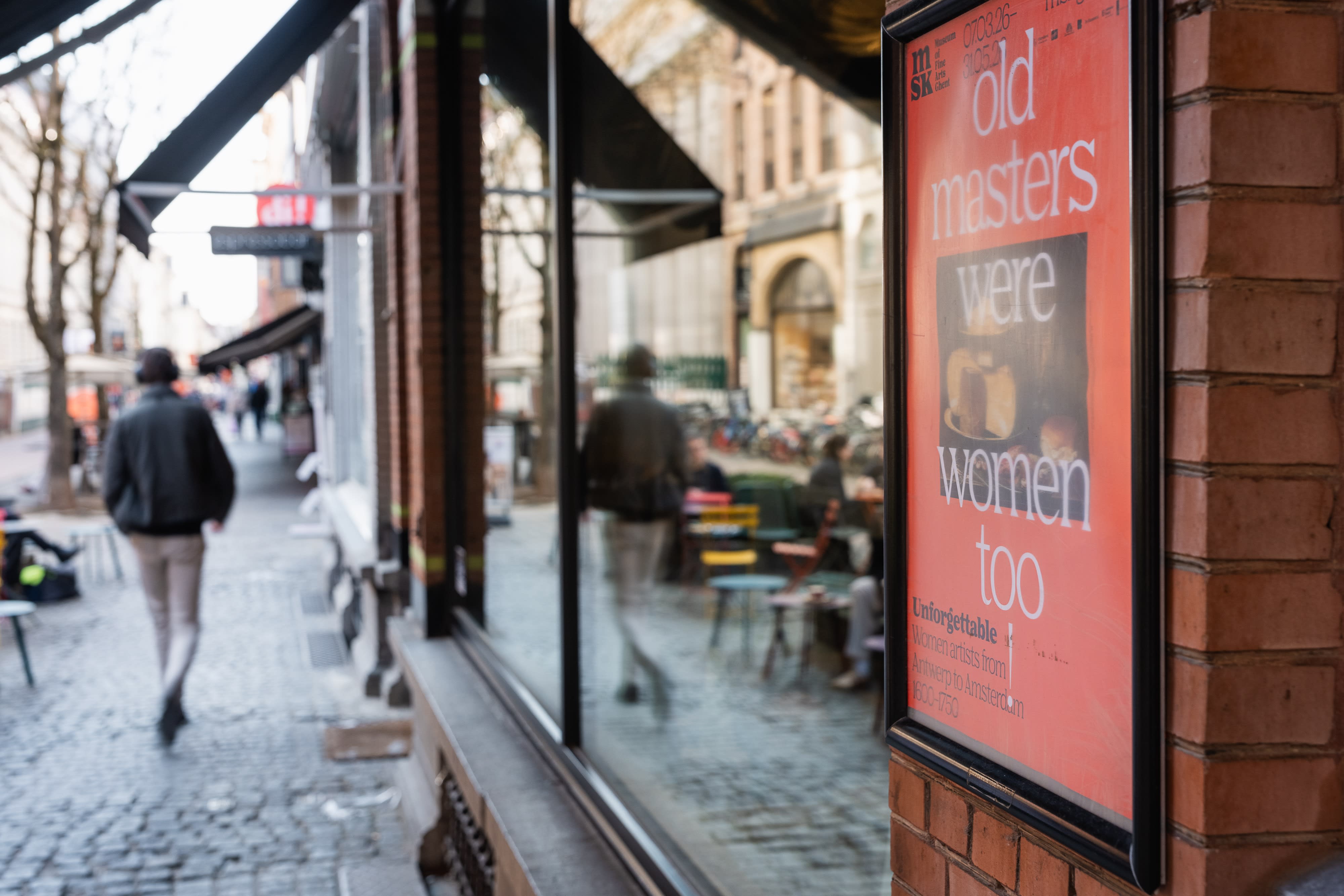
On the walls of the city, in the windows of cafes, at the entrance of libraries and theaters, three slogans have appeared.
The Old Masters were women too.
Muse or Master?
She painted, he signed.
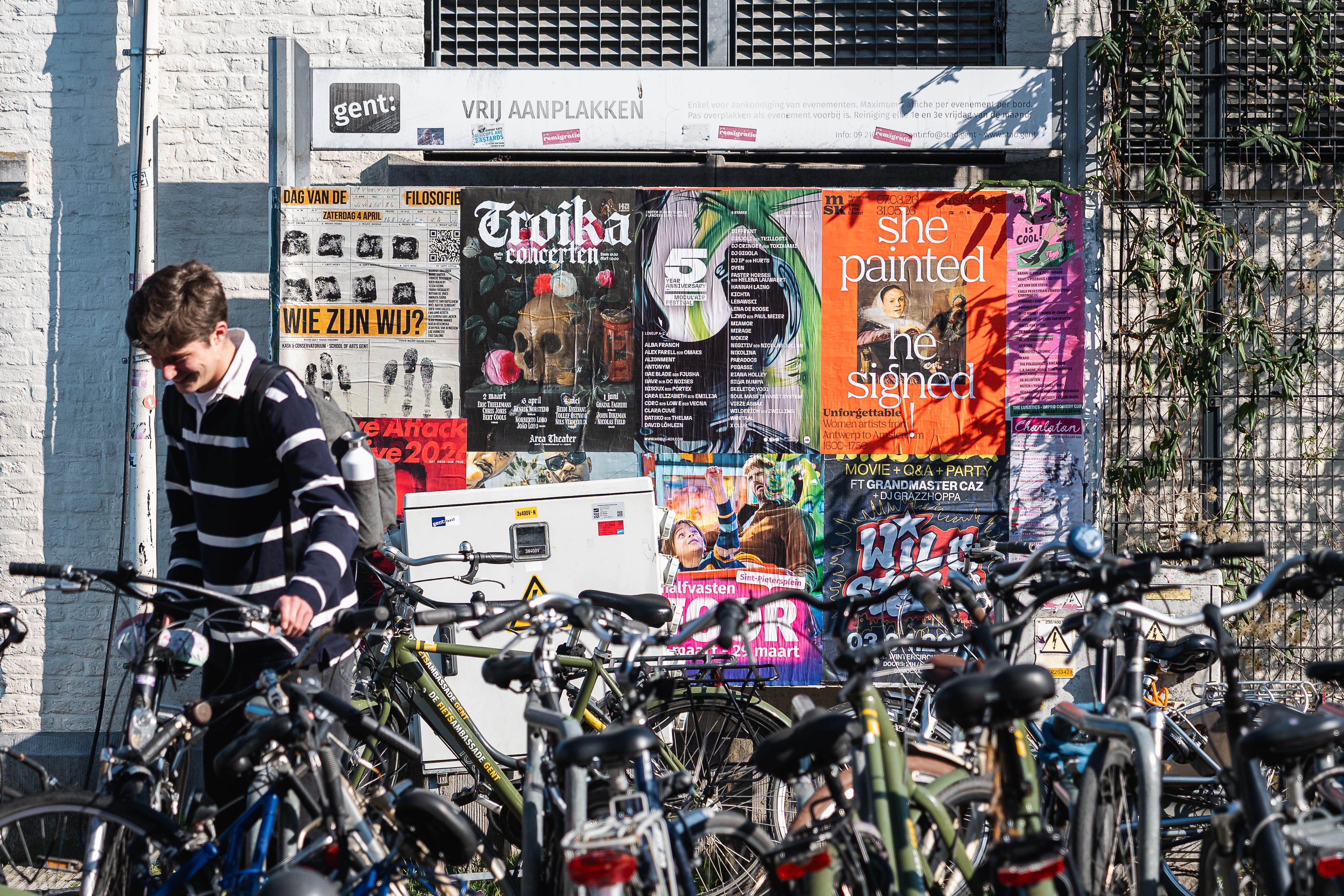
The posters lead to the Museum of Fine Arts in Ghent. On the facade, the announcement of the exhibition Unforgettable. Women Artists from Antwerp to Amsterdam, 1600 to 1750.
More than forty artists from the seventeenth and eighteenth centuries, brought together for the first time.
From Rachel Ruysch to Johanna Koerten, from Maria Faydherbe to Anna Maria van Schurman, stars of their time whose names have slipped into oblivion. In their day, they painted, sculpted, engraved, sold their work to the courts of Europe, trained pupils, ran workshops. They were read, exhibited, cited in the biographies of their era.
And then, after their death, their names slipped away.
For four of them, the erasure lasted three hundred years. Each through a different path.
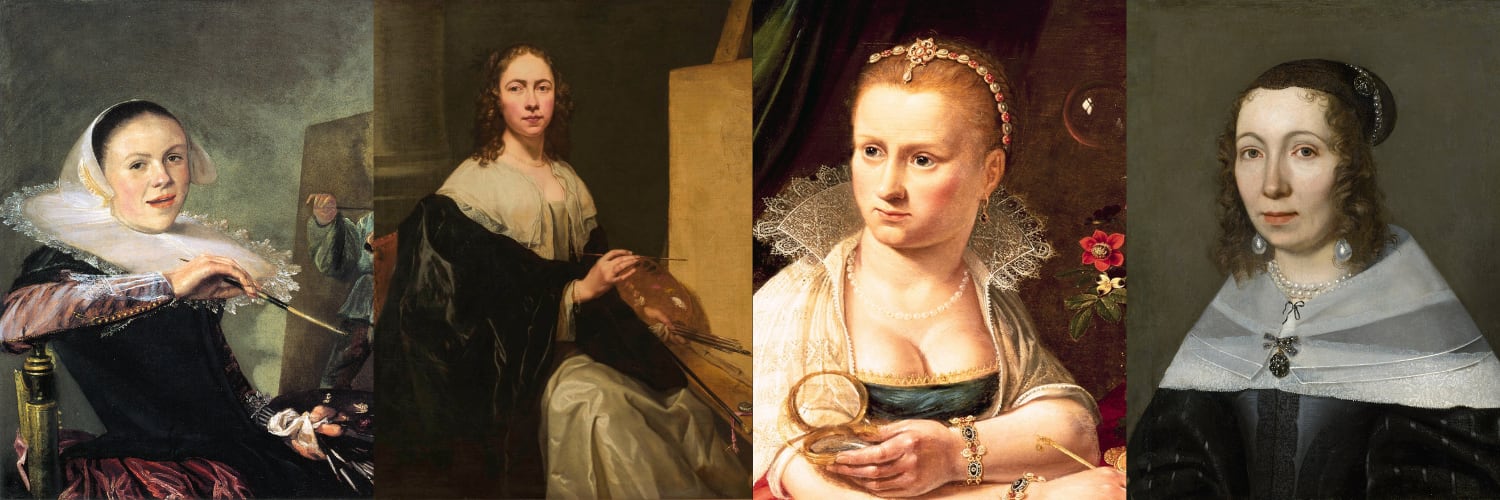
Clara Peeters. Judith Leyster. Michaelina Wautier. Maria Sibylla Merian.
This is their story.
1. Clara Peeters, Antwerp, 1612
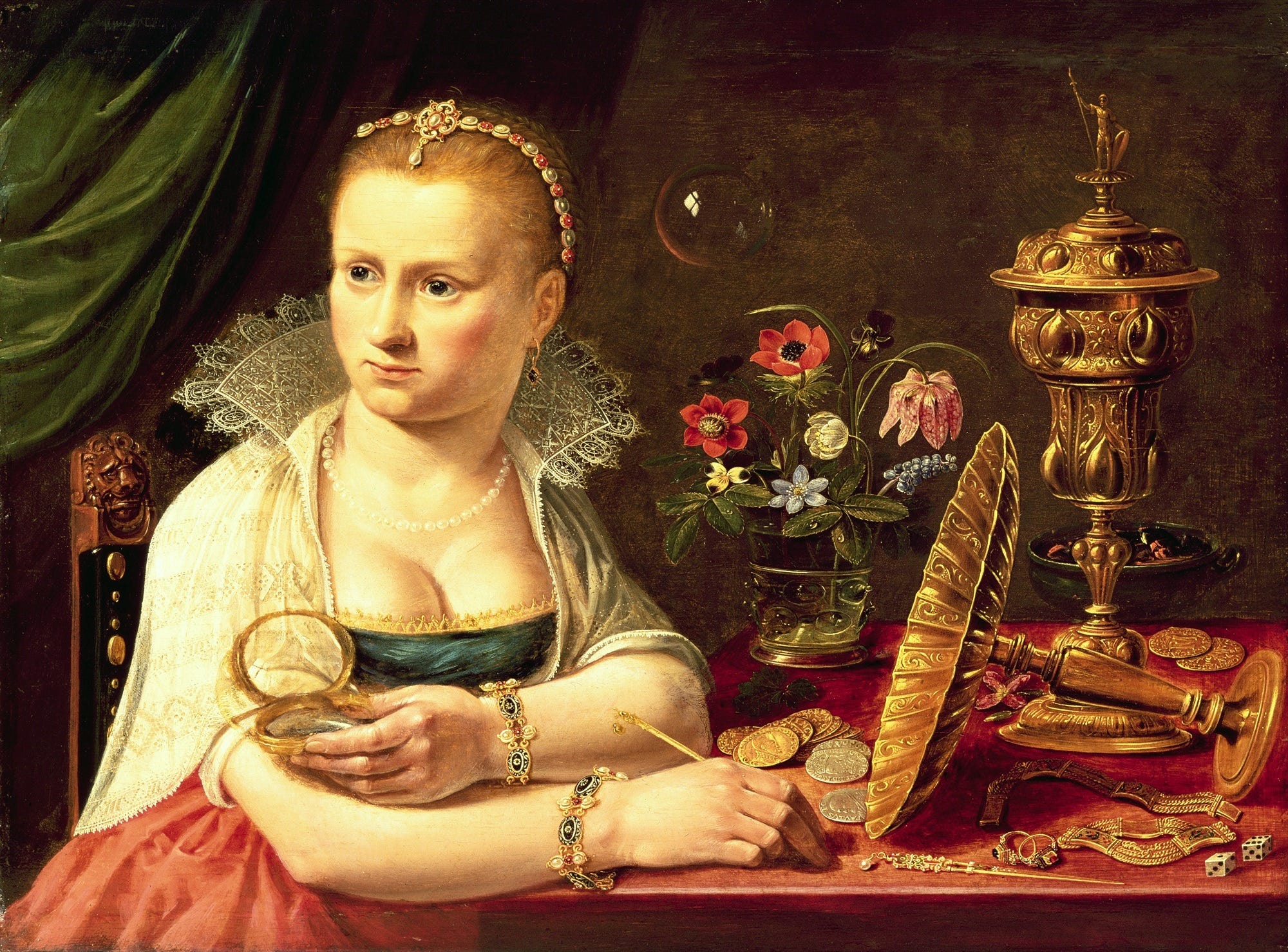
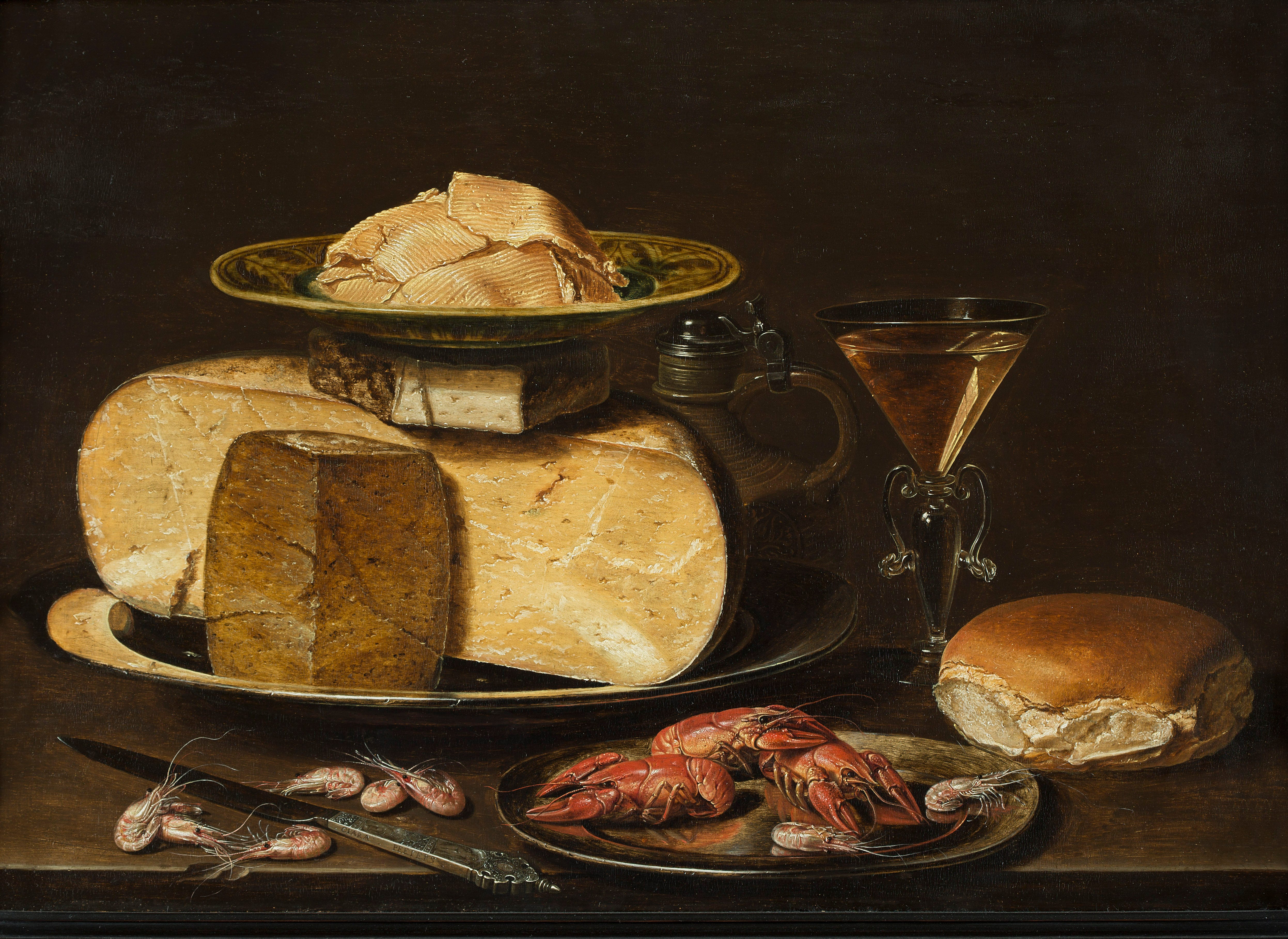
Antwerp, 1612. Clara Peeters, 25 years old, signs a still life.
Not in the lower corner of the panel, as the painters of the city do. Not on a marble plaque painted in trompe l’oeil, as some do. On the handle of the knife she has just painted.
The knife is not a table detail. It is a bridal knife, the conjugal object given to newlyweds in the Low Countries (modern day Belgium and the Netherlands), on whose handle one engraved both names and moral virtues. On Peeters’ knife, in place of the husband’s name, it is her own.
CLARA PEETERS. In capitals.
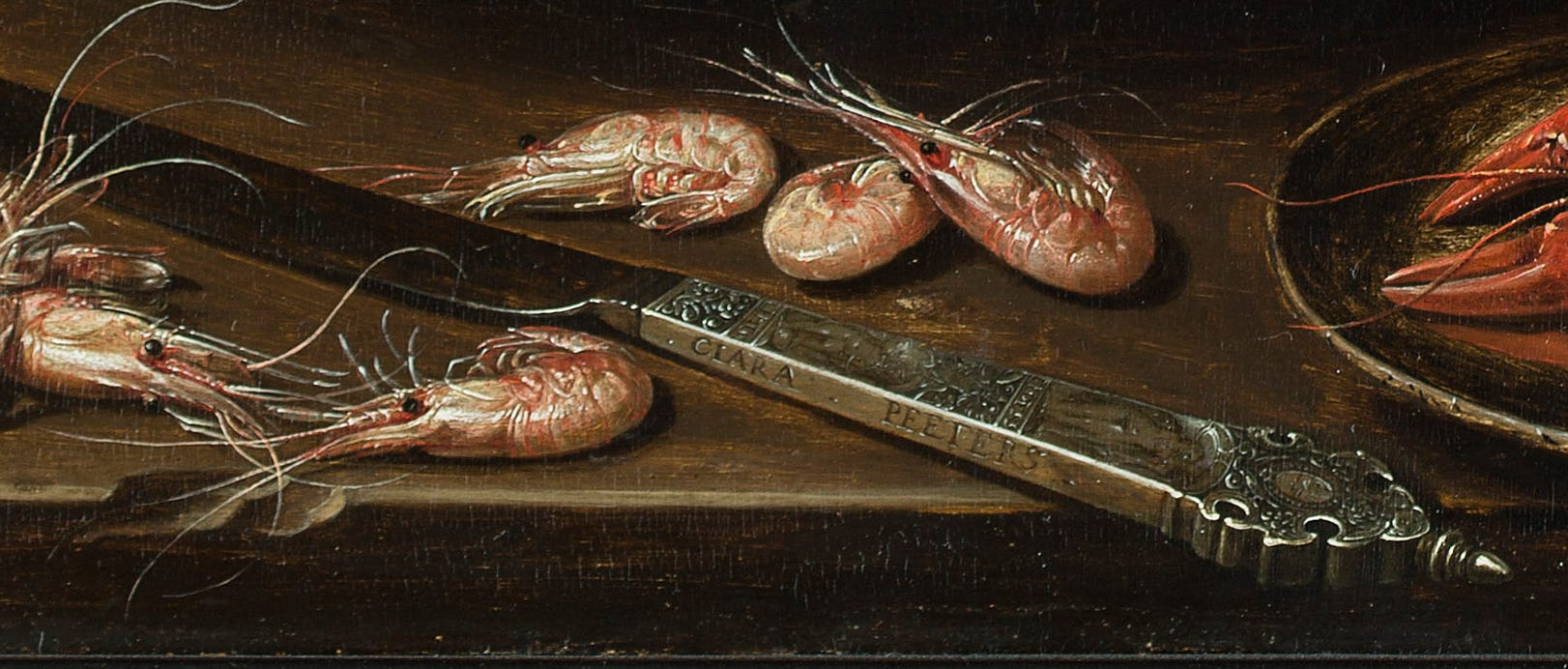
The gesture is deliberate.
In 1612 in Antwerp, women painters exist. They can even be members of the Guild of Saint Luke, the all powerful painters’ corporation of the city. But they are rare. Most paint in the workshop of a father, a brother, or a husband, and sign under that workshop’s name. A man’s name.
Peeters is one of the exceptions. No painter father, no family workshop. She runs her own studio. She specializes entirely in still life, a genre that barely exists before her.
Before 1608, the year she paints her first dated work, fewer than five food still life paintings are known to have been produced in all the Low Countries. Five, in total.
Peeters will largely help invent the genre.
The falconry still life, that is her, in 1611, the year Archdukes Albert and Isabella reinstate hunting at court. She also establishes the first codes of the breakfast still life, what Dutch painters will soon call the ontbijtje, which will become a generation later one of the great subgenres of Golden Age painting. She is also one of the first to paint fish.
But she does not place her name on the surface of her canvases. She slips it inside the painting itself.
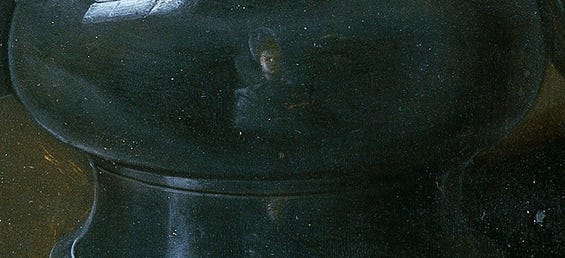
She places a discreet CLARA P on the edge of a painted table. And in at least eight of her known paintings, she slips her own face into the reflective surfaces of the objects she herself has painted. Silver gilt goblets. Bulging pewter pitchers.
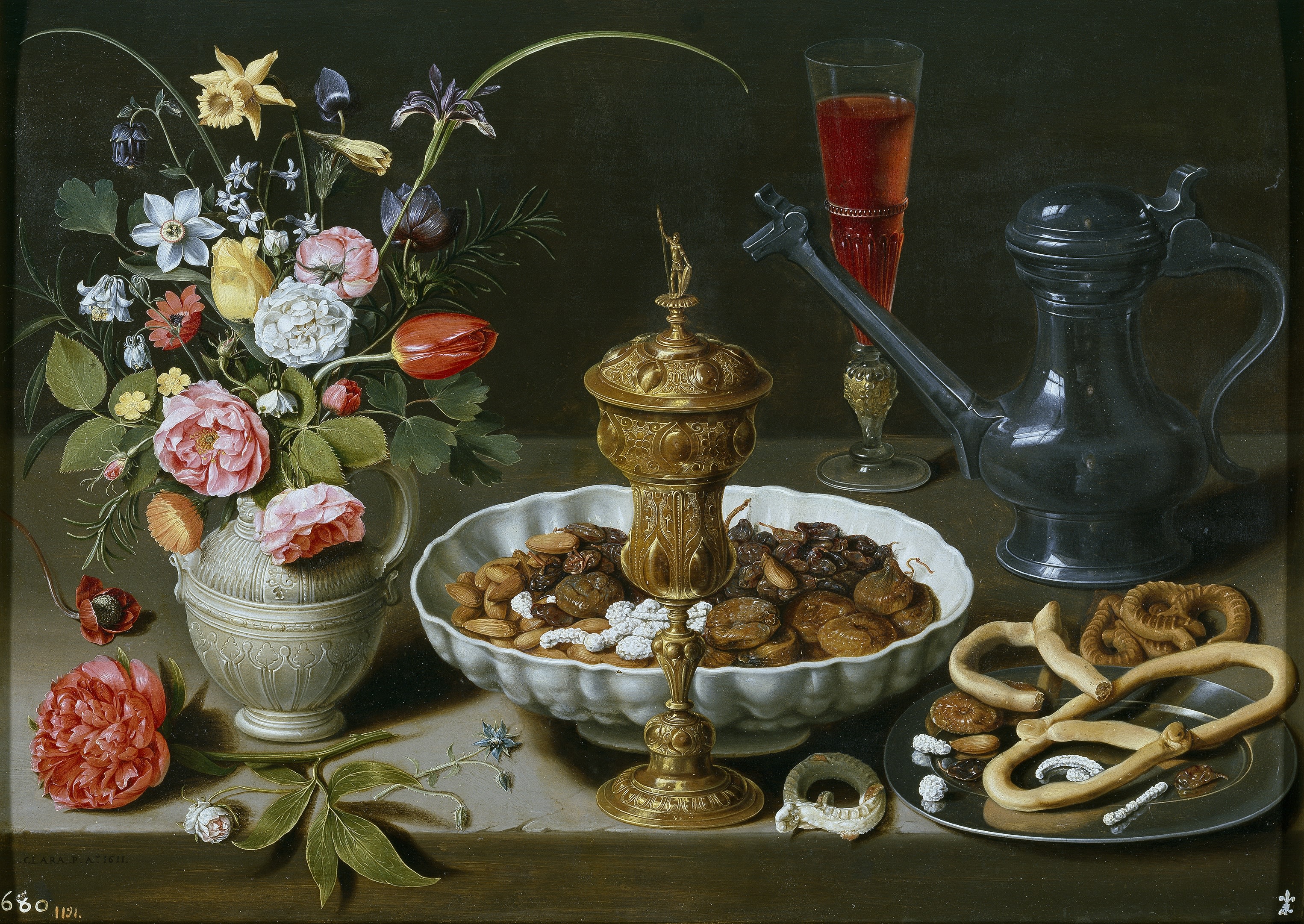
In a still life painted in 1611, her face appears six times in the same painting, on two different objects. In the reflection of the goblet, she stands before her easel, brush in hand, painting. In the reflection of the pitcher, she wears a tall lace bonnet and a white ruff, the large pleated collar typical of women of the Antwerp upper class.
She does not sign the canvas. She paints herself into it.
For centuries, her paintings circulate under her name. But the system is not understood. The signatures engraved into the objects and the tiny self portraits in the pitchers are not read for what they are: a continuous, methodical assertion of who painted the canvas.
It takes the late twentieth century for art historians to start looking at her paintings as closely as she painted them.
Peeters paints for over thirty years. After 1639, nothing. No will, no last dated painting. She is 52, and she vanishes from the archives.
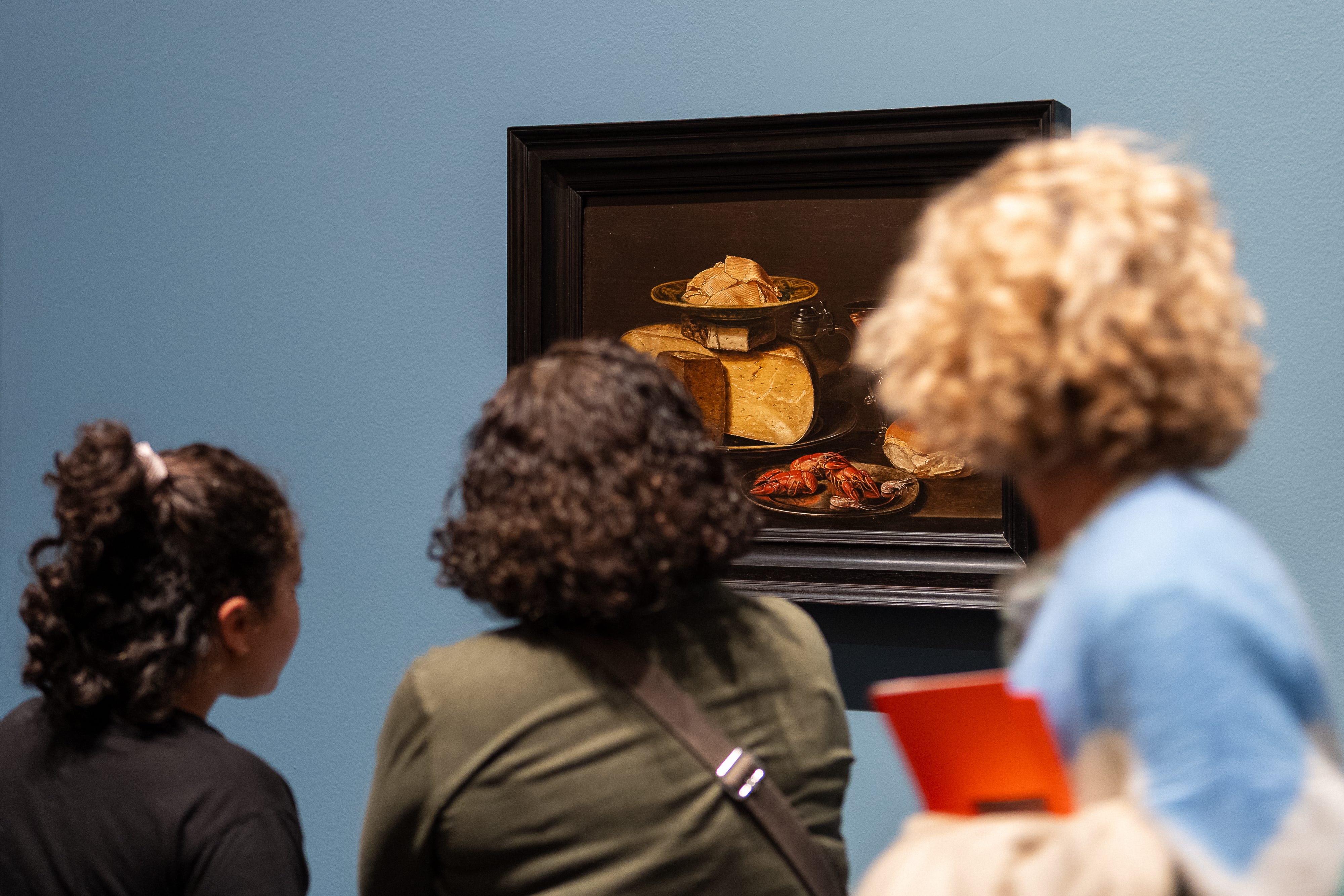
The exhibition Unforgettable brings together six of her paintings. The still life with cheeses and shrimp is among them. If you step close to the panel, both gestures appear side by side: the name engraved on the handle of the bridal knife, and the tiny face of the painter in the reflection of the jug’s lid.
2. Judith Leyster, Haarlem, 1635
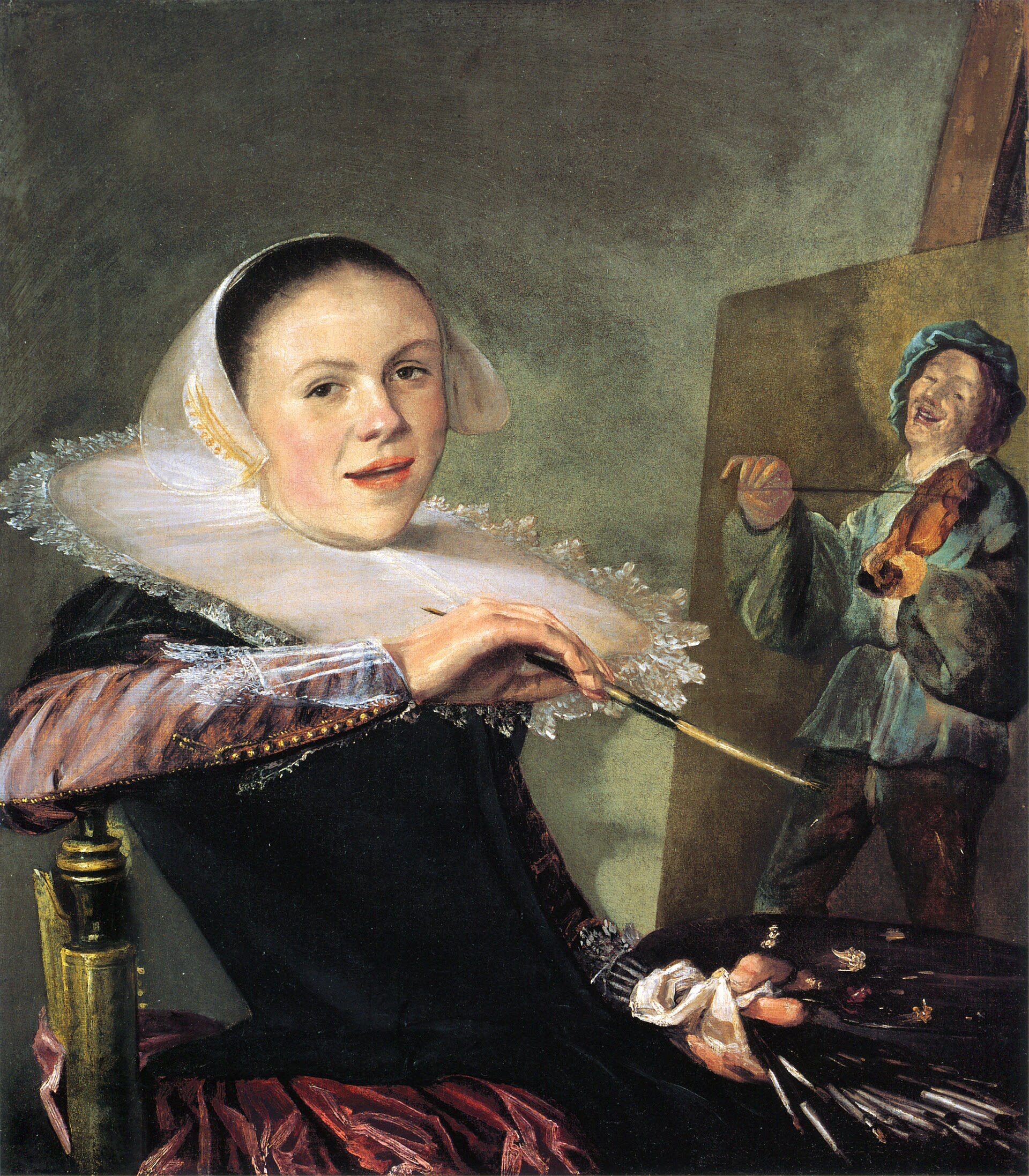
Haarlem, 1635. Before the officers of the Guild of Saint Luke, Judith Leyster, 26 years old, files a complaint against Frans Hals.
Hals is 53. He is the most famous master painter in the city. He has just accepted into his workshop a young apprentice, Willem Wouters, who had begun his training with Leyster a few days earlier. Wouters left Leyster without the guild’s permission. Hals recruited him.
Leyster attacks, before the most powerful institution in the city, the most respected master in the trade.
The ruling comes a few weeks later. Wouters’ mother pays four guilders to Leyster, half the sum she had claimed. Hals pays a fine of three guilders. Wouters is no longer allowed to paint in Hals’ workshop. Leyster, too, is sanctioned for failing to register the apprentice in time with the guild.
A partial victory. But in 1635, the act of a woman who does not bend before Frans Hals.
Leyster was born in Haarlem in 1609. Her father runs a small brewery he named De Leyster: the pole star in Dutch, the guiding star. A few years after her birth, he goes bankrupt. The father loses the sign. The daughter keeps the name.
She learns to paint with a master of the city, possibly Hals himself.
At 17, the chronicler of Haarlem, Samuel Ampzing, notices her. In the margin of his Description of Haarlem, about a painter’s workshop, he writes that there is someone else there who paints with beauty and boldness. The name in the margin is Leyster.
At 24, in 1633, she enters the guild. She opens her workshop. She takes three male apprentices in two years.
She never signs her full name. Just a monogram: a J and an L intertwined, and a five pointed star on the right, a play on her family name.
She marries the painter Jan Miense Molenaer in 1636. She dies in 1660, at 50, in Heemstede, near Haarlem.
After her death, her name disappears from the major histories of art. Houbraken, who publishes in 1718 the great collection of biographies of Dutch painters, gives her no entry.
For 233 years, her paintings are sold, bought, exhibited under other names. Most often as Frans Hals. Sometimes as Pieter de Hooch, Gerard van Honthorst, Jan Miense Molenaer, Jan de Bray.
Someone, at some point, paints the signature of Hals over the star monogram on one of Leyster’s canvases, The Happy Couple, dated 1630.
May 1893. London. New Bond Street.
The Dutch art historian Cornelis Hofstede de Groot walks into the gallery of Thomas Lawrie, which opened a few months earlier. On the wall, The Happy Couple. Lawrie bought it from another London dealer, Charles Wertheimer, as a Frans Hals. Wertheimer, when selling him the painting, had told him it was the finest Hals he had ever seen.
Hofstede de Groot steps closer. Under the Hals signature, he makes out a smaller monogram. A J. An L. A star.
May 1893. London civil court. Lawrie sues Wertheimer for misrepresentation: the painting is authentic, but the Hals signature painted over it is the forgery. The two dealers settle out of court.
The name Judith Leyster is never spoken during the trial.
The woman who had taken Hals before the Haarlem guild in 1635 sees, two hundred and fifty eight years later, her signature covered by that of the same Hals on one of her own paintings.
The 1630 self portrait has become the image used as the banner for most publications and exhibitions on women painters. It is in Unforgettable, along with four other Leysters.
The Happy Couple stayed in Paris, at the Louvre.
3. Michaelina Wautier, Brussels, c. 1655
Brussels, around 1655. Michaelina Wautier, fifty years old, paints a life size male nude.
The canvas is two meters seventy high and three meters fifty wide. Bacchus, drunk, round bellied, is carried by his satyrs. Several full length male nudes surround him, precise anatomy, nothing concealed.
It is, to the knowledge of art historians today, the first time a woman painter depicts a life size male nude in a mythological scene of this scale.
And she paints herself into the canvas.
At center right, standing among the revelers, a clothed woman in her fifties looks the viewer straight in the eye. She is not part of the procession. She observes the scene. She observes us.
Wautier signs the painting with her name.
She was born in Mons, County of Hainaut, in 1604, baptized in September. She has an older brother, Charles, also a painter. In 1645, they settle together in Brussels, share a studio, and stay there for the rest of their lives. Neither of them marries.
She sells four paintings to Archduke Leopold Wilhelm of Austria, governor of the Southern Low Countries, the greatest collector at the Brussels court. Her brother Charles sells him fewer.
She dies in Brussels in 1689, at 85. She leaves everything to Charles.
That is the last time her name is attached to her paintings for three centuries.
From the late seventeenth century on, her works enter private collections and resurface in inventories under the name of Charles Wautier. The signatures are still there, perfectly visible. They have been read as Charles, or ignored.
No one could believe that these canvases, these full length male nudes, this Triumph of Bacchus, were the work of a woman.
The self portrait Wautier paints around 1649 is for decades catalogued as a work by Artemisia Gentileschi. When that attribution collapses, it is reassigned to the Dutch scholar Anna Maria van Schurman.
The Triumph of Bacchus itself remains hanging in Vienna under the name of her brother Charles for generations. The official attribution to Michaelina Wautier dates from 1967.
It took three hundred years, give or take, to rewrite the label.
The first solo retrospective dedicated to Michaelina Wautier alone opened in 2018 at the MAS, the Museum aan de Stroom in Antwerp. It brought together for the first time nearly all the known paintings by the artist.
The Triumph of Bacchus has not left Vienna. But Unforgettable shows two other Wautiers, including A Boy with Tobacco, around 1650, the study of a child sneezing, considered one of the chiaroscuro masterpieces of its era.
4. Maria Sibylla Merian, Port of Amsterdam, July 10, 1699
Port of Amsterdam, July 10, 1699. Maria Sibylla Merian, 52 years old, boards a ship bound for Surinam.
With her, her younger daughter Dorothea, 19, and the drawing materials needed for two years of work on site. The crossing to Paramaribo, capital of the Dutch colony of Surinam, takes about two months.
No institution commissions her. No prince pays her passage. To leave, she has sold part of her own collections. Before boarding, she has written her will. She is divorced. She leaves behind in Amsterdam her other daughter, Johanna Helena, and a small studio.
What she wants to do in Surinam, no one has done before her.
Go there, see the insects alive, watch them lay eggs, feed, molt, become adults, on their own plants, in a tropical climate, and draw everything from life.

Merian was born in Frankfurt am Main in 1647. Her father is Matthaus Merian the Elder, one of the greatest engravers and publishers in Europe, founder of a printing dynasty. He dies when she is three. Her mother remarries Jacob Marrel, a still life painter, who becomes her first teacher.
At thirteen, Merian raises caterpillars in sealed jars and draws their transformation day by day.
At 32, she publishes her first book on caterpillars, in German, in Nuremberg.
In Surinam, she stays two years. She treks through plantations, draws, observes. She catches malaria. In June 1701, she is forced to return.

In 1705, she publishes Metamorphosis insectorum surinamensium. Sixty giant plates, each engraved and hand colored by Merian and her workshop. Each plate shows a plant, the insects that feed on it, and their complete life cycle.
The book founds modern entomology.
In her entry on the peacock flower, plate 45, Merian writes a sentence no scientific publication of her century would have printed. Translated from her seventeenth century Dutch:
The Indians, who are not well treated by their Dutch masters, use the seeds to abort their children, so that their children will not become slaves like them.
She names the plant. She names the act. She names the master slave relationship. She does not name the women who told her.
Merian dies in Amsterdam in 1717, at 70.
In the decades that follow, her name is misattributed within her own family. Some of her plates are reissued under the name of Matthaus Merian, her father, who died when she was three. Others are republished under the name of Jacob Marrel, her stepfather, who never set foot in Surinam.
The book of one woman becomes the legacy of two dead men.
Her name is not restored to the science of entomology until the twentieth century.
Unforgettable shows seven of her works. Including the plate that opens the Surinam book: a pineapple surrounded by cockroaches, engraved by Merian a year and a half after her return to Amsterdam.
Unforgettable
Forty women artists from the Low Countries (modern day Belgium and the Netherlands) across the long seventeenth century, brought together for the first time in the same museum.
Nearly one hundred and fifty works.
The exhibition spans three centuries, from the Antwerp still lifes of Clara Peeters to the tropical plates of Merian, through the flowers of Rachel Ruysch painted when she was still working at 78, the intricate paper cutouts of Johanna Koerten, the Hebrew calligraphy of Anna Maria van Schurman, the sculptures of Maria Faydherbe.
Six Peeters. Five Leysters. Two Wautiers. Seven Merians. And thirty five other women painters, sculptors, engravers, embroiderers, most of whom have never been shown in the same room.
Unforgettable. Women Artists from Antwerp to Amsterdam, 1600 to 1750 is open at the MSK in Ghent until May 31, 2026. Co organized with the National Museum of Women in the Arts in Washington.
The exhibition closes May 31. After that, these forty women go back to their separate museums across the world, and some go back to storage.
If you are anywhere near Ghent this month, this is the reason to go. Allow ninety minutes for the exhibition. And stay another hour in the permanent galleries of the MSK right after: it is one of the finest collections of Flemish and Dutch painting in Europe, with Bosch, Rubens, Memling, and many leave without seeing it.
Three hundred years of recovered signatures.


Last weekend of April my wife and I attended the last days of an exhibit on Women Abstract Expressionists at the Muselle Museum at William and Mary College. Now abstract expressionism does not appeal to every taste, but I am a big fan. I was delighted to see so many excellent works, arguably some of them masterpieces by women you’ve heard of (Joan Mitchell, Helen Frankenthaler, Lee Krasner) and by some you’ve likely not. Absolutely stunning. It is so great to get these “lost” pieces into the available art canon.
Thank you so much for writing about this <3 I'm currently reading a book called "Unknown/Anonymous is a woman's name" by Andrea Martínez (sorry, I translated the title from Spanish because sadly it is not yet translated to English) and it talks about this topic too, mostly across literature. What an important matter to reflect and correct!!
Thank you for shining light on it. I wish I could go to this exhibition, will tell my friends in Ghent about it :)