

170 000+ readers. Learn art the fun way.
This is a preview. Paid subscribers get the full story.
You’ll also get:
10 new stories every month
The full archive (130+ Art stories)
Your personal art guide. Comment, ask questions, DM me anytime
iPhone user? Subscribe at coolstoriesabout.art, not via the app. Apple adds 30% to the price.
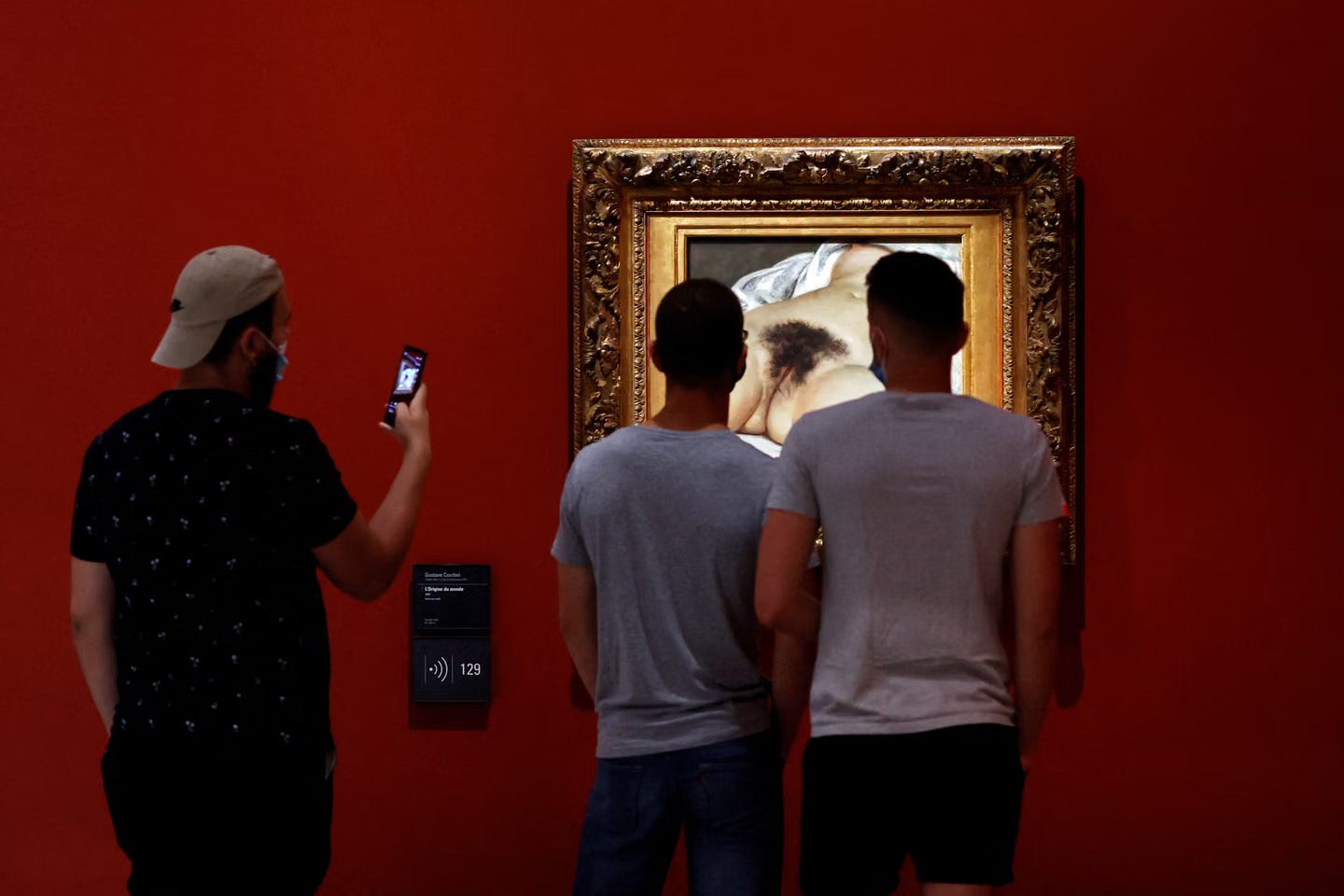
The Musée d'Orsay, in Paris.
There are the parents who clamp a hand over their children's eyes and quicken their step toward the next room.
There are the visitors who study every other painting in the room and pretend not to see that one.
And there are the ones who stop, four inches from the canvas, and do not move.
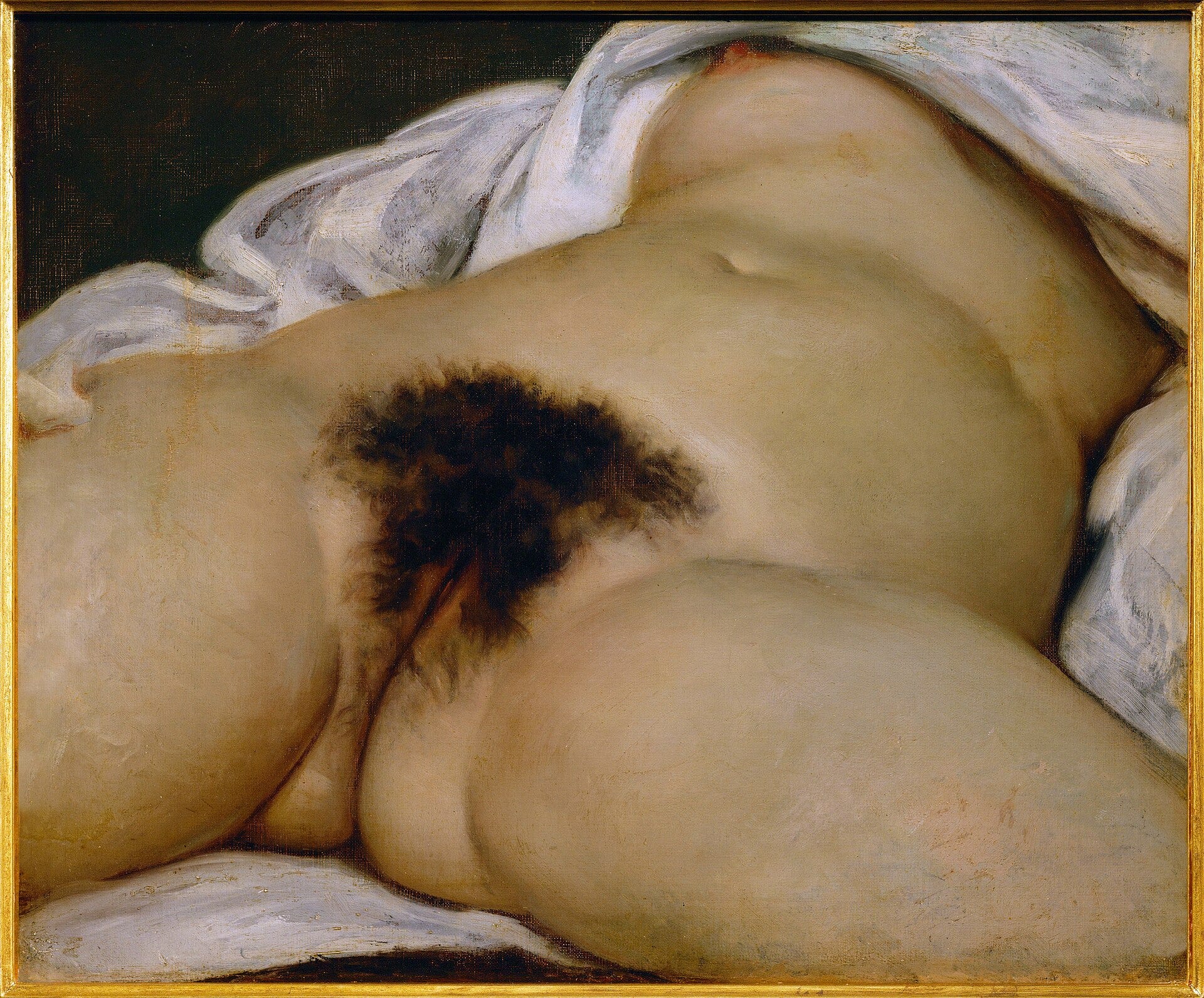
In May 2014, an artist in a gold dress entered the room, sat on the floor beneath the painting and reenacted the pose. The guards cleared the room. The museum called the police.
The canvas measures 46 by 55 centimeters. Its frame measures 84 by 99, more than three times its area.
And in front of it, everyone asks the same question.
Who is this woman?
Who could have lain down there, one day in 1866, and let Gustave Courbet paint her like this?
The realist
At 47, Courbet is the most hated painter in France, and that reputation is a point of pride.
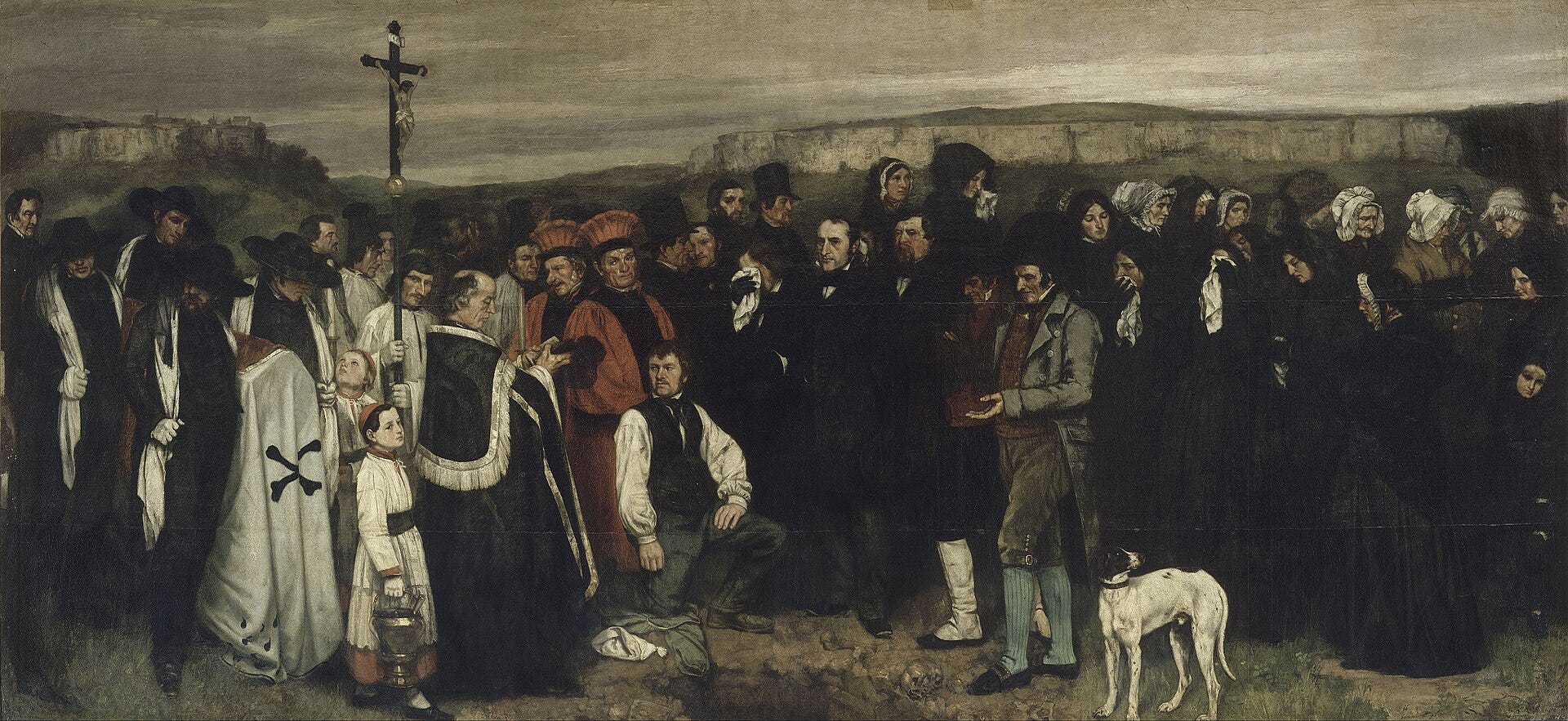
Fifteen years earlier, two of his canvases caused a scandal. Men breaking stones at the edge of a road, dirty, faceless. Then a burial in his native village of Ornans. Fifty figures painted at life size, on a canvas of a size previously reserved for battles and sovereigns. Giving peasants that scale was taken as an insult.
People call him the realist, and it is not a compliment.
In 1866, a man climbs the stairs to Courbet's studio.
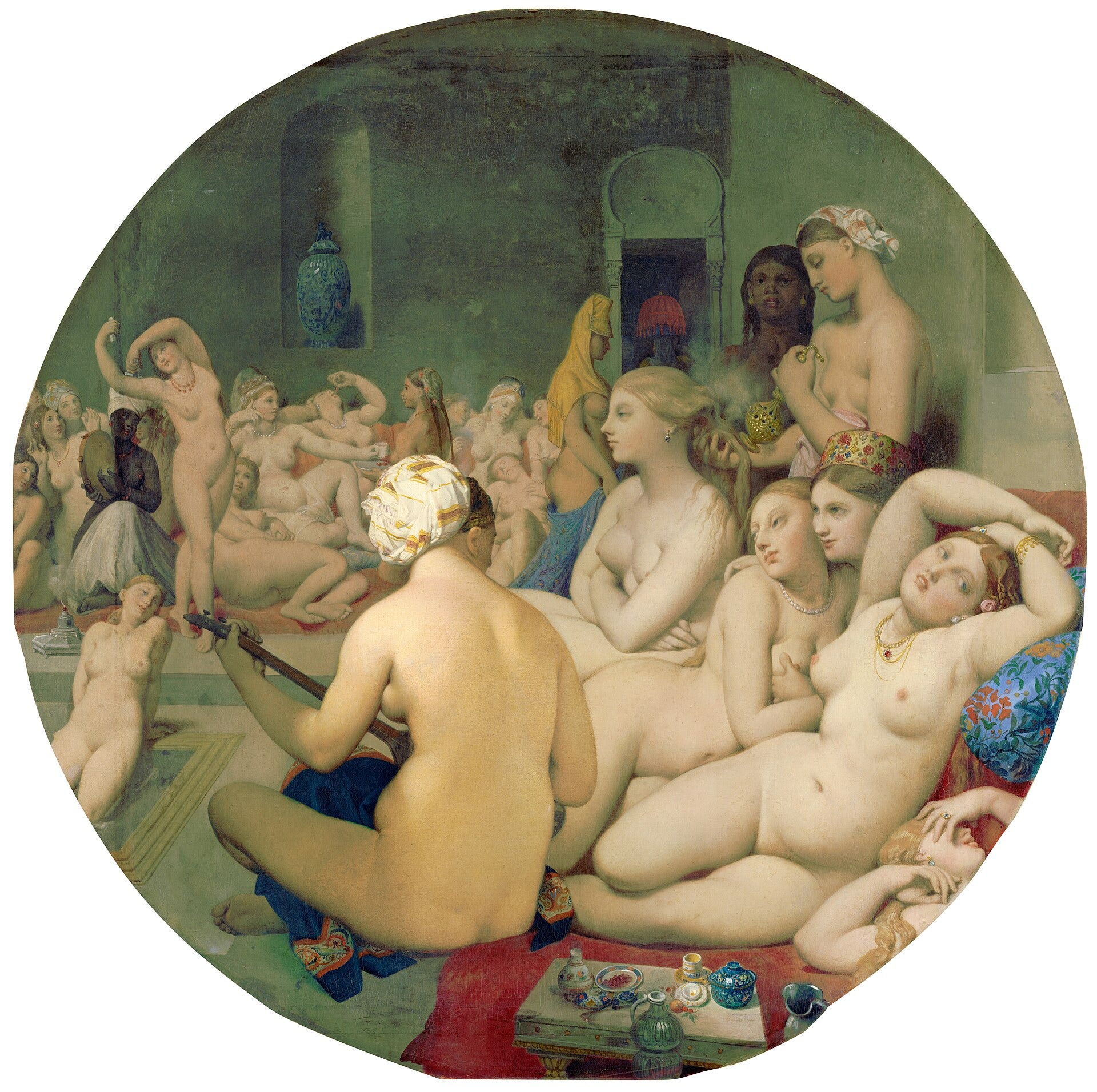
Khalil Bey is 35. An Ottoman diplomat, he has just settled on the rue Taitbout with a fortune that has all Paris talking. The year before, he bought Ingres's The Turkish Bath.
He commissions two canvases from Courbet. The first, The Sleepers, shows two naked women asleep in each other's arms. The second costs him 19,000 francs, the price of an apartment building.
It is this one.
Discover my new newsletter !

The woman with copper hair
The previous autumn, Courbet is in Trouville. He spends two months there, in a rented studio at the edge of the beach. Seascapes leave the easel one after another, in between portraits of Parisian ladies on vacation.
An American painter, 31, is staying there too, with his companion. His name is James Whistler, hers is Joanna Hiffernan, and everyone calls her Jo.
She is Irish, born into a family that fled the poverty of Limerick to crowd into Lambeth, in south London. One of her sisters starved to death there at eleven. She is 21 when she meets Whistler, and from then on she never leaves him.
She becomes his model, and much more than his model. She keeps Whistler's books, sells his canvases, negotiates with the dealers in his place.
Courbet writes that autumn: "Of the two thousand ladies who came to my studio, I admired the beauty of a superb redhead whose portrait I have started."
The three become inseparable: they paint side by side on the beach, eat their way through bowls of shrimp cooked in fresh butter, and in the evening Jo sings in Irish.
The portrait begun there is called Jo, the Beautiful Irishwoman. With one hand she holds a mirror, with the other she draws her loosened hair through her fingers.
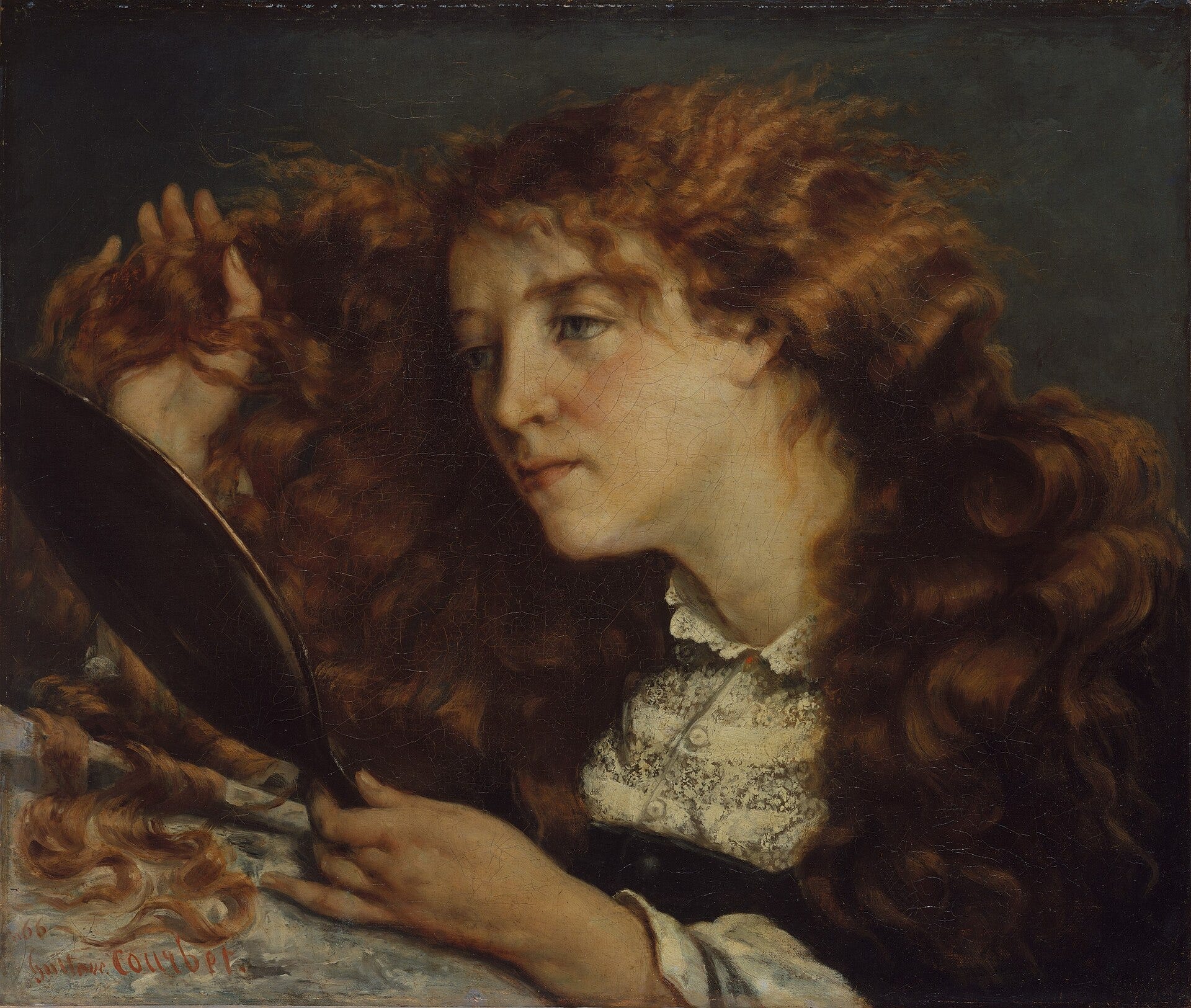
Courbet will paint four versions of it. One he keeps at home until his death, refusing ever to sell it.
Seven months in Chile
In January 1866, Whistler sails for Valparaiso. Before leaving, he gives Jo power of attorney over all his affairs.
He is gone seven months, and by the time he comes back it is over. She will never pose for him again.
The following year, he writes to the painter Fantin Latour, his closest friend, a letter in which he speaks of Courbet with a violence he shows no one else. "Courbet! and his influence was disgusting! The regret I feel and the rage, hate even, I feel for all that now would astonish you perhaps."
1866 is also the year of The Origin of the World.
And look at the belly in the painting. Some see a woman six months pregnant.
The painter, the model, the year, the breakup, the rage. It all fits.
Except for one thing.
Jo is a redhead.
The pubic hair painted on the canvas in the Musée d'Orsay is dark.
And this is only the beginning.
You are about to discover
Where a title Courbet never chose comes from.
The tricks used to hide it from the eyes of the world.
Whether this painting is whole, or a piece of a larger canvas.
Whether the woman is pregnant, or not.
Who the woman on that sheet really is.