

This is a preview. Paid subscribers get the full story.
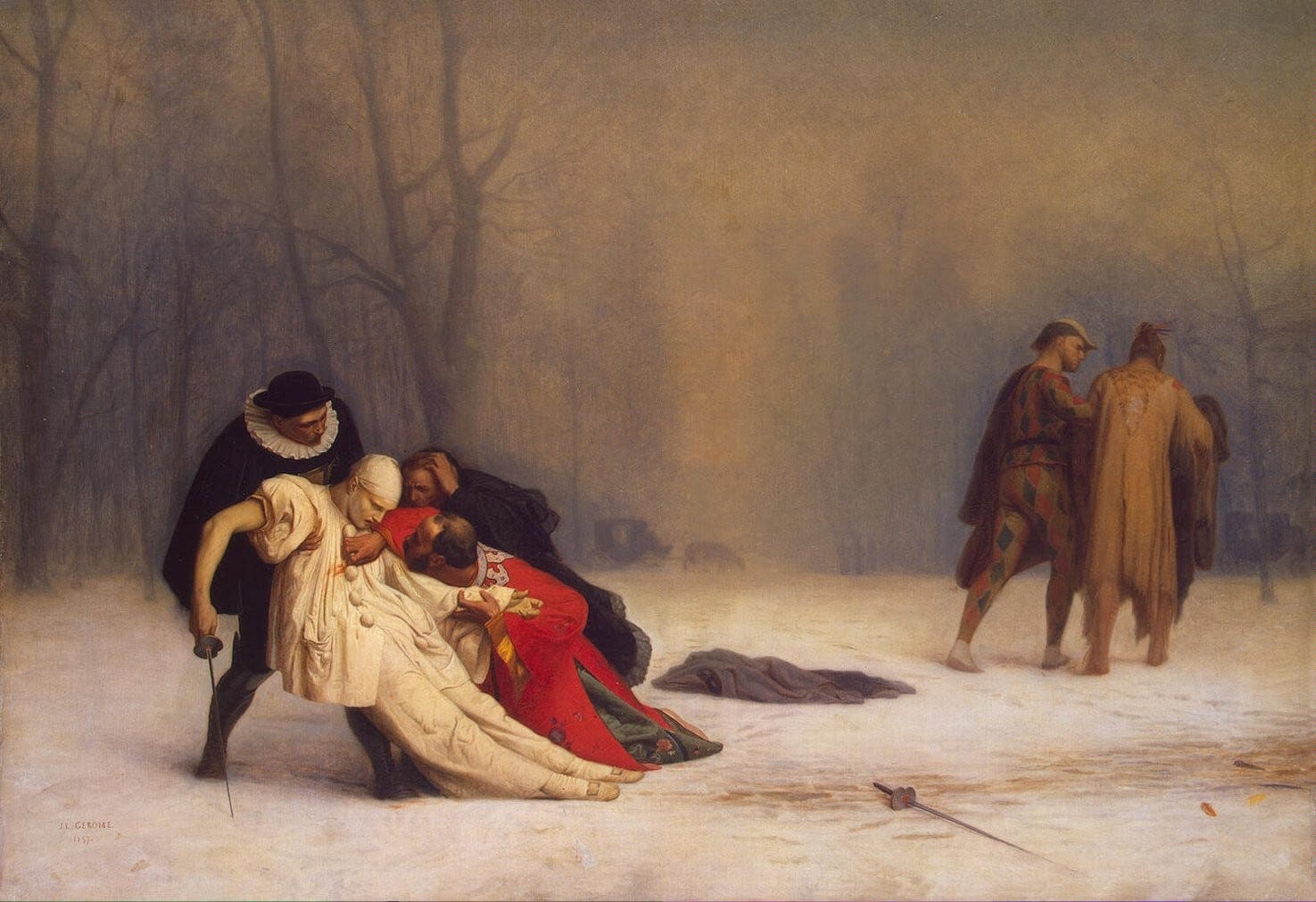
Today I want to tell you about one of my favorite painters. See if you can guess which one.
First clue: he is French.
Second clue: he paints in the second half of the 19th century.
Third clue: in his day, he is the most famous painter in France.
Are you thinking of Monet? Renoir, Manet, Degas, Cézanne, Pissarro?
Wrong.
At the time, the public laughs at every one of them. The Salon, the great official art exhibition in Paris, shuts its doors to them, and almost none of them can make a living from painting. Monet goes hungry. Cézanne, rejected everywhere, eventually retreats to his hometown of Aix-en-Provence.
His paintings, though, I am sure you have seen.
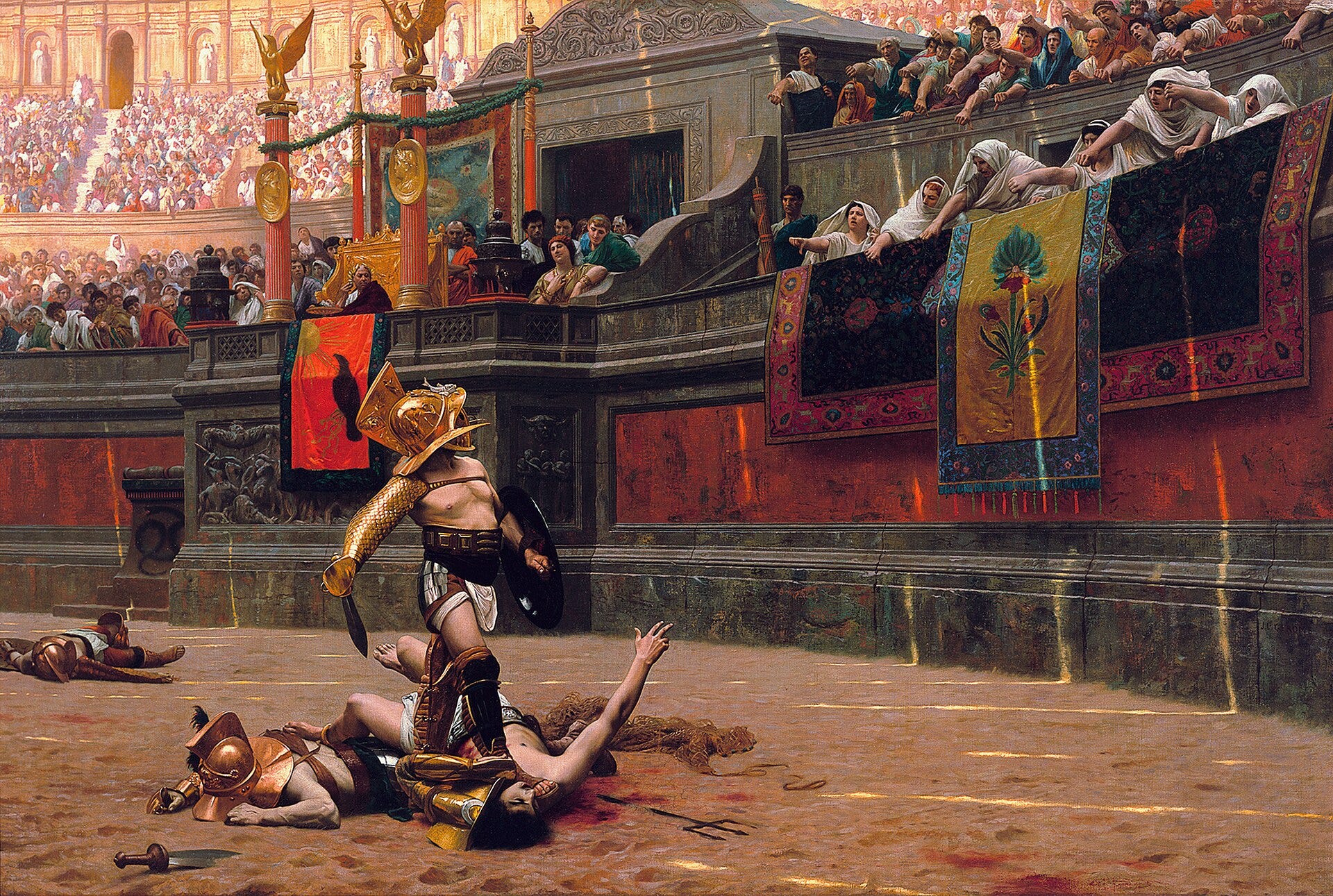


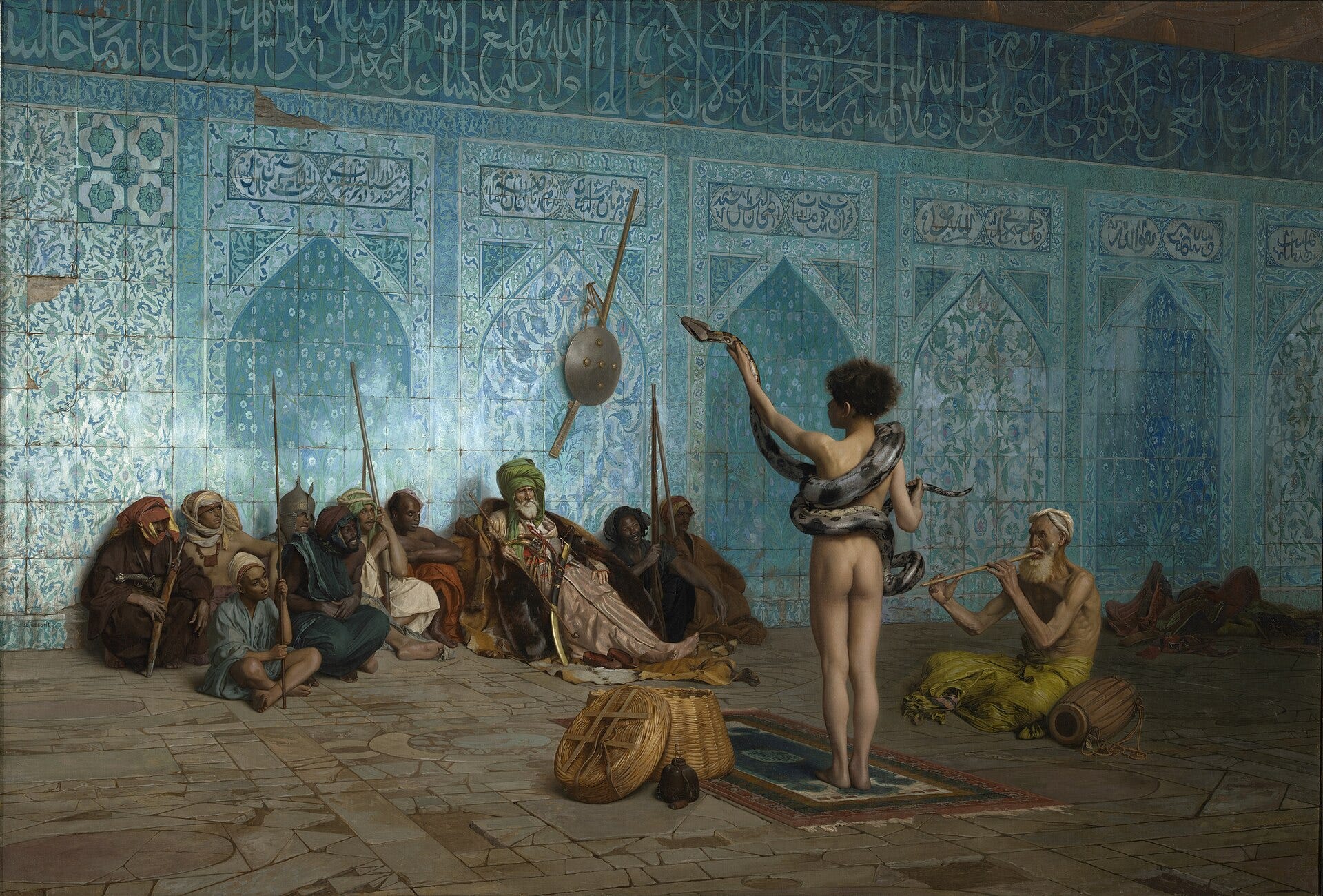
Flawless draftsmanship, and a surface so smooth that the eye cannot find a single brushstroke.
In his day, he has it all. Napoleon III commissions paintings from him. The Académie des Beaux-Arts, the most exclusive circle of artists in France, opens its doors to him at 41. The Legion of Honor promotes him rank by rank, all the way to Grand Officer.
For nearly forty years, he reigns over the École des Beaux-Arts, the state art school in Paris, where students flock from all over the world, from as far away as America. His father-in-law, the most powerful art dealer of the era, sells his canvases for a fortune and reproduces them as prints by the thousands, from Paris to New York.
I consider him a genius, and I am going to explain why.
First, take a look at the painting below.
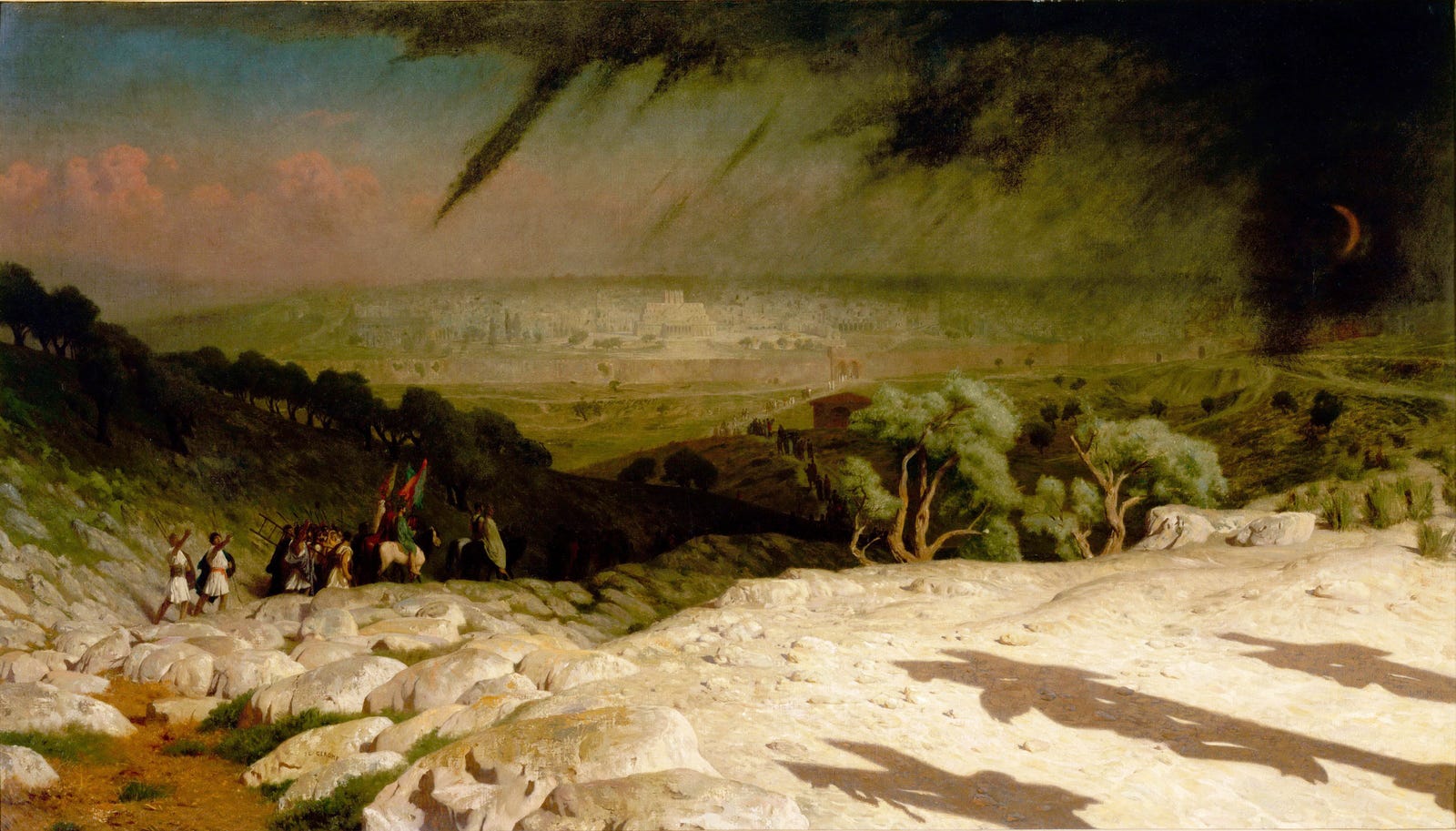
Probably the most painted subject in all of art history: the Crucifixion.
For centuries, painters have all shown the same scene: Christ nailed to the cross, his mother weeping at his feet, a thief crucified on either side. You have seen it a thousand times, from Giotto to Rubens, from Raphael to Velázquez. Always the same image.
Booooring.
He paints neither Christ nor the crosses.
He paints their shadows. Three long shadows stretched across the rocks of Golgotha, the hill where Jesus has just died. Farther off, the Roman soldiers and the crowd are heading back down toward Jerusalem. The sun goes dark, a storm rolls in. The world has just been turned upside down, and everyone goes back to business as usual.
You cannot see the crosses, and yet they are all you see.
Filmmakers will one day call this “offscreen space”: the part of the scene the camera leaves out of the frame, which the audience fills in on its own. He paints it in 1867, nearly thirty years before the first movie screening.
He pulls the same trick in “The Death of Caesar.”
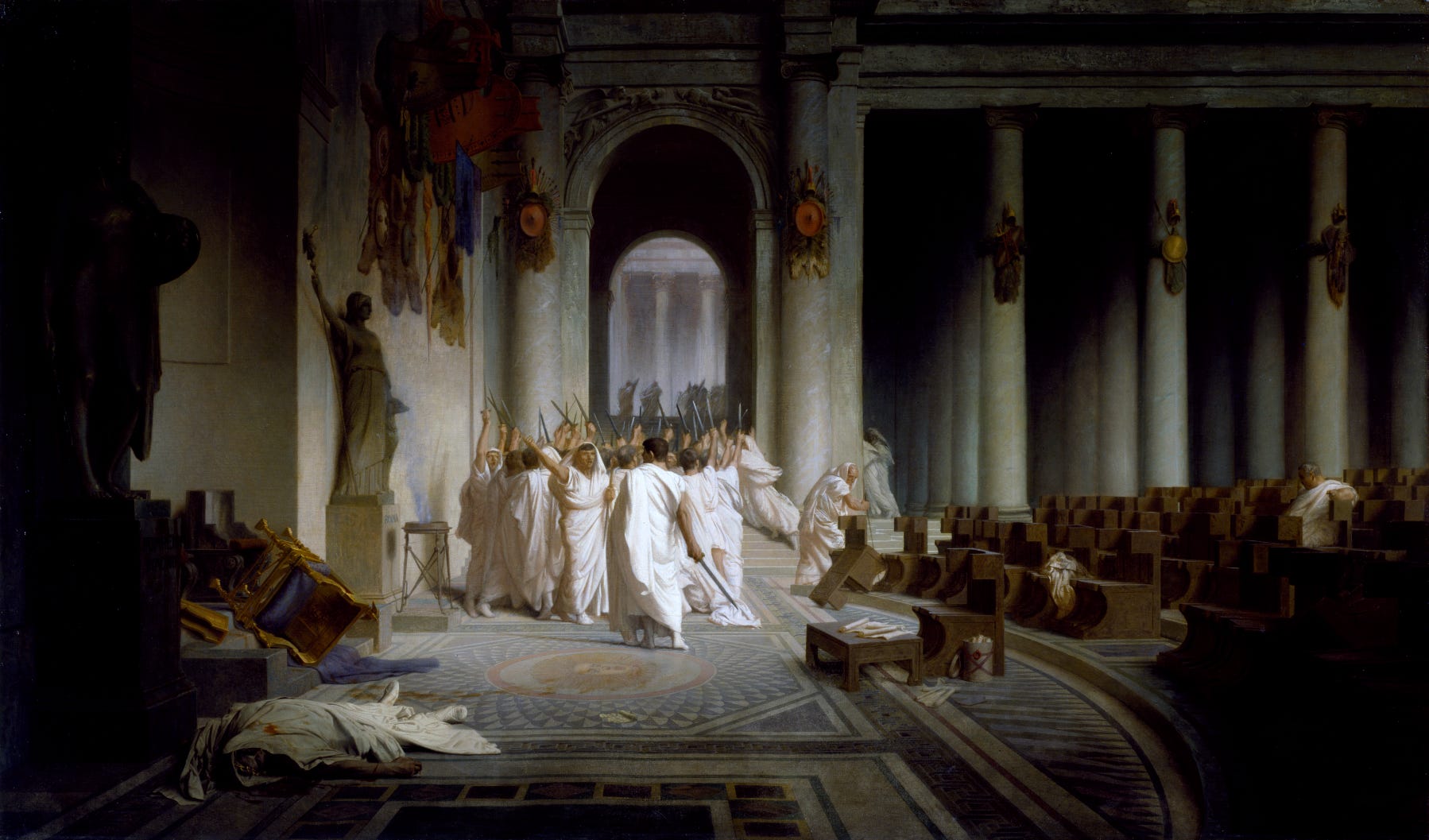
This time, he packs three moments in time into a single picture.
The past: the murder has already happened. Caesar lies in a corner of the hall, almost hidden under his toga, next to an overturned seat. Bloody footprints cross the floor.
The present: the conspirators walk away, backs to us, daggers raised, while in the background the senators flee.
The future: a single senator stays seated, at the far end, on the right. He does not run. As I read it, he already foresees what is coming: the civil war this murder is about to unleash.
Past, present, future: three moments in time on a single canvas.
That is why I love him: he invented cinema before cinema existed.
And cinema returned the favor. His paintings inspired filmmakers as early as the Italian “Quo Vadis” of 1913, then whole generations of movies about ancient Rome, without his name ever appearing in the credits.
Know someone who would love these stories? Give them a month or a year, with a note from you. 🎁
“Jerusalem” hangs in the Musée d’Orsay, in Paris. You have to hunt for it: it has been banished to a side gallery on the ground floor that most visitors never even walk through as they hurry up to Monet, Renoir, Van Gogh, and Cézanne on the top floor. The museum shows only a handful of his paintings.
The most famous painter in France, tucked away in a corridor. That is no accident.
In the 20th century, France erased him, and it did so methodically. His paintings came down from museum walls and went into storage. His name vanished from the art history books.
Only the great American museums still give him pride of place: in Baltimore, in New York, in Phoenix.
Why did art history try to erase him?
It all starts with one canvas: Auguste Renoir’s “Bal du moulin de la Galette.”
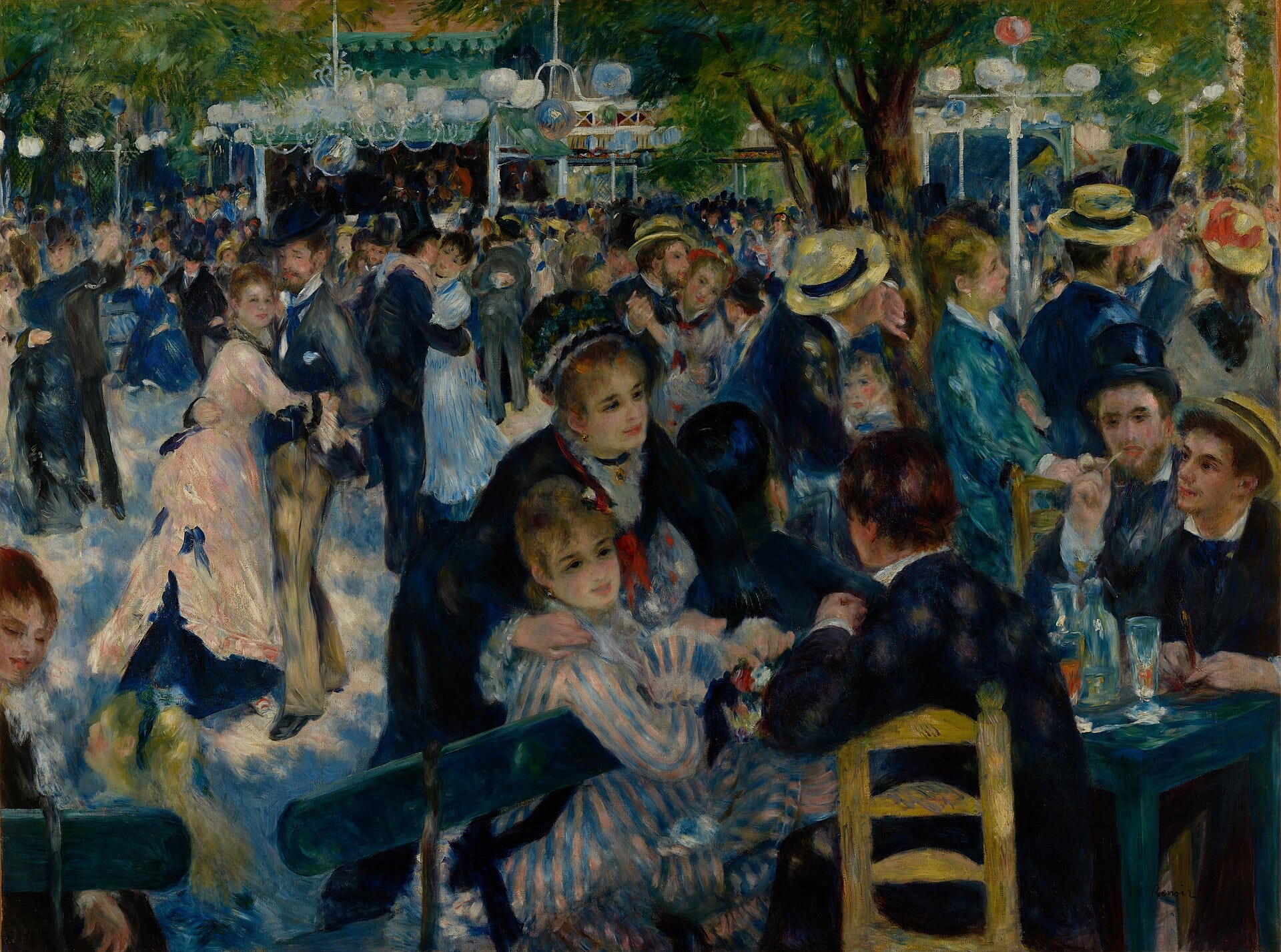
Couples dancing under the trees on a Sunday in Montmartre. A gentle, carefree scene. It is hard to imagine a more harmless painting.
And yet it is about to tear Paris apart.
What You’ll Discover
Who this painter is, the most famous painter in France in his day
The scandal that tore Paris apart
What the “Bal du moulin de la Galette” cost him
Why America hangs him while France hides him
Why art history tried to erase him
200,000+ readers learn art the fun way.
Paid subscribers get the full story. You’ll also get:
10 new stories / month
The full archive (150+ Art stories)
Your personal art guide. Comment, ask questions, DM me anytime
There’s only one person behind Cool Stories: me. Paid subscribers make it possible.
Less than a coffee a month. Cancel anytime.
Apple user? Subscribe at coolstoriesabout.art, not via the app. Apple adds 30% to the price.