

170 000+ readers. Learn art the fun way.
This is a preview. Paid subscribers get the full story.
You’ll also get:
10 new stories every month
The full archive (130+ Art stories)
Your personal art guide. Comment, ask questions, DM me anytime
iPhone user? Subscribe at coolstoriesabout.art, not via the app. Apple adds 30% to the price.
Madrid, the Prado, Room 52B, ground floor.
A room set apart from the big ones. Most visitors pass through without slowing down, on their way up to the Velázquezes and the Goyas.
Some of them stop short, though. They turn back and step closer.
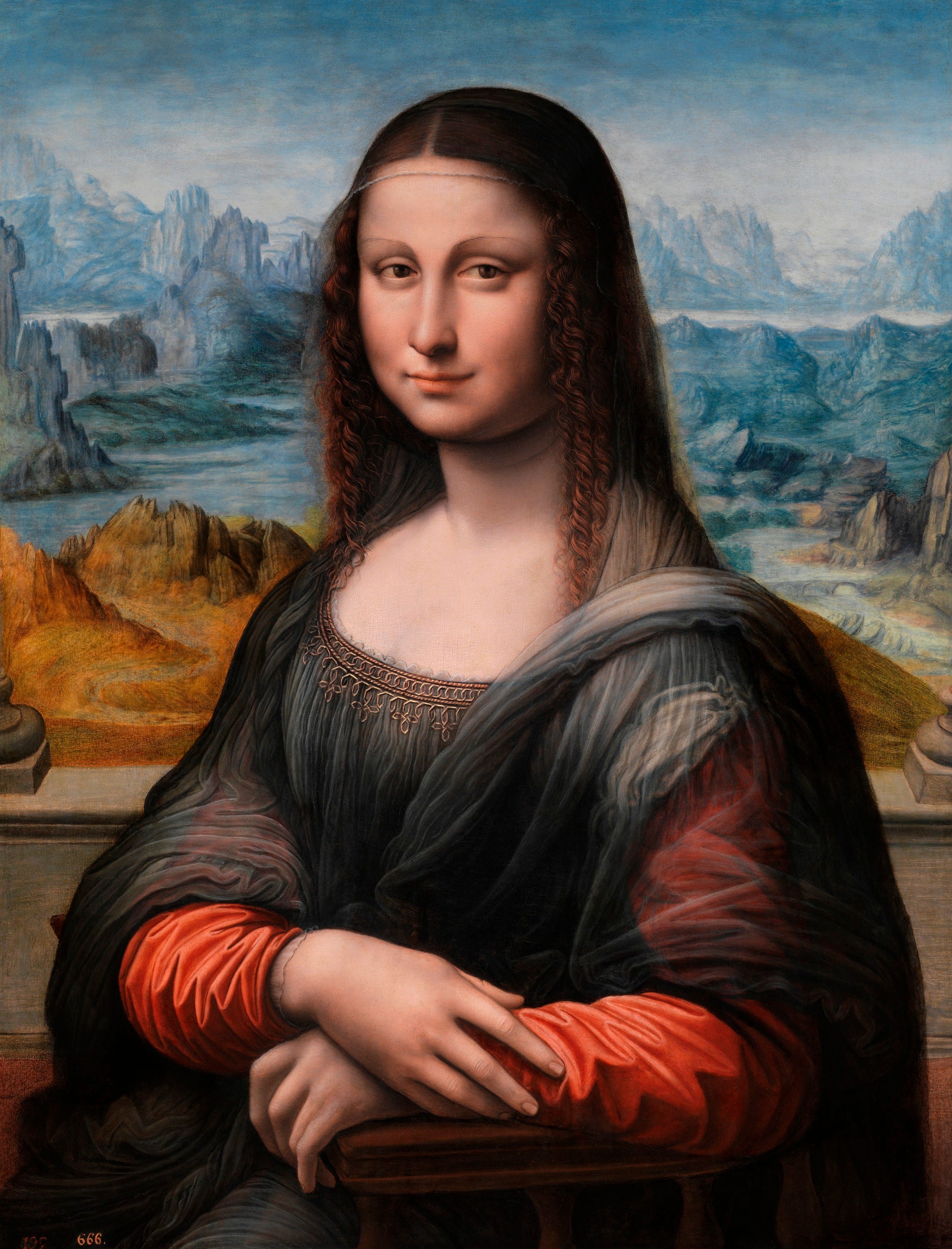
A seated woman, turned three quarters toward the viewer, one hand resting on the other, a thin veil over her hair. Behind her, rocks and water.
Everyone knows that pose, that smile. They're printed on mugs, tote bags, refrigerator magnets.
But this is not the Louvre. This is Madrid. And she isn't the woman you remember: lighter, more colorful, younger, her features sharper.
A question settles in, and nothing in the room answers it. Where does this painting come from, and who painted it?
By Leonardo's Hand
In 1666, a scribe takes inventory of everything the king of Spain owns in his Madrid palace. The panel is a painting on wood. In front of it, he writes: a woman, by the hand of Leonardo da Vinci.
By the hand of Leonardo. No hedging, no mention of his circle. An original.
The inventories that follow repeat the attribution for nearly two centuries, and its value keeps climbing. The painting follows the royal family from residence to residence, hanging in the king's private apartments.
In 1819, the Prado opens and the royal collections move in. The panel enters the museum as a Leonardo.
Discover my new newsletter !

The Woman from Florence
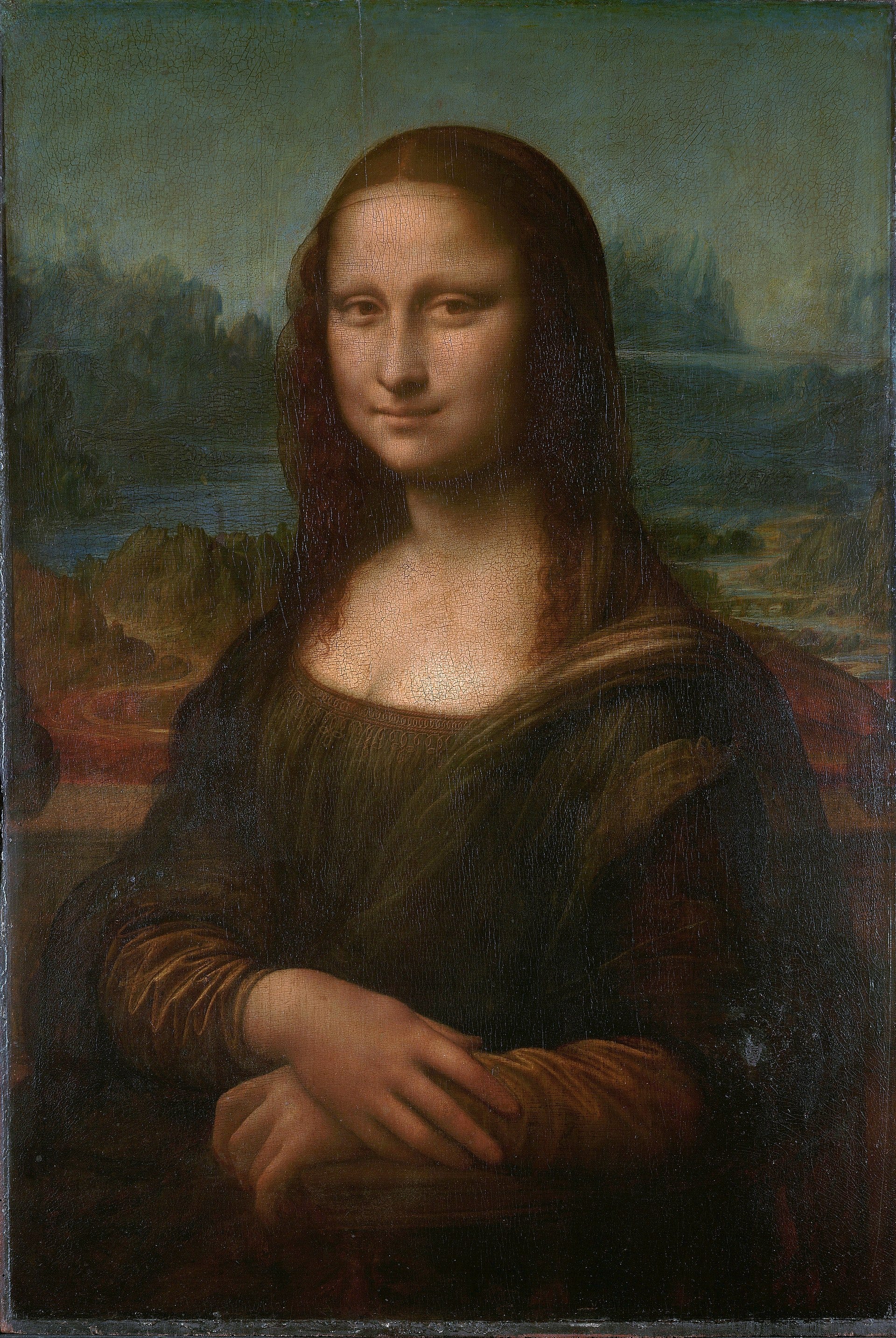
If the inventories are right, there is a problem. This same face already has a Leonardo. It hangs in Paris, and it is the most famous painting in the world.
What is known about it fits in a few lines. It depicts Lisa Gherardini, 24 years old in October 1503, married for nine years to Francesco del Giocondo, a silk and cloth merchant who took her as his second wife. That is where the painting's other name comes from: La Gioconda, Giocondo's wife.
That October, a clerk in the Florence city offices notes in the margin of a book that Leonardo da Vinci is working on the head of Lisa del Giocondo. No earlier written record of the painting exists.
Leonardo is 51. The portrait keeps him busy for years. He never delivers it, and no record of payment has ever been found.
The painting follows him from city to city, all the way to France, where Leonardo dies on May 2, 1519.
On one side, the portrait he never parted with. On the other, a second version in the hands of the kings of Spain.
The Wood of the Panel
In the twentieth century, the Prado gradually stops calling it a Leonardo. The name fades from the museum's records, with no announcement and no explanation.
The painting itself stays on the wall, among the Italian masters, between a Raphael, an Andrea del Sarto and Fra Angelico's Annunciation. On the rare occasions it is taken down, visitors write to the museum demanding it be put back.
Then, in 1992, a specialist in old master paintings publishes the explanation that closes the debate. His answer fits in one line: the panel is oak.
Oak is the wood of northern European painters. The Italians of the Renaissance painted on other woods. An oak panel was not painted in Florence.
This painting is a copy, made far from Italy, long afterward, from the finished original. Case closed.
The Letter from Paris
The case stays closed for 18 years. In 2010, a letter arrives from Paris. The Louvre, preparing a major Leonardo da Vinci exhibition, wants to borrow this painting.
Nothing justifies the request. Europe has dozens of old copies of the Mona Lisa, and nobody pays them any attention.
The one in Madrid is considered among the weakest of the lot. The Prado's catalogue does not even give it a serious entry.
And that is the one Paris asks for, without explaining its choice.
One fact sets it apart from all the others, though. The old copies of the Mona Lisa all look like the painting in Paris. The one in Madrid is the only one that does not.
Before a loan, a museum checks the condition of the painting. In June 2011, the panel goes down to the Prado's conservators. It comes out of its frame and onto an easel.
The Prado's wood panel specialist turns it over and examines the back.
The back is not oak. It is walnut. A dense, expensive wood, reserved for painters who could afford it.
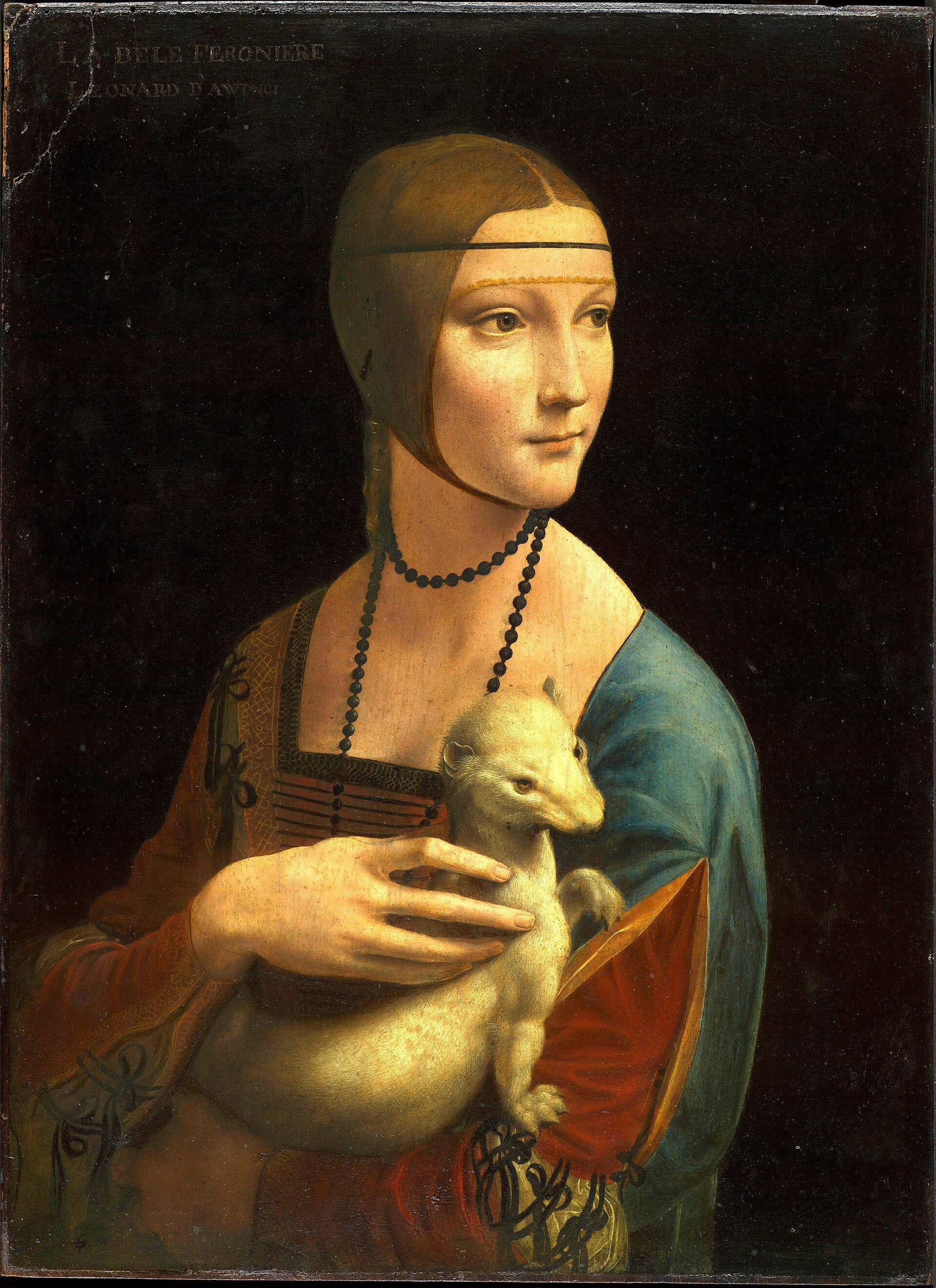
The oak theory has just lost the one fact it rested on. Leonardo da Vinci painted The Lady with an Ermine, La Belle Ferronnière and Saint John the Baptist on walnut.
The Paris Mona Lisa, meanwhile, is painted on poplar.
Under the Black Paint
The Prado is left with a panel nobody knows how to classify anymore. Everything starts over.
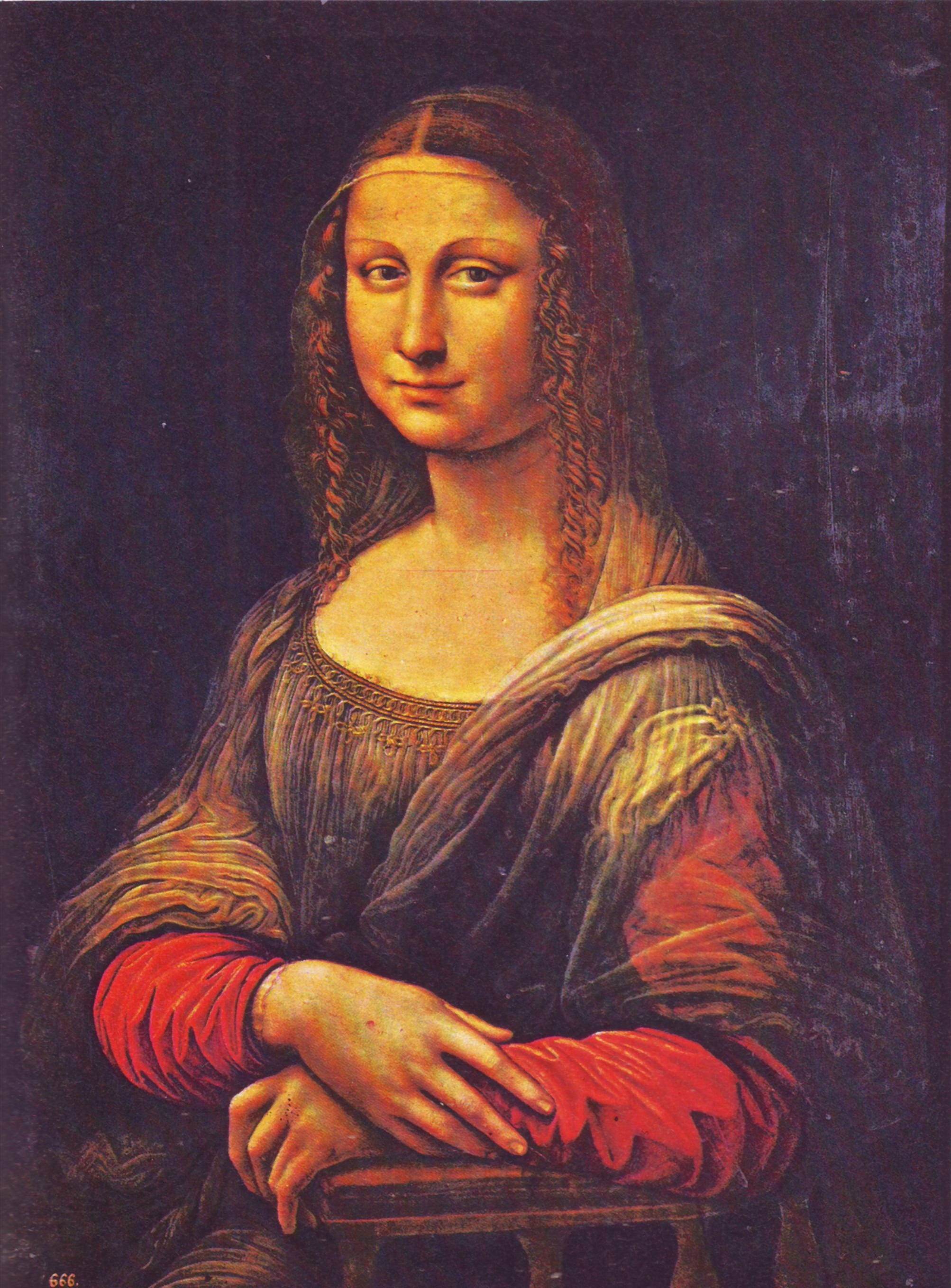
The painting sitting on the easel in 2011 does not look like the one Room 52B shows today. Behind the woman, no rocks, no water: a sheet of black paint rises all the way to the edge of the frame.
Ana González Mozo, whose job at the Prado is to study what lies beneath the surface of paintings, starts with that abnormal background.
Beneath the black, shapes emerge. Curved lines, climbing. Mountains.
The black does not belong to the painting. Someone laid it down long afterward, over an entire landscape, and no document says who, or why.
The museum decides to remove it. A conservator works through the black layer with cotton and solvent, centimeter by centimeter, for four months. Under each pass of the cotton, a piece of rock, a patch of sky.
The landscape that reappears is the one visitors look at today in Room 52B. And that landscape is the landscape of the Paris Mona Lisa. The same rocks, the same water, in the same places.
An identical backdrop proves nothing by itself. But the Madrid landscape is not finished. The painter laid in the bottom, worked his way up toward the sky, stopped partway and never touched it again.
A copyist does not stop in the middle of a sky. The original in front of him is complete, from the first rock to the last.
The Buried Drawing
The Prado writes to Paris in turn, to request the images the Louvre has made of its Mona Lisa by photographing it under light that penetrates the paint and shows what lies beneath.
Beneath the paint of a picture, a drawing remains. The painter traces his lines, then paints over them and the lines disappear. This light brings them back into view.
On the Paris Mona Lisa, the buried drawing shows Leonardo feeling his way.
Lisa's waist, her belt, first placed lower, then raised. The fingers, drawn in one position, then moved. The outline of the veil is reworked, and so is the outline of the head. The paint has covered them for five centuries.
In Madrid, the two sets of images are placed side by side, the Paris Mona Lisa on one screen, the Prado panel on the other.
Beneath the Madrid paint, the drawing carries the same hesitations. In the same places.
Someone copying a finished painting sees only its surface. Nothing can tell him where Leonardo first placed Lisa's waist.
Then comes the chair. Leonardo drew the right arm of Lisa's chair, the armrest, then gave it up along the way. Beneath the Madrid paint, the same armrest waits, drawn in the same spot, never painted either.
A man painted this panel knowing what the Mona Lisa hides beneath its paint. That fact rules out almost every explanation. One of the last still standing: Leonardo da Vinci painted both Mona Lisas with his own hand.