

This is a preview. Paid subscribers get the full story.
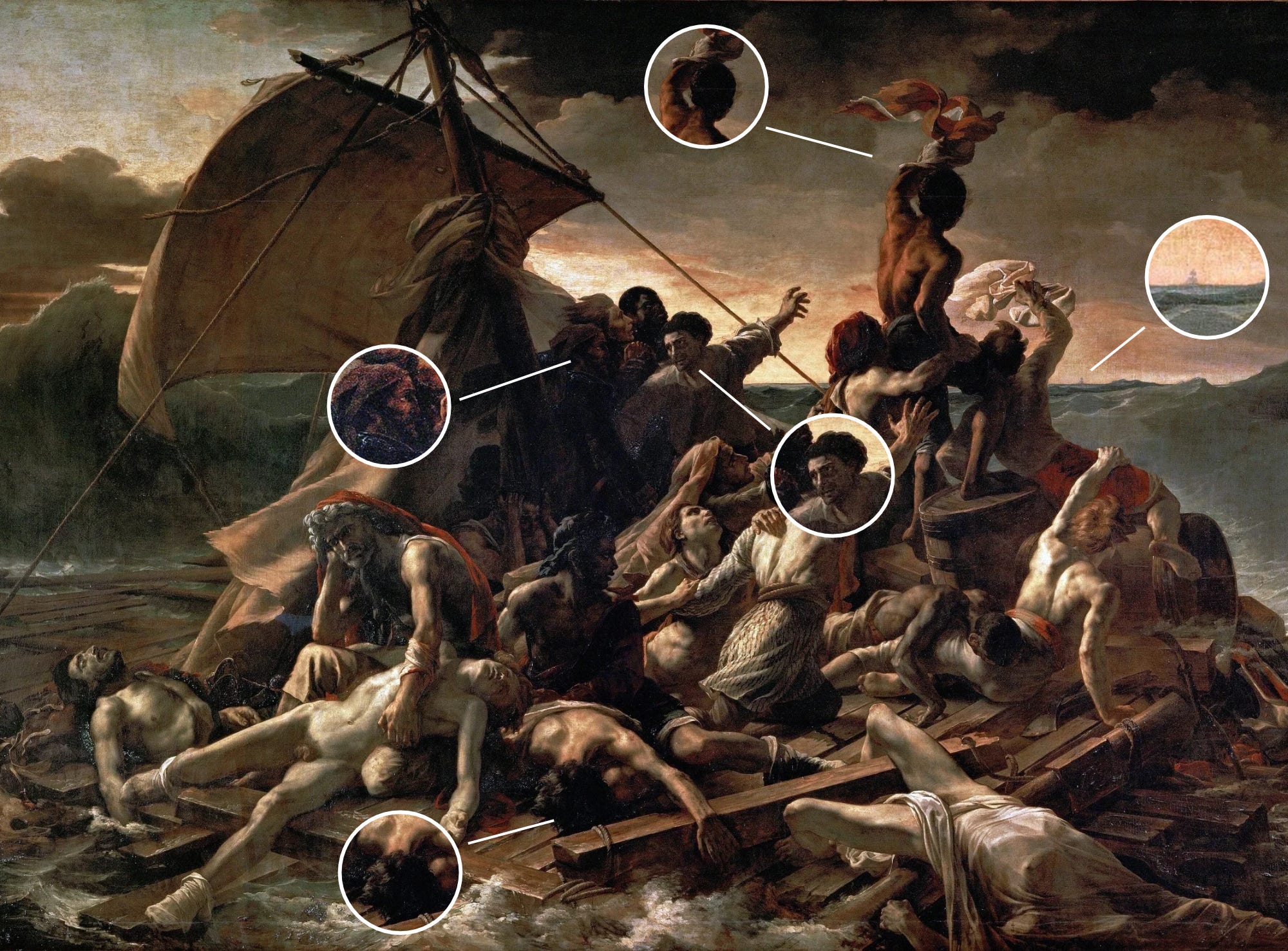
To paint one picture, a 27-year-old artist shaved his head.
Not to look fashionable. To make going out impossible. In the Paris of 1818, a man with a shaved head can’t show his face at the theater, at the café or in society drawing rooms. Rich, well-connected and horse-crazy, Théodore Géricault removes every excuse to leave his studio with a single pass of the razor.
He stays inside for eight months. He emerges with a canvas nearly 5 by 7 meters (about 16 by 23 feet).
In 1819, Géricault shows it in Paris under a bland title: “Scene of Shipwreck.”
The painting causes a scandal all the same.
Let me show you why, detail by detail.
Know someone who would love these stories? Give them a month or a year, with a note from you. 🎁
The Missing Ship
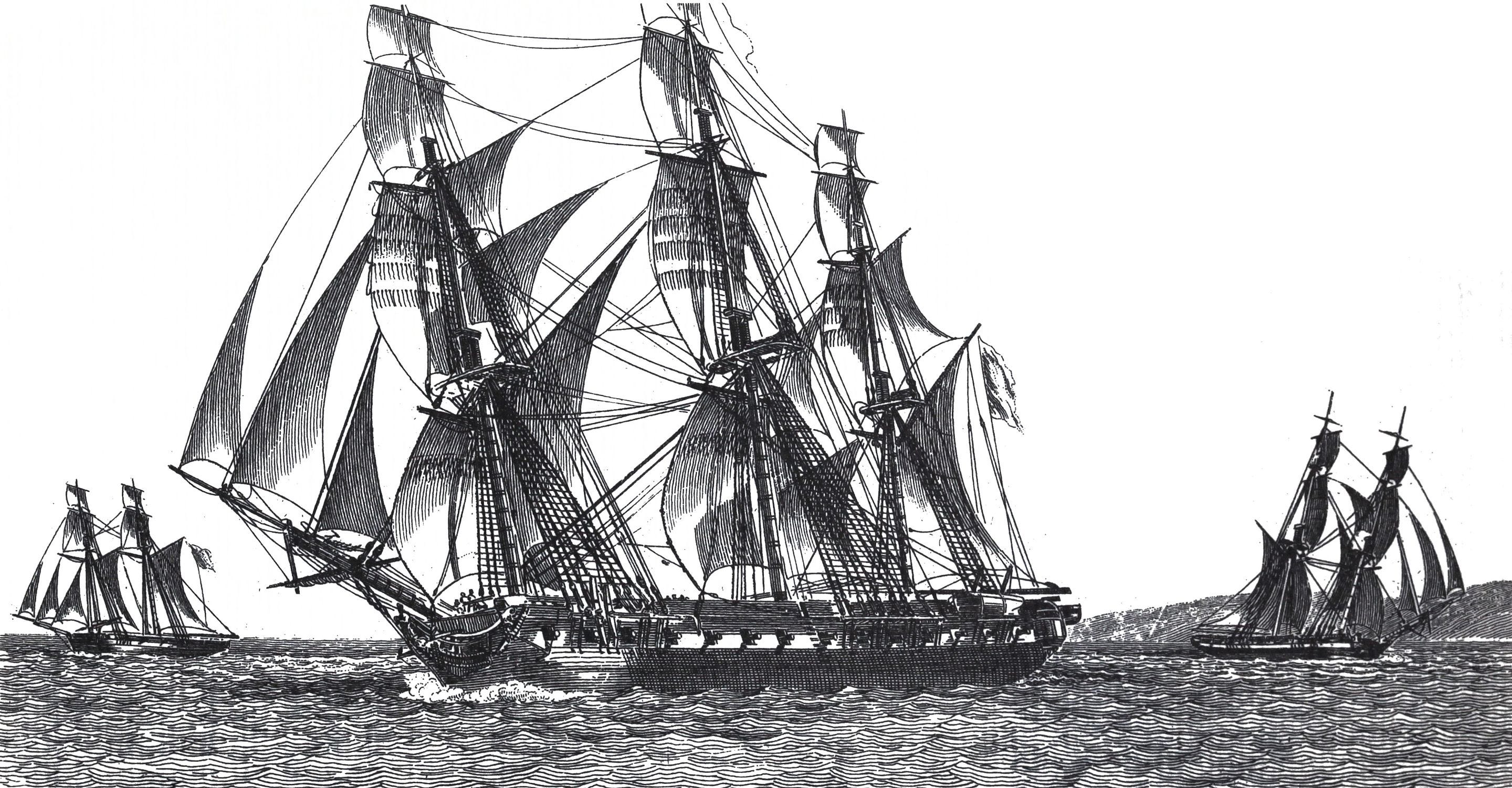
Let’s start with the painting’s name. Everyone calls it “The Raft of the Medusa.” Now try to find the Medusa. It isn’t anywhere on the canvas.
Here is the Medusa: a ship that left France in June 1816, a year after Napoleon’s defeat at Waterloo. Louis XVIII is back on his throne, and the restored monarchy rules the country with a firm hand. Under the peace treaty with England, Senegal, on the coast of West Africa, is returned to France.
To reclaim it, the king sends four ships. Leading them is the Medusa, one of the finest frigates in the fleet, flying the king’s white flag. Nearly 400 people are on board: sailors, soldiers, settlers, families, and the colony’s new governor.
On July 2, the Medusa runs aground on a sandbank off the coast of what is now Mauritania. For two days, the crew tries to work her free. Then, on the night of July 4, a storm blows up. Waves batter the hull until the keel breaks. The ship has to be abandoned.
The Raft
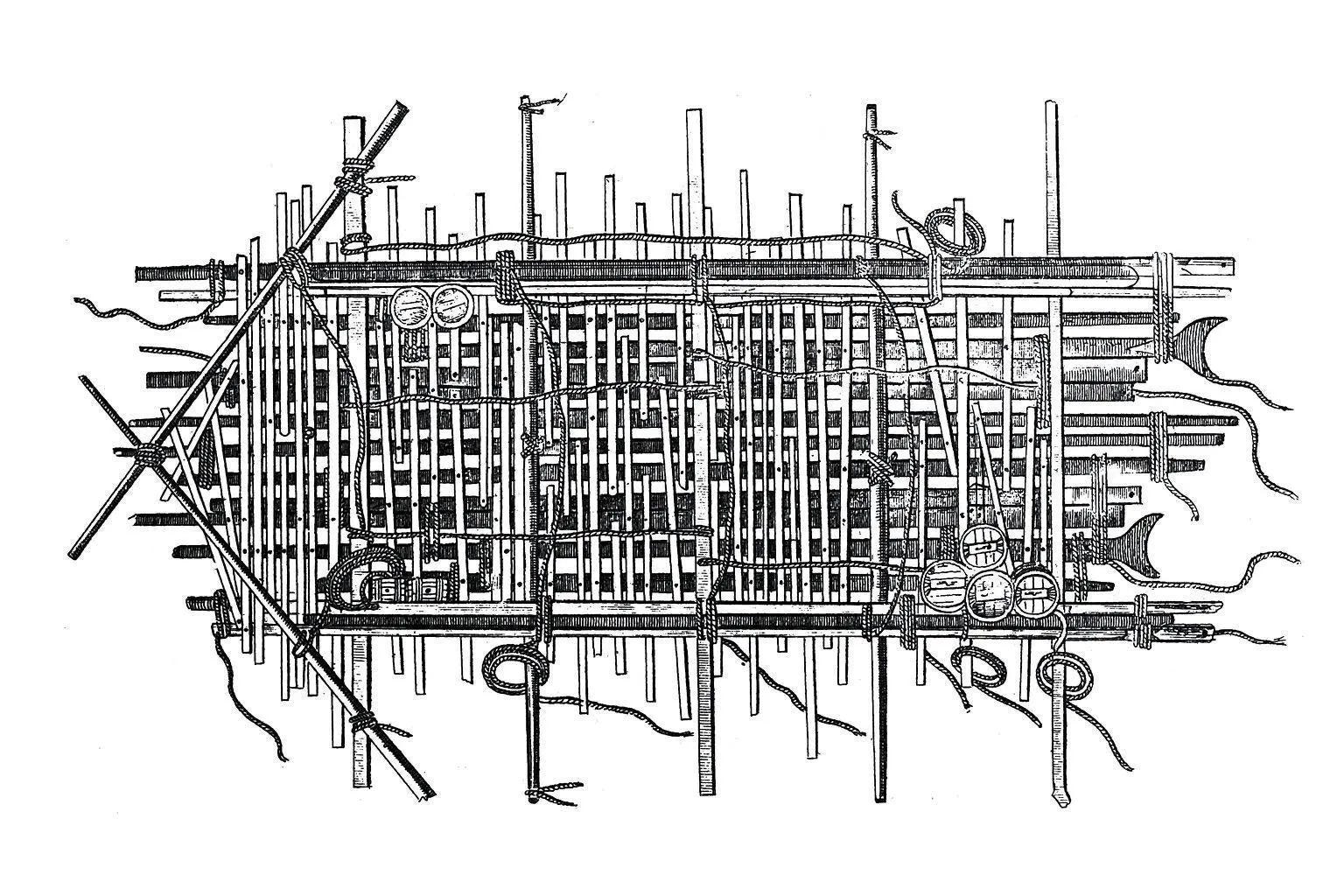
All that’s left of the frigate on the canvas is this raft, built from her masts and planks: 20 meters long, 7 wide.
It was first meant for unloading cargo. It ends up carrying 147 people: soldiers from the Senegal battalion, ordinary sailors, civilian passengers, and a single woman, Marie, who sold food and drink to the troops. Under their weight, the raft sinks until the water is up to their thighs. The castaways nickname it “the Machine.”
Their supplies: a sack of ship’s biscuits already soaked in seawater, six barrels of wine and two barrels of fresh water. Within minutes, both water barrels are accidentally lost overboard.
The frigate’s boats are supposed to tow the Machine to shore. A few hours later comes a decision that can’t be undone: the towlines are cast off. The raft and its 147 passengers are left alone on the open sea, with no real rudder.
On the very first night, the swell picks up. The raft bobs like a cork. The men crammed onto it slide toward the edges, and some drop into the water through the gaps between the badly fitted planks. By morning, 20 are gone.
Then come thirteen days of drifting. Géricault paints the thirteenth.
He rebuilds this raft in miniature in the middle of his studio. He sets wax figures on it and spends entire nights moving them around.
The Dead
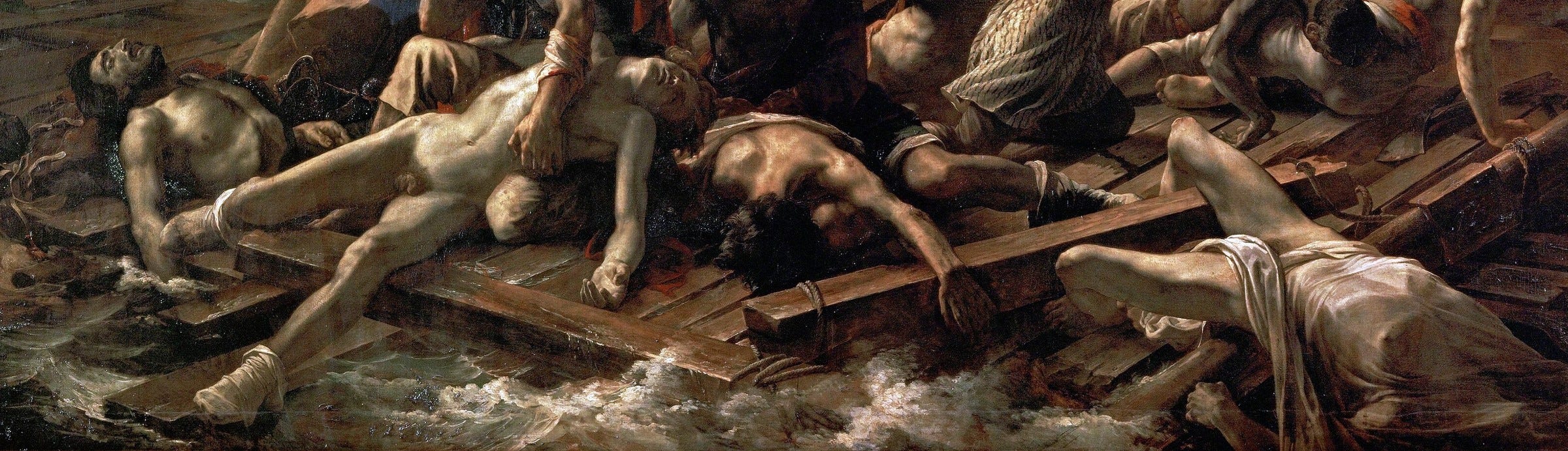
Stand in the foreground, right at the edge of the canvas. Naked bodies slide toward the water, nearly twice life-size.
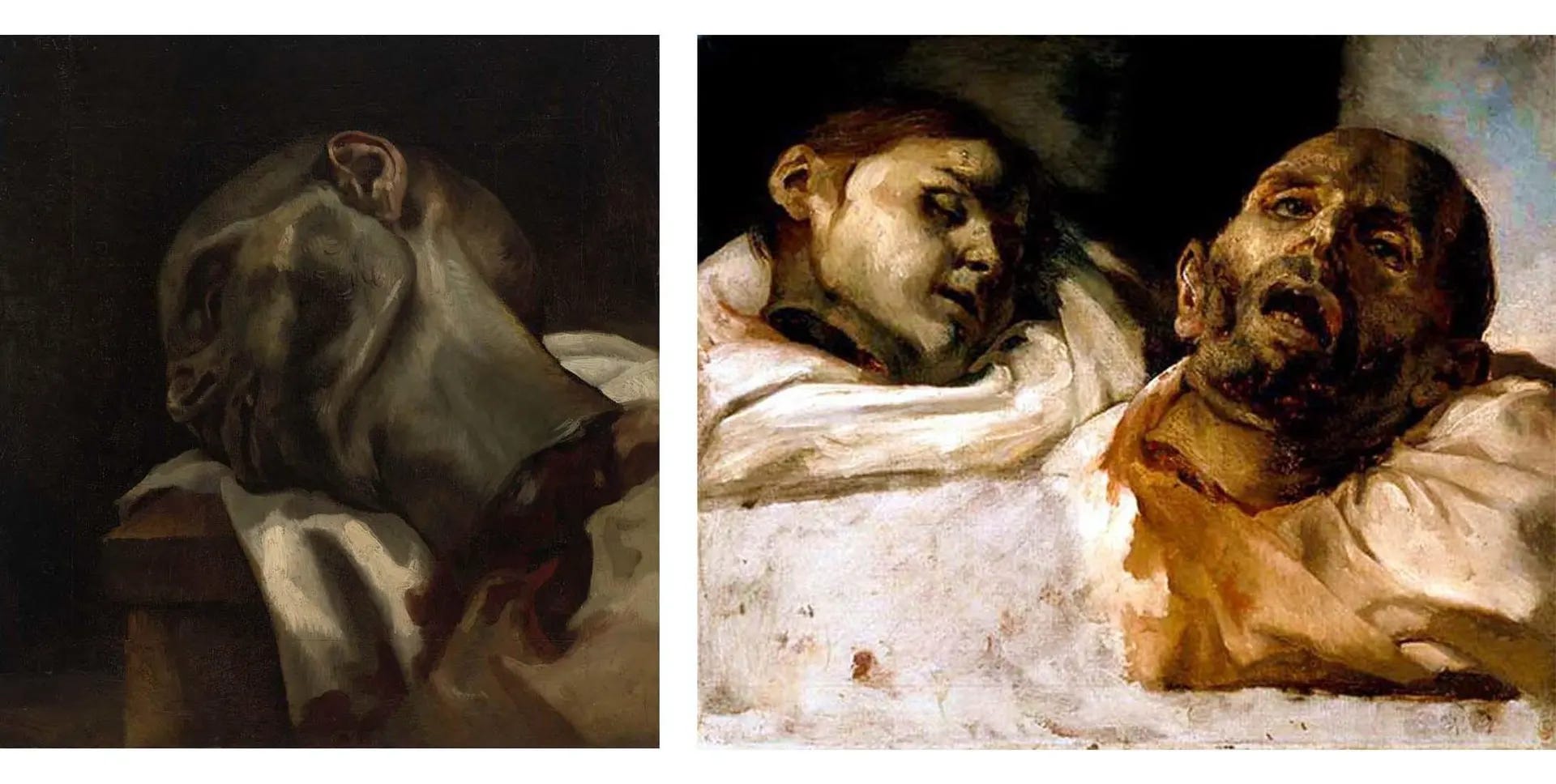
To paint them, Géricault wants to see death up close. He has chosen a studio directly across the street from the Beaujon Hospital.
Every day, he crosses the street to sketch the dying. At the morgue, he collects severed arms and legs and carries them home to paint as they decompose. An asylum even lends him a severed head, which sits on the roof of his studio for two weeks. His friends grow alarmed.
Then come the living models. Behind this dead man lying face down on the planks, one arm flung out, is a young friend of Géricault’s: Eugène Delacroix, who will later paint “Liberty Leading the People.”
The Top
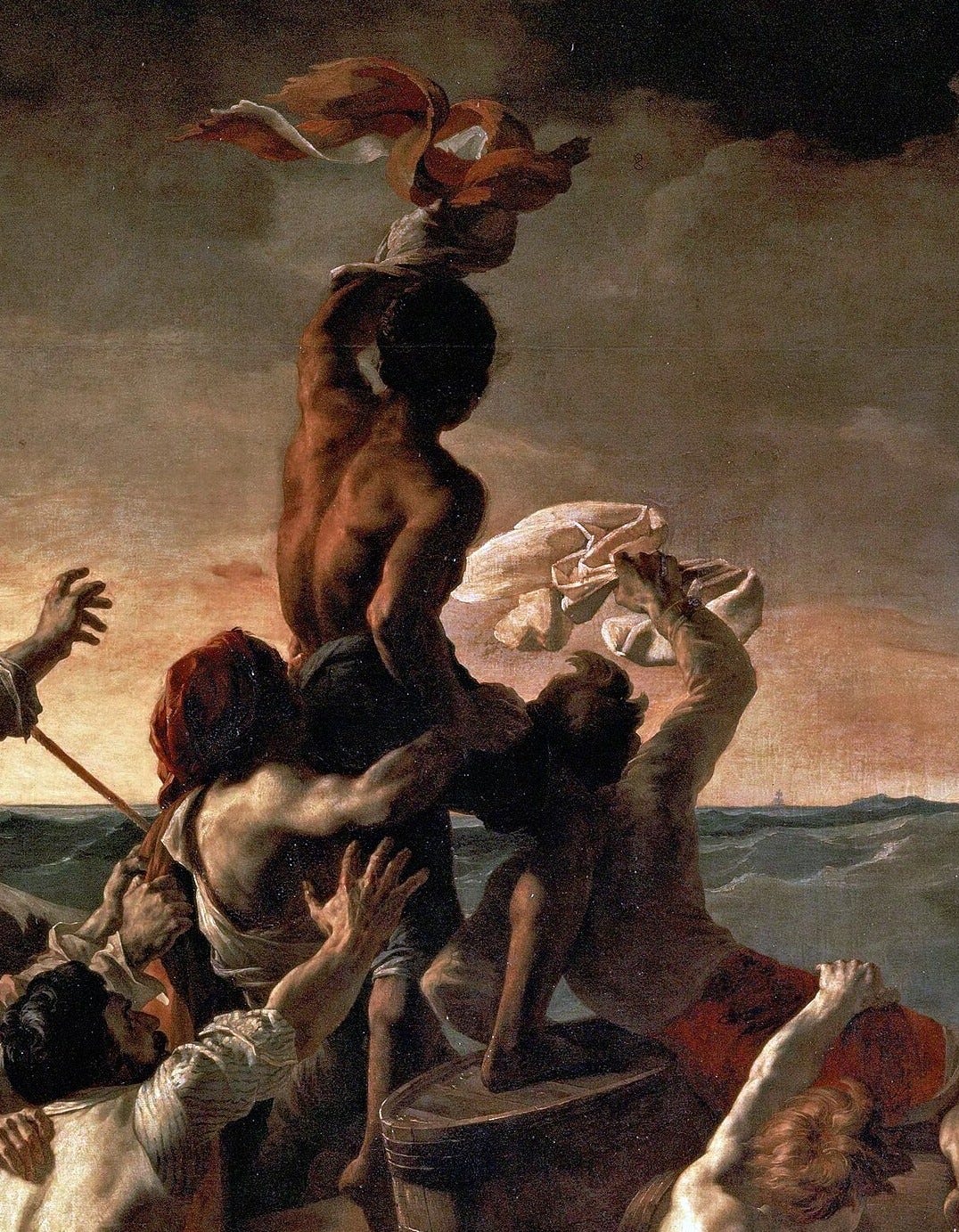
Now climb back up the slope of bodies to the top of the canvas. A man seen from behind stands on a wine barrel, waving a rag at the end of his outstretched arm.
The model, Joseph, left behind nothing but his first name.
Born into slavery in Saint-Domingue, today’s Haiti, he is working as an acrobat in Paris when Géricault notices him. So in the highest spot in the painting, the place reserved for the man who carries everyone’s hope, Géricault puts a Black man, at a time when slavery is still legal in the French colonies.
The Horizon
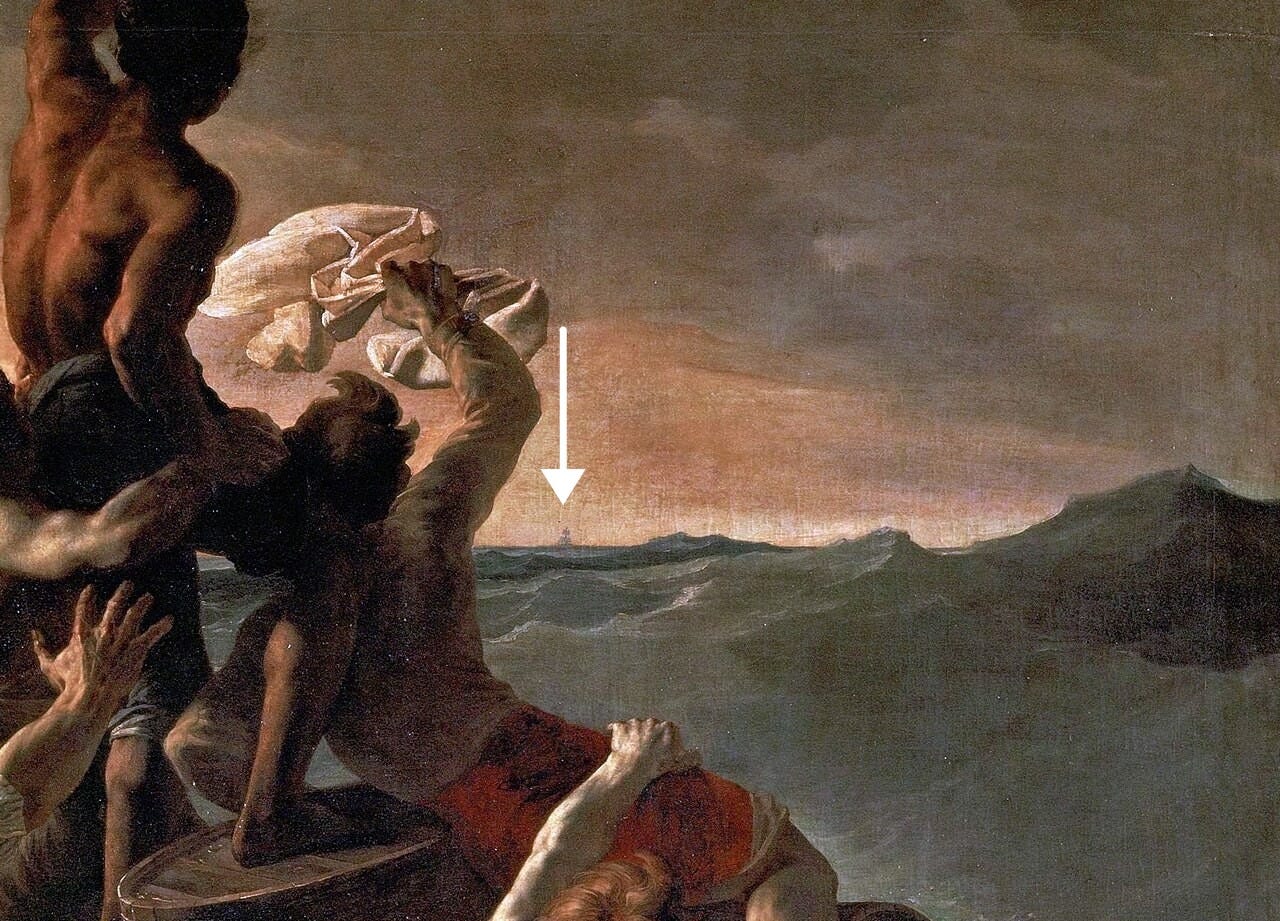
Follow Joseph’s arm to the horizon on the far right, where you’ll find a tiny speck: a ship, the Argus. The whole raft is calling out to it.
But the Argus isn’t looking for the raft. It has sailed from Senegal and is heading for the wreck of the Medusa to salvage whatever is still on board. No one has ordered it to find these men.
Now go back to the sail, on the left. The wind fills it in the opposite direction from the ship, and every gust pushes the raft a little farther from the Argus.
The Mast
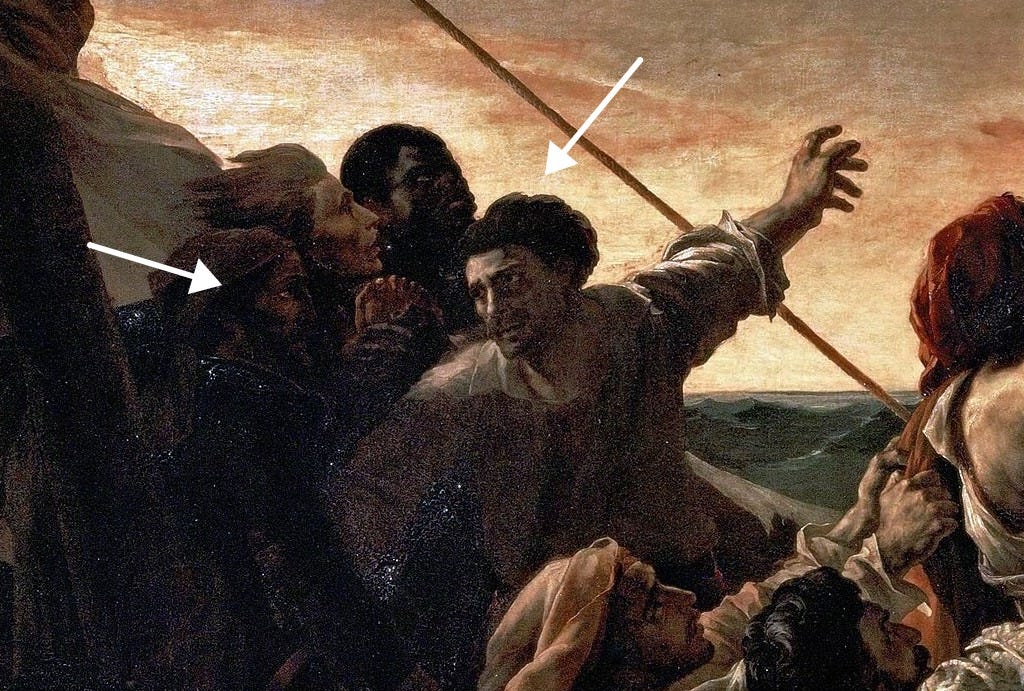
Follow that sail down to the foot of the mast.
Two men are standing there, apart from the crush of bodies climbing toward the barrel. One of them points toward the horizon.
Look at them closely. Géricault put them at the heart of his canvas for a reason: these two men will set off the scandal.
What You’ll Discover
🛟 Whether the men on the raft survived
🌊 What happened during those thirteen days
🚢 Why no ship set out to rescue them
🎨 The scene Géricault never dared to paint
🔥 Why this canvas caused a scandal
🗝️ Who the two men at the mast are
200,000+ readers learn art the fun way.
Paid subscribers get the full story. You’ll also get:
10 new stories / month
The full archive (150+ Art stories)
Your personal art guide. Comment, ask questions, DM me anytime
There’s only one person behind Cool Stories: me. Paid subscribers make it possible.
Less than a coffee a month. Cancel anytime.
Apple user? Subscribe at coolstoriesabout.art, not via the app. Apple adds 30% to the price.