
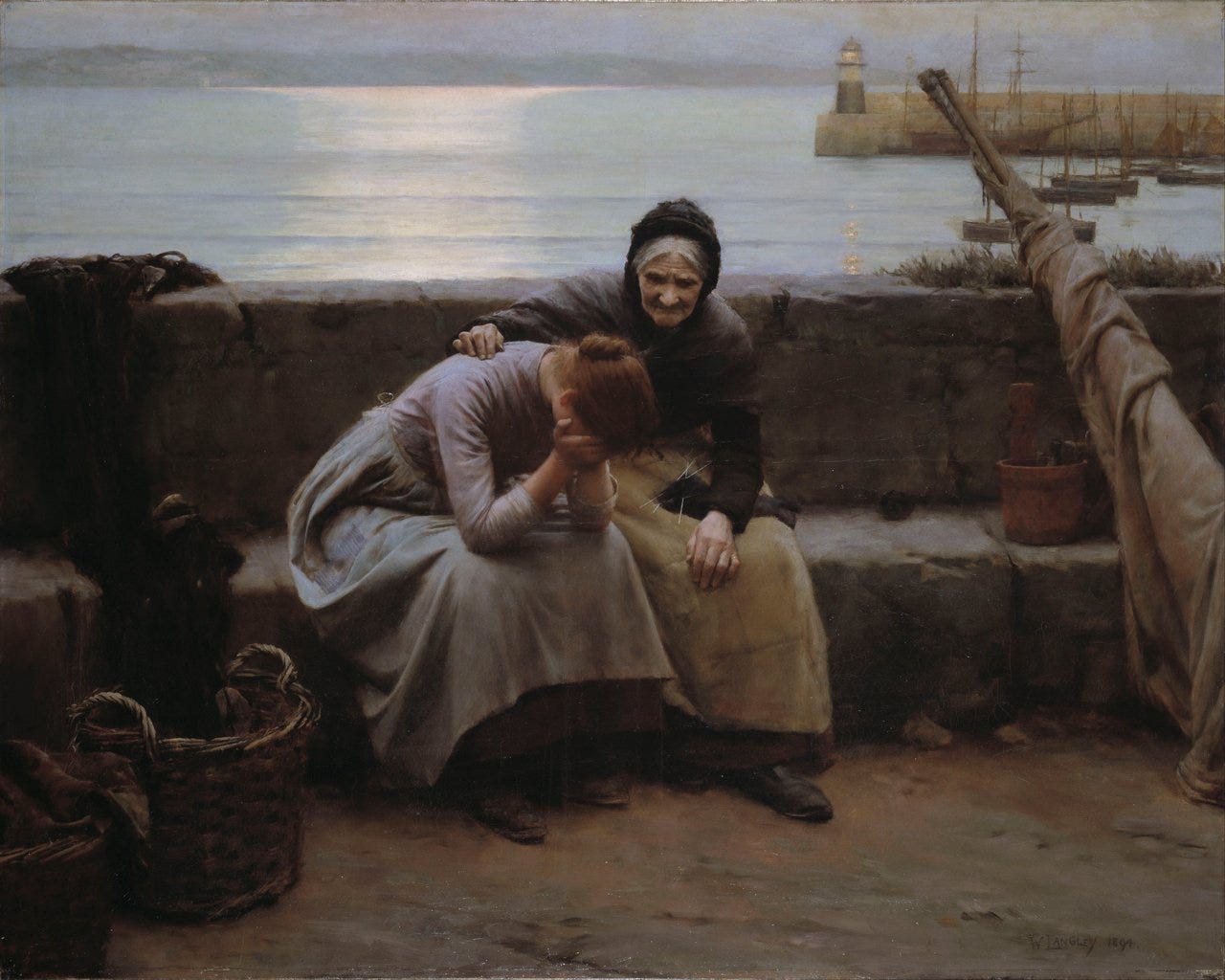
The saddest paintings in art history are the ones with a real loss behind them.
Some painters had just lost the person they were painting. Others took a death from the newspapers, or a story every reader already knew. Either way, the grief sits in something you can point to on the canvas, more often a gesture than a face.
Cool Stories About Art is a newsletter to learn art the fun way.
Join 200,000+ readers and get:
10 new art stories / month
The entire archive of content (1,000+ articles)
Comment, ask questions, and chat with other readers
All twelve are paintings, and each earned its place with at least one of two things. The first is a death you can put a date on, in the painter's own life or in the news of the day. The second is a figure caught grieving or dying, in a gesture you can see for yourself. The countdown starts at twelve. 👇
12. The Raft of the Medusa, Théodore Géricault (1819)
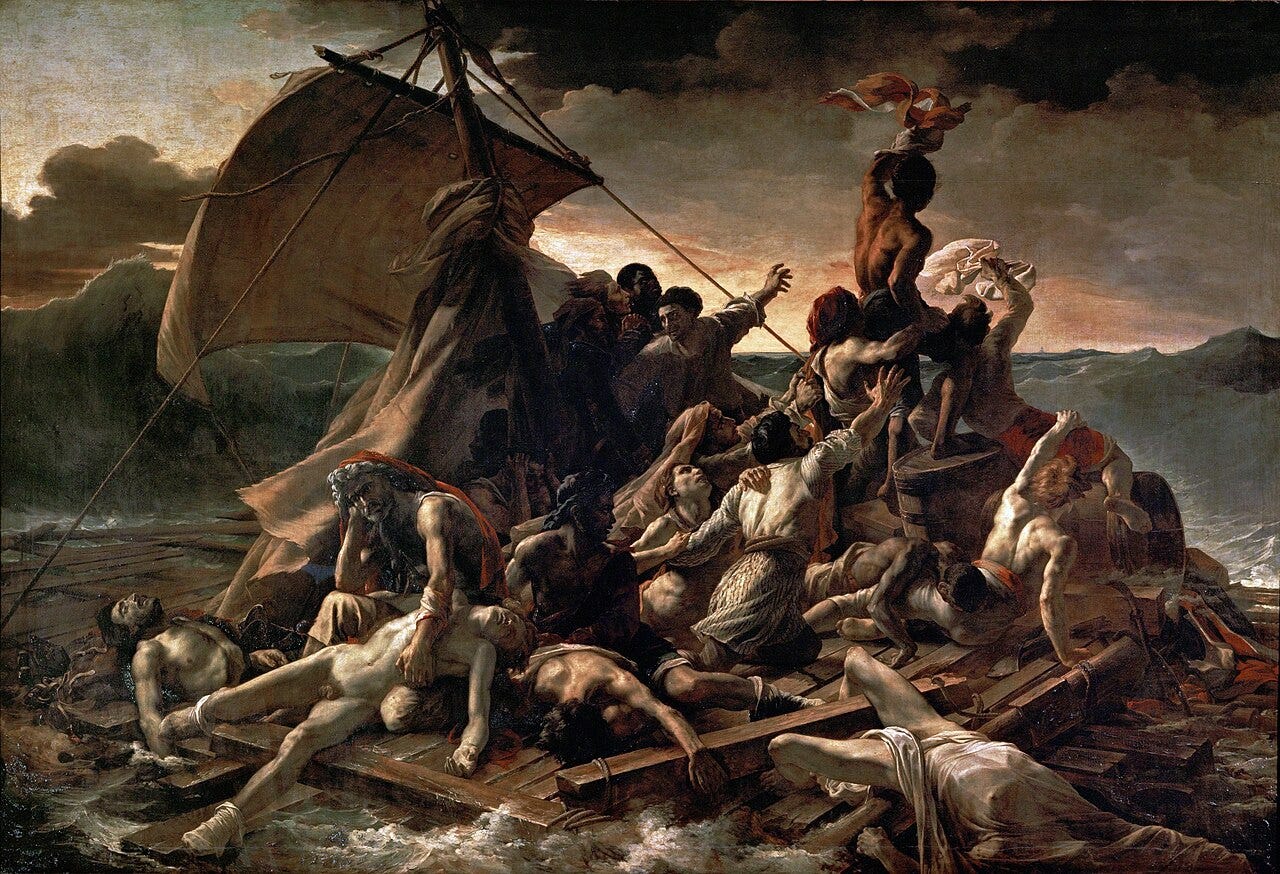
Théodore Géricault painted The Raft of the Medusa in Paris in 1818 and 1819. The shipwreck behind it was barely three years old and still raw news in France.
In June 1816, the French frigate Méduse set out for Senegal carrying around four hundred people. Its captain had barely any sailing experience. He owed the job to political connections.
On 2 July he ran the ship aground on a sandbank off the coast of Mauritania. There were only six lifeboats for everyone aboard, so the crew built a raft out of masts and planks and put roughly one hundred and fifty people on it.
It was supposed to be towed to shore. Instead, someone cut the rope.
The government tried to bury what happened next. The full account of the cover-up is in The Untold Story of the Raft of Horror.
For thirteen days the raft drifted with almost no food or water. People fought and drowned, and several survivors later admitted the living had eaten the dead. When a ship finally spotted the raft, only fifteen people were still alive.
Géricault wanted every detail right. He tracked down two of the survivors and had them describe the wreck to him in person. With them, he built a scale model of the actual raft, down to the gaps between the planks.
He sketched corpses at a Paris hospital morgue and reportedly kept a severed head in his studio for two weeks, just to study how the color of skin changes after death.
Géricault chose the second before the rescue. The survivors have just spotted a ship on the horizon, the Argus, and do not yet know it will take another two hours to reach them.
The dead are piled at the bottom of the canvas. Above them, the living climb over each other toward a lone figure waving a cloth at the sky.
Look at the far left, though, because that's where I think the painting really is. An older man sits there with a dead young man across his knees. He has turned his back on the ship.
Géricault showed the huge canvas at the 1819 Paris Salon under a neutral title, Scene of a Shipwreck.
Some critics called it a pile of corpses. Others saw a direct accusation against a government that had sent people to die under a badly chosen captain.
At a Glance
Artist: Théodore Géricault (1791-1824)
Painted: 1818-1819, Paris
Medium: Oil on canvas, about 4.9 x 7.2 m
Where to see it: Musée du Louvre, Paris
About This Painting
Who is the man waving the cloth at the horizon? The waving figure was most likely posed by a Black model known only as Joseph, who sat for Géricault several times. The preparatory sketches suggest Géricault planned that figure as the high point of the composition from the start.
Was the captain of the Méduse punished? Yes. The Méduse's captain, Hugues Duroy de Chaumareys, was court-martialled in 1817, dismissed from the navy and sentenced to three years in prison.
Did Géricault really shut himself away to paint The Raft of the Medusa? Very nearly. Géricault shaved his head so he would not be tempted to go out, and worked on the huge canvas in his studio for months.
Why is The Raft of the Medusa called a Romantic painting? The Raft of the Medusa gave a canvas the size usually kept for kings, battles and myths to anonymous victims of a recent scandal. That choice made it one of the founding works of French Romanticism.
11. At Eternity's Gate, Vincent van Gogh (1890)
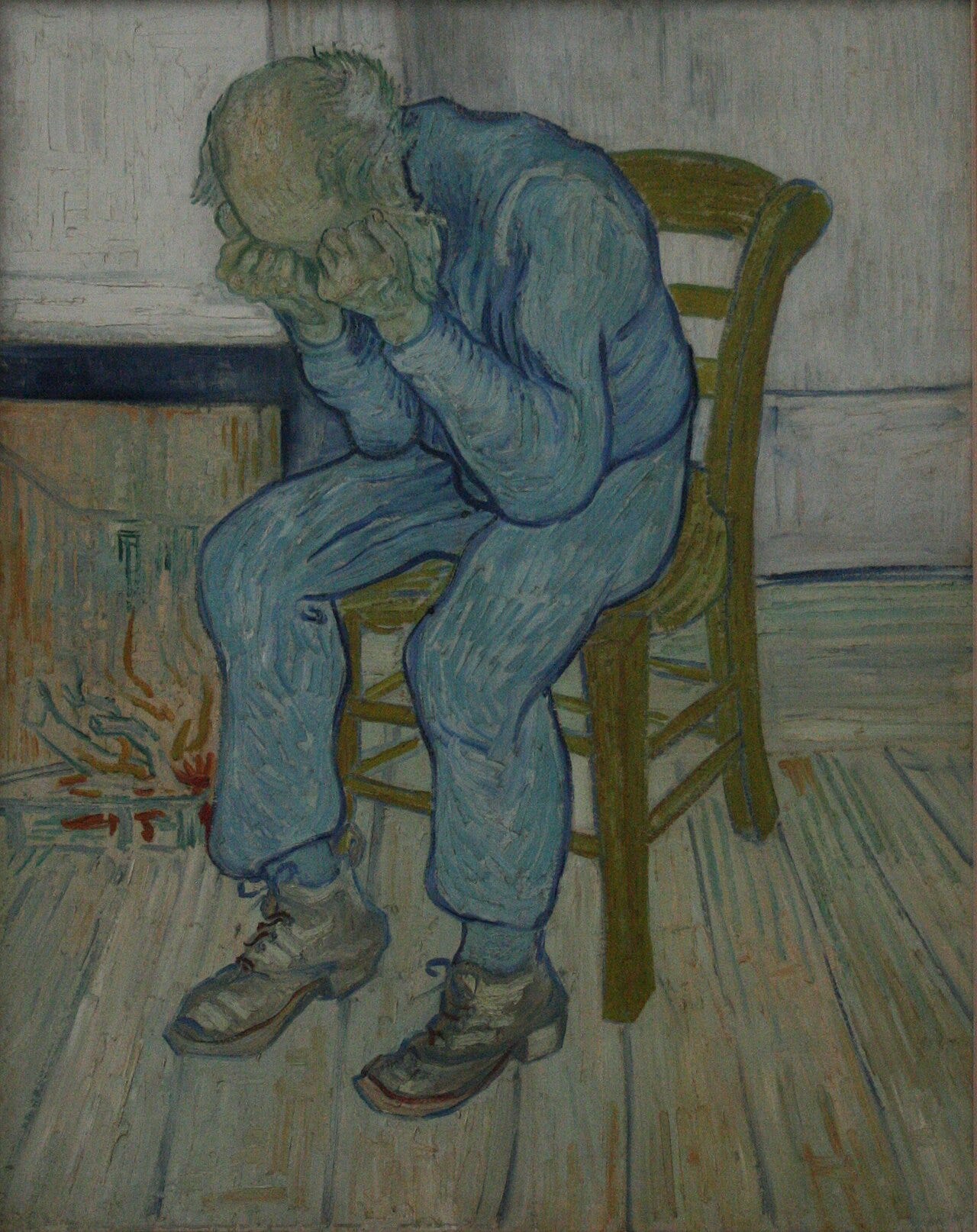
Vincent van Gogh painted At Eternity's Gate in early May 1890, in the asylum at Saint-Rémy-de-Provence where he had spent the past year.