

170 000+ readers. Learn art the fun way.
This is a preview. Paid subscribers get the full story.
You’ll also get:
10 new stories every month
The full archive (130+ Art stories)
Your personal art guide. Comment, ask questions, DM me anytime
iPhone user? Subscribe at coolstoriesabout.art, not via the app. Apple adds 30% to the price.
Frida Kahlo paints in bed.
Her mother had an easel made for her, one that leans out over her bed, and a mirror mounted under the canopy so that she always has a model in front of her. She uses a fine brush. Her canvases are small enough to fit in her lap.
In 1939, she gets up.
In her studio in Coyoacán, the neighborhood of Mexico City where she grew up, she puts the biggest canvas of her career on an easel. It is the first time she has worked at this size. She is 32, and the painting is called The Two Fridas.
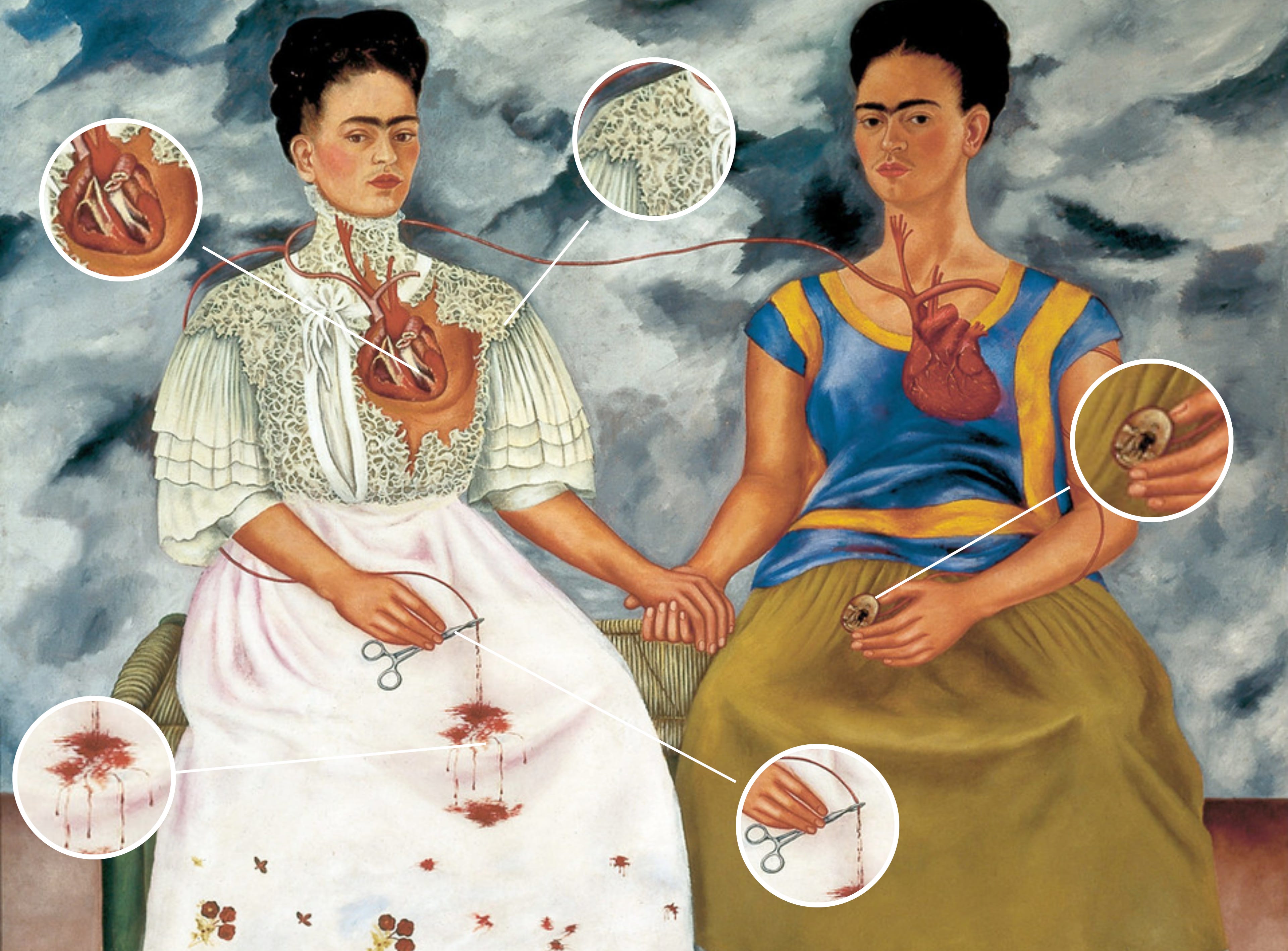
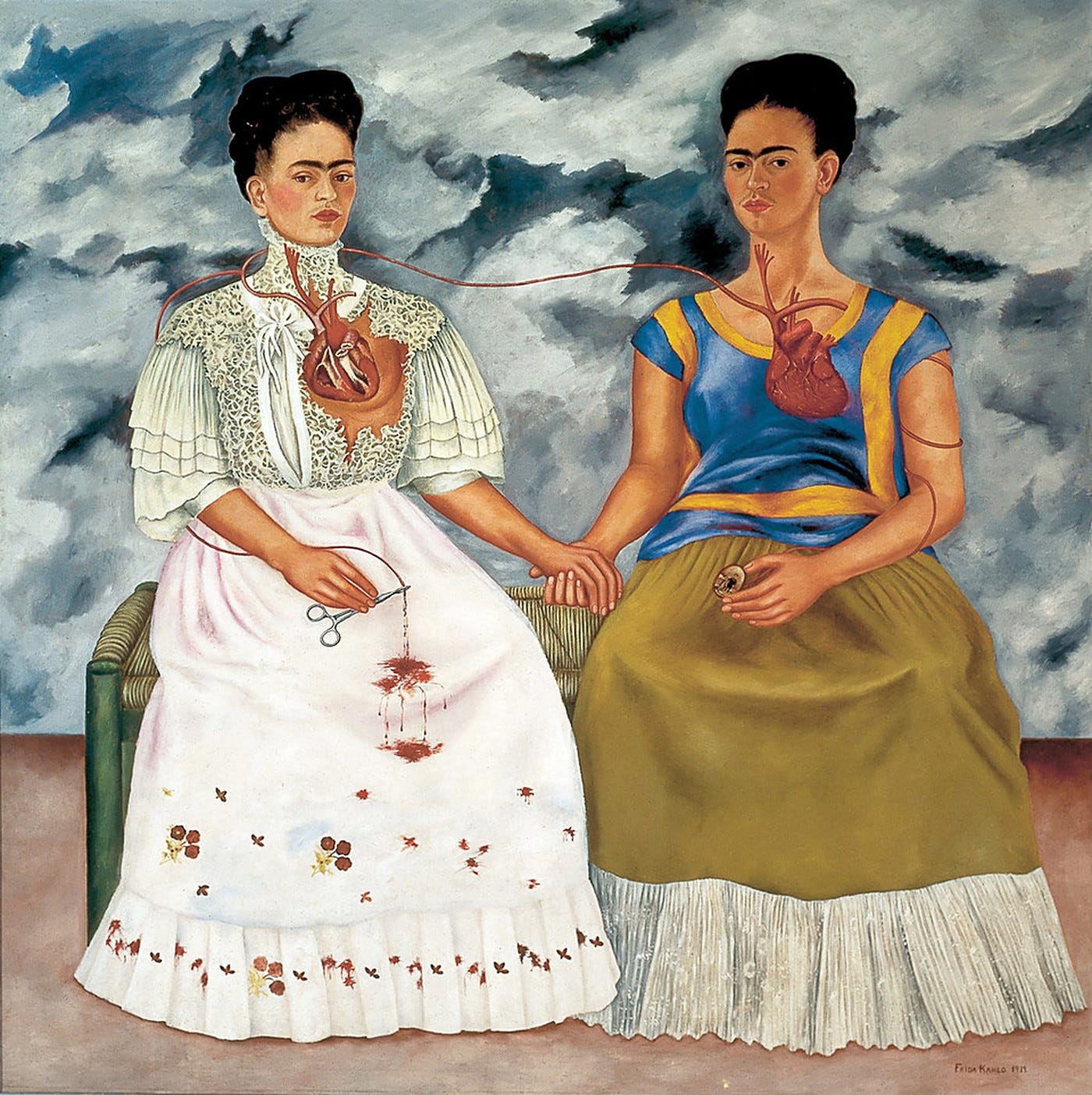
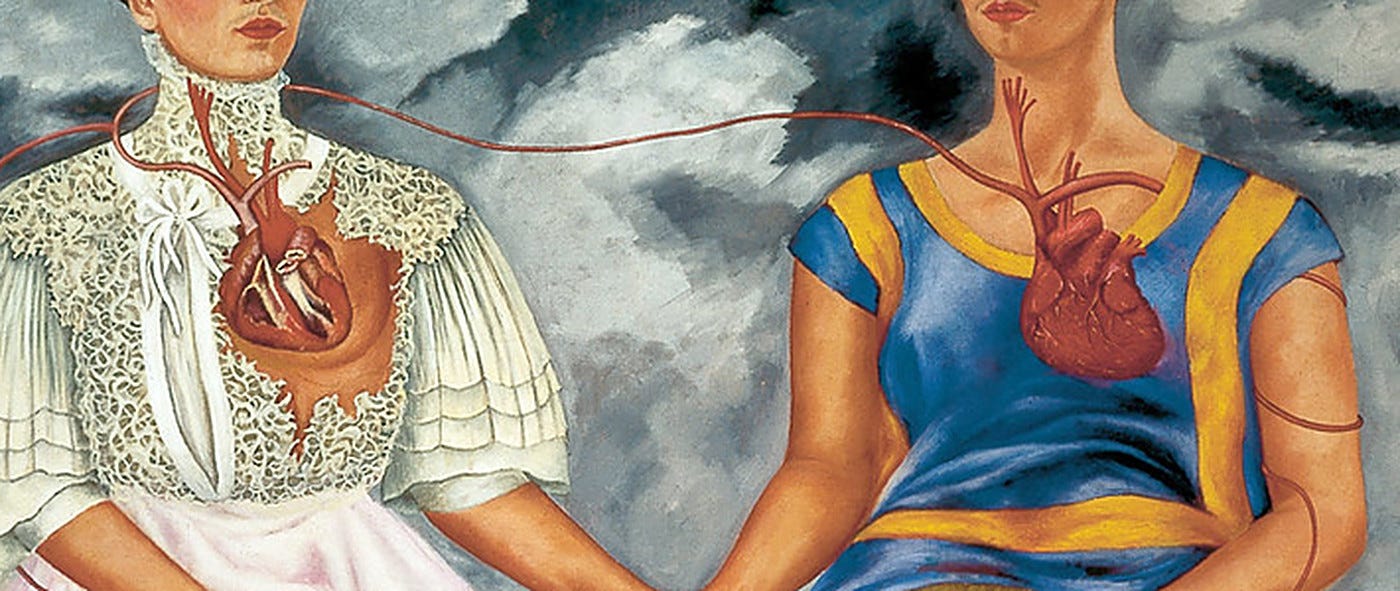
Two women sit side by side, holding hands. They have the same face.
She gets out of bed for this one, and nothing in it is there for decoration.
Let's look at it detail by detail.
The Background
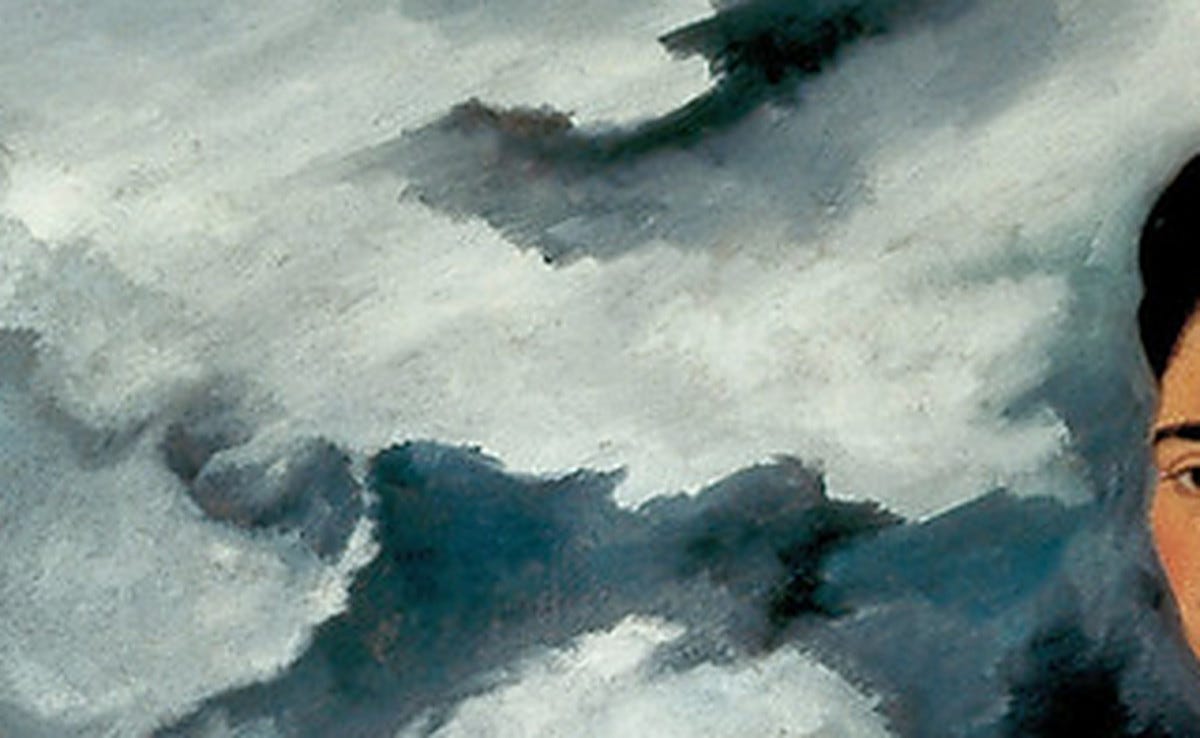
Start with what is behind the two women.
There is no wall, no horizon, no shadow on the ground. Nothing tells you where the light is coming from. A stormy sky fills the background, and it places the scene nowhere at all.
This is how a retablo is laid out. A retablo is a small votive painting on a sheet of metal, commissioned by a Mexican family from a village craftsman after they survive an accident or an illness.
The craftsman paints the body that was in danger, the saint who answered, and a line of thanks along the bottom. Nothing else. No setting, no depth.
Frida Kahlo has more than 400 of them hanging in her house. She buys them in markets and in country churches.
The Huipil
Let your eye move to the woman on the right.
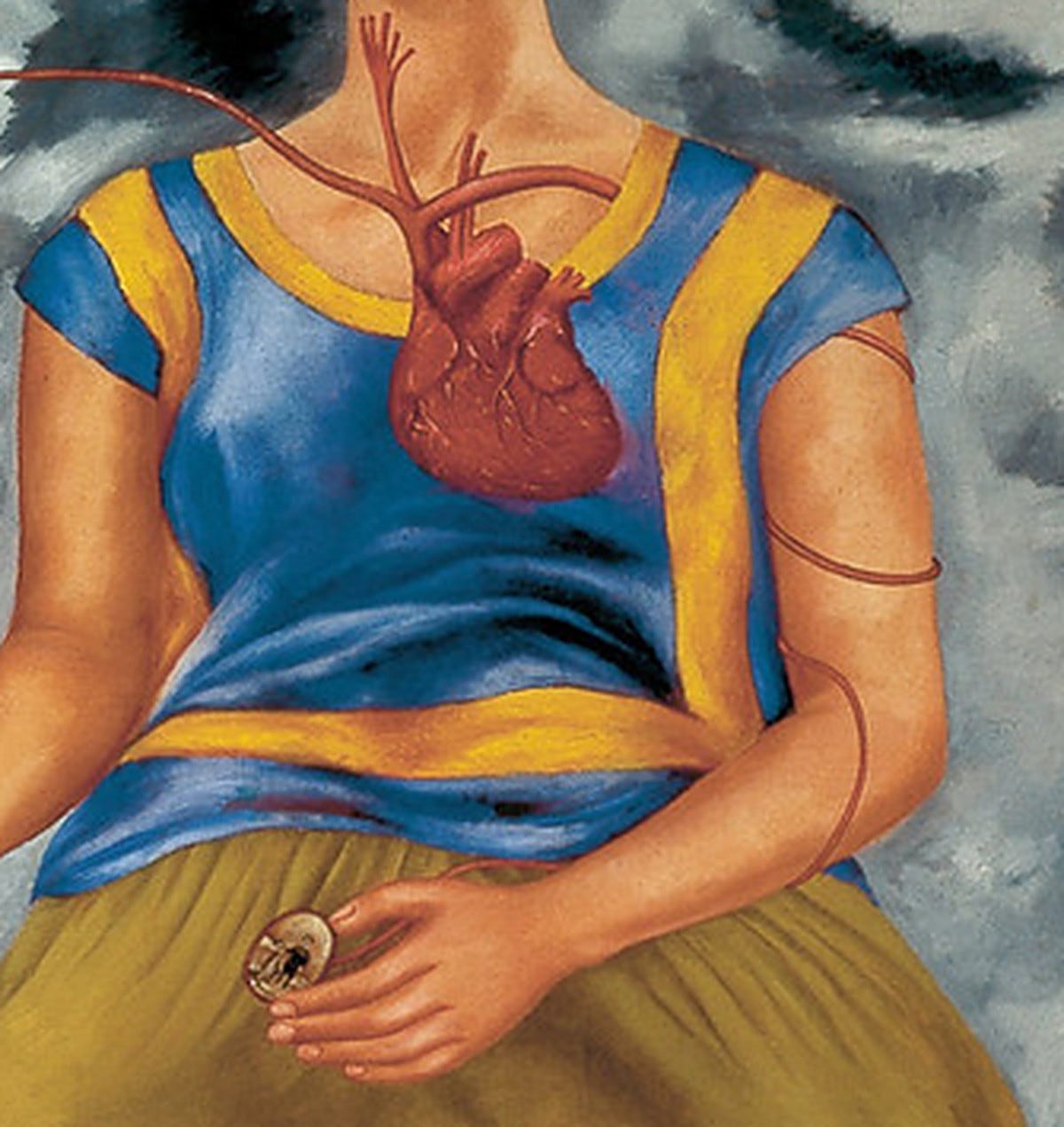
She is wearing a blue huipil with yellow bands, the short sleeve blouse the women of Tehuantepec wear, along with the long olive skirt and white ruffle that go with it. Those women are called tehuanas.
Tehuantepec is in the south of the country, at the isthmus where Mexico narrows to its thinnest point between the two oceans. The women there run the markets, set the prices and keep the household money. Frida Kahlo's mother is born in the state the isthmus runs through.
Her daughter will dress as a tehuana for her whole adult life.
Discover my new newsletter !

The High Collar
Now the woman on the left.
A high collar, long sleeves, lace across the chest. The dress is European, the kind a woman wears to her own wedding.
Frida Kahlo's father is Carl Wilhelm Kahlo. He arrives from Germany at 19, becomes Guillermo in Mexico, and makes his living photographing the country's churches for the government.
In 1936 his daughter paints the family tree. Her parents are in it on their wedding day, copied from the wedding photograph that hangs in the house, and her mother is wearing this dress.
Guillermo Kahlo photographs Frida all through her childhood. He photographs himself too, alone, facing the camera.
Look at how the two women are sitting. Square to the front, backs straight, hands flat, eyes still. That is how you hold yourself in front of a camera.
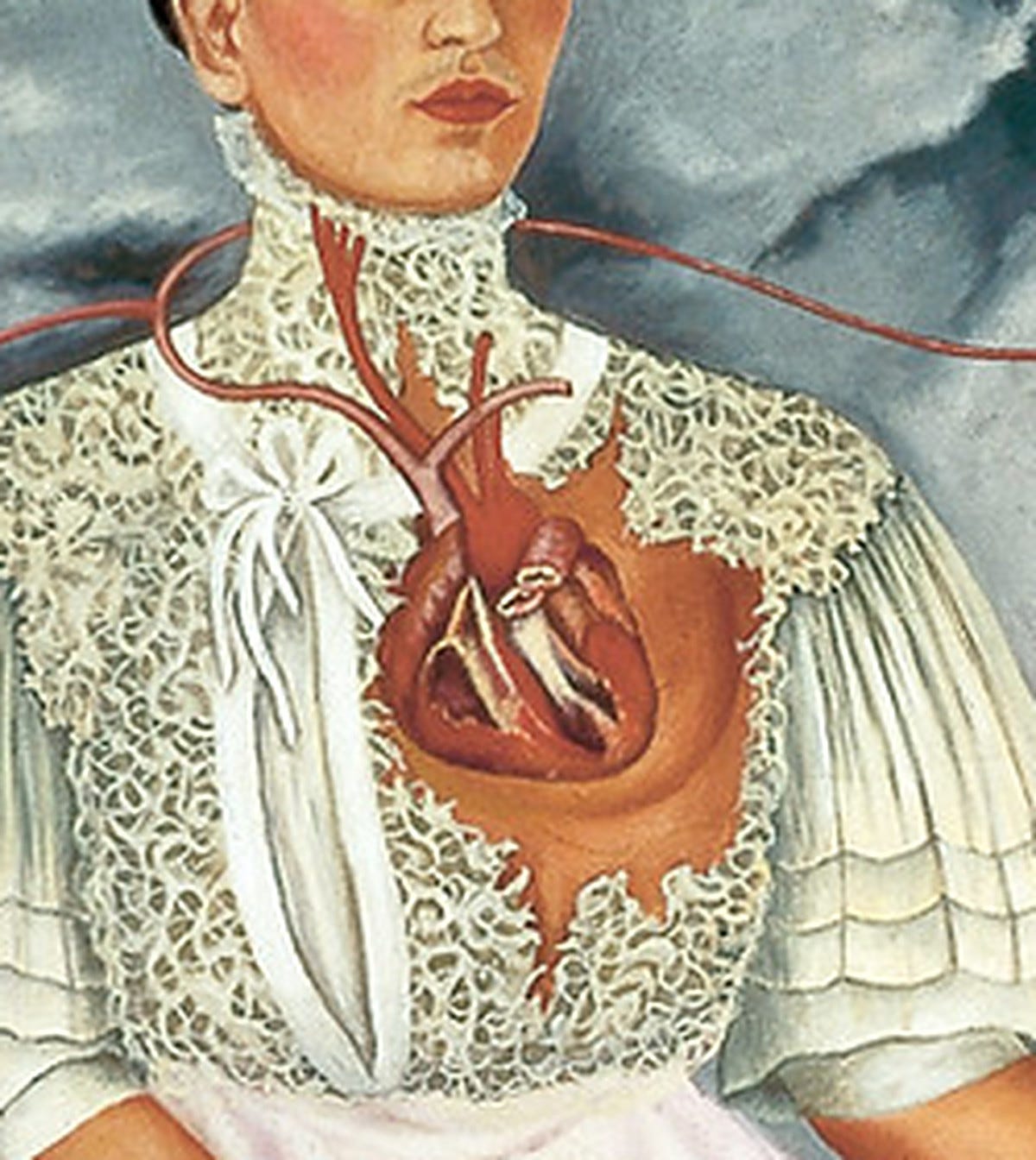
All the Way Down
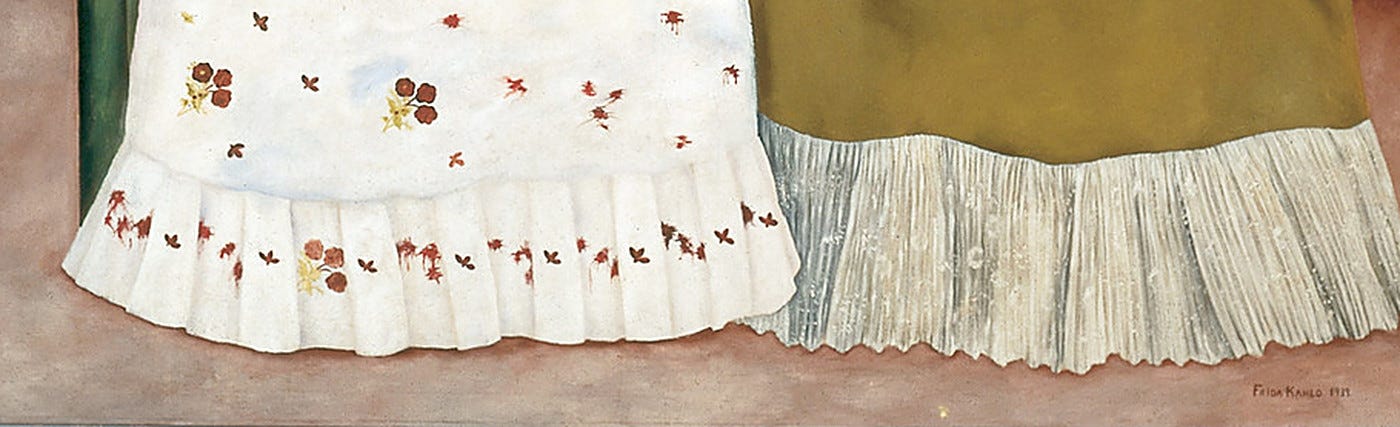
Look down at the bottom of the painting.
Both skirts run all the way to the floor. You never see a foot.
Polio takes hold when Frida Kahlo is 6 and stunts her right leg and foot. The calf stays thinner, the leg stays shorter, and the other children call her Peg Leg Frida.
She pulls several pairs of socks up over that calf to build it up, has the right shoe fitted with a raised heel, and switches to long dresses for good.
When she paints this canvas, she has been hiding that leg since grade school.
The Bodice
The top of both dresses is wide and stiff, and neither one follows the shape of the body.
Frida Kahlo dresses like this every day. The cut sits over the corsets that hold her spine in place. She goes through 28 of them in her life, in plaster, in leather and in steel, each one strapped on for months before the next is fitted.
What She Is Gripping
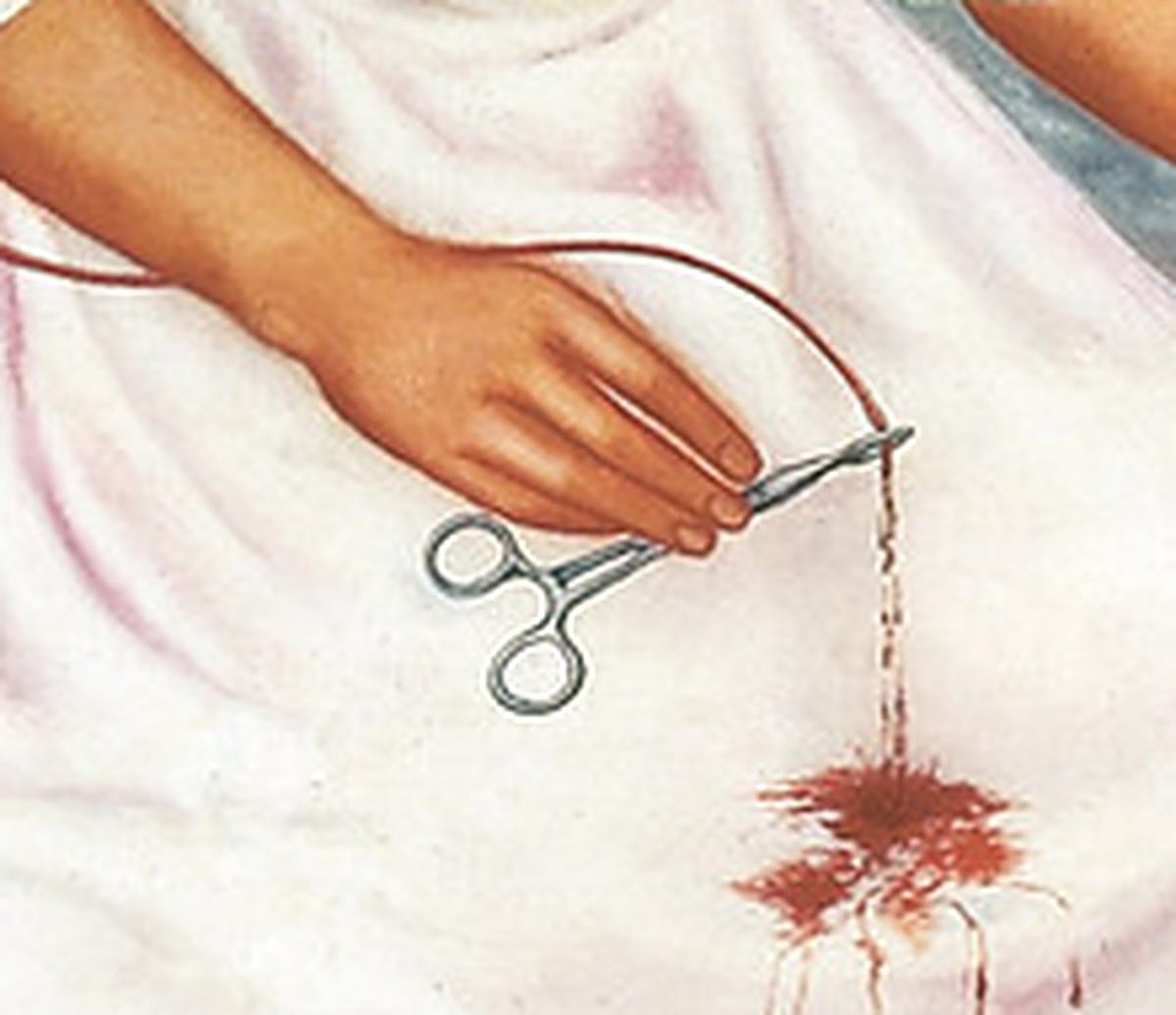
Come back to the woman in the white dress, and to the hand lying on her skirt.
That is not a pair of scissors. It is a surgical clamp, the tool a surgeon closes on an artery to stop the bleeding.
Frida Kahlo is 18 when a streetcar hits the bus she is riding home. An iron bar goes through her pelvis. Her spine breaks in three places. Her collarbone breaks, her ribs break, and her right leg breaks in 11 places.
She comes out of that bus with a body that will be opened 32 times, and the clamp is waiting on the tray every single time.
Remember it. We will come back to it.
The Hearts
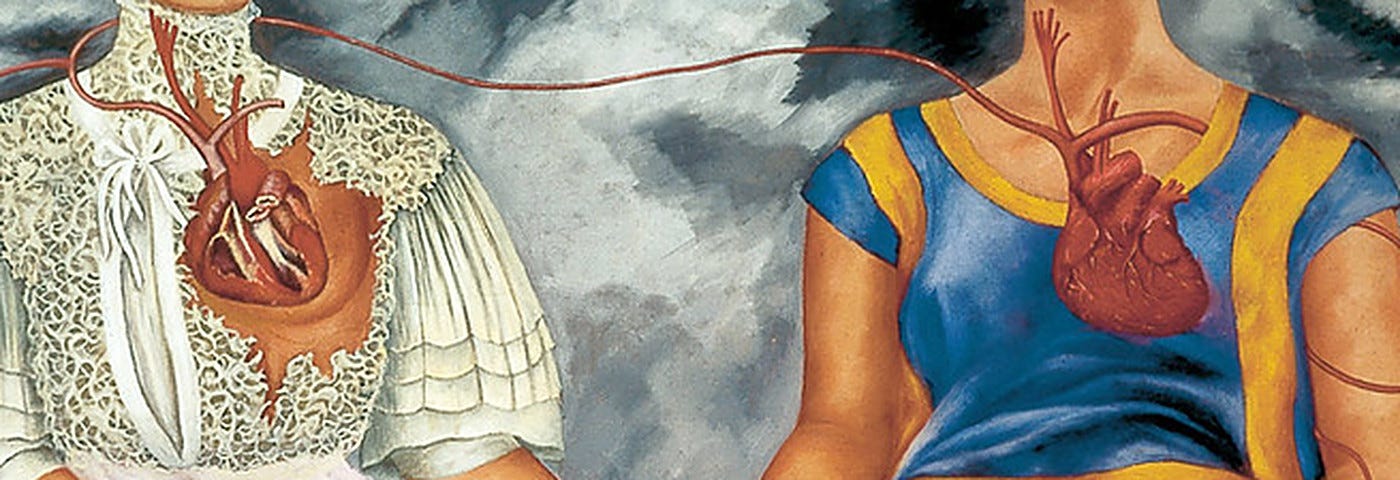
Both women are cut open above the breast, and the hearts sit outside their bodies, on top of the cloth.
A heart painted outside the body runs all through Mexican imagery. In Mexican homes you find the Sagrado Corazón, the Sacred Heart of Christ, displayed on his own chest for all to see.
The image goes back much further. Before the Spanish arrived, Aztec priests used a flint blade to open the chests of those they sacrificed at the top of the pyramids, and lifted the heart toward the sun while it was still beating.
The way it is drawn, though, owes nothing to devotion. Ventricles, atria, the great vessels, each one in its place, exactly as they appear on an anatomy chart.
Frida Kahlo is 15 when she enters the Escuela Nacional Preparatoria, the elite school that feeds into the university in Mexico City. There are 35 girls among nearly 2,000 students. She is going to be a doctor.
Three years later, the streetcar accident ends those studies.
The Arteries
Compare the two organs.
The one on the right is whole. Closed, complete.
The one on the left is open. Cut clean through, the arteries severed, the edges as even as a blade leaves them.
In every image of the Sagrado Corazón the heart stays whole. It is pierced with a lance, ringed with thorns, crowned with flames. It is never cut in two.
Here she cuts one in two.
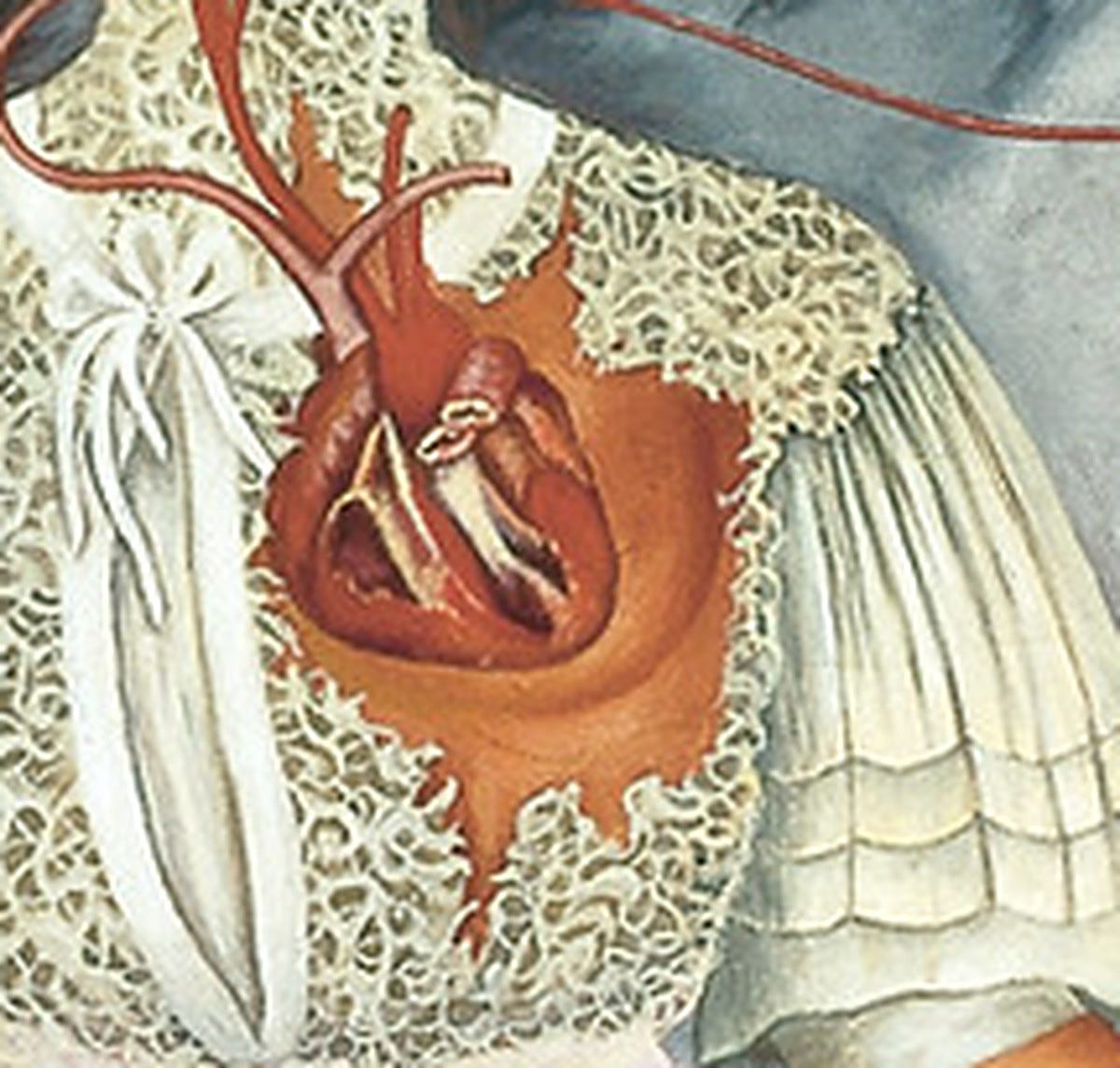
Follow the vein. It leaves the open heart, crosses the canvas, enters the second heart, and stops in a closed hand.
That hand is gripping an object the size of a coin. That object on its own explains why there are two Fridas.