170 000+ readers. Learn art the fun way.
This is a preview. Paid subscribers get the full story.
You’ll also get:
10 new stories every month
The full archive (130+ Art stories)
Your personal art guide. Comment, ask questions, DM me anytime
iPhone user? Subscribe at coolstoriesabout.art, not via the app. Apple adds 30% to the price.
Venice, September 11, 2007.
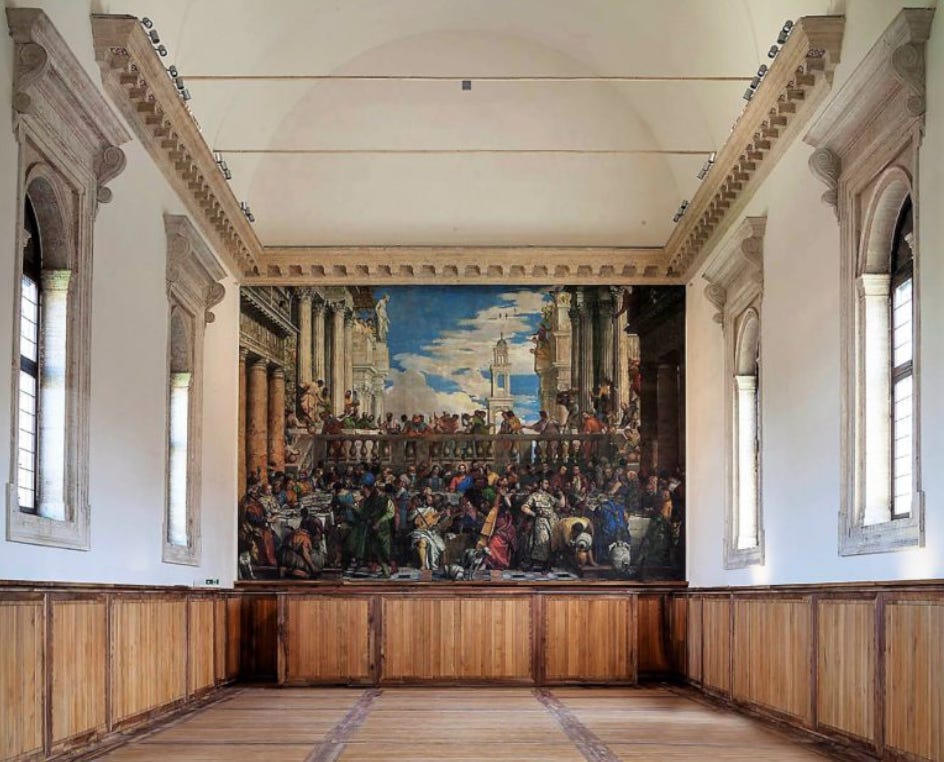
In the refectory of the monastery of San Giorgio Maggiore, 700 people are standing. Cardinals, officers in uniform, art historians.
They are looking at a bare wall.
The painting that covered it left on September 11, 1797, carried off by Bonaparte's soldiers. Two hundred and ten years ago, to the day.
Then the banquet comes back onto the wall.
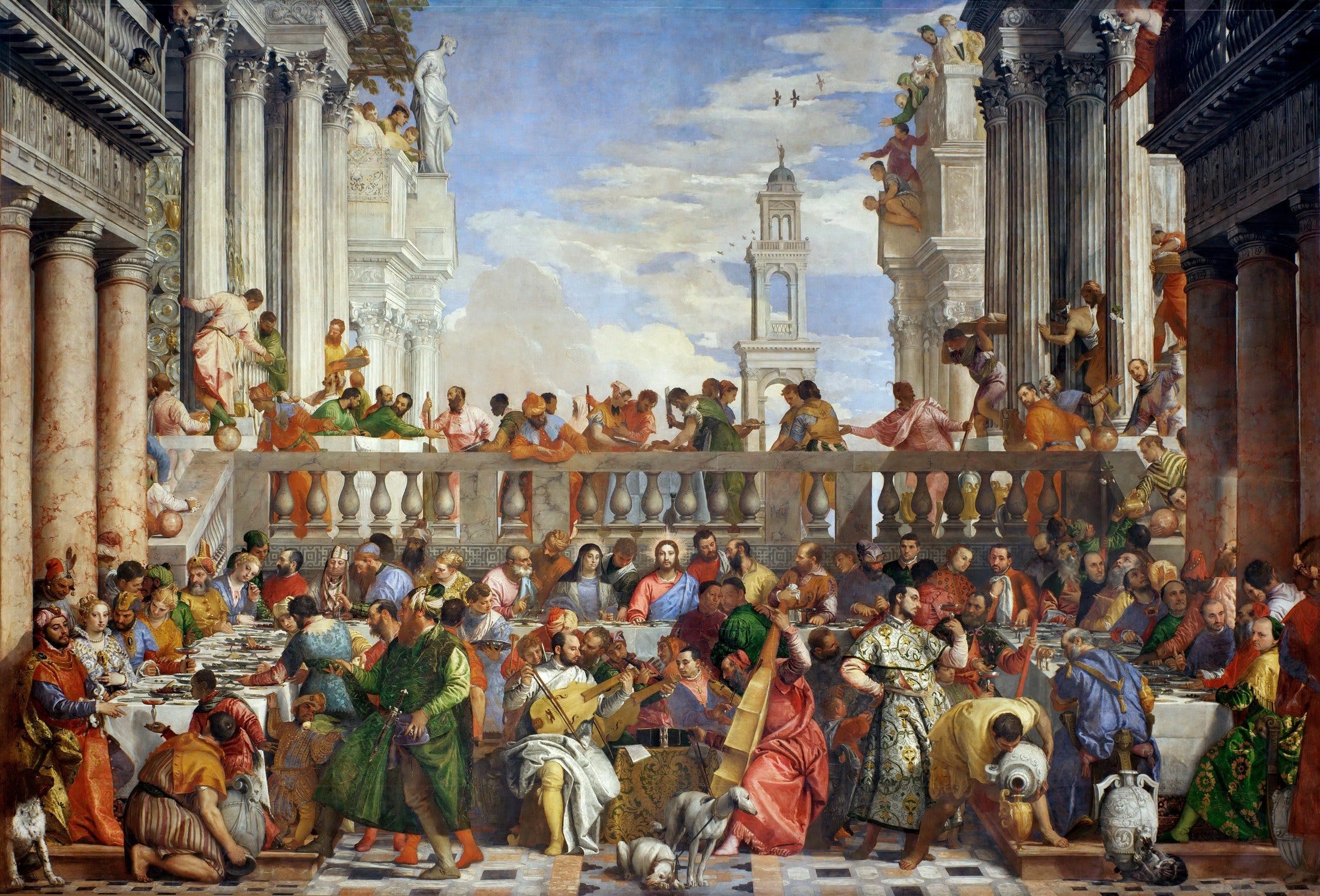
Floor to ceiling, corner to corner: an enormous table, columns, a blue sky, 130 guests.
This is not the painting. It is a printed reproduction, at full size.
To make it, a Spanish team scanned the original at the Louvre at night, with the museum closed, on the condition that no one touch it. Two guards stayed in the room throughout the shoot.
The work is called The Wedding at Cana. It is the largest painting in the Louvre: nearly 70 square meters of canvas.
The story takes a few lines in the Gospel of John.
A wedding in a village in Galilee. The wine runs out in the middle of the meal. Jesus has six stone jars filled with water, and the water turns into wine. It is his first miracle.
A wedding, wine, 130 people at the table.
A celebration, or so it seems...
We are going to look at it detail by detail.
The Refectory Wall
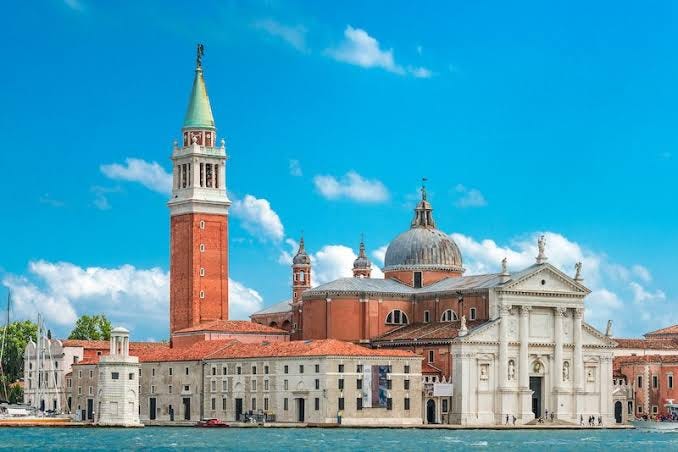
The painting is commissioned on June 6, 1562 by the Benedictine monks of San Giorgio Maggiore, on the island facing Saint Mark's Square.
It is not made for a church. The monks want it in their refectory, the room where they take their meals.
The contract calls for a canvas the width and height of the end wall. Veronese is free to paint as many figures on it as he wants.
While he works, the monks house him, supply him with a barrel of wine, and feed him at their own table.
Above the door, he paints two angels holding a plaque. A single word is written on it: SILENTIUM. Among the Benedictines, you eat without speaking.
The monks will eat in front of this wall for 234 years.
The Architect
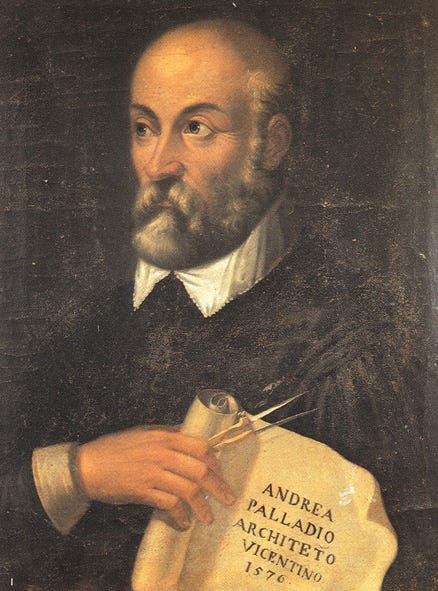
The room where Veronese sets up his scaffolding has just been rebuilt. The architect is named Andrea di Pietro della Gondola.
No one knows him by that name. He started out as a stonecutter at 13, a patron spotted him and gave him a working name: Palladio.
His name became a style, Palladianism.
In 1570, he publishes a manual in Venice, four volumes in which every one of his buildings is drawn and measured, ready to be copied.
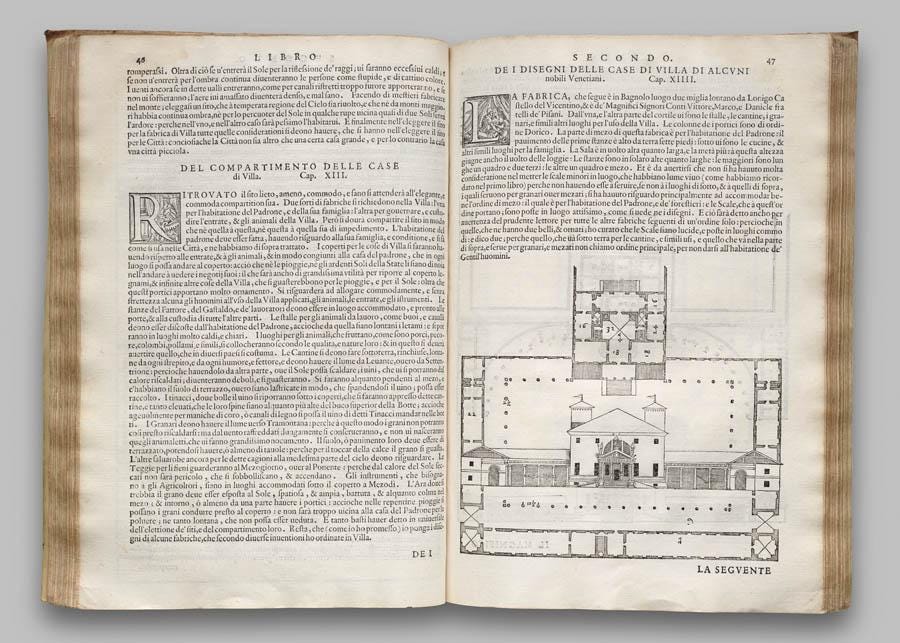
The book travels to England, then to America. Thomas Jefferson designs Monticello and the University of Virginia with that volume on his desk, and behind him come the White House, the Capitol, and the Supreme Court.
In 2010, the United States Congress passed a resolution naming Palladio the father of American architecture.
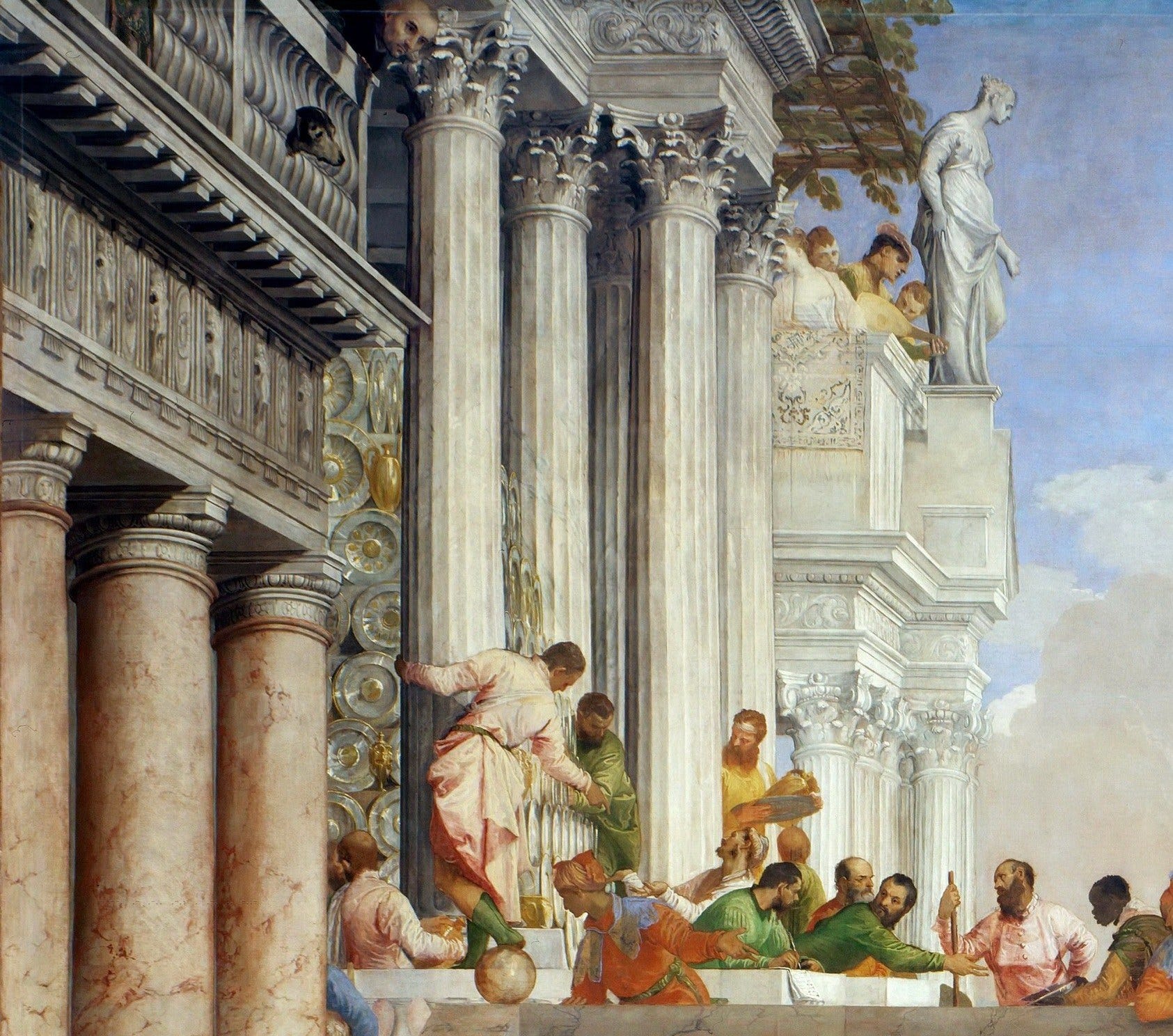
Now look at the back of the painting. The columns, the marble balustrade, the staircase, the terrace on the upper level.
Those buildings are Palladio's. The two men have been working together for years, and Veronese paints one man's architecture into the other man's canvases.
In front of a Veronese, get in the habit of looking behind the figures. You will very often find Palladio's architecture there.
The monks ate in a room by Palladio, looking at a room by Palladio.
The Ones Giving the Party
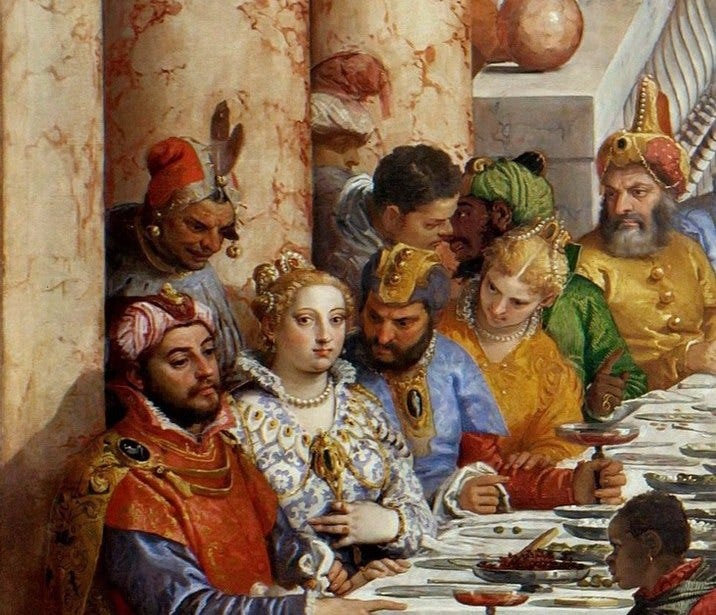
Look to the far left, at the very end of the table.
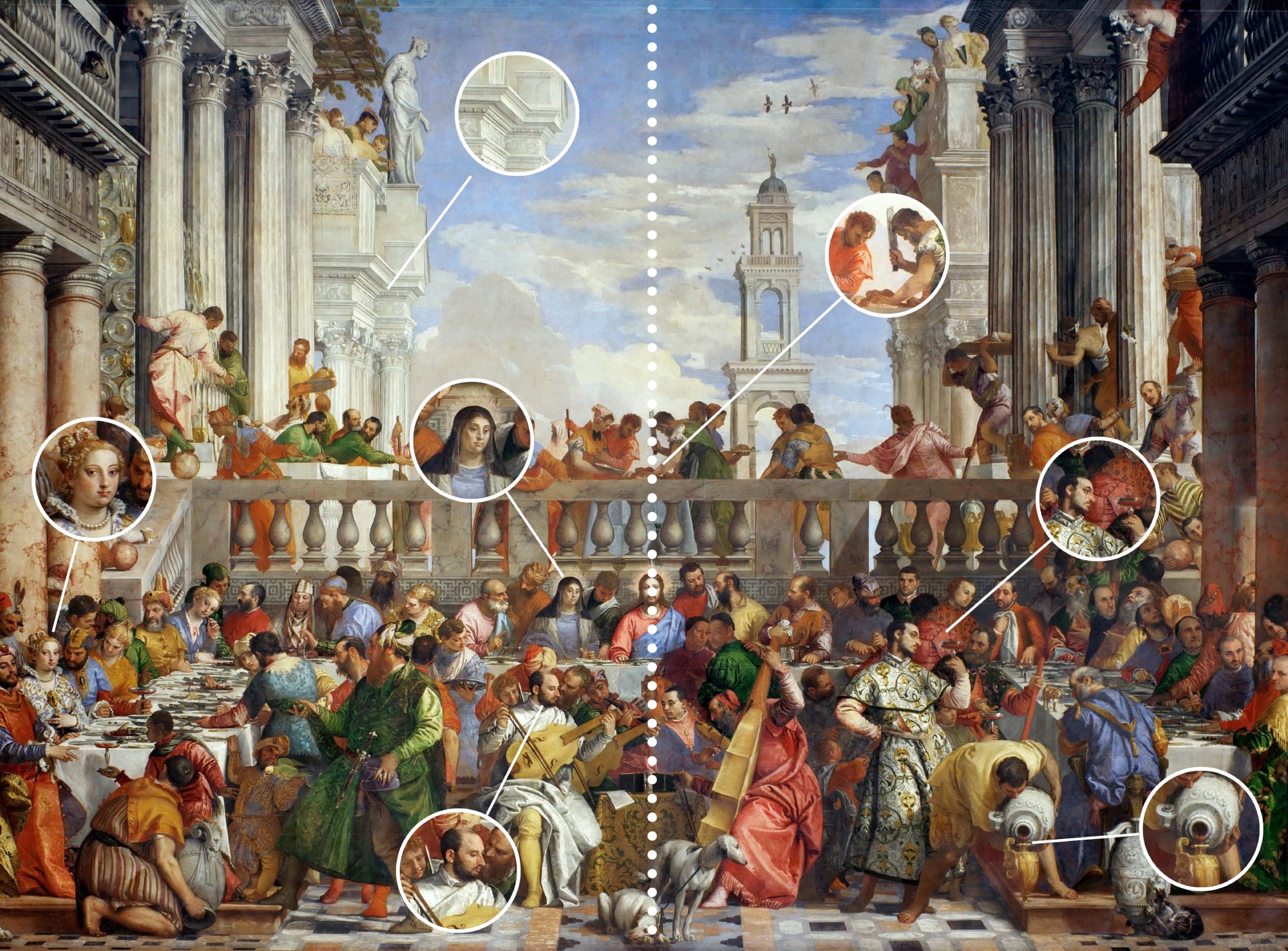
A young blonde woman in a white and gold gown, pearls braided into her hair. Beside her, a man in a red mantle, wearing a pale turban.
These are the bride and groom. It is their wedding, their house, their wine.
They are pushed against the left edge, in the seat reserved for the least important guests. No one is looking at them.
The Gospel of John tells the story of the wedding at Cana without ever giving their names.
The place of honor, at the exact center of the table, is taken by a guest.
Discover my new newsletter !

The Table
The cloth is white. The dishes are silver, some of them footed, and the knives have pale handles. On them, olives, small red fruits, slices of candied fruit.
None of this grows in Venice.
The sugar that candies the fruit comes from Cyprus, the spices from Alexandria, the silk from the Levant. The city produces almost nothing: it buys, it resells, and it takes its cut on the way through.
The glasses, on the other hand, are Venetian. Murano cristallo is the only perfectly transparent glass in Europe, and Venice forbids its glassmakers to leave the island in order to keep the process secret.
The colors too. This painting is the most colorful on the continent because Venice is the port where the pigments come ashore.
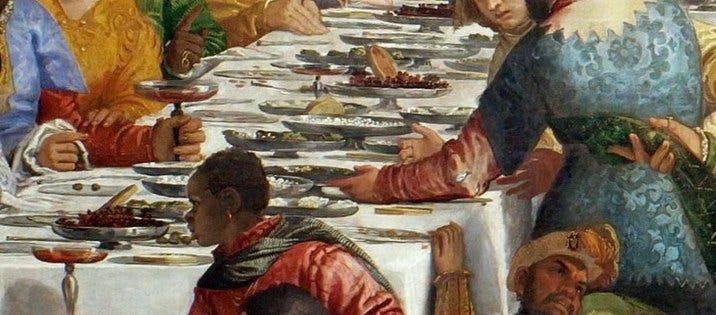
On the bodies, starched lace ruffs, fitted doublets, gold chains. And among them, turbans, caftans, Ottoman headdresses.
These are not costumes. This is the clientele of the Rialto, the great market of Venice, seated at the same cloth.
In the Bible, the wedding at Cana is a poor village wedding.
The subject is a miracle in Galilee. The painting is a portrait of Venice.
Four Names in the Crowd
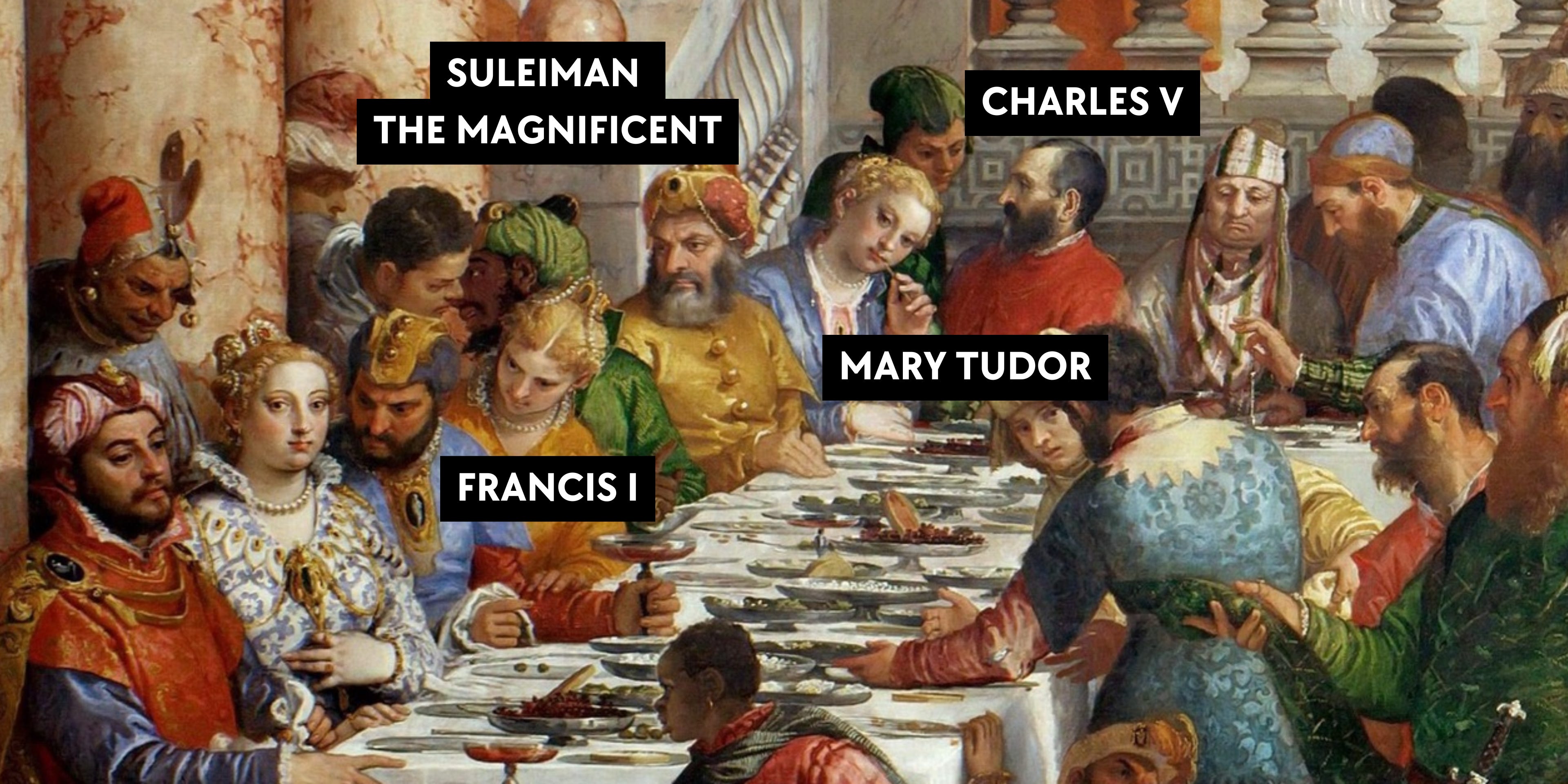
Among these faces, four carry a name.
Suleiman the Magnificent, sultan of the Ottomans, has reigned for more than forty years over an empire running from Budapest to Baghdad. His fleet has driven Venice out of its last holdings in Greece.
Charles V ruled at the same time over Spain, Austria, the Low Countries, Naples, and the colonies of America. The two men spent their entire lives at war with each other.
Francis I, King of France, the man who bought the Mona Lisa. He allied himself with the sultan against the emperor: a most Christian king signing a military treaty with Islam, and all of Europe cries scandal.
Mary Tudor, Queen of England, married to Charles V's son.
Four crowns that spent forty years marrying, allying with, and fighting one another. Veronese seats them at the same cloth, in the crowd, without setting them apart from the other 126.
The Servant Pouring
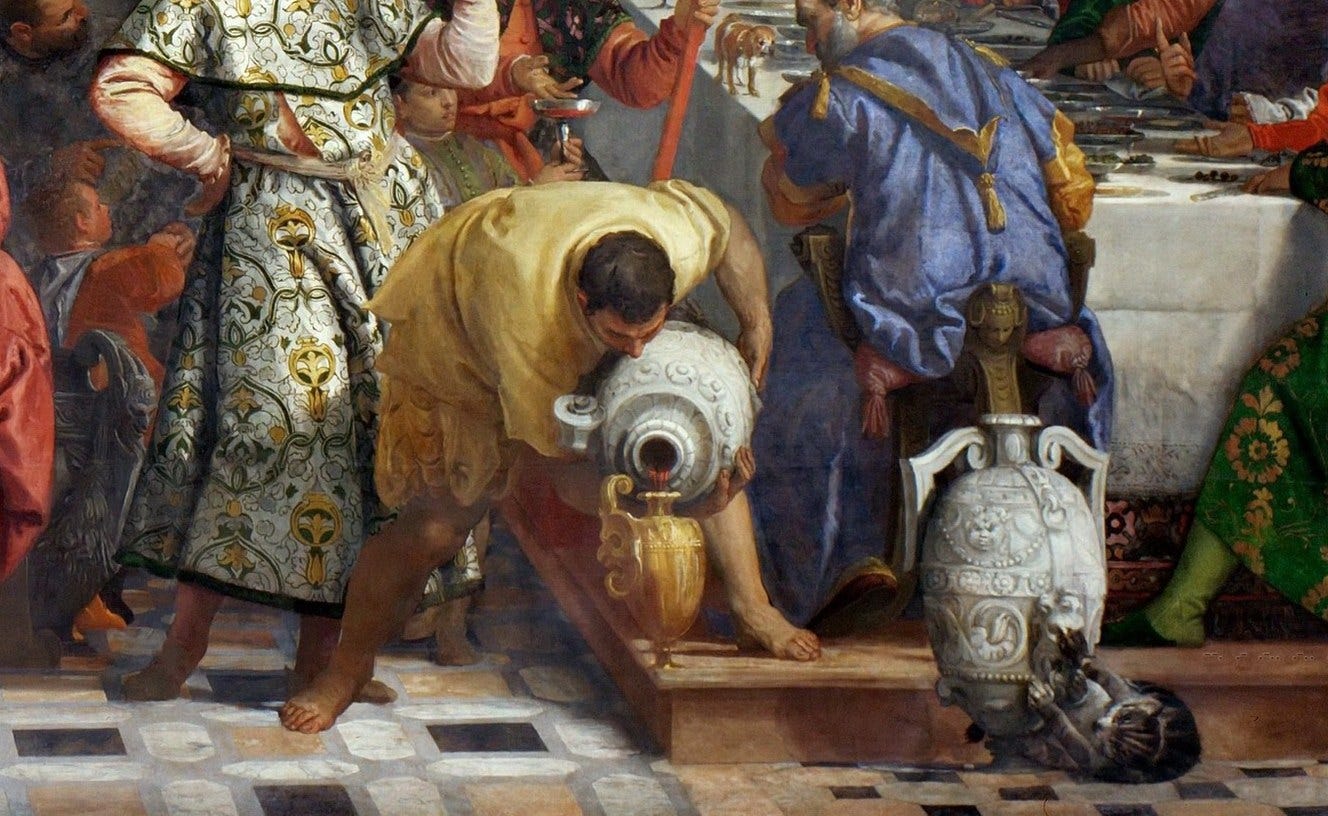
In the lower right corner, a barefoot servant in a yellow tunic leans forward. He tips a large jar over a gold vessel.
What comes out is dark red. This is the miracle, happening.
The Gospel describes these vessels precisely: six stone jars, used for the ritual washing of the Jews before a meal. Jesus asks that they be filled with water to the brim.
Veronese keeps the stone of the text, but he carves his jars like furniture from a Venetian palace: white marble, masks, handles.
The miracle takes place down there, at ankle height, while the whole table is looking somewhere else.
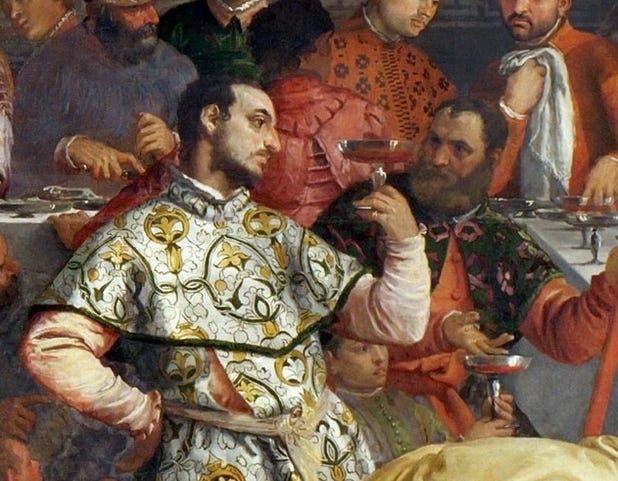
One single guest already has this wine in his hand, at the other end of the table.
The Raised Glass
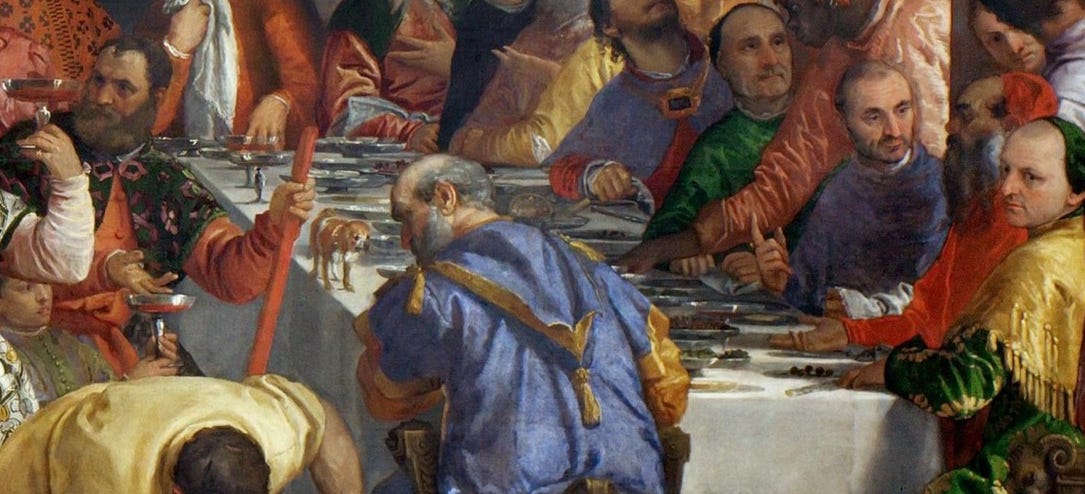
At the other end of the table, on the left, an old man in a striped headdress holds a tall glass between his thumb and forefinger, at chest height. He is studying it.
The Gospel gives him a title: he is the master of the feast, the man in charge of the cellar and of the service.
He tastes it. The wine is better than anything served since the start, and he has no idea where it came from: only the servants who filled the jars saw it appear.
So he sends for the bridegroom and takes issue with his method. You serve your best wine first, he says, and the ordinary wine at the end, once the guests are too merry to tell the difference. You have done the opposite.
The only man in the painting who has tasted the miracle reads it as a decision about wine service.
The Empty Glass
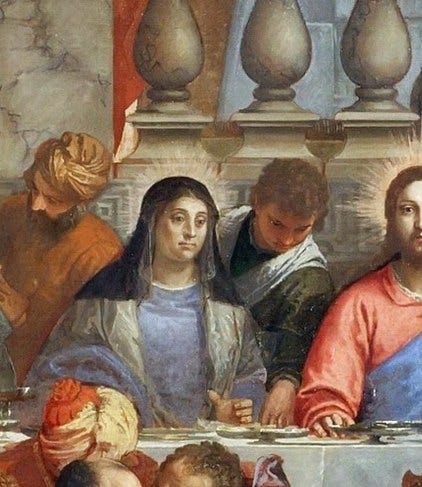
At the center of the table, immediately to the left of Jesus, a woman in a gray gown, hands resting in front of her. Over her hair, a veil edged in black.
This is Mary, his mother.
She is the one who notices first that the wine has run out, and who tells him. On the canvas, her hand points to an empty glass.
He answers her: “Woman, what have I to do with thee? Mine hour is not yet come.”
The phrase is harsh. It means: this is not your concern, and this is not the moment.
She does not press him. She turns to the servants and tells them to do whatever he tells them.
Christ
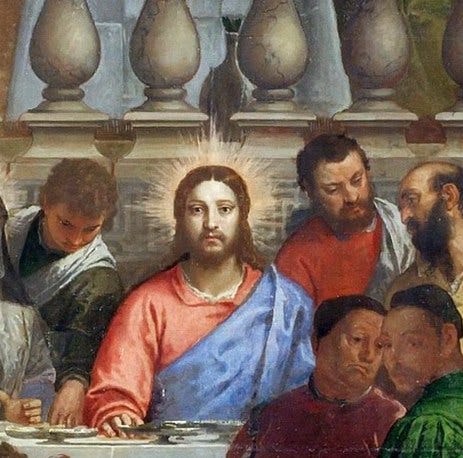
One step to the right, at the exact center of the canvas.
He faces us, in a red tunic and a blue mantle, hands resting on the cloth.
The whole table is eating, drinking, leaning toward a neighbor, passing a dish. He looks straight ahead, out of the painting, at whoever is looking at him.
Now step back, far enough to see the whole canvas.
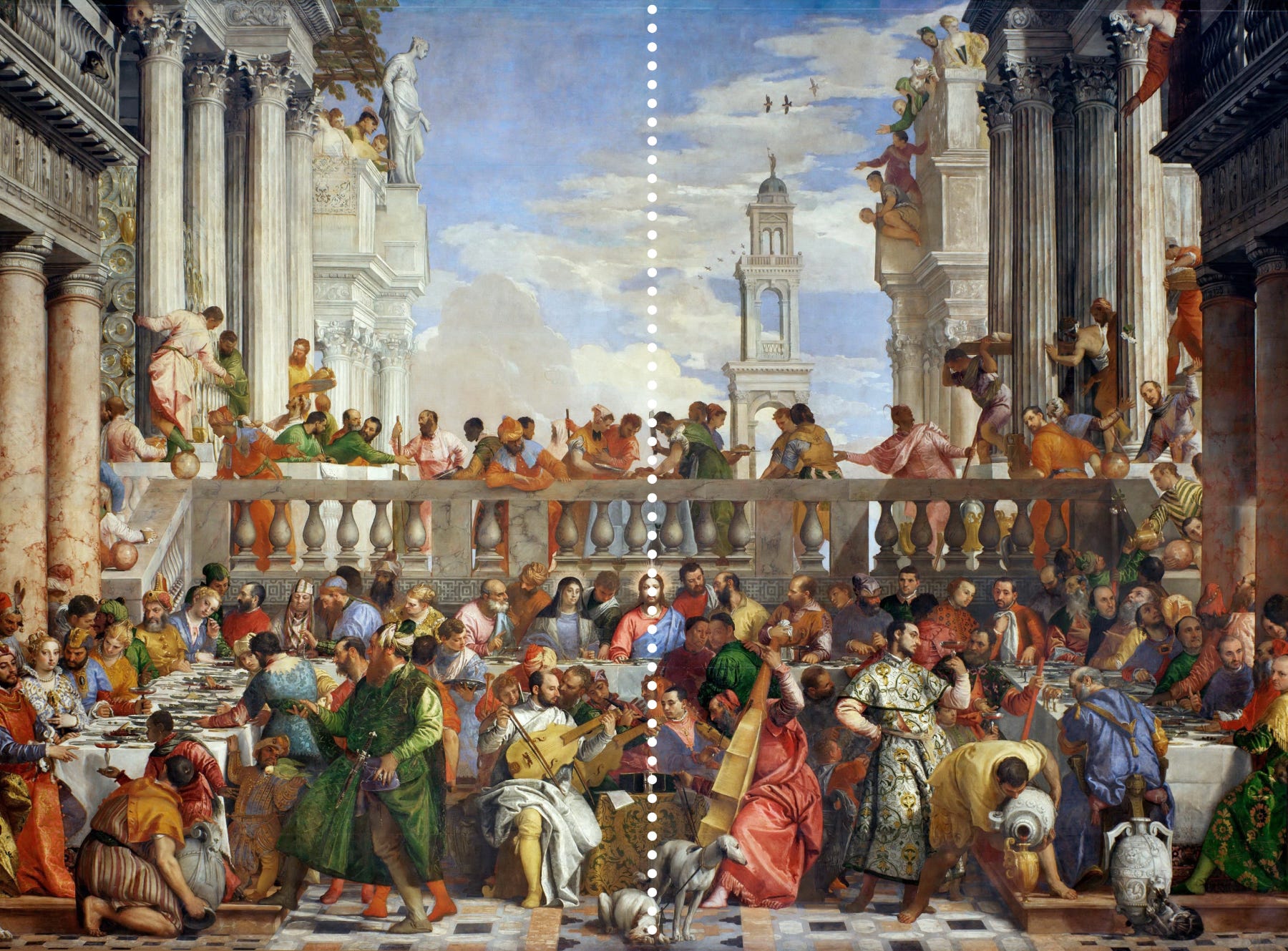
A vertical line cuts the painting at its exact middle. It starts at the bottom, at a small table where four musicians are playing, and it runs straight up through the head of Christ.
Veronese has aligned four elements along that line, from the bottom up, in this order and no other.
It is a countdown, and it has nothing to do with a wedding.