Deurle, a village in Flanders on the banks of the Lys.
In a house on the Pontstraat, a notary waits, pen raised. Across from him, a woman of 58.
She has been painting for more than forty years. She has cancer. She is dictating her last will.
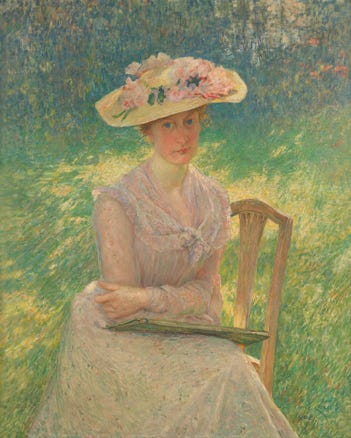
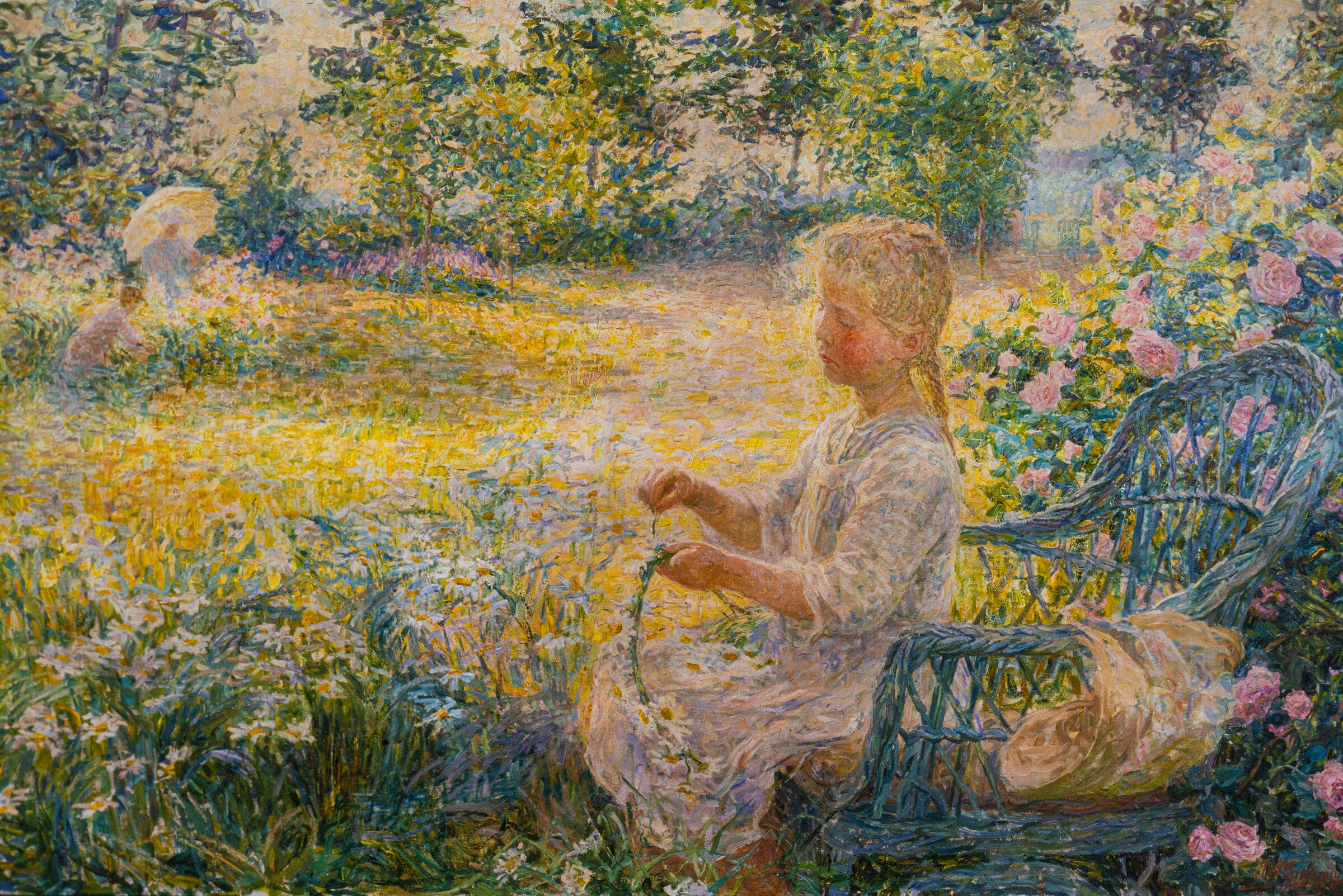
On the wall, a painting. A woman in a white dress, seated in a garden in full sun, her gaze slightly elsewhere. The same woman, at 26.
Not a self-portrait. At the bottom of the canvas, another hand's signature. A man, dead ten years now. His widow still lives a few kilometers away, in the house where he lies buried. The studio she has turned into a small museum.
It is to that museum that the woman leaves the portrait hanging in front of her. Her name is Jenny Montigny, and the notary writes down what she dictates.
My portrait, the one he painted of me, is to go to his museum. But only after the widow's death, not before.
A silence. Then one more sentence.
If she refuses, I leave my portrait to the Museum in Brussels.
The name at the bottom of the canvas belongs to the most famous Belgian impressionist.


The Law
Forty-two years earlier, in Ghent.
Jenny Montigny, 16, lives at 118 Sint-Pietersnieuwstraat, one of the well-off houses in town. Her father, Louis Montigny, professor of law at the university, city councillor, alderman for a time, cannot stand hearing about art, and says so in public.
"I may offend the art lovers, but I must say that considerations put forward from the artistic point of view leave me absolutely cold."
In that world, drawing is something you practice, like the piano. One more accomplishment for the day a husband has to be found, an occupation dropped the morning after the wedding.
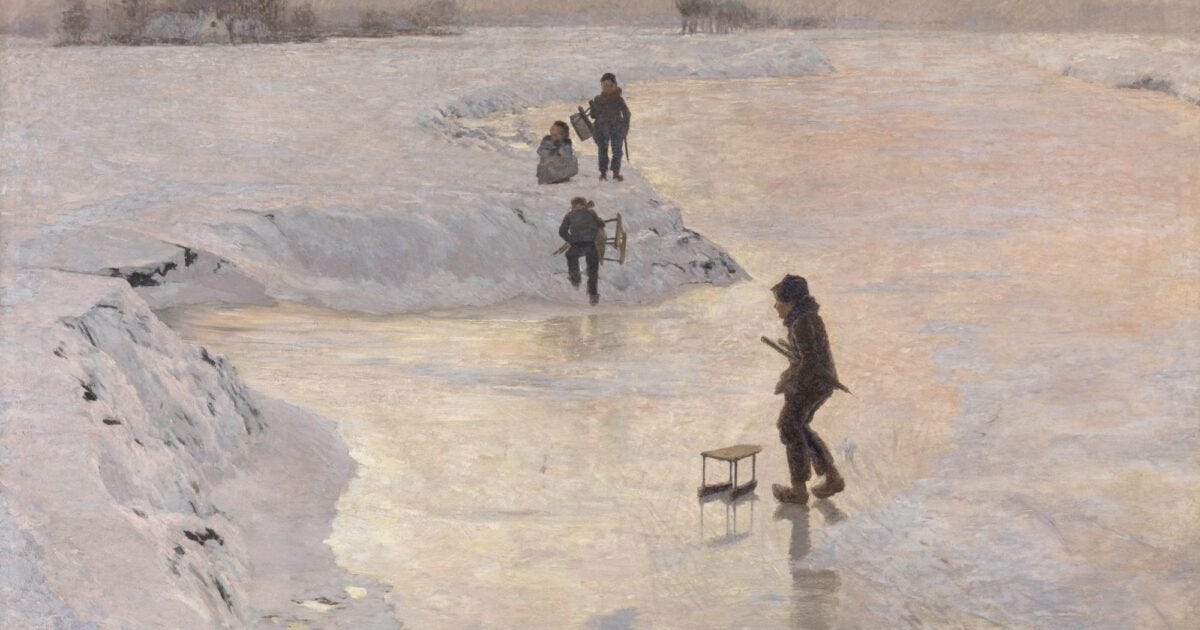
One day in 1892, in a room of the Museum of Fine Arts in Ghent, a canvas stops Jenny Montigny.
A frozen river. A winter sky set low over the Flemish countryside. Skaters leaning forward glide toward the back of the picture, in an afternoon light that never finishes falling.
She stands rooted in front of it.
The painting follows her out of the museum, that day and the weeks after, until she goes back to read the name at the bottom of the canvas.
Emile Claus.
At 16, in a house where no one will help her, Jenny Montigny decides to become a painter. Then she goes looking for the man who painted the skaters.
The Door
Astene, upriver along the Lys from Ghent. At the far end of a large garden, a low house, the Villa Zonneschijn.
The summer she turns 17, Jenny Montigny gets off the train, walks the length of the garden to the house, and knocks. The door opens on a man of 42, already a big name in Flemish painting, married to Charlotte Dufaux.
She asks for lessons. He agrees.
As soon as the weather turns, Claus opens his garden to his pupils and sends them out to paint, no classroom and no schedule. Canvas carried out in the morning, brought back at night, and the next day, at the same hour, out again to finish it in the same light.
There are several of them around him, Anna De Weert, Anna Boch, Yvonne Serruys, and the circle has a name known as far away as Paris: la Clauserie d'Astene.
In the evening, Jenny Montigny takes the train back to Ghent and sleeps under her father's roof. Ten years of the same journey.
In the Claus house, the governess is named Zoë Ketels. From morning to night she crosses the hallways with a tray, a pile of linen, a carafe in her hands, and nothing that happens inside those walls escapes her.
To her, the master of the house is monsieur. The pupil from Ghent is mademoiselle.
One evening, the studio door stays shut. The other pupils have gone, the day's canvases are drying against the hallway wall, and a strip of light shows under the door.
Behind it, two voices. Monsieur's, passing judgment on a canvas. Mademoiselle's, answering, and not letting go.
The tone rises, and it rises high. He presses, she holds. Zoë Ketels knows it: mademoiselle, pleasant with everyone, gives way to no one on the quality of her own work, not even to him.
She slows, stops a step from the door, carafe in hand. She listens. The voices drop.
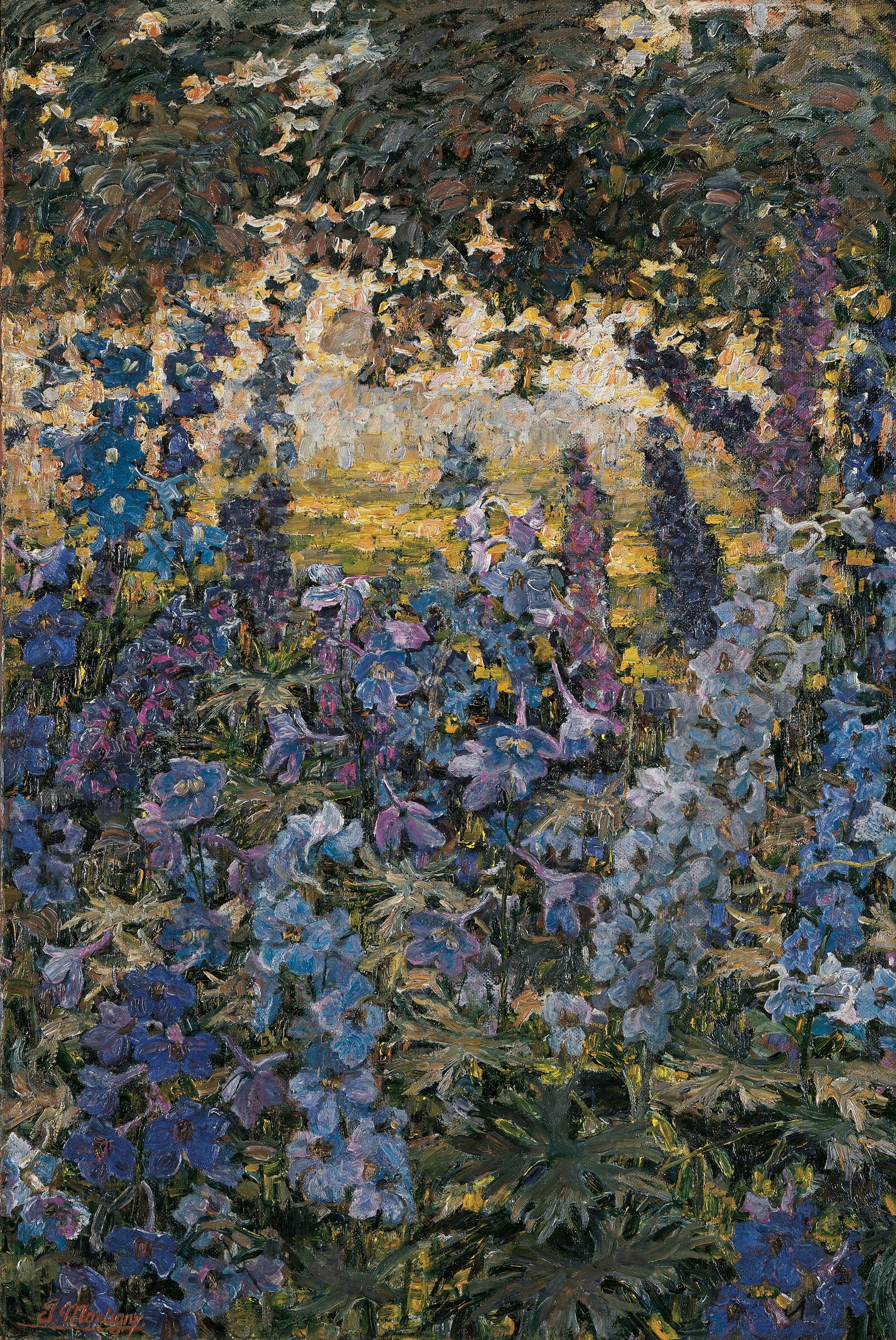
White Dress
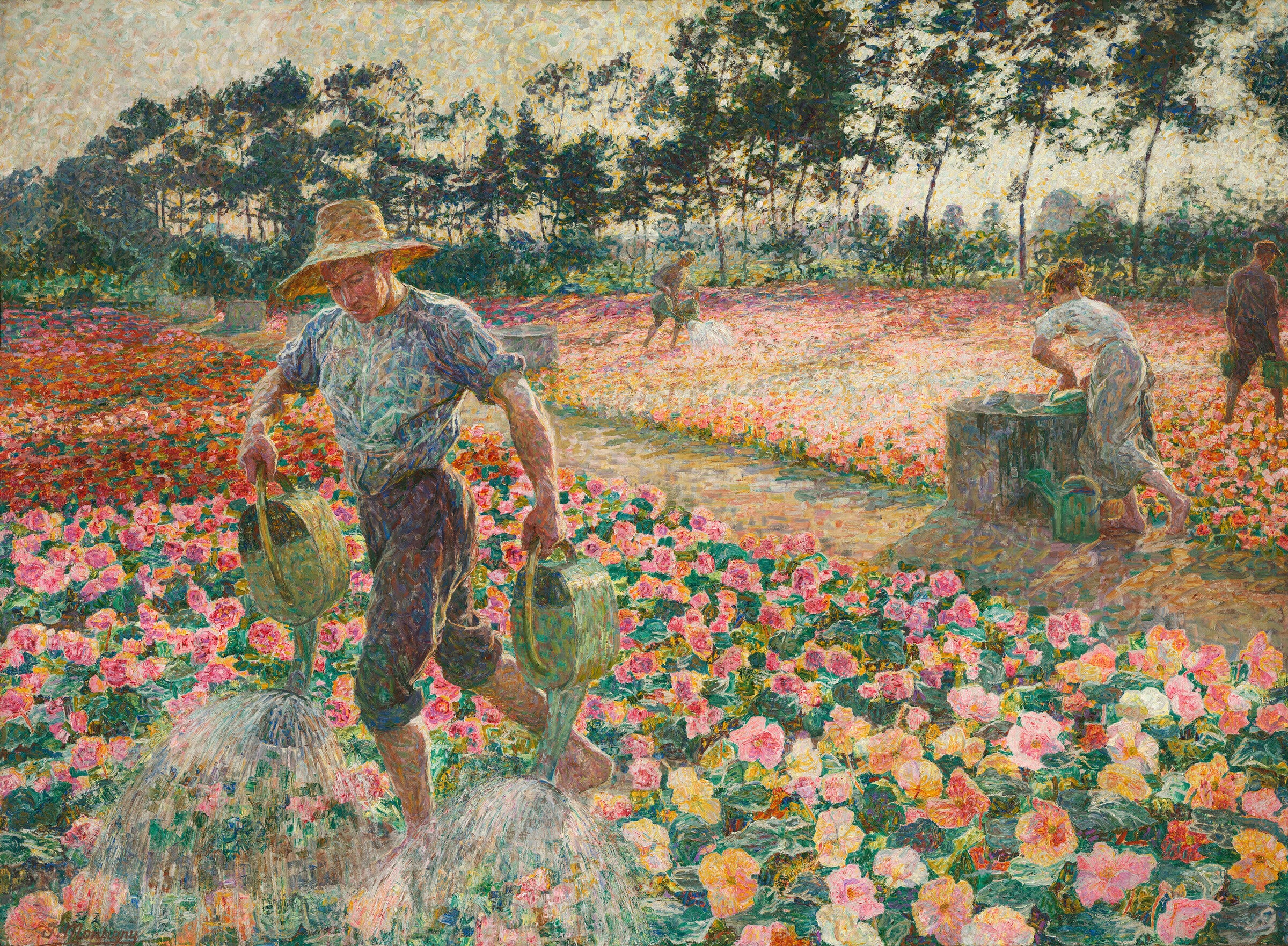
In 1902, the Triennial Salon in Ghent, the city's great painting exhibition, accepts five canvases by Jenny Montigny. Claus sits on the committee that chose them.
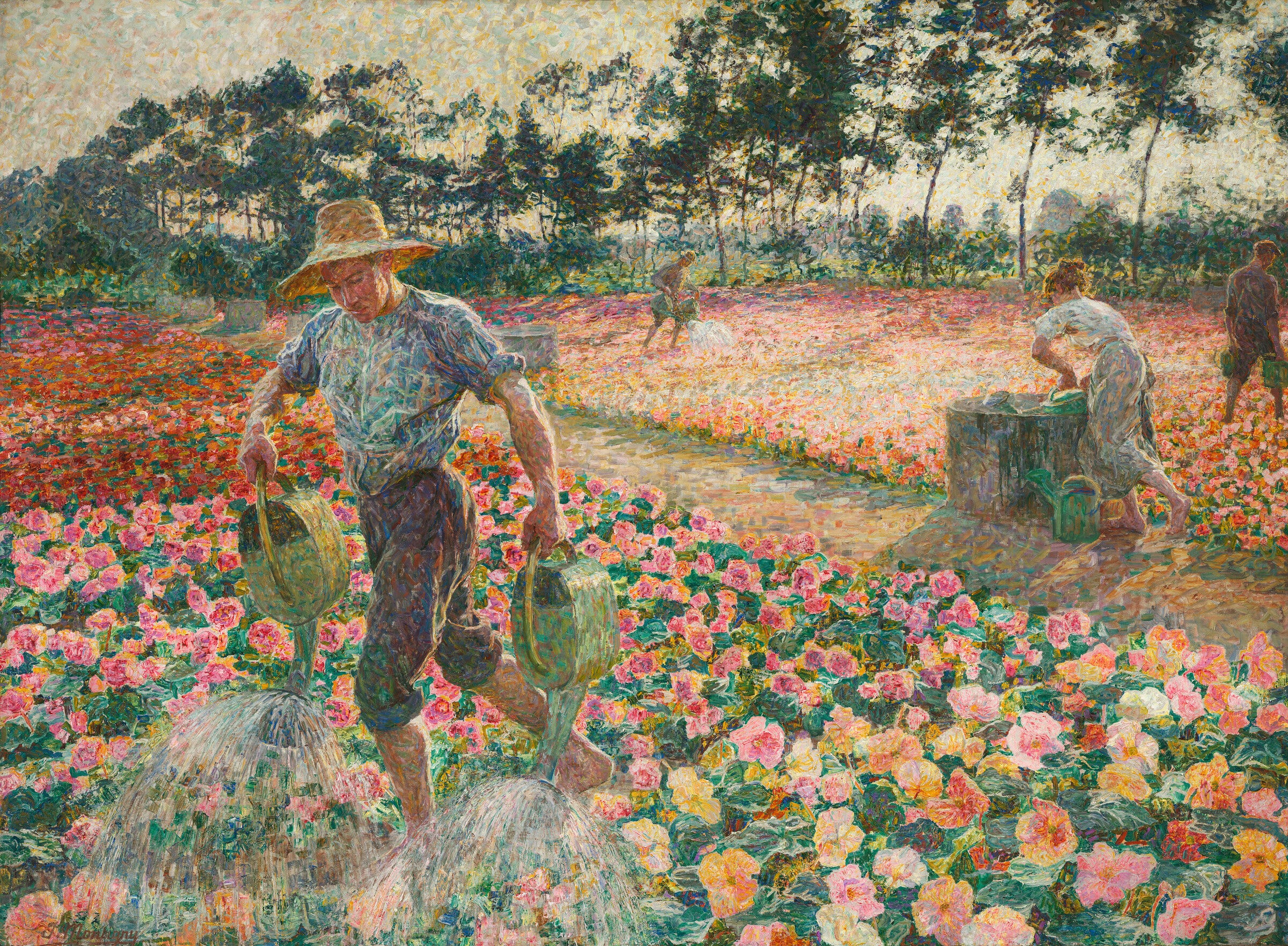
Among them, a very large canvas, "September Morning." Twelve years earlier, Claus painted "The Beet Harvest," and standing before one, everyone thinks of the other.
The papers come out. In nearly every article, Claus's name slips into the same sentence as hers. The two names never part again.
On a day of full sun that year, Claus plants an easel in a garden and asks her to sit down.
White dress. The sun beats down, no shade, and the session stretches on. Claus works, steps back, narrows his eyes, comes in again. She does not move.
On the finished canvas, she is not looking at the painter. Her gaze goes off to the side, toward a point that is not him.
Lower right, a signature and a date. Emile Claus, 1902.
The portrait goes to no salon and no dealer. It goes to Jenny Montigny's house.
Two years later she leaves her father's house for good and has one of her own built, with a large studio, in Deurle, between Ghent and Astene. At 28, a roof of her own, her work, and Claus for a neighbor.
When one of the two travels, the postcards are in English. Neither of them is English. In both houses, the staff read Dutch and French.
In 1906, the French state buys a canvas by Jenny Montigny at the Salon des Indépendants. Seven years later the Museum of Fine Arts in Ghent, the museum of the skaters, buys one as well. She is 38. On the wall label, her name stands alone.
Chelsea
Autumn 1914. The war empties Belgium through the coast. Jenny Montigny crosses to England.
In London, a clerk at the register of Belgian refugees fills out a card in her name.
Profession: painter.
Marital status: single.
Address: Carlyle Studios, King's Road, Chelsea.
Age: 39.
Claus came through London before her, with his wife, and did not stay. From Wales he writes to the writer Cyriel Buysse, a refugee in Holland, for news of the people close to him, scattered by the invasion. He names them by their initials, one by one. Among them, J.M.
The war settles in, and the Belgians of London eventually find one another. One day the following year, Hampstead Heath, north of the city. Emile Claus is sitting in the grass. He is not painting. Across from him, a sketchbook on her knees, Jenny Montigny is drawing him. A brief parenthesis. Twenty years he has been correcting her canvases. This time, he poses.
War or no war, she keeps working. On copper, with a needle, she etches the paths of Hyde Park and those of Kensington Gardens. Then she goes to the King Albert's Hospitals, where Belgian soldiers are brought back from the front, and sits at the foot of the beds. A wound in a leg. An opened shoulder. A foot being treated.
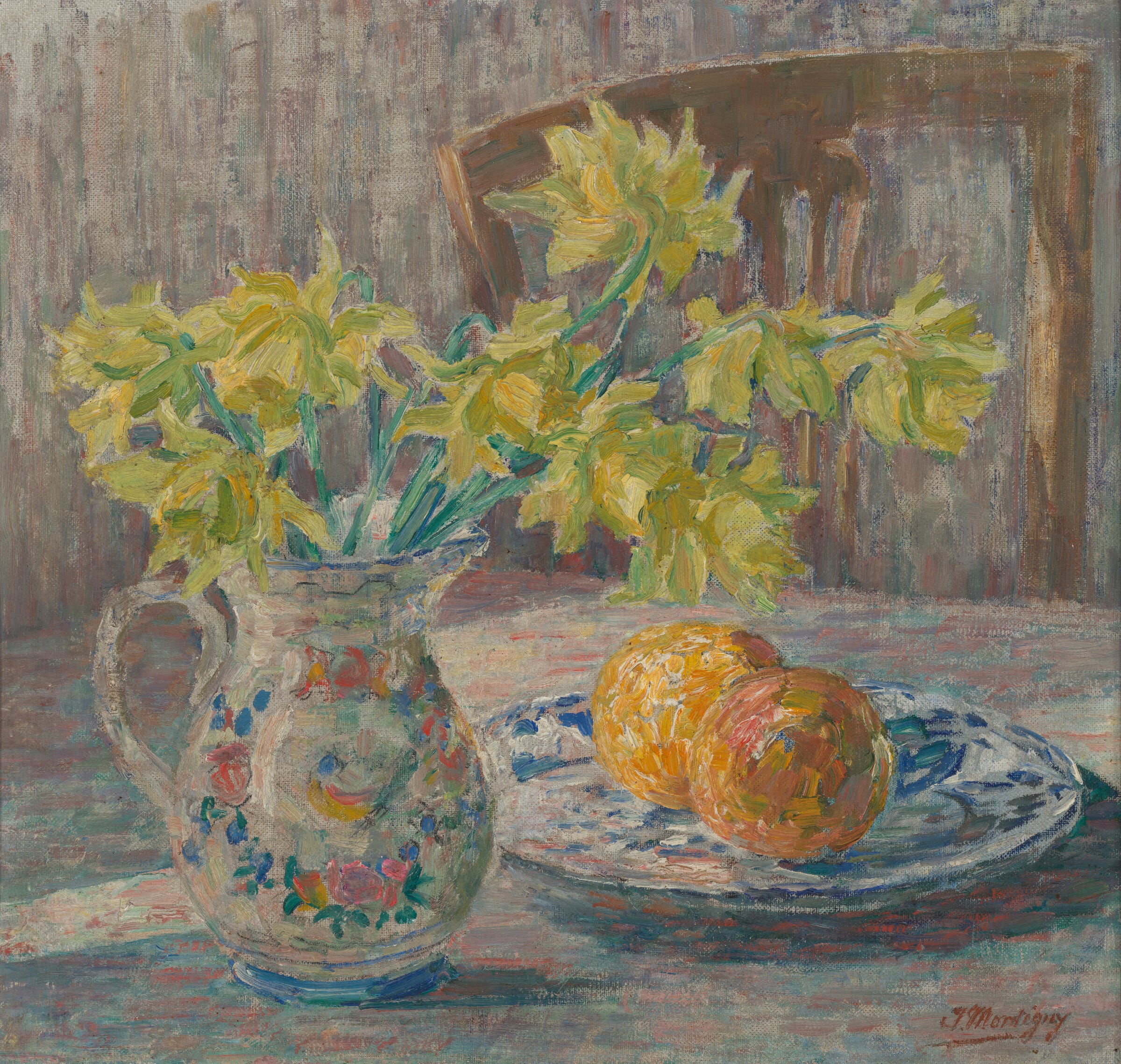
The Sketchbook
The war ends. Claus, operated on in the spring, goes home to Belgium as soon as he can. She comes back after him.
The big house in Deurle, the one she had built, she sells for a smaller one on the Pontstraat, at the water's edge. She keeps her studio in the village. Her models she finds close by: the children of the Saint Joseph school, where the sisters let her in during class, and her maid's children.
Ghent, for its part, has not forgotten her. The city's Artistic and Literary Circle lends her its walls for a first retrospective: thirty years of work hung together, in the city where her father taught law.
In Astene, nothing has changed. Claus is 74 and still painting, on his feet, arm raised to the canvas. Behind him, Jenny Montigny opens the Hampstead Heath sketchbook again. From behind. In three-quarter view. Five sheets, then seven.
Thirty years she has been drawing him. He painted her once, in a white dress, in a garden.
In June, Emile Claus dies suddenly.
He leaves a house, a studio full of canvases, and a widow.
In Deurle, in Jenny Montigny's studio, against the wall, a coat rack. Claus's coat hangs from it, his hat above. They will stay there thirteen years.
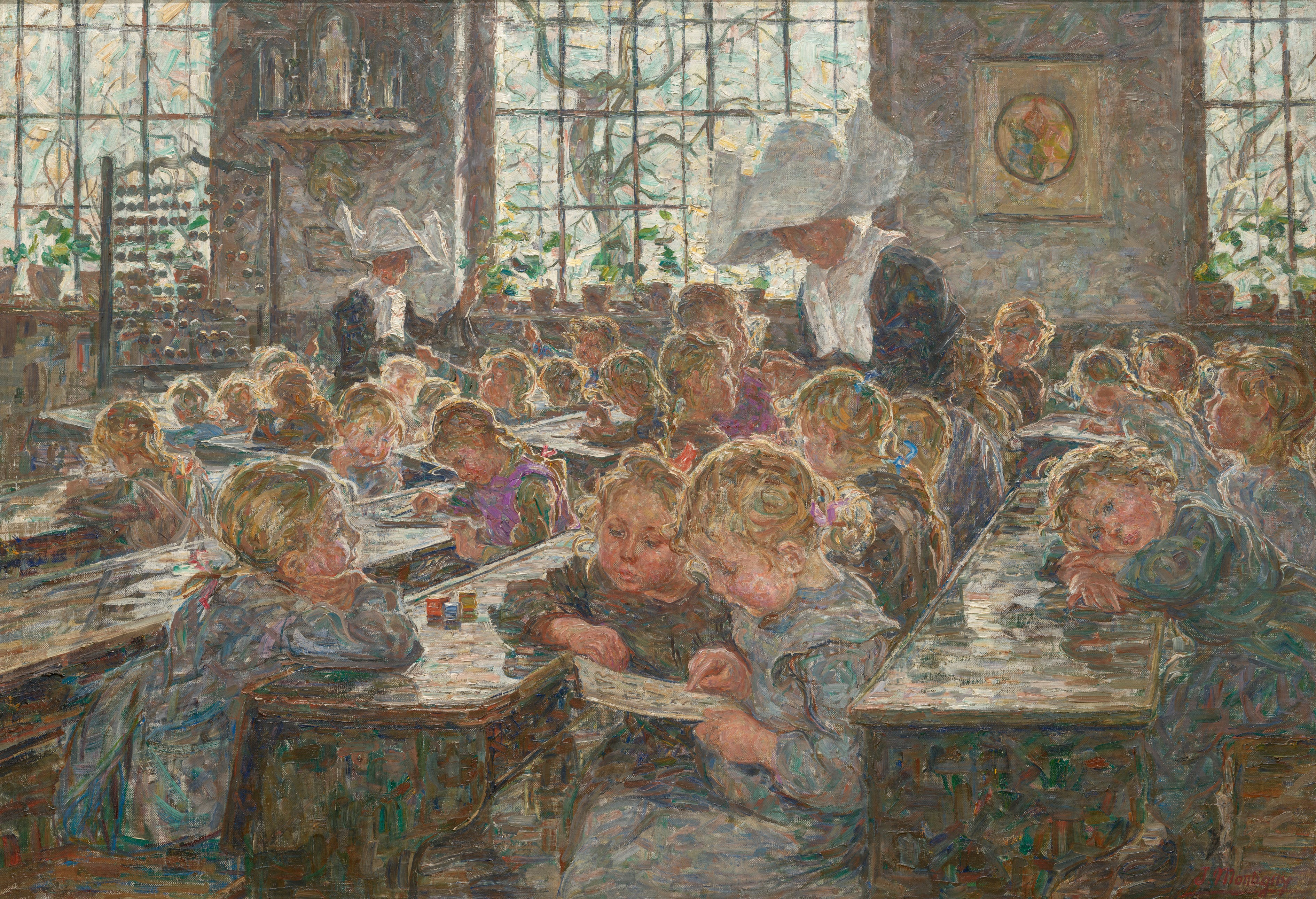
Astene
Emile Claus lies in the municipal cemetery of Astene, a few kilometers from Deurle.
Flowers start appearing on the slab. Not on the day of the burial, not on All Saints' Day. Any day at all, and often. In the morning they are there.
At the villa, Charlotte Dufaux hangs the canvases left in the house on the studio walls and opens the door to the public. A sign announces the Claus Museum.
Then she has the grave reopened.
The coffin leaves the cemetery, crosses the village, and passes through the gate of the Villa Zonneschijn. Not behind the house, not at the back of the vegetable garden. In front of the facade, between the house and the street. Visible from the road, out of reach. Over it, four tons of white marble in a single block, signed George Minne.
The gate closes again.
The flowers keep coming. They are found in the morning in the grass, on the garden side, thrown over the railings.
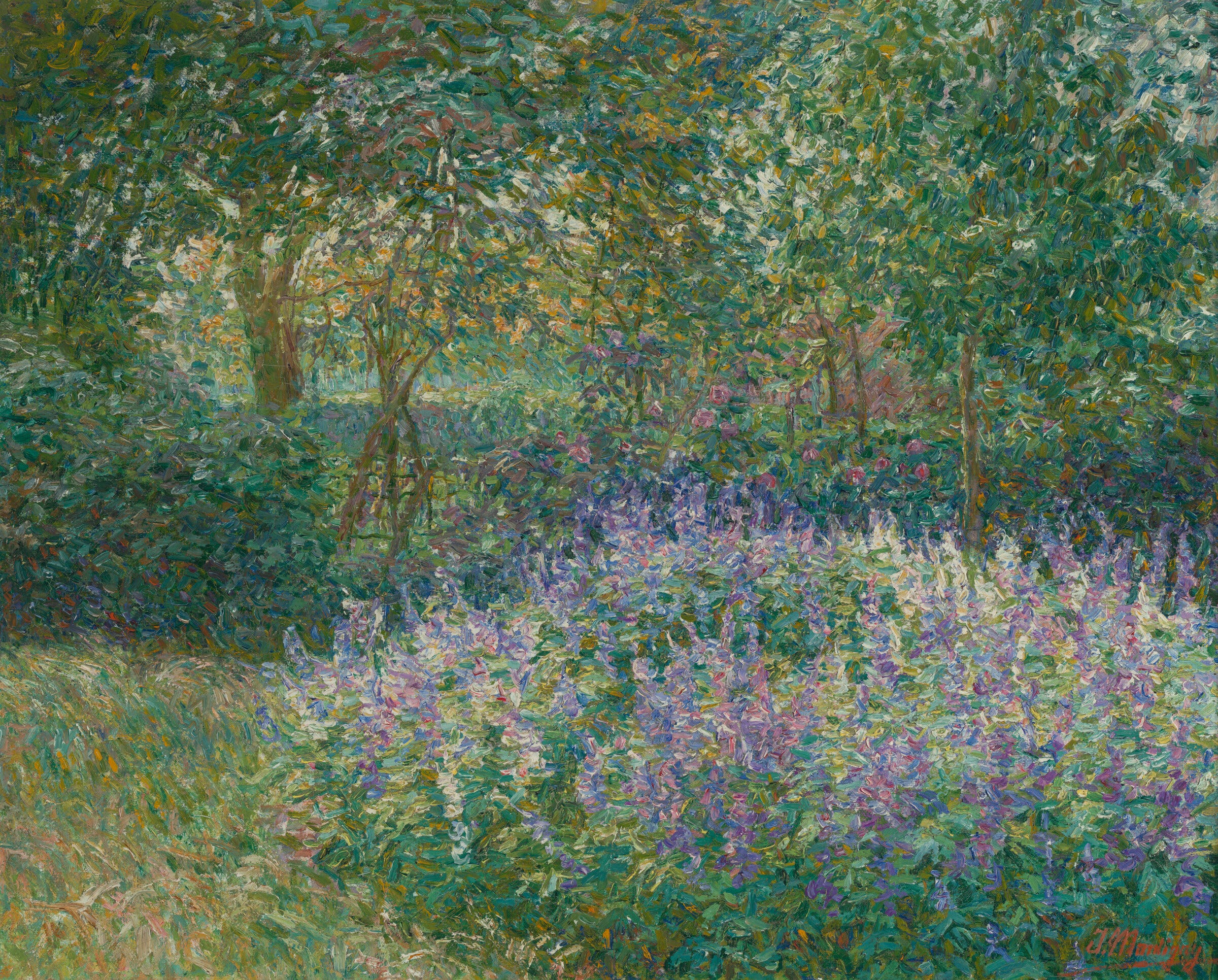
Thirteen Years
On the first day of 1927, ahead of an exhibition, Jenny Montigny writes to the critic Sander Pierron.
"... for the first time, I face the public on my own responsibility, the death of my master leaving me quite at a loss."
In the galleries, taste has switched sides: hard colors, faces hacked out with a hatchet, expressionism. Gardens in full sun no longer sell. Times are getting hard.
When new canvas runs short, a finished painting is turned around and its back serves as the support. Every stretcher now carries two paintings.
The rent, she pays in portraits: the landlord's first, then his family's. Friends from the Artistic Circle of Ghent pool their money to buy a work from her, without telling her where the money comes from. The rest her sister Yvonne pays.
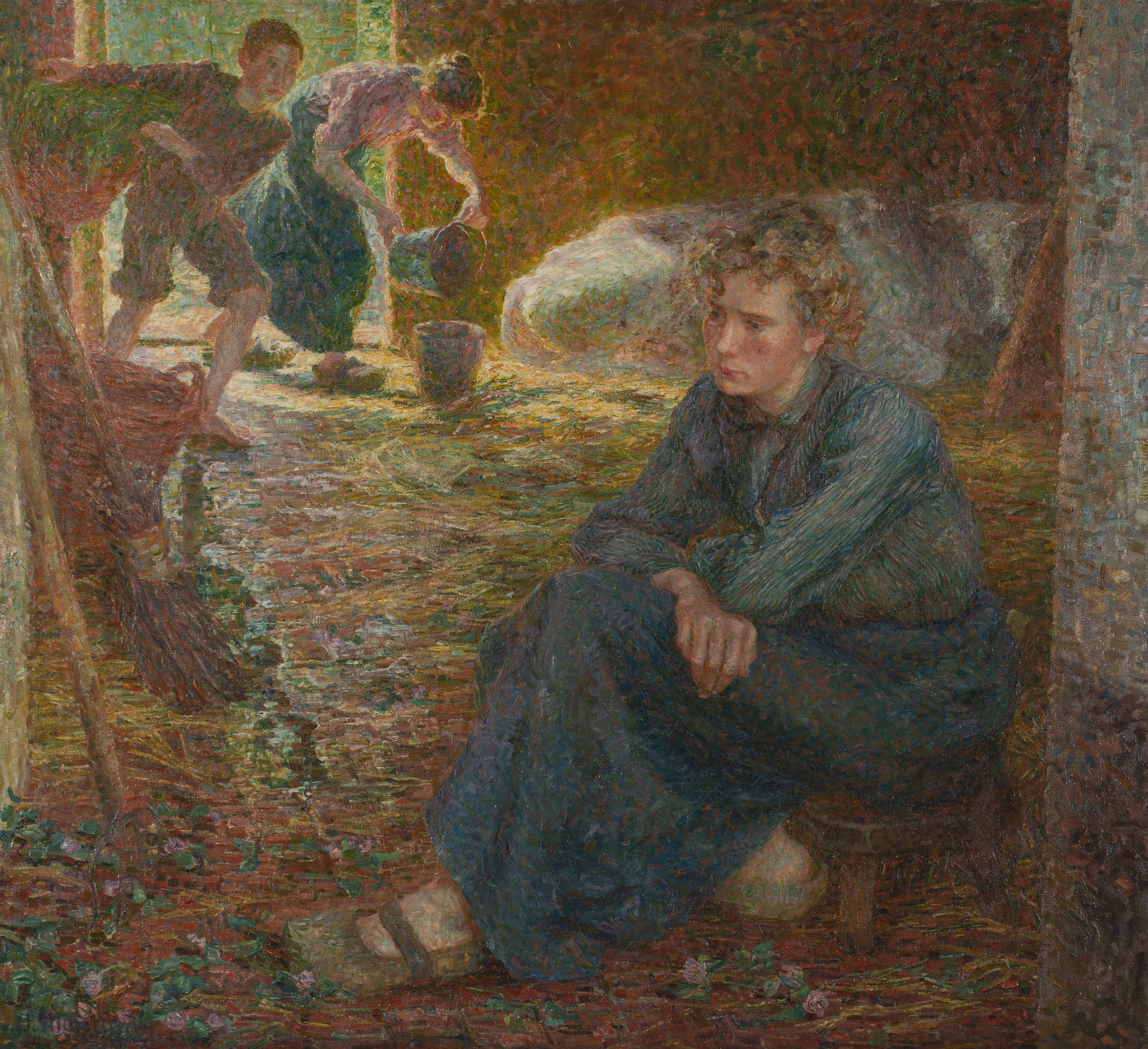
The List
On October 31, 1937, at half past one in the morning, Jenny Montigny dies in her house on the Pontstraat. She is 62.
Her will, dictated more than three years earlier, runs to a few lines. Before the clause about the portrait, she placed another one, for her own canvases.
"I would like a very limited retrospective exhibition to be held one day, in Brussels, of those of my works whose list I enclose."
The portrait, for its part, follows the path she laid out. Her sister Yvonne, who carries out her wishes, writes to Astene and offers it to the widow.
Charlotte Dufaux refuses.
So, as the will provided, the portrait goes to Brussels. In 1941, Yvonne gives it to the Royal Museums of Fine Arts of Belgium. Charlotte Dufaux dies eleven years later.
Fifty Years
After that, nothing. For decades the canvases of Jenny Montigny stay along the Lys, in the houses of the people who bought them in her lifetime, and no one comes looking for them.
It takes fifty years for a museum to remember her. In 1987 the museum in Deurle gives her an exhibition, and that same year, in Deinze, her work is hung alongside two other pupils of Claus, under a title about the pupils of Emile Claus. Ten years later, in Charleroi, she finally has walls to herself.
In June 2020, eight canvases that had stayed in her family go up for sale in London. Along the Lys, three towns have given her name to a street.
The Wall
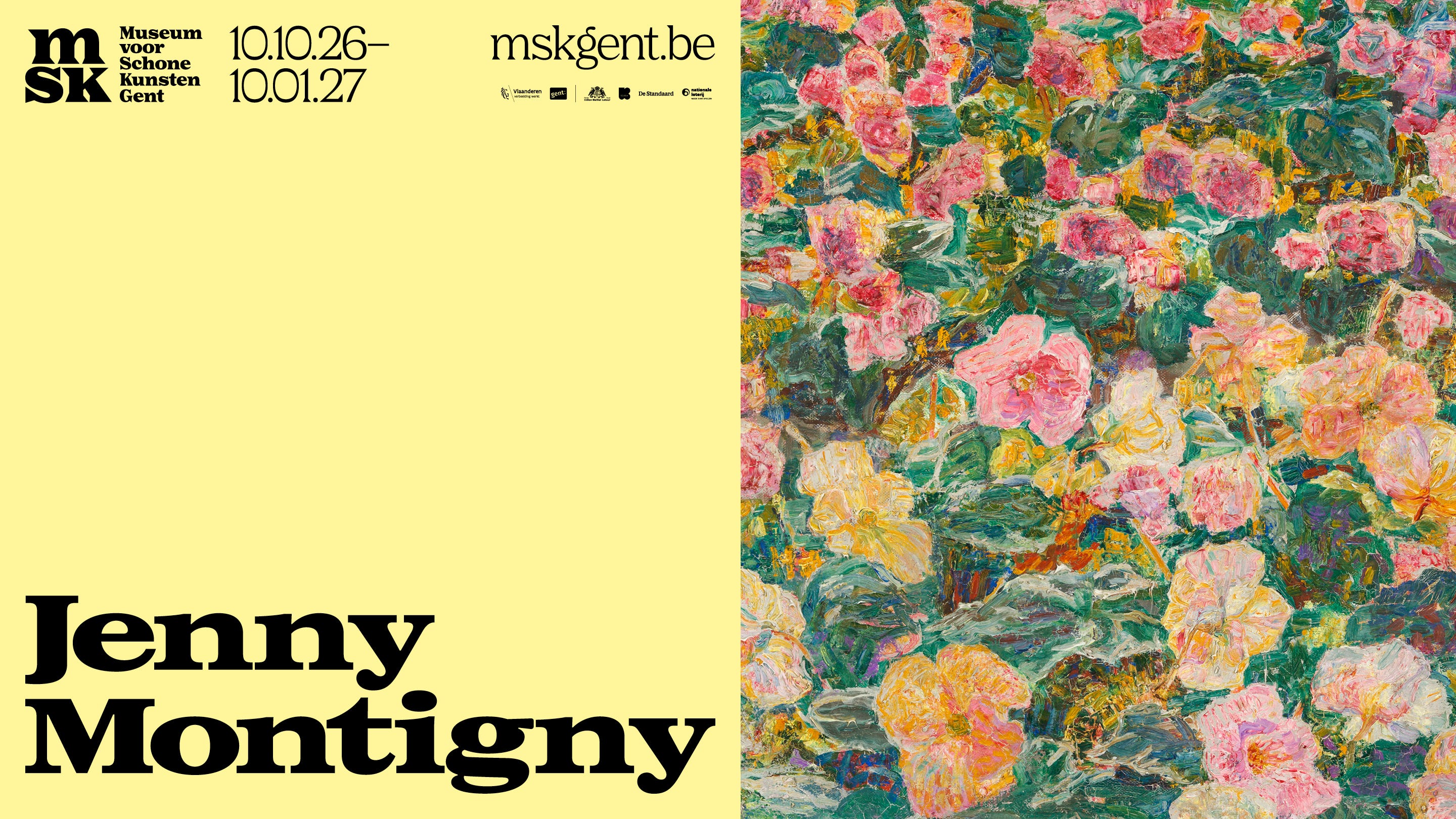
On October 10, 2026, the Museum of Fine Arts in Ghent opens a Jenny Montigny retrospective. Paintings, pastels, drawings, etchings.
It is the museum where, at 16, she stopped in front of "The Skaters," a frozen river under a low winter sky.
She had asked for a very limited exhibition, in Brussels. She gets a large one, in Ghent, eighty-nine years later.