
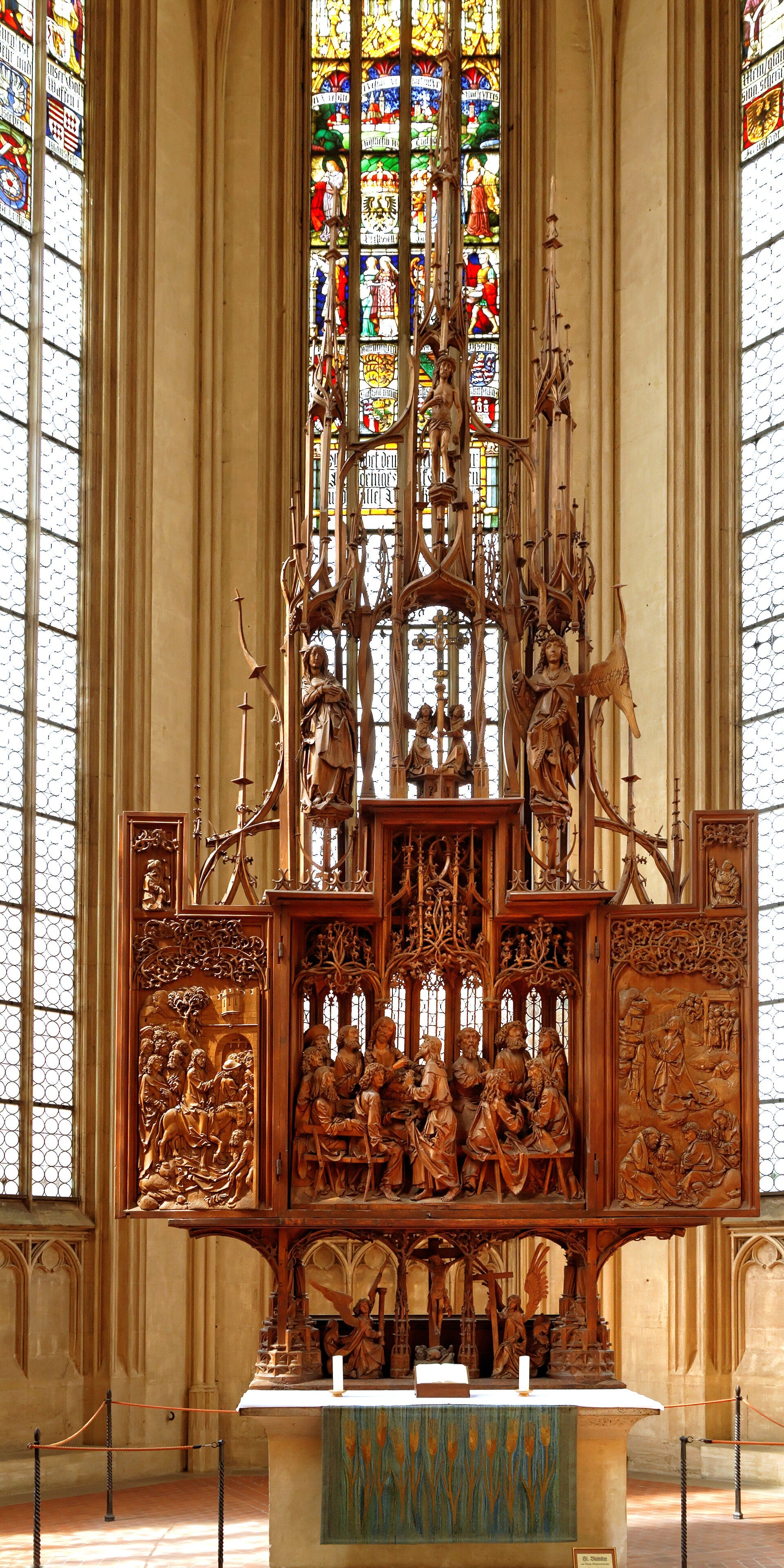
Tilman Riemenschneider (around 1460 to 1531) was a German sculptor who worked in Würzburg, a city in southern Germany. He carved saints in wood and often left the wood unpainted, as in his Last Supper, carved for a church in the town of Rothenburg.
Cool Stories About Art is a newsletter to learn art the fun way.
Join 200,000+ readers and get:
10 new art stories / month
The entire archive of content (140+ articles)
Comment, ask questions, and chat with other readers
In the spring of 1525, an army of rebel peasants marched on Würzburg. The city belonged to its bishop, who ruled it like a prince from a fortress on the hill across the river. The bishop ordered the city council to arm the citizens and send them out against the peasants.
One of the councilors was a sculptor of about 65, Tilman Riemenschneider. He had carved the tombs of two bishops for the cathedral of Würzburg, and the city had once elected him mayor. The council told the bishop no.
Riemenschneider had come to Würzburg more than forty years earlier, without the right to sell a single statue. In December 1483, at about 23, he entered the city's guild of painters, glassmakers and sculptors, the association that decided who could practice those trades.
The guild took him in as a journeyman, a trained craftsman who still had to work for a master. Nobody knows where the young man had learned to carve. He had grown up in the Harz mountains, in the middle of Germany, where his father ran a mint, the workshop that struck coins.
A marriage changed his rank. In February 1485, Riemenschneider married Anna Schmidt, the widow of a master goldsmith and the mother of three sons. Anna's house became his workshop, and that same year Würzburg made him a citizen and a master, free to sign contracts in his own name.
In the decades that followed, the bishops of Würzburg and the towns around the city made the newcomer a rich man. Then came the refusal of 1525. A few weeks later, Tilman Riemenschneider was a prisoner in the fortress across the river.
What did that refusal cost him?
In the rest of the story
Which famous sculptor was paid to cover his first great work in paint.
Who takes the place of Jesus at the center of his Last Supper.
Whether the bishop's men really broke his hands, as a famous legend says.
What workmen digging beside the cathedral found, three centuries after his death.