
Tsukioka Yoshitoshi (1839 to 1892) was a Japanese artist who designed woodblock prints. He was born in Edo, the city now called Tokyo, and worked in ukiyo-e, the Japanese tradition of color prints of actors, warriors and ghosts.
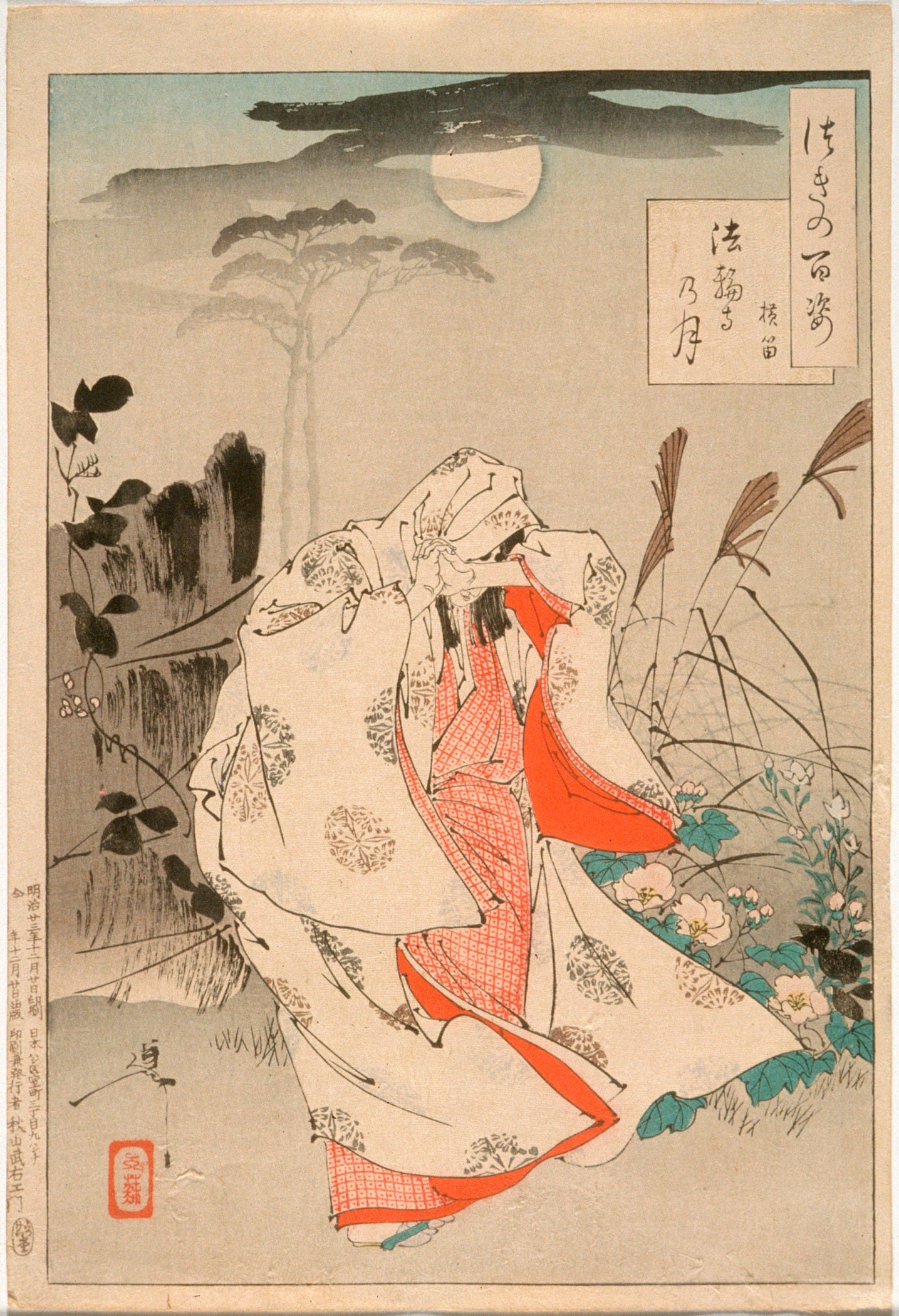
Yoshitoshi is famous for two sets of prints from the last years of his life, One Hundred Aspects of the Moon and New Forms of Thirty-six Ghosts, published between 1885 and 1892.
In the early 1870s, Yoshitoshi had lost all his work and sunk into poverty and depression. He came back under a new name that he chose himself, and died in Tokyo in 1892, at fifty-three.
Cool Stories About Art is a newsletter to learn art the fun way.
Join 200,000+ readers and get:
10 new art stories / month
The entire archive of content (140+ articles)
Comment, ask questions, and chat with other readers
On July 4, 1868, a print designer of twenty-nine named Yoshitoshi watched a battle in his own city, Edo. The fighting took place at Ueno, a hill covered with temples in the north of the city.
For more than two and a half centuries, Japan had been ruled by the shogun, a military leader who governed in place of the emperor. In 1868, the emperor's supporters took the power back by force, and the emperor's army marched into Edo, the shogun's capital.
A band of the shogun's former followers refused to give up, and made their stand among the temples of Ueno. By the end of the day the emperor's troops had won. About three hundred of the shogun's men lay dead, and about a thousand houses had burned.
Yoshitoshi had grown up in the shogun's Edo. Since the age of fourteen, he had drawn pictures for the city's print publishers, who had each drawing carved into blocks of wood and printed on paper by the hundreds.
The year after the battle, Yoshitoshi ranked among the best print designers in Japan. A few years later, no print publisher ordered anything from him, and he ate the rice that his own pupils brought him.
In the years of his moon series, in the same city, buyers lined up before dawn on the day a new print by Yoshitoshi went on sale. Many of them found the print already sold out.
What had Yoshitoshi done, in the years between, to bring the buyers back?
In the rest of the story, you'll find out:
why he drew the battle he had watched as if it had happened three centuries earlier
why he renamed himself "Great Resurrection"
how drawing crimes for the newspapers put him back to work
how his ghosts manage to be funny and frightening at once