
Vampires in art arrived before Dracula. Munch painted a woman leaning into a man’s neck and insisted it was only a kiss, Burne Jones painted his own humiliation as a vampire tale, and Philip Burne Jones gave the world its first painted vampire in 1897, the same year as the novel.
Learn art the fun way
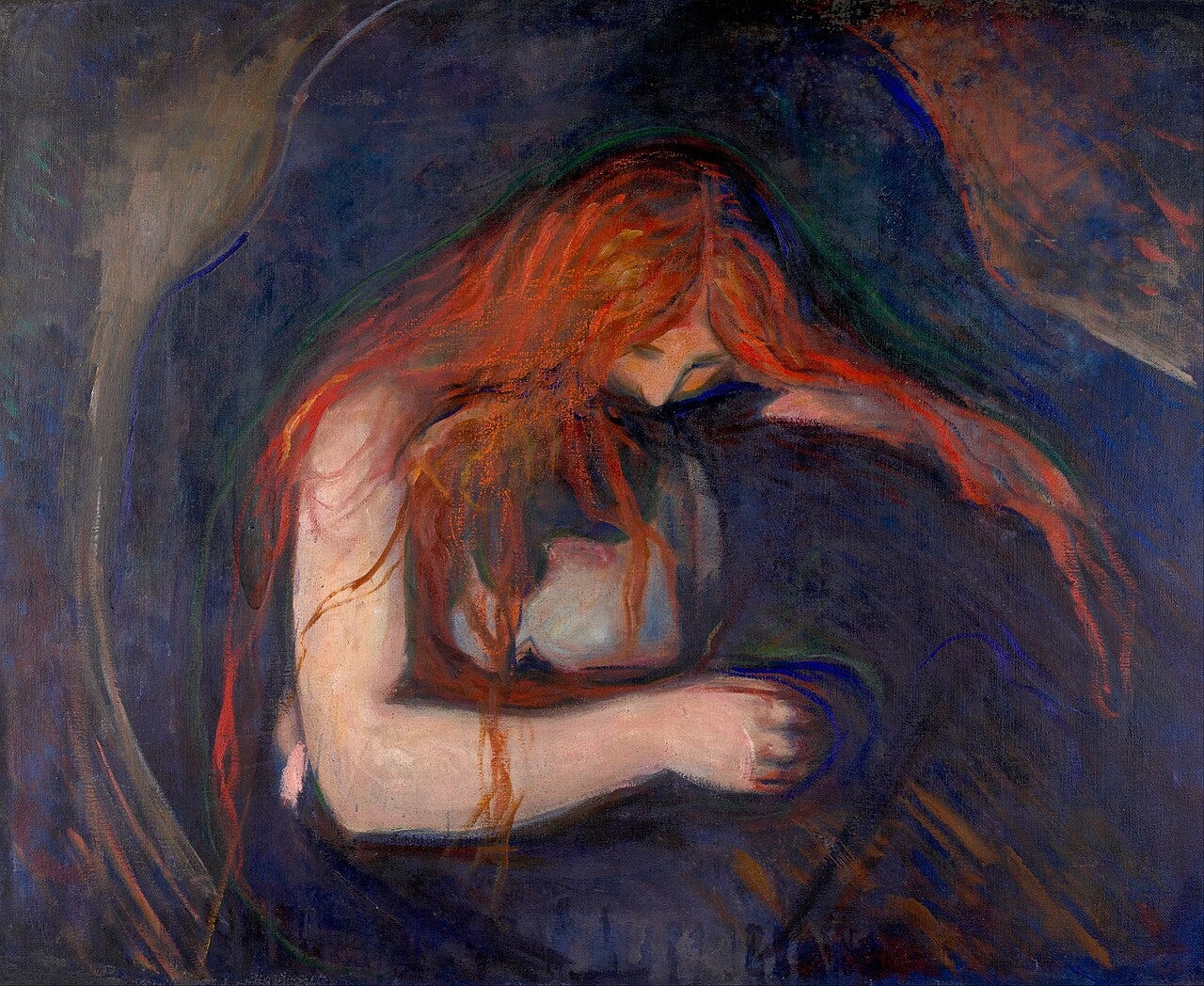
1 | Vampire, Edvard Munch (1895)
A red haired woman bends over a man’s bowed neck, her hair falling around him like blood. Munch called it Love and Pain and always denied the vampire reading.
His friend Stanislaw Przybyszewski renamed it, and the new title stuck for good. Munch painted at least six versions: Edvard Munch.
2 | The Vampire, Philip Burne Jones (1897)
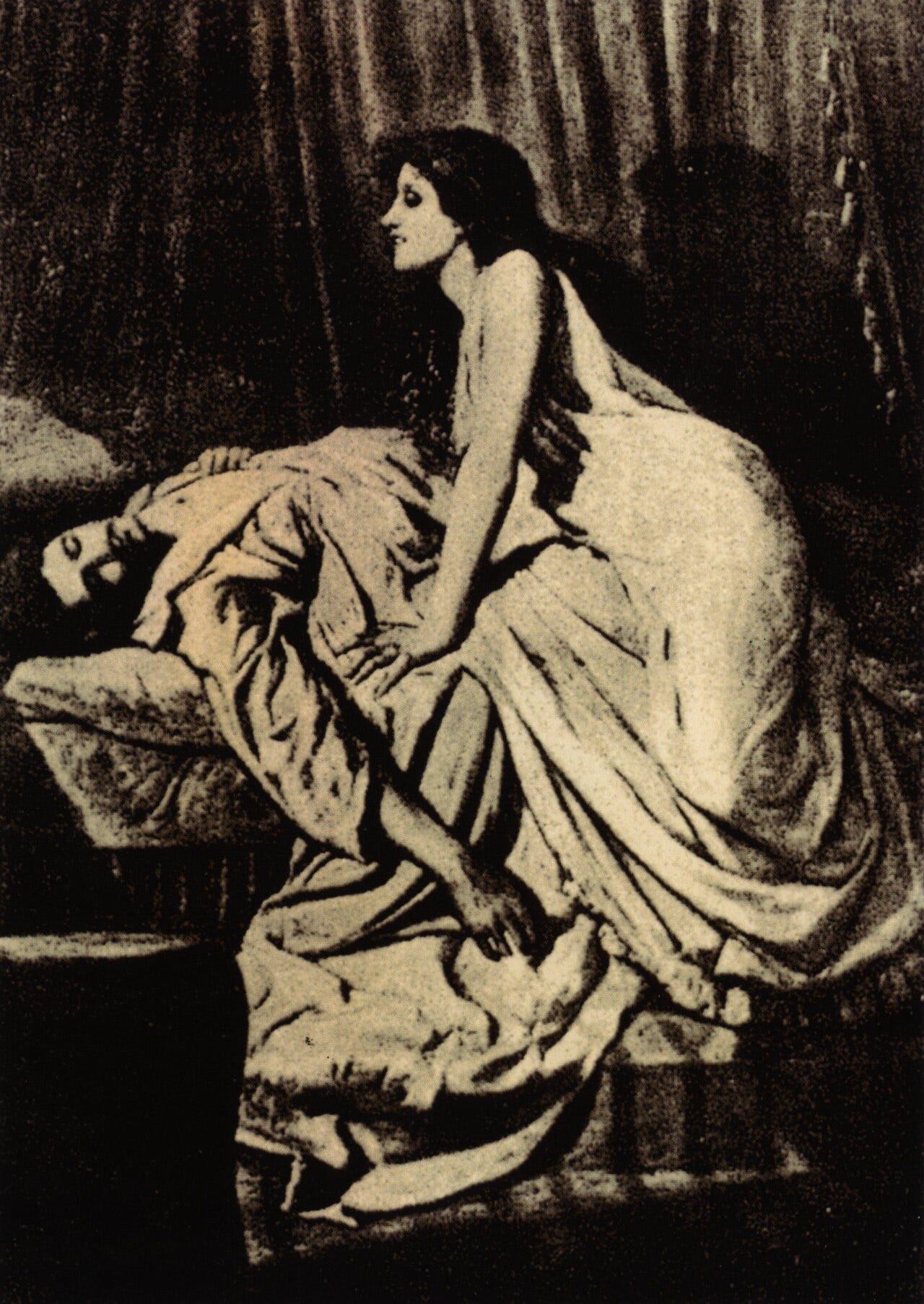
A woman in white kneels over an unconscious man, painted the year Dracula was published. It is usually read as revenge art about the actress Mrs Patrick Campbell.
Rudyard Kipling, the painter’s cousin, wrote a poem to accompany it, and the phrase a rag and a bone and a hank of hair entered the language.
3 | Fuseli’s incubus, the ancestor of the film vampire
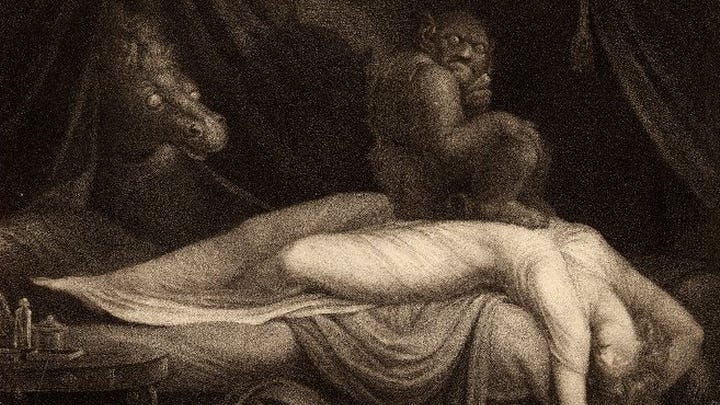
The incubus squatting on a sleeping woman’s chest is the ancestor of every bedroom vampire scene painted since.
Fuseli built the whole visual grammar: the sleeper, the weight, the intruder nobody sees. More of it is in dreams in art.
4 | Lilith, John Collier (1887)
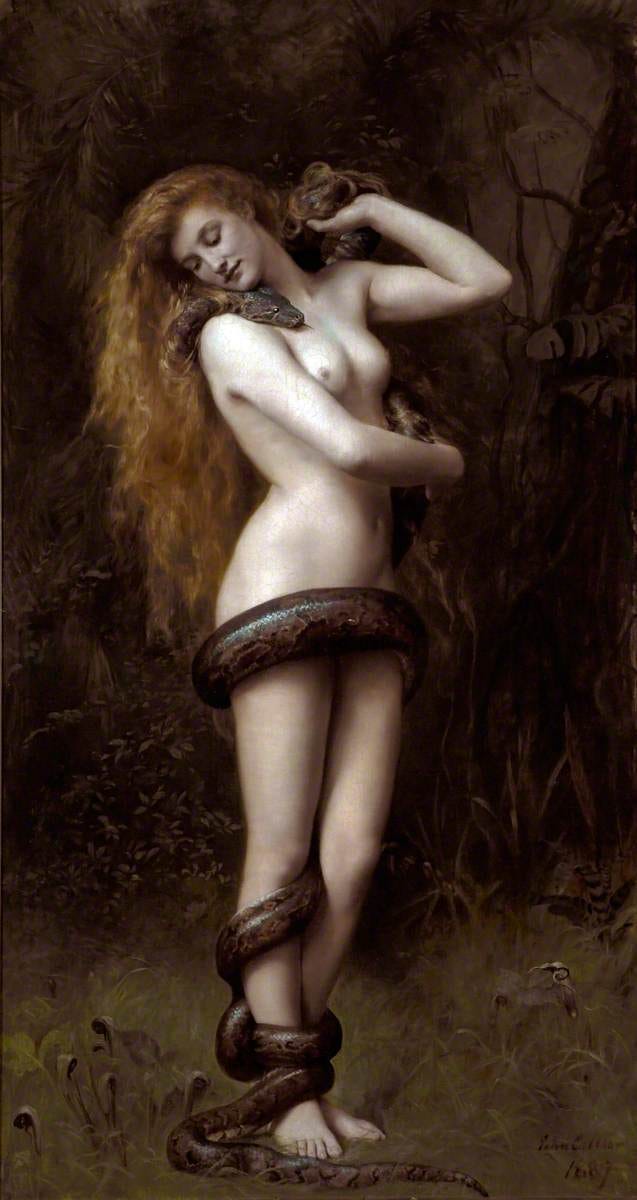
Adam’s first wife stands naked with an enormous snake coiled around her body, eyes closed, entirely at ease.
Victorian painters used Lilith to smuggle the vampire idea past the censors: seduction and death in one figure. John Collier made a career of it.
Collier painted her in 1887 with a snake wrapped round her body, for the Atkinson Art Gallery in Southport. Lilith comes from Jewish folklore as Adam’s first wife, and the Victorians turned her into a seductress.
5 | The Kiss of the Sphinx, Franz von Stuck (1895)
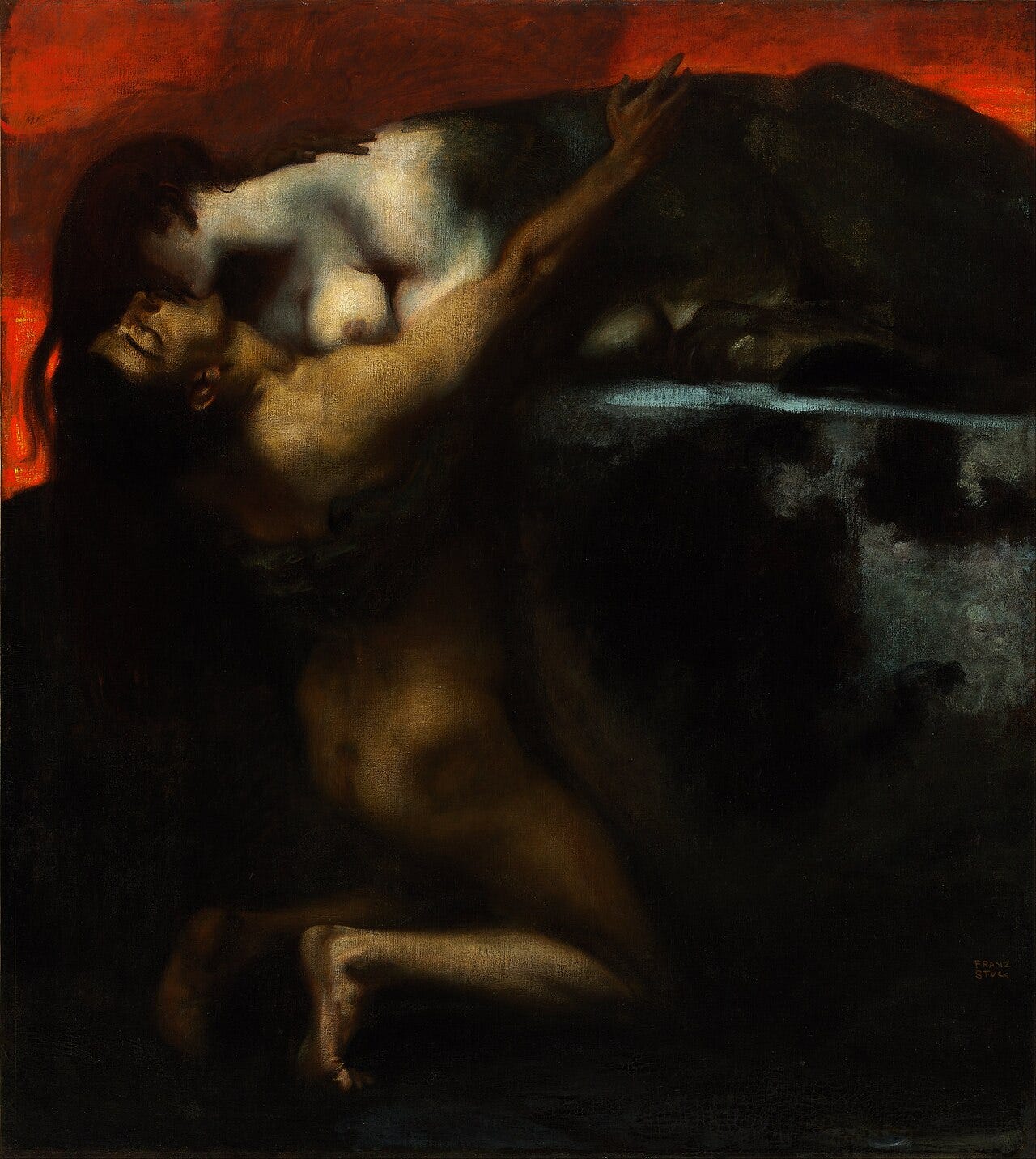
A winged sphinx pins a man backward on a rock and kisses him with her whole body. Munich called it scandalous and bought it anyway.
Von Stuck painted the same predator repeatedly: sphinx, serpent, sin. He taught Kandinsky and Klee.
Von Stuck painted it in 1895, and it hangs in Budapest. The sphinx has a woman’s body and the man is bent backwards off a rock, which makes the embrace and the kill the same gesture.
6 | The Vampire, Edvard Munch in the forest (1916 to 1918)
Munch moved the same two figures outdoors decades later, into a green wood, softer and stranger than the interior version.
One of these was stolen from the Munch Museum in 1988 and recovered. The theft history is in the most stolen paintings in history.
Munch painted the first version in 1893 and called it Love and Pain. The vampire title came from his friend Stanislaw Przybyszewski, and Munch kept painting the subject for thirty years.
7 | The Blood of the Vampire and Symbolist women
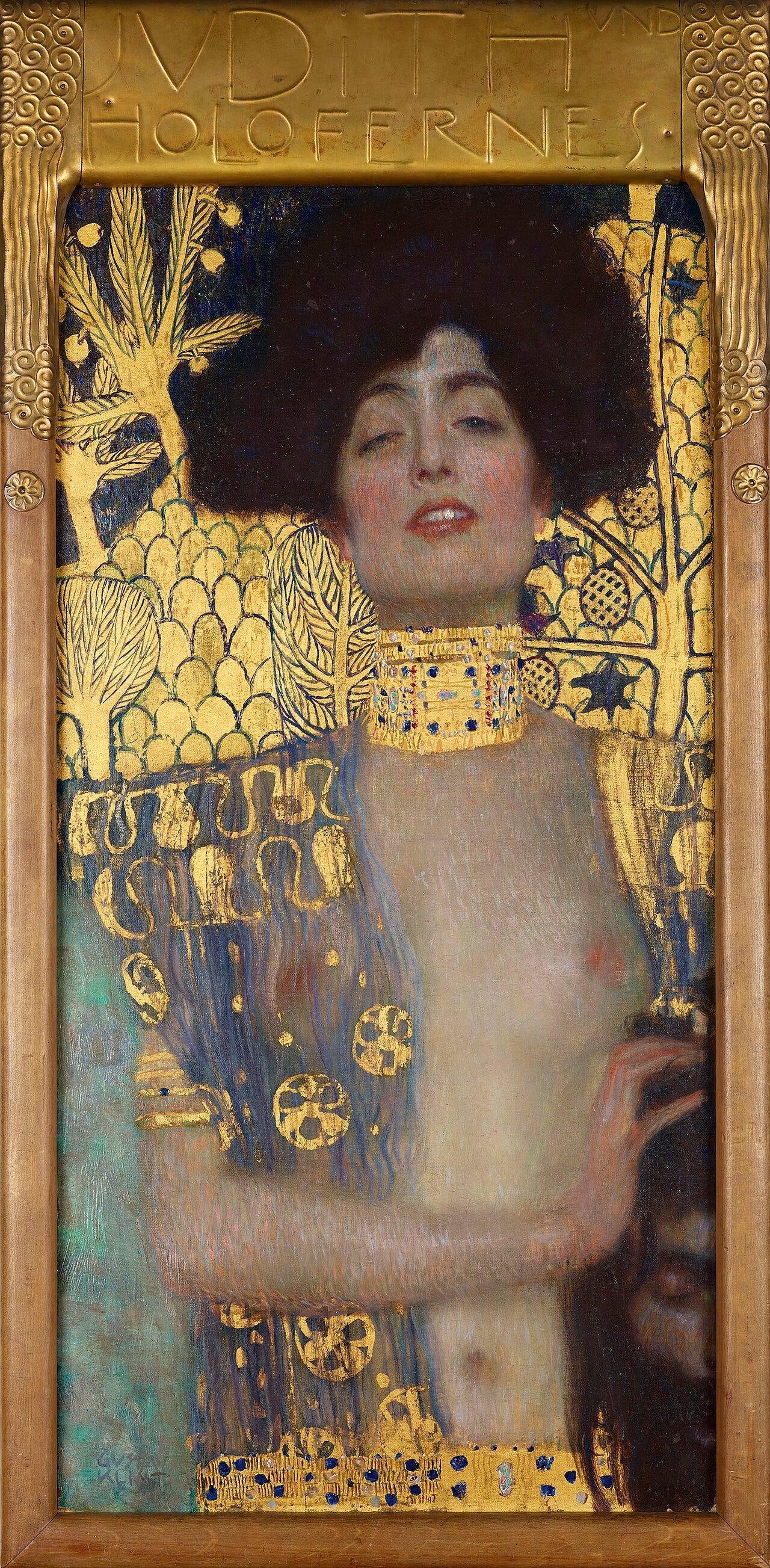
Around 1900 the femme fatale absorbed the vampire entirely: Salome, Judith, Circe and Lilith all drain the men who look at them.
Klimt’s Judith with the head of Holofernes is the most elegant example. I go into his whole story in Gustav Klimt.
Florence Marryat published the novel in 1897, the same year as Dracula. Symbolist painters were working the same seam at the same moment, which is why the imagery converges.
8 | Medieval demons and the drinking of blood
Long before the word existed, manuscripts and church walls showed demons feeding on souls and corpses walking out of graves.
The revenant is a medieval European legal problem before it is a literary one. Hell’s full cast is in hell in painting.
Illuminators drew demons feeding on the damned in Last Judgement scenes long before anyone used the word vampire in English, which is only recorded from the 1730s. The visual grammar came first, the name second.
9 | Saturn Devouring His Son, Francisco Goya (about 1823)
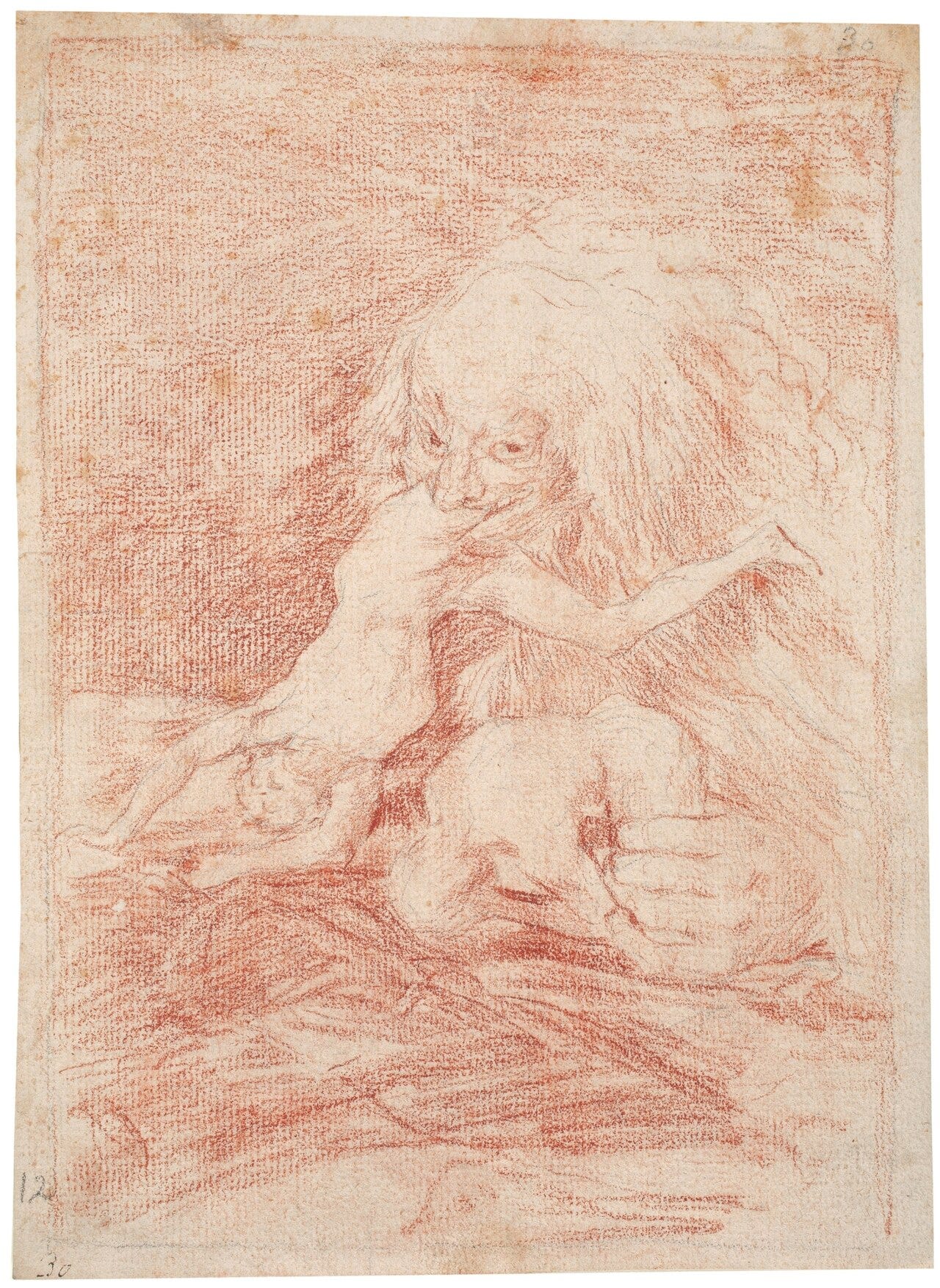
Not a vampire, but the most horrifying feeding in art: a father eating his own child, painted directly on Goya’s dining room wall.
He never intended anyone to see it. More on him in Francisco Goya.
10 | The Vampire, Albert Joseph Penot (about 1890)
A naked woman with enormous bat wings hangs upside down against a black ground, painted in Paris for the Salon market.
It is pure spectacle, and it shows how fast the bat woman became a commercial genre in France.
11 | Vampire drawings of Zdzislaw Beksinski
The Polish painter of nightmares produced skeletal, wrapped and feeding figures for decades without ever naming them.
He refused titles entirely so viewers had to name their own horrors. The rest of his life is in Zdzislaw Beksinski.
12 | Nosferatu and the painters who fed it (1922)
Murnau’s film borrowed its shadows and doorways from German painting and Symbolist prints, and gave every later vampire image its look.
The stolen Dracula rights forced the studio to change every name, and a court ordered the negatives destroyed. Copies survived.
For the Symbolist women who drank blood, browse the Met and the Rijksmuseum.
Before Dracula: the questions that follow
Which one does everyone recognise? Munch’s Vampire, which he himself called Love and Pain and refused to explain as a vampire.
Which came first, Dracula or vampire painting? They arrived together. Philip Burne Jones exhibited The Vampire in 1897, the year Stoker published Dracula.
Why so many vampire women around 1900? The femme fatale gave Symbolists a way to paint fear of women, desire and death in one figure.
Is Fuseli’s Nightmare a vampire painting? Not literally, but it invented the composition every later vampire scene reuses.
Where is The Vampire today? Oslo for Munch, Munich for von Stuck, the Prado for Goya, and Collier in British collections.
Worth knowing before you go: Munch sold versions of Vampire for decades because collectors kept asking for it, while insisting to the end that it showed nothing more than a woman kissing a man’s neck.