
Van Gogh belongs, in most minds, to sunflowers and the hard summer light of Provence. Yet for most of his working life he painted and drew in the cold.
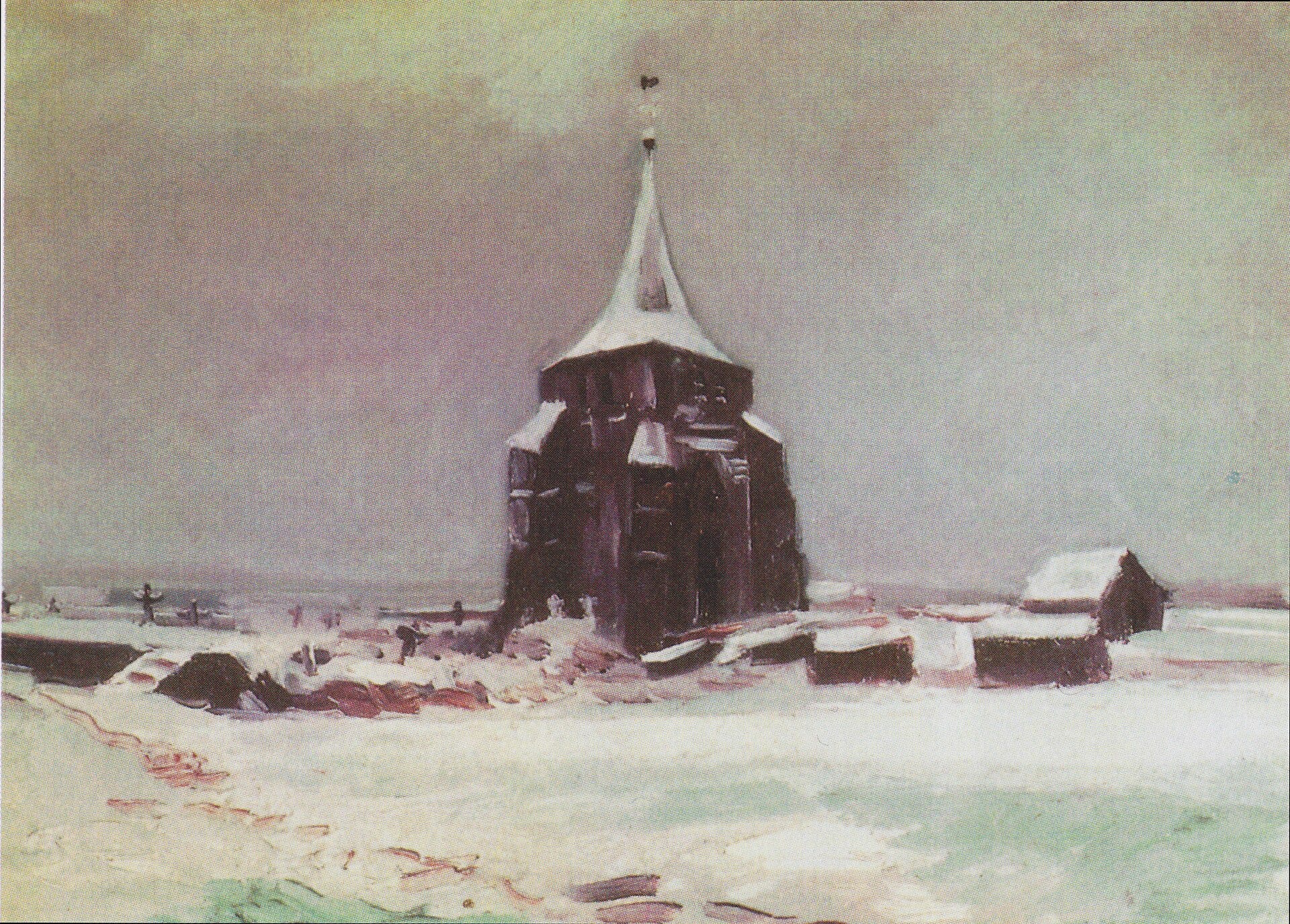
The winters follow him from the coal country of Belgium, where he decided to become an artist, to an asylum in Provence, where in his last year he painted from memory the frozen fields of the North.
Cool Stories About Art is a newsletter to learn art the fun way.
Join 200,000+ readers and get:
10 new art stories / month
The entire archive of content (140+ articles)
Comment, ask questions, and chat with other readers
The Cold Behind the Sunflowers
Before he moved to the South of France in 1888, Van Gogh spent nearly all his working years in Belgium and Holland, where winter lasts for months.
In his winter pictures the cold empties the landscape. Trees lose their leaves, fields lie bare, and each figure stands out dark against the snow.
Twelve of these winter scenes are enough to follow him through his career: nine paintings and three drawings. Eight were made in the North, before he moved to Paris to live with his brother.
The other four come from Provence. The last two of those were painted indoors, from memory or from a print, while illness kept him inside an asylum. The earliest goes back to 1880, in the coal country where he first took up drawing.
12. Miners in the Snow (1880)
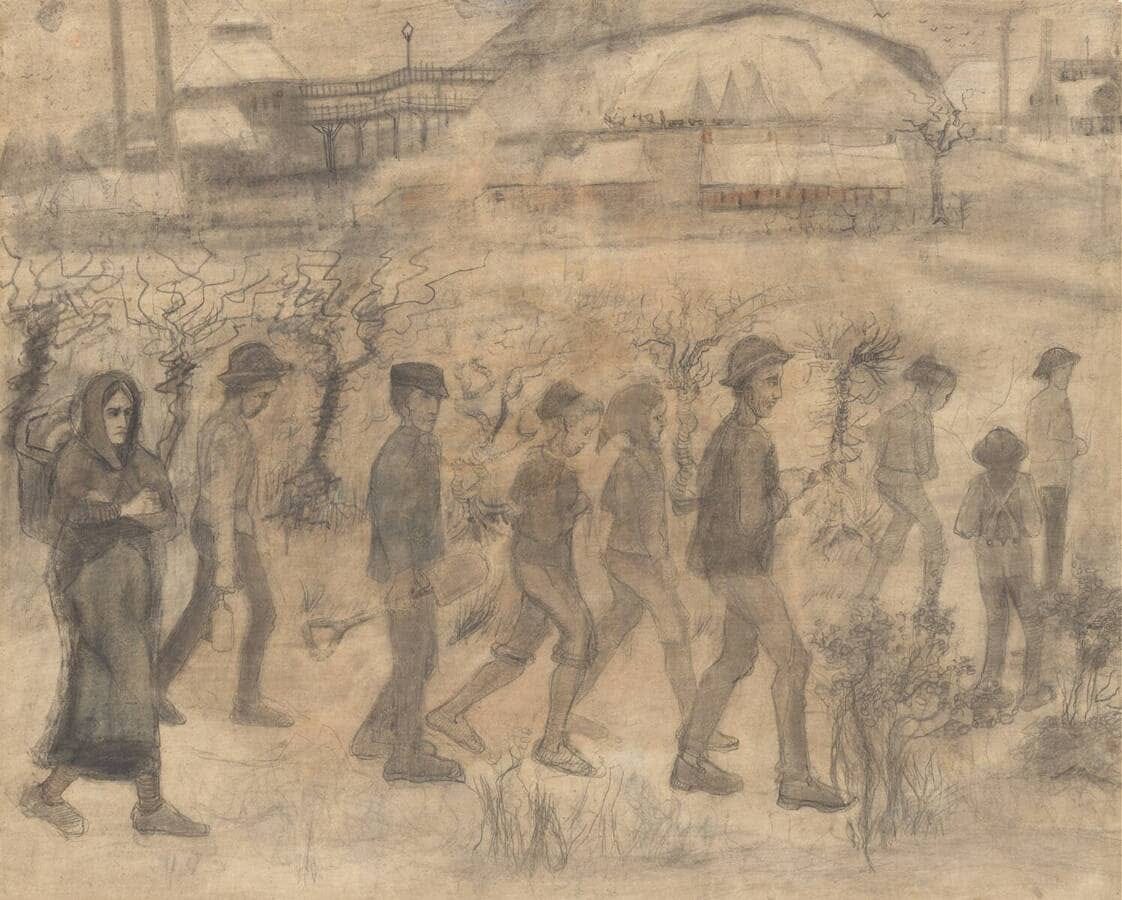
The figures in Miners in the Snow are little more than dark shapes, shoulders hunched, strung out along a hedge on white ground. They are walking at first light toward the shaft where they will spend the day underground.
These men and women lived in the Borinage, the coal basin around Mons, in southern Belgium. Van Gogh had first come among them as a preacher, not as an artist.
He was the son of a Dutch pastor. He arrived in the Borinage in December 1878 and gave away his belongings to live as poorly as the miners did. After about six months he was dismissed.
He stayed in the region all the same, and began to draw. For about a year and a half he taught himself, working alone through anatomy and perspective.
In August 1880 he described to his brother Theo some sketches of miners going to the shaft in the morning "through the snow, by a path along a thorn hedge: passing shadows, dimly visible in the twilight." The finished sheet followed in September.
Done in pencil, colored chalk and watercolor, it keeps the hedge and the moving shadows of the letter. A few weeks later he came back to the people in it.
"The man from the depths, from the abyss, de profundis, that is the miner," he wrote, borrowing the Latin opening of a psalm, "out of the depths." He would count himself fortunate, he added, if he could draw them one day.
At a Glance
Artist: Vincent van Gogh (1853 to 1890)
Made: September 1880, Cuesmes, Belgium
Medium: Pencil, colored chalk and transparent watercolor on wove paper
Size: Not published
Where to see it: Kröller-Müller Museum, Otterlo, Netherlands
11. Women Carrying Sacks of Coal in the Snow (1882)
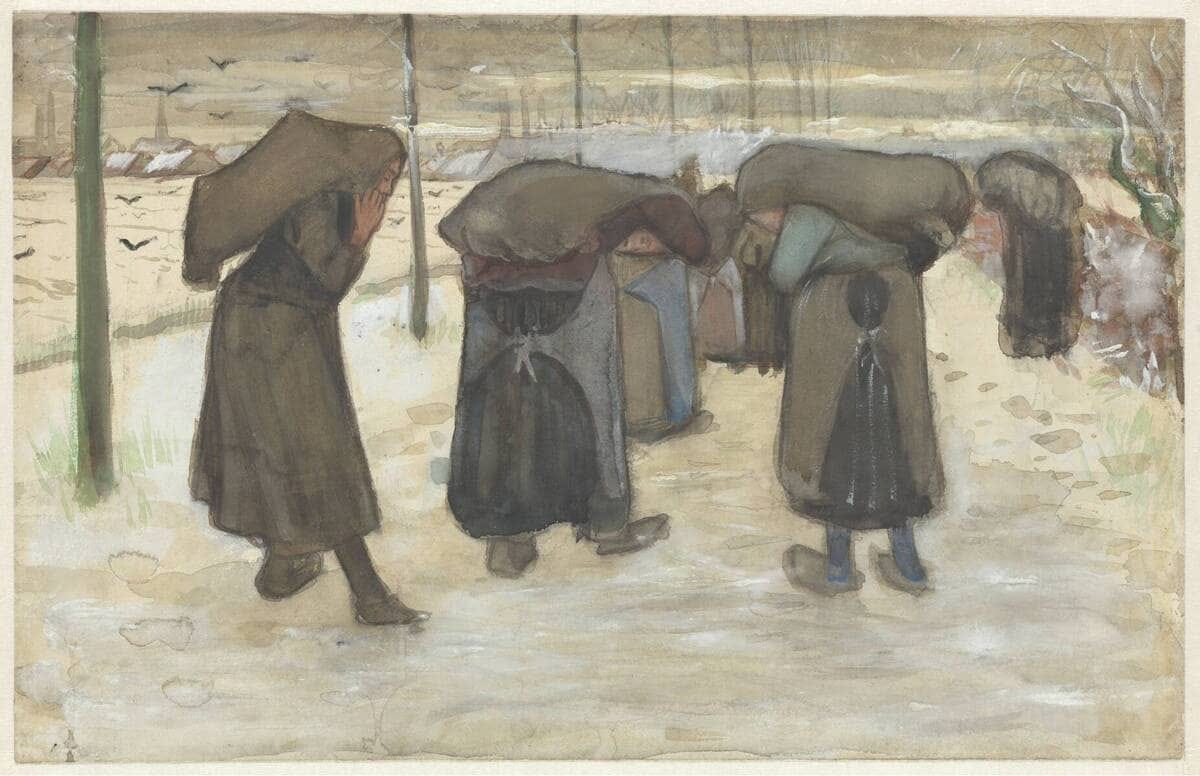
Black sacks of coal weigh on the backs of a line of women, who walk bent almost double across white ground. The sheet was made in November 1882 in The Hague, a city without a single coal mine.