
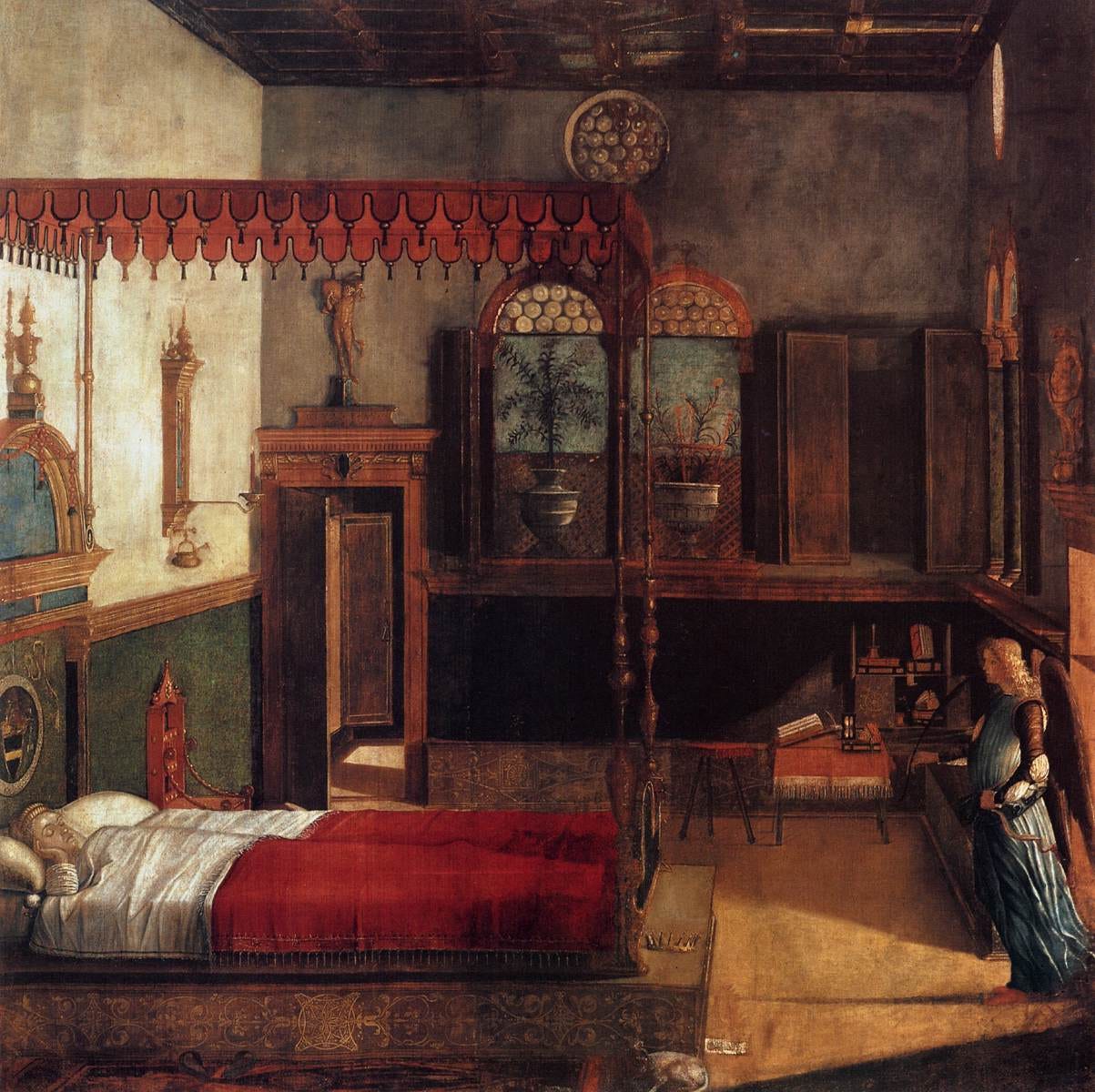
Vittore Carpaccio (about 1465 to 1525 or 1526) was an Italian painter of Renaissance Venice. He became famous for the huge story paintings he made for the religious brotherhoods of his city, like The Dream of Saint Ursula, now at the Gallerie dell'Accademia in Venice.
Cool Stories About Art is a newsletter to learn art the fun way.
Join 200,000+ readers and get:
10 new art stories / month
The entire archive of content (140+ articles)
Comment, ask questions, and chat with other readers
The brotherhoods, clubs of ordinary Venetians devoted to a saint, paid Carpaccio to paint the lives of saints. Around the saints, he painted his own city, down to the laundry drying on the roofs. Outside Venice, his name faded for about three hundred years. In the United States, the name Carpaccio is best known today as a dish of raw beef.
Vittore Carpaccio was born in Venice around 1465. The city, in northern Italy, was then an independent republic led by an elected ruler, the doge.
The painter's father, Pietro Scarpazza, sold furs. Scarpazza was the family's real name. On his best-known paintings, the painter signed a Latin form of it, "Carpathius," since Latin was the language of scholars.
The name "Carpaccio" appeared only in 1648, more than a century after his death, in the writings of a Venetian author.
In Venice, these brotherhoods, called scuole, gave painters many of their biggest orders. Each scuola helped its members in hard times and met in its own hall. The richest covered the walls of their halls with enormous canvases telling the life of their saint.
In 1490, Carpaccio finished the first of nine canvases on the life of Saint Ursula, a princess in a legend of the Middle Ages, for the brotherhood devoted to her.
In The Dream of Saint Ursula, painted in 1495, the princess sleeps in a Venetian bedroom, her cheek resting on her hand, her slippers beside the bed. A young angel steps through the door with a palm branch, the sign of a martyr, someone killed for their faith. The angel has come to announce Ursula's death.
For thirty years, the brotherhoods of Venice kept Carpaccio busy. Three centuries later, almost no one outside Venice knew his name.
Who brought Carpaccio's name back to the rest of the world?
In the rest of the story
What an invisible light found under the paint of one of his pictures.
How half of one of his paintings ended up in California.
Why an Englishman asked to be locked in a room with Saint Ursula.
What the dish that carries his name owes to his paintings.