

170 000+ readers. Learn art the fun way.
This is a preview. Paid subscribers get the full story.
You'll also get:
10 new stories every month
The full archive (130+ Art stories)
Your personal art guide. Comment, ask questions, DM me anytime
iPhone user? Subscribe at coolstoriesabout.art, not via the app. Apple adds 30% to the price.
Florence, 1503. Lisa Gherardini climbs the steps to Leonardo da Vinci's workshop. She is 24 years old. Her youngest child, Andrea, was born a few months earlier.
This is her fifth childbirth in six years. Her husband Francesco, a prosperous silk merchant, has just commissioned this portrait to celebrate the birth of their second son.
Lisa settles into the chair. Over her shoulders, a transparent veil covers her dark dress. This light fabric is called a guarnello. Florentine women wear it during pregnancy and after childbirth.
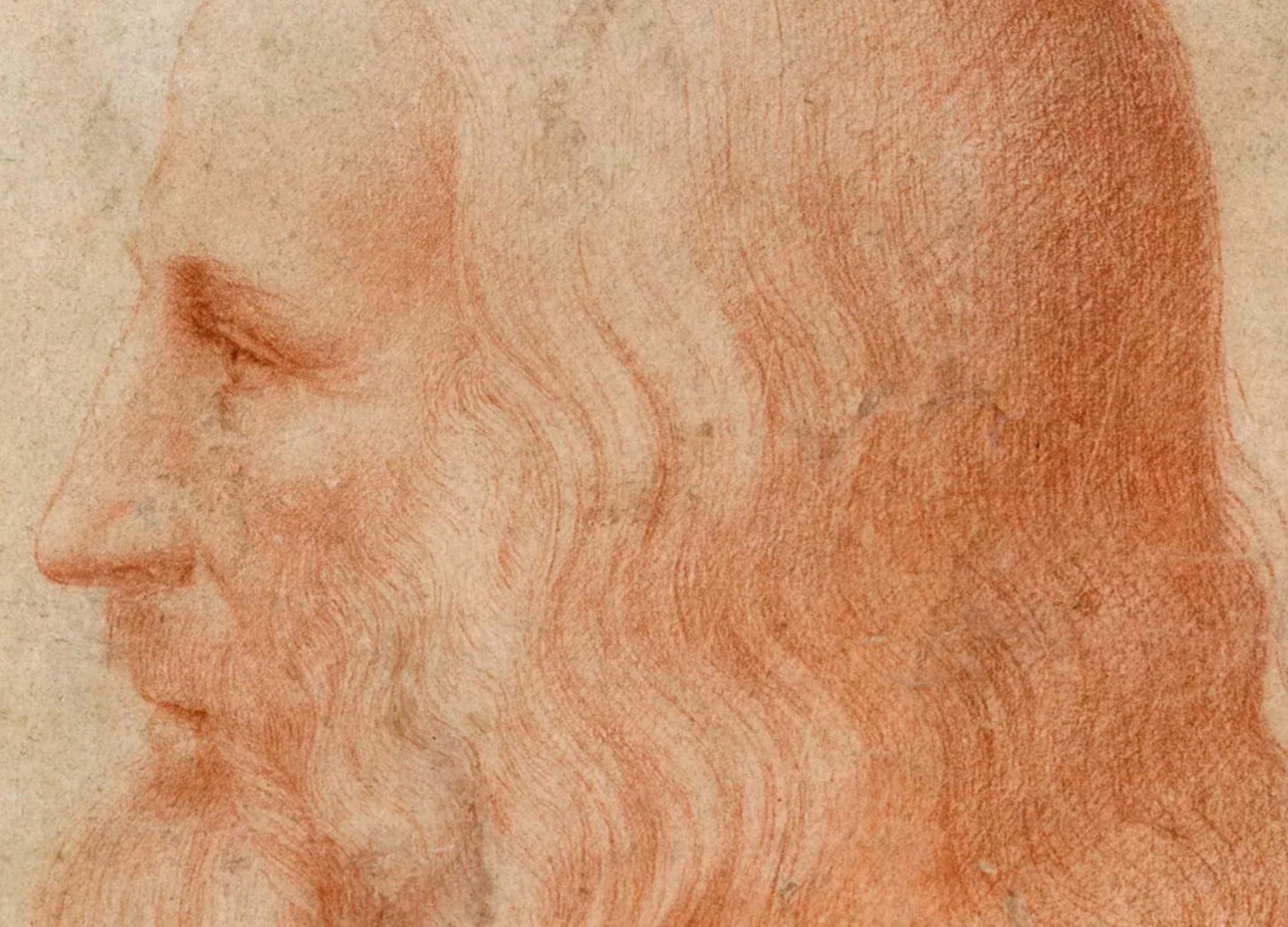
Leonardo observes. He is 51 years old. For twenty years, he has been dissecting corpses to understand the human body. When he paints, he reproduces what he sees with almost scientific precision. The pores of the skin. The shadows beneath the jaw. The texture of the hair. Every detail matters.
To distract his model, he has musicians brought in. Lisa smiles faintly. Leonardo begins to paint.
Five centuries later, doctors scrutinise this painting at the Louvre. What they discover goes beyond art history.
A Body That Speaks
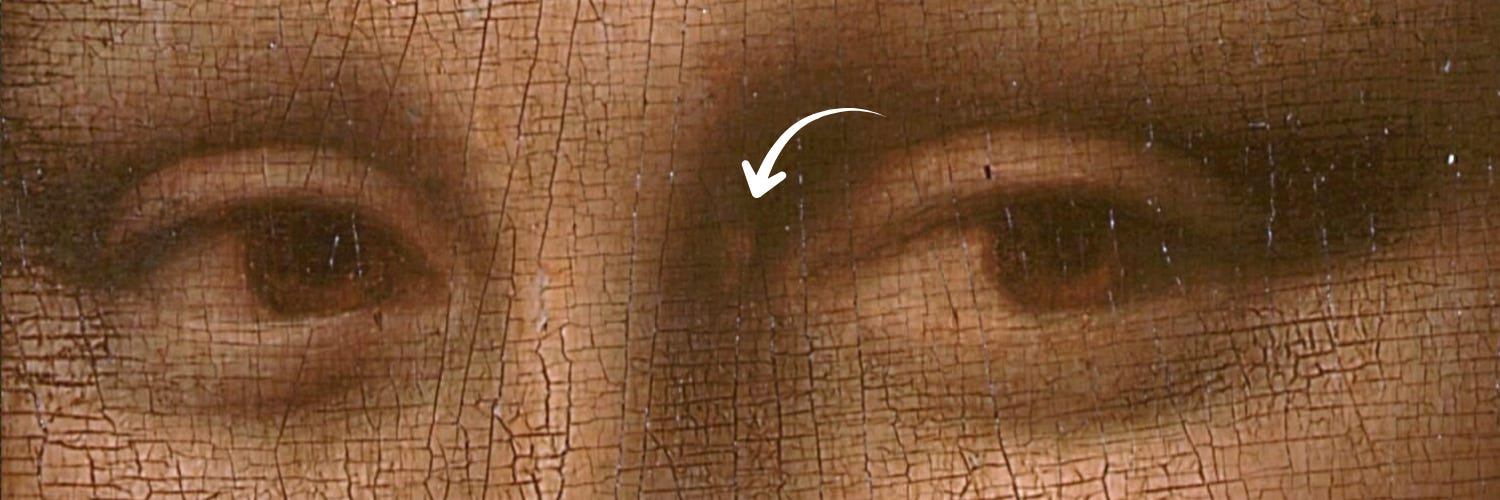
Look at the corner of her left eye. A small yellowish spot, barely visible, marks the inner upper eyelid. In 2004, researchers identify this detail as a xanthelasma, a deposit of cholesterol beneath the skin. This lesion would not be described medically until 1851.
If the identification is correct, Mona Lisa represents the first known pictorial depiction of this phenomenon.
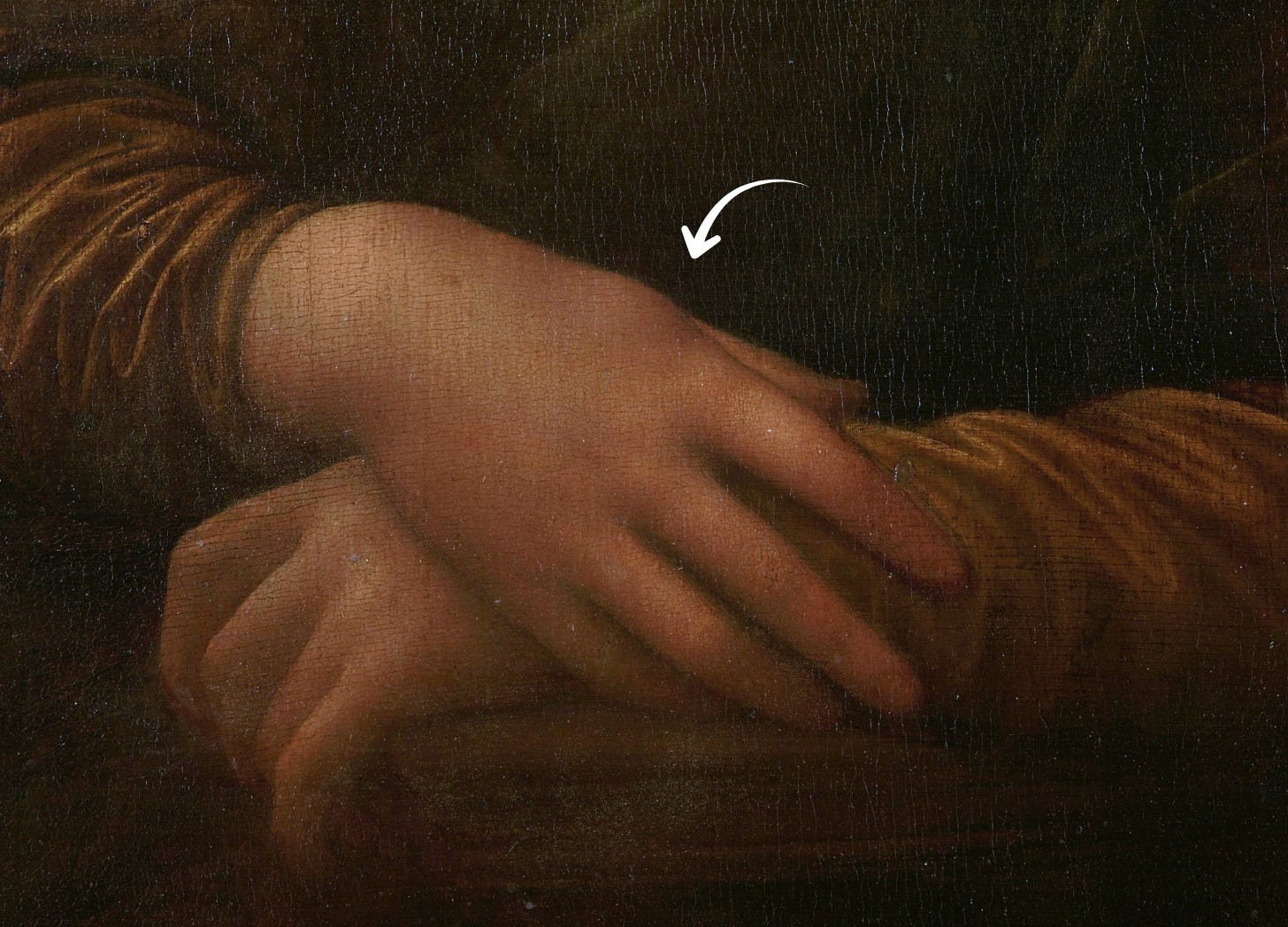
Now observe her right hand, resting delicately on her left wrist. A slight protuberance can be seen beneath the skin, between the back of the hand and the wrist. A lipoma, probably. A benign accumulation of fatty tissue.
Discover my new newsletter !

Keep learning art the fun way


Xanthelasma and lipoma in a 24-year-old woman. This is not insignificant.
Then there is her complexion. Lisa Gherardini appears yellow. One might invoke the oxidised varnish that has covered the painting for five centuries.
Except that analyses using infrared reflectography have shown that this tonality was already present beneath the layer of varnish. Leonardo painted Lisa with this olive-tinted complexion.
Her face seems slightly puffy. Her cheeks lack the rosy freshness one expects in a young woman. Her forehead is high, clear. Her hair appears thin and sparse at the temples.
And then there are the eyebrows. They have disappeared.
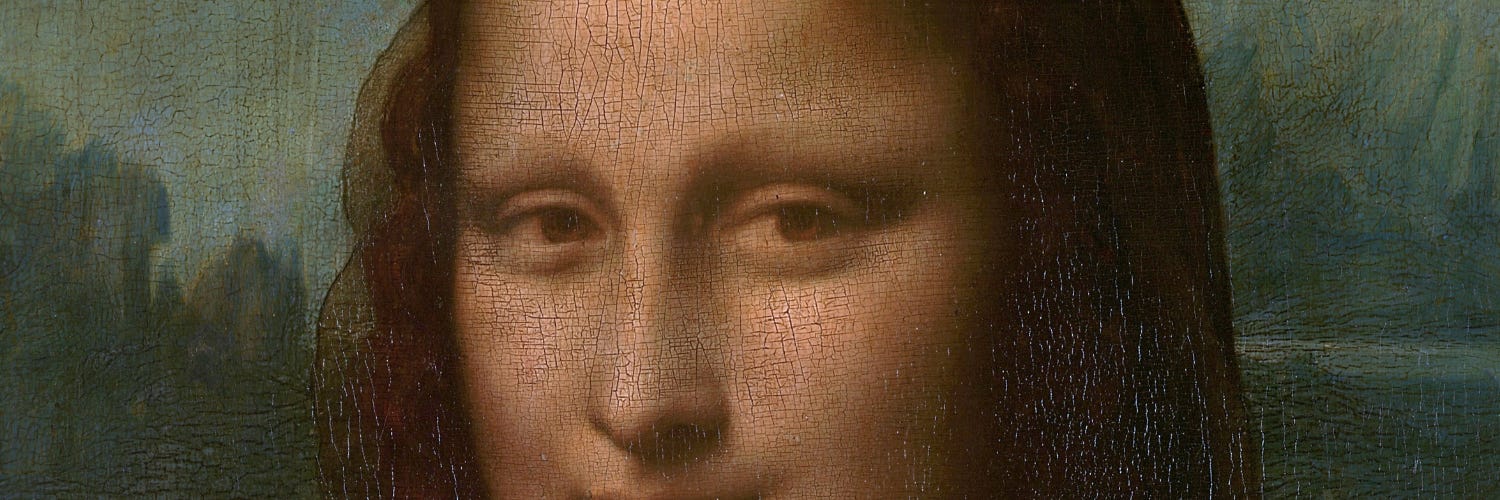
In 1550, Giorgio Vasari describes the painting. He affirms that Leonardo had painted thick eyebrows, "here dense, there sparse," with such precision that one could distinguish the pores of the skin. In 2007, engineer Pascal Cotte does indeed detect the trace of a brushstroke depicting a hair above the left eye.
Proof that the eyebrows existed. But they were evidently very discreet. Today, nothing can be seen.
Did Leonardo paint a woman who plucked her eyebrows according to Florentine fashion? Or did he simply reproduce what he saw: a young mother whose hair had grown sparse?
The Smile That Questions
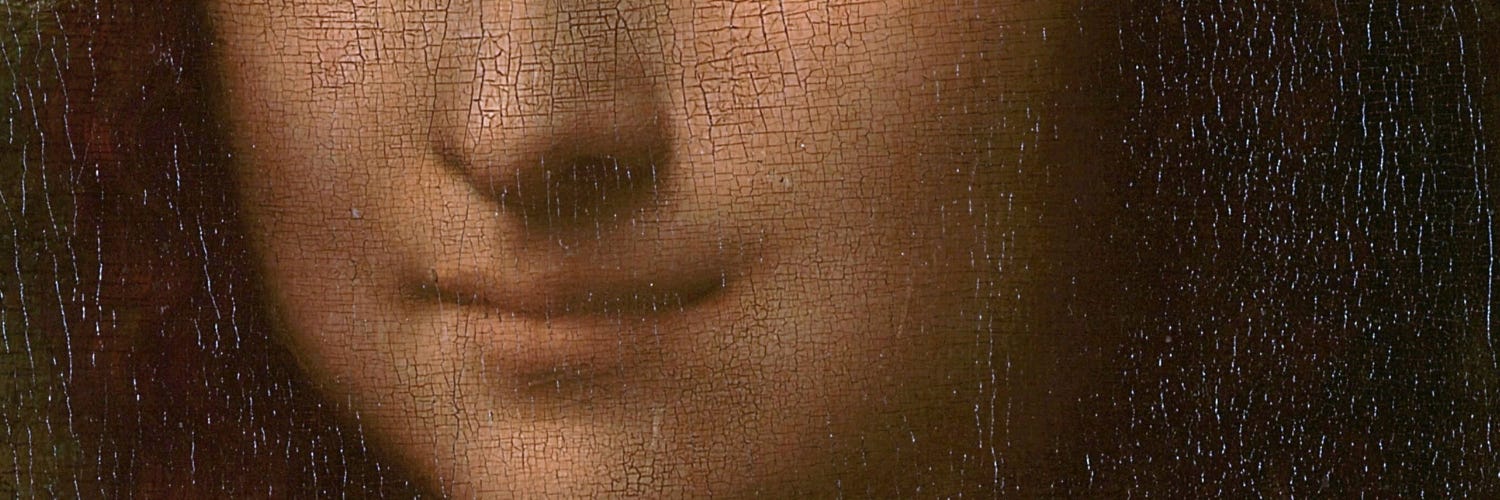
That smile. The most famous in art history. Enigmatic. Almost elusive.