Wayne Thiebaud: The Complete Story

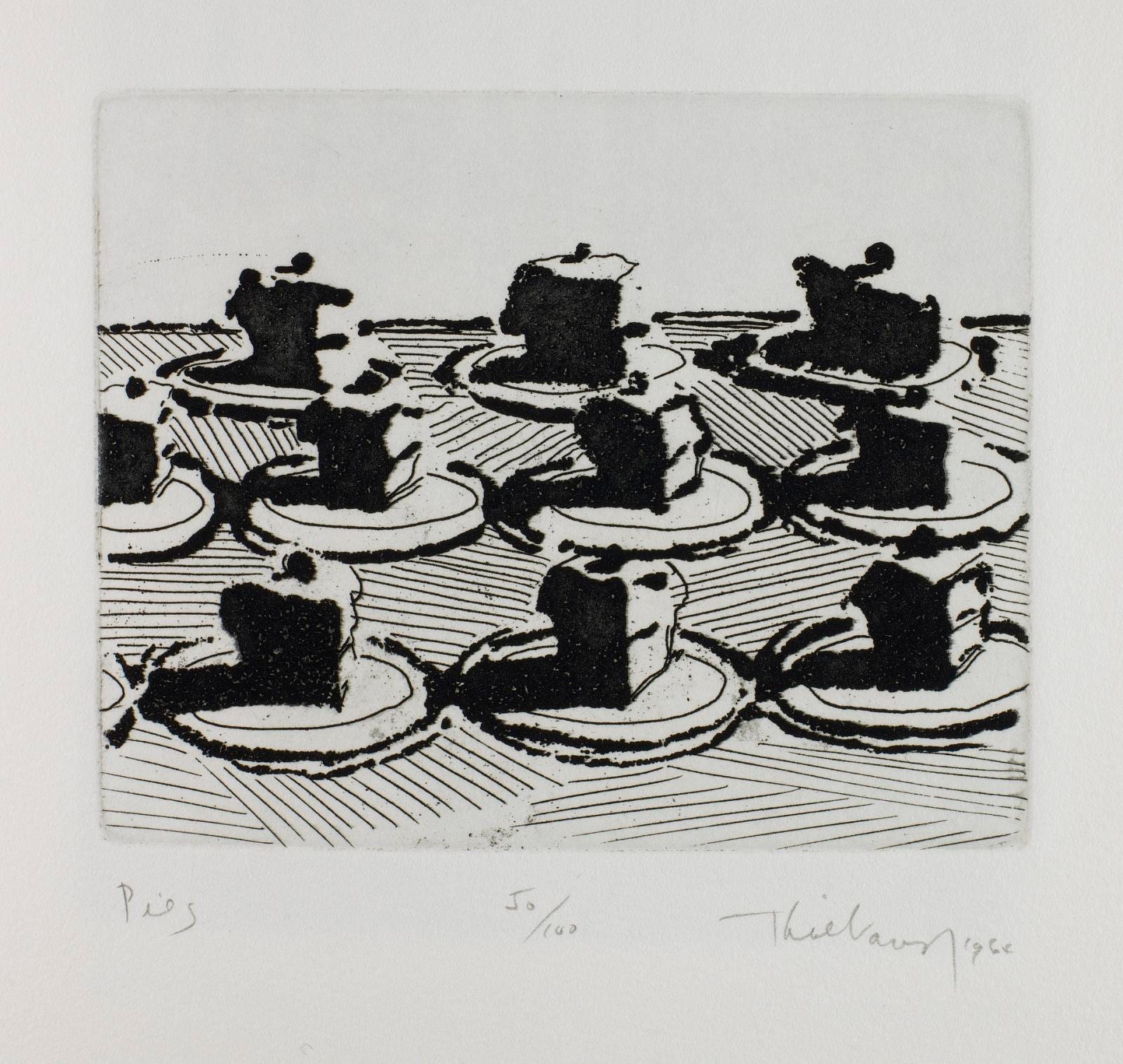
A row of cakes in a glass case, a gumball machine, a slice of pie, each one painted with thick, glossy paint that looks good enough to eat.

Wayne Thiebaud. Delights, Courtauld Gallery, London 03

Wayne Thiebaud spent a long life painting the sweet displays of American diners, and made them feel both cheerful and quietly lonely.

He was an American painter best known for his bright, thickly painted images of cakes, pies and everyday treats, often linked to Pop art though he resisted the label.


Over 110,000 art lovers read this every week. Join them, free.


For the parts museums leave out

The ones I would send you to next:


Paint like frosting

Thiebaud laid his paint on thick and creamy, so that the painted frosting on a cake is made of real, glistening ridges of oil.

These glowing displays of food are some of the most appetising still life ever made, with each cake casting a long, coloured shadow.

Pop or not

Because he painted consumer goods in the early 1960s, Thiebaud was grouped with Pop art, but he always felt apart from it.

Where Pop was cool and ironic, his work is warm and nostalgic, closer to a love letter to ordinary American life than a comment on it.

More than cakes

Thiebaud also painted dizzying San Francisco streets that plunge down impossible hills, and wide California farmland seen from above.

These landscapes show the same love of strong colour and clear shape, proving he was far more than the painter of desserts.

The teacher

For decades Thiebaud taught at the University of California, shaping generations of artists while quietly building his own reputation.

He kept painting almost to the end of his very long life, treating the studio as a daily discipline rather than a path to fame.

Things people ask about Wayne Thiebaud

What is he known for?

Thickly painted cakes, pies and diner treats.

Was he a Pop artist?

He was linked to Pop but felt warmer and more nostalgic than the movement.

What else did he paint?

Steep San Francisco streets and California farmland.

When did he die?

In 2021, at the age of one hundred and one.

Why his cakes still glow

Thiebaud took the most ordinary American sights and painted them with such care that they became strangely moving, sweet and a little sad at once.

He worked into his second century, and his glowing cakes now hang in major museums, proof that a humble subject, painted with love, can outlast every passing trend.


Over 110,000 art lovers read this every week. Join them, free.


Before he became a painter he worked as a cartoonist and even briefly for a film studio, training that gave his work its clean shapes and gentle humour.

His prices climbed steeply in his final years and after his death, so the painter of five and dime treats ended up among the most valued American artists of his generation.

His subjects ranged far beyond the bakery case, from lipsticks and ties to gumball machines and hot dogs, all painted with the same loving attention to colour and shadow.

Late in life he was celebrated with major retrospectives and national honours, and his glowing displays of everyday treats are now read as some of the most distinctly American images of the past century.

His steep San Francisco streetscapes, with cars perched on impossible hills, have become some of the most recognisable images of that city, proving his eye worked on a grand scale as well as a small one.

His farmland views, seen from high above in bands of bright colour, turned the flat fields of California into something close to abstraction while keeping their warmth.


Get more art secrets and stories in your inbox, free.