
Long before Hollywood's Wolf Man, the werewolf lived almost entirely on paper, in woodcuts, street broadsheets and penny magazines, much of it printed while people still believed in it. The oddest of these pictures shows a real wolf, caught in a village well, then dressed as a dead mayor, wig and mask included, and hanged on a gallows like a man.
Cool Stories About Art is a newsletter to learn art the fun way.
Join 200,000+ readers and get:
10 new art stories / month
The entire archive of content (140+ articles)
Comment, ask questions, and chat with other readers
Why the Werewolf Lived in Print
A werewolf is a hard thing to draw. It has to be a man and a wolf at the same time, and every artist who tried had to decide where the man stops and the animal starts: a man who crawls, or a wolf that wears a coat.
Painters, for the most part, left the subject alone. The werewolf belonged to printers, who sold it as news, from trials and wolf attacks to sermons and serial novels. Eleven of the twelve images chosen here were printed, and only one was painted on canvas.
The choice follows the years when people still feared werewolves, or had only just stopped, from the start of the sixteenth century to the close of the nineteenth. A few medieval manuscripts come before them, and the films come after.
12. Anonymous, The Wolf of Ansbach (1685)
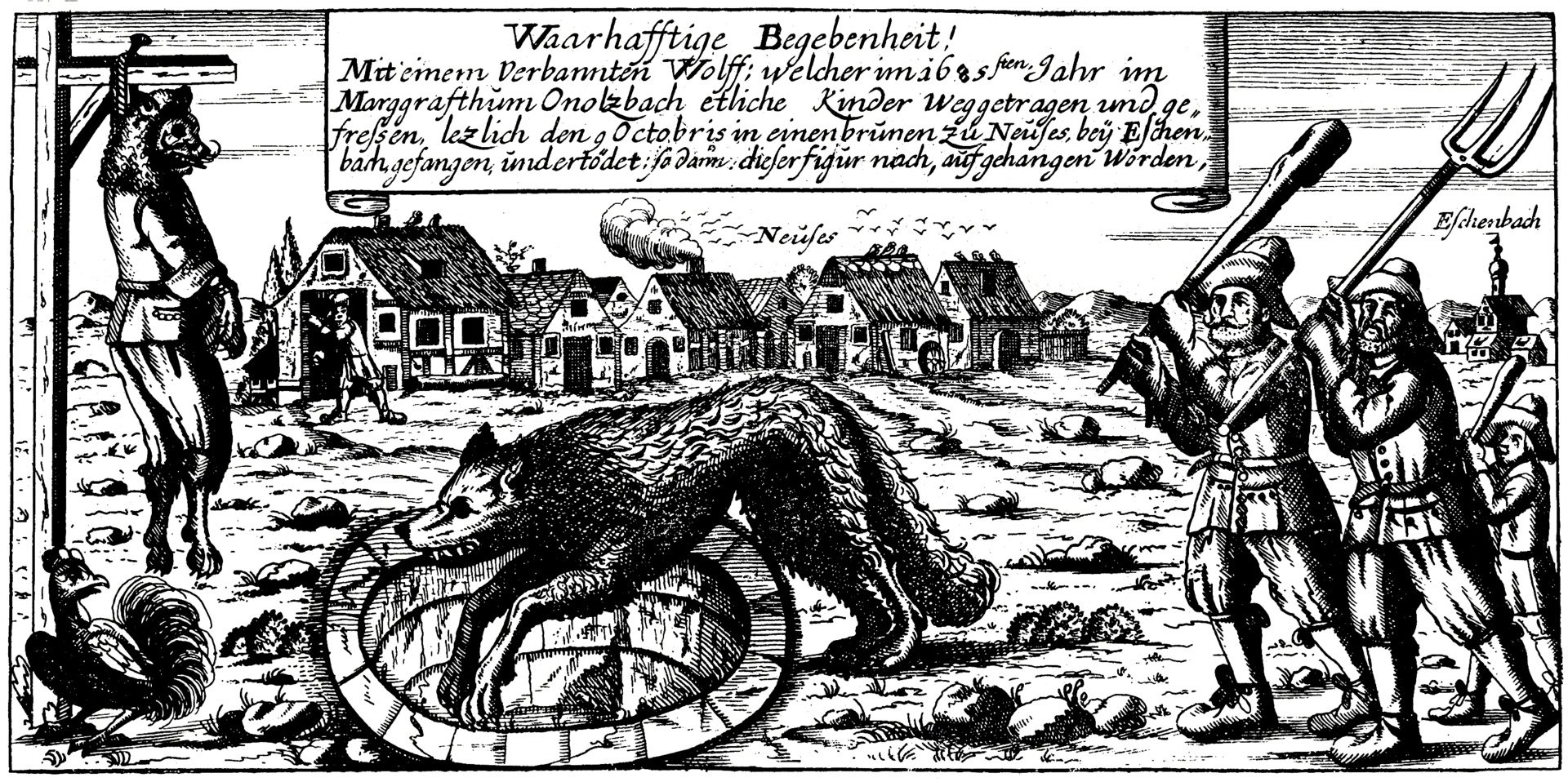
To the left, a wolf hangs from a gallows, dressed in a man's coat and breeches. In the center, the same animal is caught in the mouth of a well, with a rooster nearby, while villagers come running with a club and a pitchfork. The houses behind them are labeled Neuses, a village near Ansbach, in Franconia, in southern Germany.
The banner across the top says what kind of picture this is. It begins with two words, *Waarhafftige Begebenheit*, "A True Event". The sheet is a broadsheet, a single printed page sold cheaply in the streets, and its anonymous engraver made it in 1685, while the story was still fresh.
The event it reports began that summer. From the end of July, a wolf attacked people in the villages around Ansbach, and several children were killed. The council of the margrave, the prince who ruled Ansbach, treated it as a matter for hunters. It ordered a hunt, recommended nets and offered a reward of twelve thalers to whoever killed the animal.
The villagers had another explanation. They said the wolf was Michael Leicht, a former mayor of the town who had died not long before and whom nobody had liked. Another sheet of the time shows him as a wolf wrapped in a white shroud, coming back to his own house.
The well is where the hunt ended. On October 9, 1685, the wolf chased a rooster into it at Neuses, fell in, and was killed there. That is the scene in the middle of the print, and the scene on the left shows what the town did next.
The body was carried to Ansbach and skinned. The skin was stuffed, dressed in a man's clothes and given a wig, a beard and a mask made to look like Leicht's face. Then it was hanged on a gallows built for the purpose on a hill outside the town, with verses pinned beside it.
On that hill, the wolf the villages had feared wore the face of the man they had hated.
At a Glance
Artist: Anonymous
Made: 1685
Medium: Copper engraving
Size: Not published
Where to see it: Copies of the 1685 Ansbach broadsheets survive in the Nuremberg State Archives and the Ansbach City Archives, Germany
11. Olaus Magnus, Men Transformed into Wolves (1555)
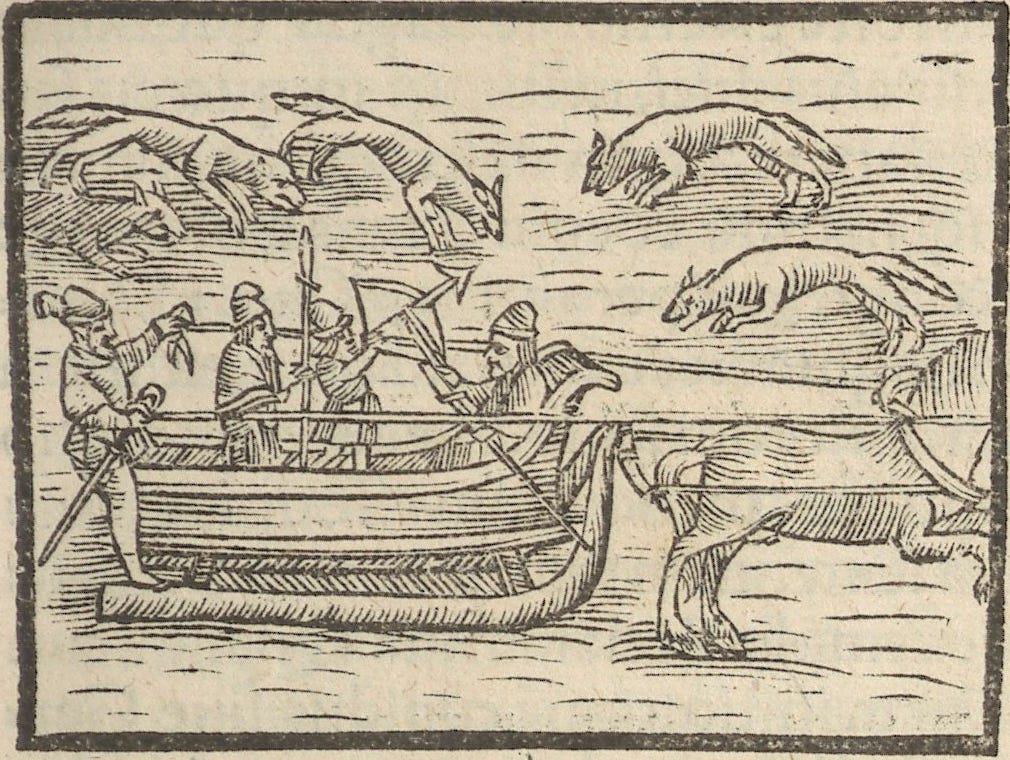
Men in a sleigh fight off leaping wolves with spears and a crossbow in this small woodcut. The book it illustrates, printed in Rome in 1555, makes a far stranger claim about the north of Europe. On Christmas night, in Prussia, Livonia and Lithuania, men who have turned into wolves gather in great numbers and attack lonely houses in the forest, trying to break down the doors.