

170 000+ readers. Learn art the fun way.
This is a preview. Paid subscribers get the full story.
You’ll also get:
10 new stories every month
The full archive (130+ Art stories)
Your personal art guide. Comment, ask questions, DM me anytime
iPhone user? Subscribe at coolstoriesabout.art, not via the app. Apple adds 30% to the price.
Arles, rue du Bout d'Arles, Sunday, December 23, 1888, past eleven at night.
A man walks alone down the street, at a fast clip, a beret jammed down on his head, a bundle under his arm.
On this street, every door is the door of a brothel. He stops at the first one, the licensed house at number 1. He knocks.
A young woman opens. He knows her; she knows him. Her name is Rachel.
He holds out the bundle, a knotted cloth, the way you hold out a gift. She unties it in front of him.
Inside, a piece of an ear. His own, cut off a few hours earlier. She screams, the bundle falls. He says, before he goes:
"Take good care of this object."
He turns on his heel and walks back into the night.
The man's name is Vincent van Gogh.
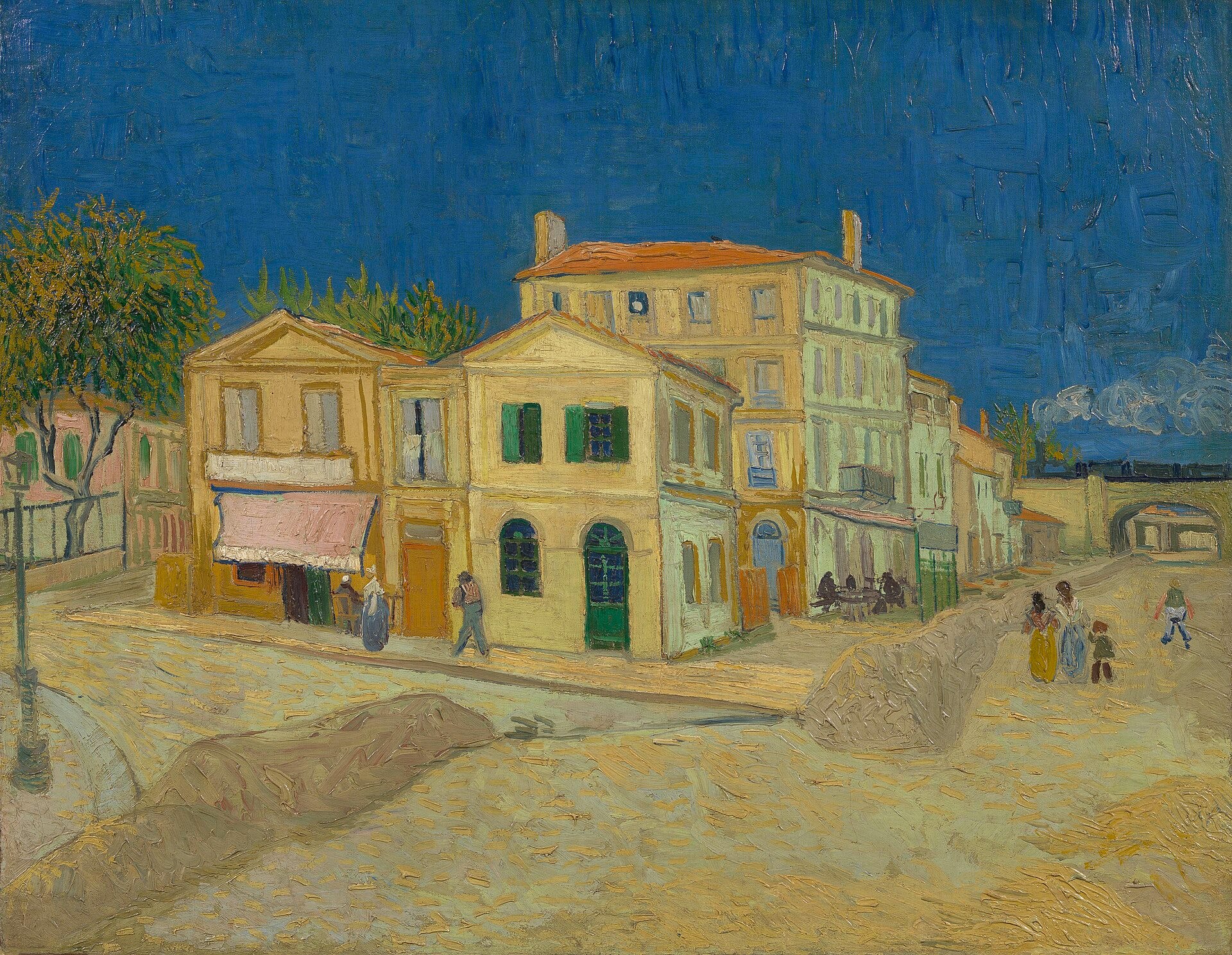
A few hours earlier, in the Yellow House on place Lamartine, the square where he lives, he quarrels with Paul Gauguin, who has been living with him for two months.
For weeks, everything between them, painting and daily life alike, has turned into a fight. Gauguin is talking about going back to Paris. Tonight, voices rise fast.
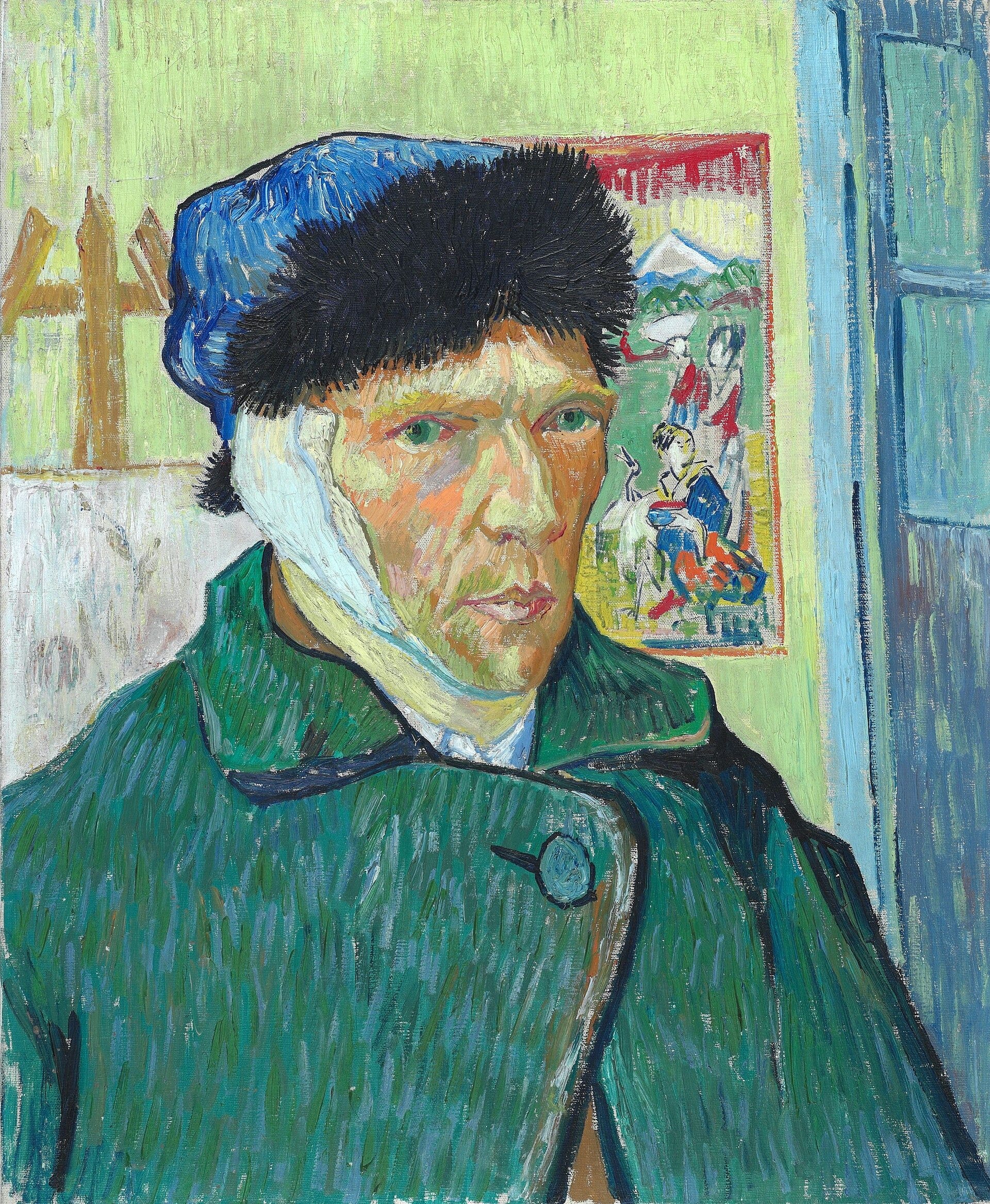
Vincent comes at him with an open razor in his hand. Gauguin backs away, gets out, flees down the street. Alone in the house, Vincent turns the blade on himself and cuts off his ear.
From the rue du Bout d'Arles he goes home to the Yellow House. The next morning the police find him in his bed, barely alive. He is rushed to the Hôtel-Dieu, the town hospital.
A Certificate, a Letter
A week passes. Vincent is still at the Hôtel-Dieu, in a common ward, his ear under a bandage. A pastor from the town, Frédéric Salles, comes to see him.
The mayor of Arles is waiting for a certificate. Dr. Urpar, the hospital's chief physician, writes it. He asks that his patient be transferred to a special asylum. To say what the patient suffers from, he writes two words: mental alienation, the law's term for insanity.
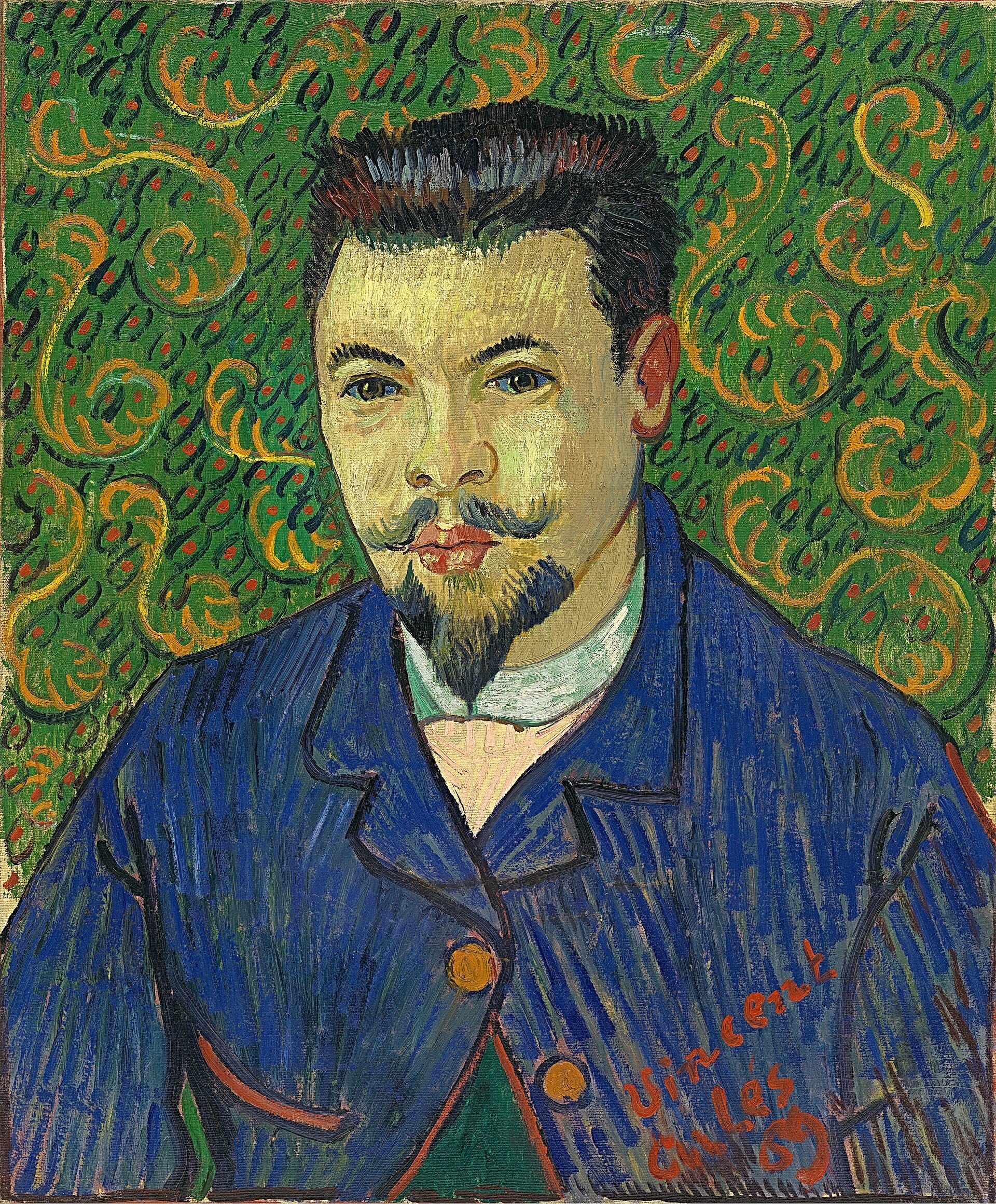
One evening, Dr. Félix Rey, the intern, 23 years old, sits down to write a letter of his own. In Paris, Theo, Vincent's brother, is waiting for news. He has written to Rey to ask what there is to fear.
Rey tells him what he has seen. Two days ago, Vincent climbed into another patient's bed and refused to get out.
Then he chased the night nurse, in his nightshirt. Yesterday, he washed himself in the coal scuttle.
What is there to fear? Rey gives no firm answer.
"It is very difficult to give a definite answer."
"At present we are treating only his ear, and certainly not his mental state."
On January 7, Vincent gathers up a few canvases and his painting kit. He leaves the Hôtel-Dieu. No diagnosis has been reached.
30 Signatures
A month later, Vincent is living alone again in the Yellow House.
Thérèse Balmoissière keeps house for him. For three days, he has believed himself poisoned. Everywhere he looks he sees poisoners, and people who have been poisoned.
Thérèse is worried, and says so. The neighbors take the matter to the chief police commissioner of Arles, d'Ornano, who orders a medical examination.
On that order, a third doctor, Dr. Albert Delon, calls at the Yellow House. He examines Vincent and gets him talking.
Vincent recognizes the people around him only now and then. He hears voices that reproach him.
The same day, Pastor Salles writes to Theo.
"Today, according to what the housekeeper told me, he refused to take the slightest nourishment."
At the end of February, a sheet of paper goes from shop to shop around place Lamartine. Crévoulin, the grocer, signs first. Some 30 neighbors sign after him.
It is a petition. It speaks of "excesses of drink, after which he finds himself in such a state of overexcitement that he no longer knows what he is doing or what he is saying."
It demands the confinement of "vood (vincent), landscape painter, Dutch subject." The name is mangled.
Commissioner d'Ornano opens an inquiry and takes statements from the neighbors. Jeanne Corrias, a seamstress on the square, testifies: on Monday, in front of Crévoulin's shop, Vincent grabbed her by the waist and lifted her off the ground.
On March 3, the commissioner closes his inquiry with these words:
"Genuinely afflicted with mental alienation ... has moments of lucidity. He is not yet a danger to public safety, but it is feared he may become one."
The Cell
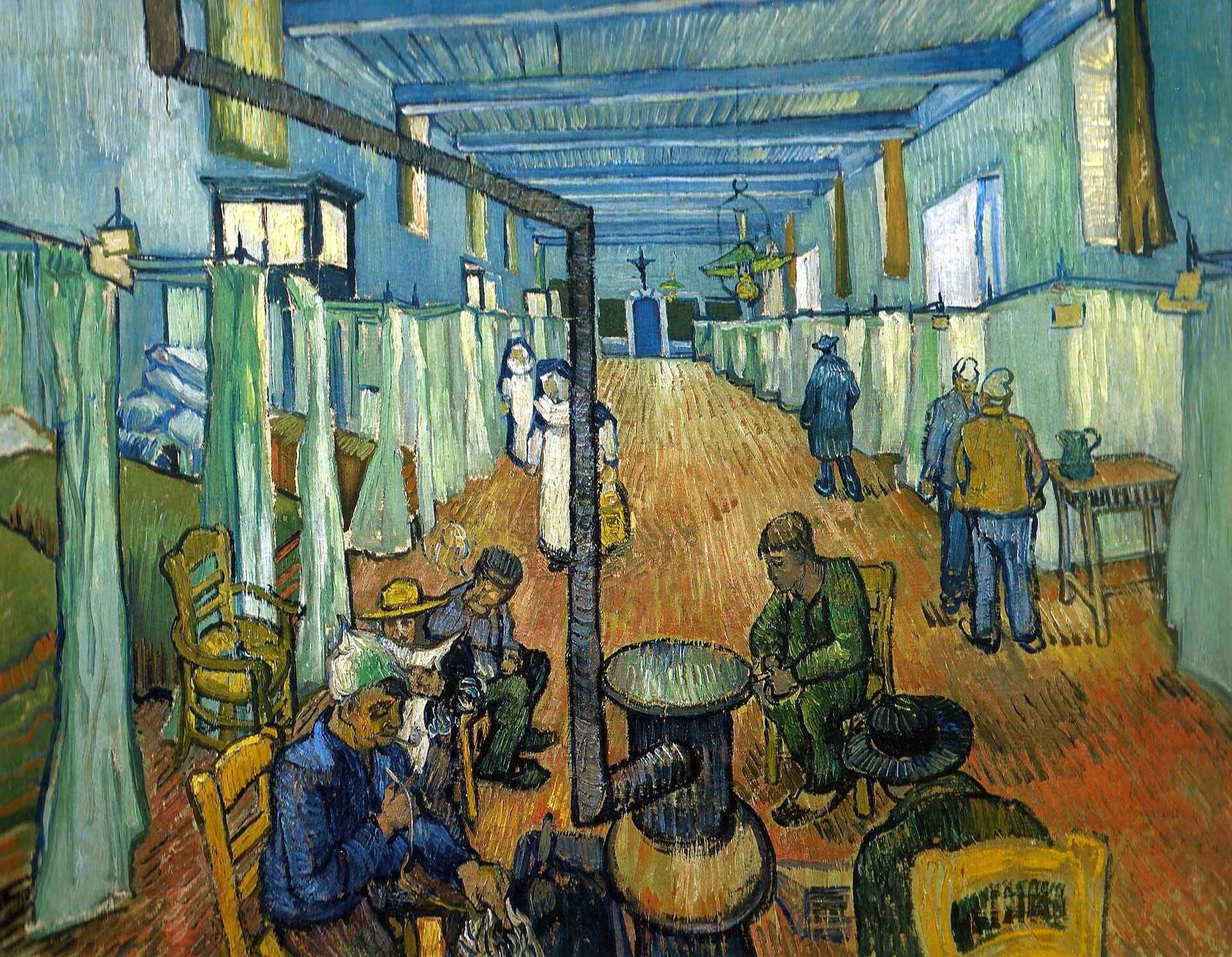
While the petition is going around place Lamartine, Vincent is already gone. A new attack has brought him back to the Hôtel-Dieu, and this time he has been put in isolation, in the cell they call the cabanon.
On March 19, from that cell, he writes to Theo. His brother has offered to get him out. Vincent refuses.
"I am writing to you in full possession of my faculties ... Do not free me, it will right itself."
A month later, he changes his mind. He himself asks to be admitted to an asylum, and he offers his own explanation.
"If alcohol was indeed one of the great causes of my madness, then it came on very slowly, and it will go away just as slowly."
Theo receives the letter and writes to the director of the asylum at Saint-Rémy-de-Provence, Dr. Théophile Peyron. He negotiates the terms the way you negotiate room and board.
A third-class room, the cheapest tier. The freedom to paint outside the walls. Half a liter of wine with each meal.
Discover my new newsletter !

The Fourth Doctor
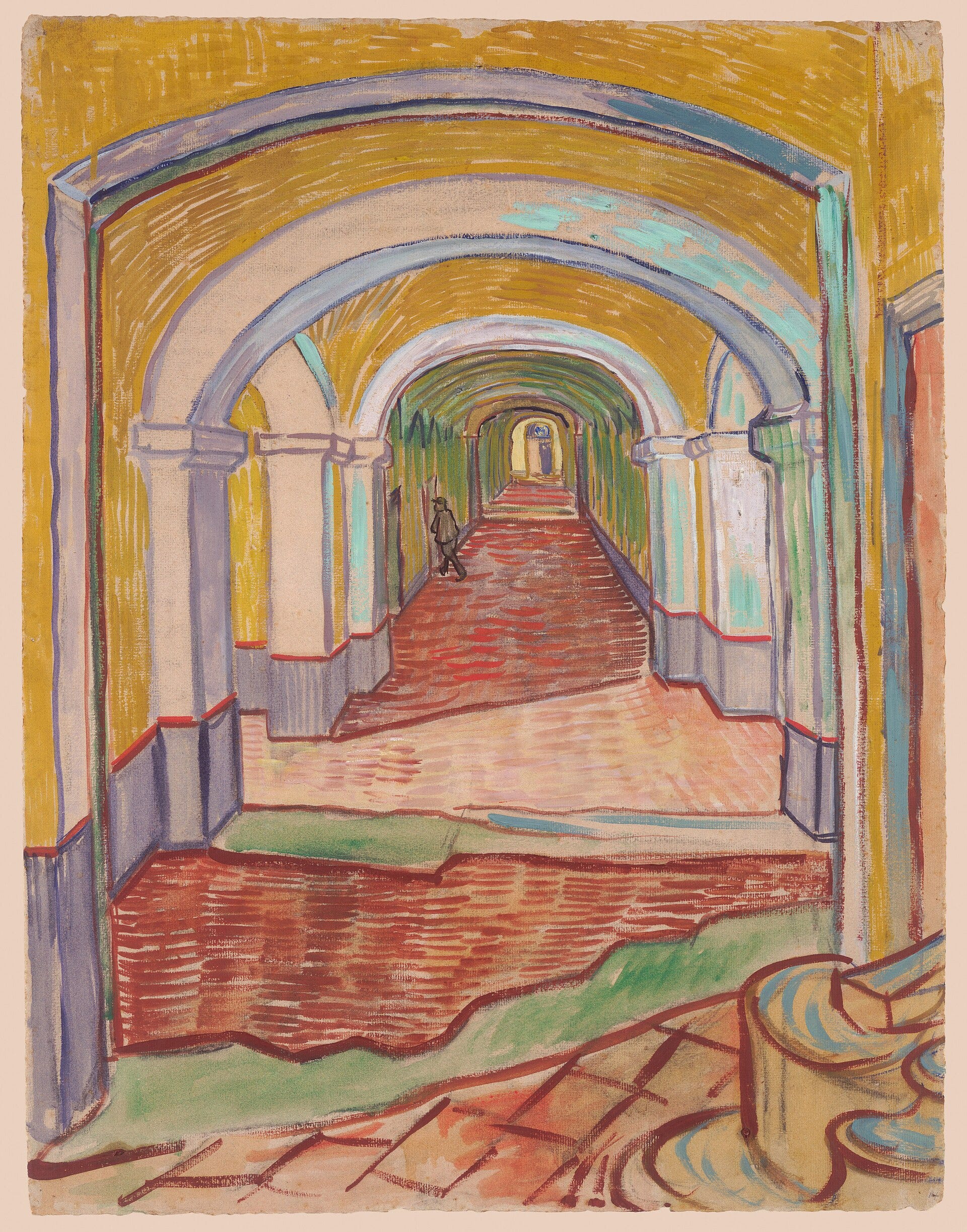
On May 8, on foot, with Pastor Salles at his side, Vincent walks through the gate of the Saint-Paul-de-Mausole asylum at Saint-Rémy. No one is forcing him.
He is led down the corridors to his room, a room with bars on the window. A second one, empty, is opened for him to paint in. He spends his first night there.
The next day, Peyron sees him. He is the fourth doctor. He examines him, talks with him, then writes out his admission certificate.
"Acute mania, with hallucinations of sight and hearing."
In the same sentence, he adds a word no certificate has carried before.
"Subject to epileptic attacks, widely spaced apart."
Vincent goes back down and writes to Theo that same day.
"The doctor here is inclined to regard what I have had as an attack of an epileptic nature."
That is all he needs to hear. Peyron, though, has tested nothing. The word epilepsy rests on no examination.
It rests on an admission from Vincent, noted in the asylum register: his aunt, his mother's sister, was epileptic, he says, and there are several cases in his family. No doctor has confirmed this family history.
Four doctors in five months. Mental alienation, a refusal to conclude, a delusion of poisoning, epilepsy. The certificate that carries the most weight hangs on a sentence spoken by the patient about the aunt.
It will take more than 130 years, and the rereading, one by one, of 902 letters, before anyone finally understands what Vincent really suffered from.