What Does Liberty Leading the People Mean?

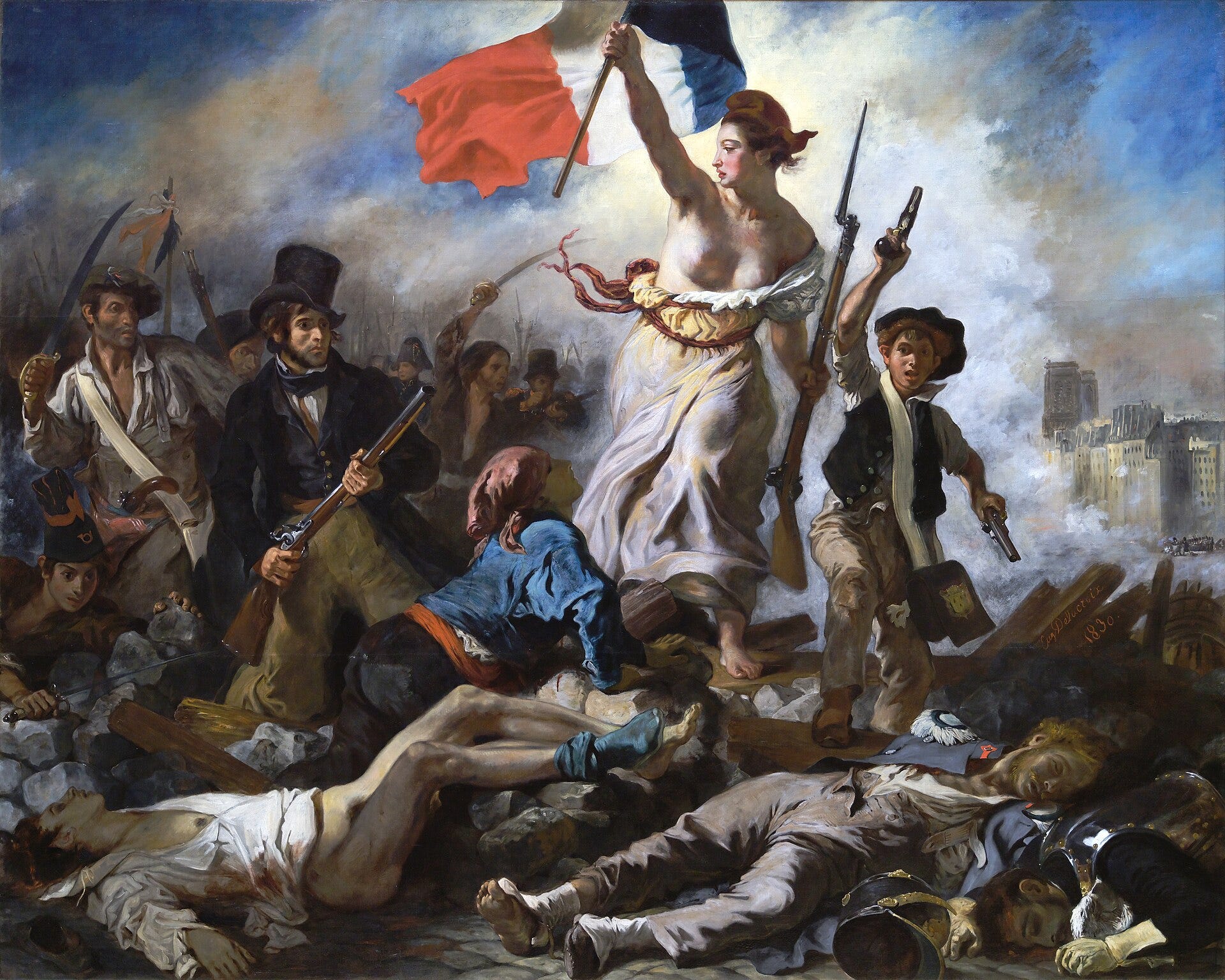
Liberty Leading the People shows Marianne, personifying the French Republic, striding over the barricades of the July Revolution of 1830, not the 1789 Revolution.

Delacroix mixed real class types, a bourgeois in a top hat, a street boy, a worker, around her, with corpses at her feet to keep the allegory grounded in fact.

People assume this painting is about 1789 because it looks like the French Revolution everyone learns about in school. It is not. Delacroix painted a later uprising, one that happened in his own lifetime, three days in the summer of 1830.

Delacroix's Liberty Leading the People showing Liberty striding over a barricade with the tricolor flag
The full painting, completed in 1830, now in the Louvre Museum in Paris.

Learn art the fun way. Free stories every week, no boring lectures.


Not the Revolution You Think

Liberty Leading the People commemorates the July Revolution of 1830, when Parisians rose against King Charles X after he suspended the constitution and rigged the press ahead of new elections.

The uprising lasted three days, remembered in France as the Trois Glorieuses. It replaced Charles X with Louis Philippe, not with a republic.

Delacroix was not painting the storming of the Bastille forty one years earlier. He was painting current events, finished within months of the fighting itself.

Confusing this scene with 1789 is the single most common mistake made about the painting, and it changes how every other detail should be read.

Who is the woman leading the charge

The bare chested woman striding at the center is not a real participant in the fighting. She is Liberty, a personification, holding the tricolor flag in one hand and a bayonet fitted musket in the other.

French audiences would have recognized her as Marianne, the figure who stands for the Republic itself. She is an idea given a body, not a portrait of anyone specific.

Her classical profile echoes ancient statues on purpose. Delacroix wanted her to read as outside time, not as a bystander caught in the crowd.

He also gave her a Phrygian cap, a headwear already tied to the fight for liberty decades before this uprising, reinforcing the reading for anyone who saw the painting in 1831.

Detail of the mixed group of fighters surrounding Liberty on the barricade
The bourgeois figure in a top hat and the boy with two pistols, part of the mixed crowd Delacroix painted around Liberty.

A Barricade of Mixed Classes

The men around Liberty come from different parts of Paris society, and Delacroix made that mix deliberate. A man in a top hat and frock coat, read by most historians as a member of the middle class, carries a hunting rifle.

Beside him fights a worker in a factory apron, and further along a boy with two pistols, often called the gamin de Paris. Students appear too, identifiable by their uniforms.

The message was that the uprising crossed class lines. Liberty leads everyone, not one faction of Parisian society.

This mixed crowd was itself a political statement in 1831, since the July Monarchy that followed the uprising quickly favored the wealthy over the workers who had helped fight for it.


More Stories on Political and Romantic Art


The Bodies at Her Feet

At the base of the painting lie two dead soldiers, one stripped of his trousers, positioned close enough that Liberty appears to be stepping over them as she advances.

Delacroix did not soften this. The corpses are rendered with the same directness as the living figures, not pushed to the edge of the frame or hidden in shadow.

That realism keeps the allegory from floating free of the actual violence. Liberty may be a symbol, but the ground she walks on is a real battlefield.

Some historians read the stripped soldier as a small, grim joke about looting after death, a detail that undercuts any purely heroic reading of the scene.

The towers of Notre Dame de Paris, visible in the background of the painting
The towers of Notre Dame, which Delacroix placed in the smoke to set the scene in a specific Paris neighborhood.

Notre Dame in the Smoke

In the background, through gunsmoke, the towers of Notre Dame de Paris are visible with a small tricolor flag flying from one of them.

The detail anchors the scene in an identifiable Paris, not a generic battlefield. Viewers in 1831 could place exactly where this fighting happened.

It also links the uprising to the city itself, not just to an abstract cause floating above any particular street.

The smoke obscuring most of the skyline besides those two towers keeps the focus on the foreground figures rather than turning the background into a postcard view of Paris.

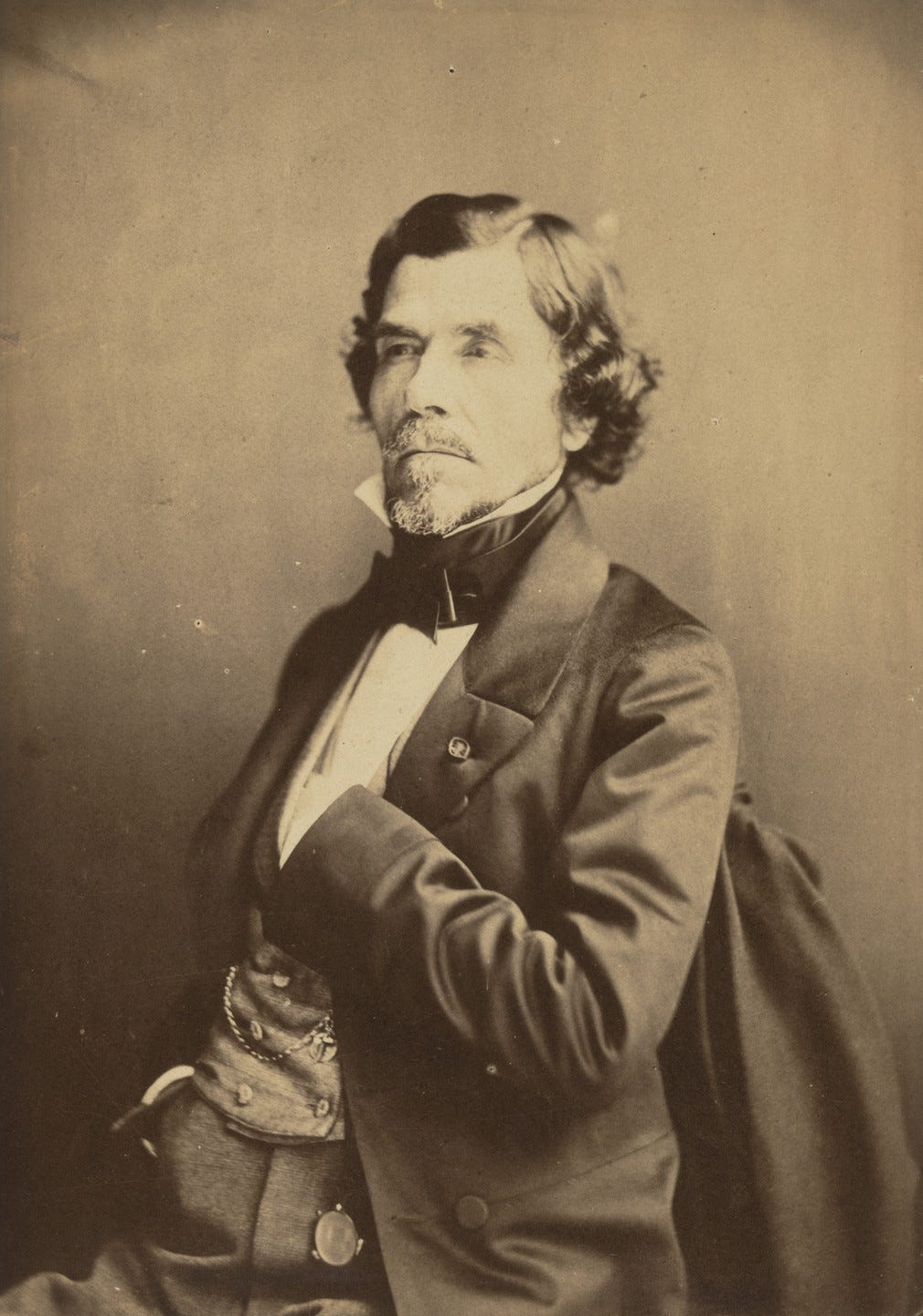
Self portrait of Eugene Delacroix
Eugene Delacroix, who supported the 1830 uprising and said he painted for his country instead of fighting.

Cool Stories About Art is a free newsletter. The stories behind the paintings, straight to your inbox.


Delacroix Was Not a Bystander

Delacroix did not fight on the barricades himself, based on his own letters, though he clearly supported the uprising's aims.

He reportedly said his disappointment at not fighting for his country pushed him to paint for it instead, treating the canvas as his form of participation.

He is sometimes claimed to have included a self portrait among the fighters, in the top hatted man, though this remains debated rather than confirmed by documentation.

Why the Government Nearly Hid It

The French state bought the painting in 1831, then kept it largely out of public view for years because its message read as too dangerous for whoever held power at the time.

It moved in and out of storage across the following decades, depending on the political climate in France at any given moment.

It only settled permanently at the Louvre later in the nineteenth century, once its content stopped feeling like an active threat to the government of the day.

Myths worth dropping

This is not a painting of 1789, and it does not depict the storming of the Bastille or any other event from that earlier era.

Liberty is not a real historical participant with a name and a biography. She is an allegorical figure, standing for an idea rather than a documented person.

And the scene is not fully invented either. The barricade, the mixed crowd, the corpses, all reflect real details of the July fighting Delacroix would have heard about firsthand in Paris.


A few more stories for you


Liberty Leading the People Frequently Asked Questions

  • What historical event does Liberty Leading the People depict?
    The July Revolution of 1830 in France, a three day uprising, not the French Revolution of 1789.

  • Who is the woman in Liberty Leading the People?
    She is Liberty, an allegorical figure representing the French Republic, often identified with the character Marianne.

  • Is Liberty Leading the People based on a real person?
    No. Liberty is a personification, not a portrait of an actual participant standing on the barricade that day.

  • Why are there dead bodies in the painting?
    Delacroix included corpses at the base of the barricade to keep the allegory tied to the real violence of the July Revolution.

  • What does the flag in the background of the painting mean?
    It shows a tricolor flying from the towers of Notre Dame, placing the uprising in an identifiable part of Paris.

  • Did Delacroix fight in the uprising he painted?
    No firsthand evidence shows he fought on the barricades, though he supported the cause and said he chose to paint for his country instead.

  • Where is Liberty Leading the People displayed today?
    It hangs in the Louvre Museum in Paris, after decades of moving in and out of storage.

  • Why did the French government hide the painting for years?
    Because its message about overthrowing a king felt politically risky under later governments, it spent long stretches in storage before settling permanently at the Louvre.


Join 170,000 readers learning art the fun way. Free stories every week, no boring lectures.