What Does The Hay Wain Mean?

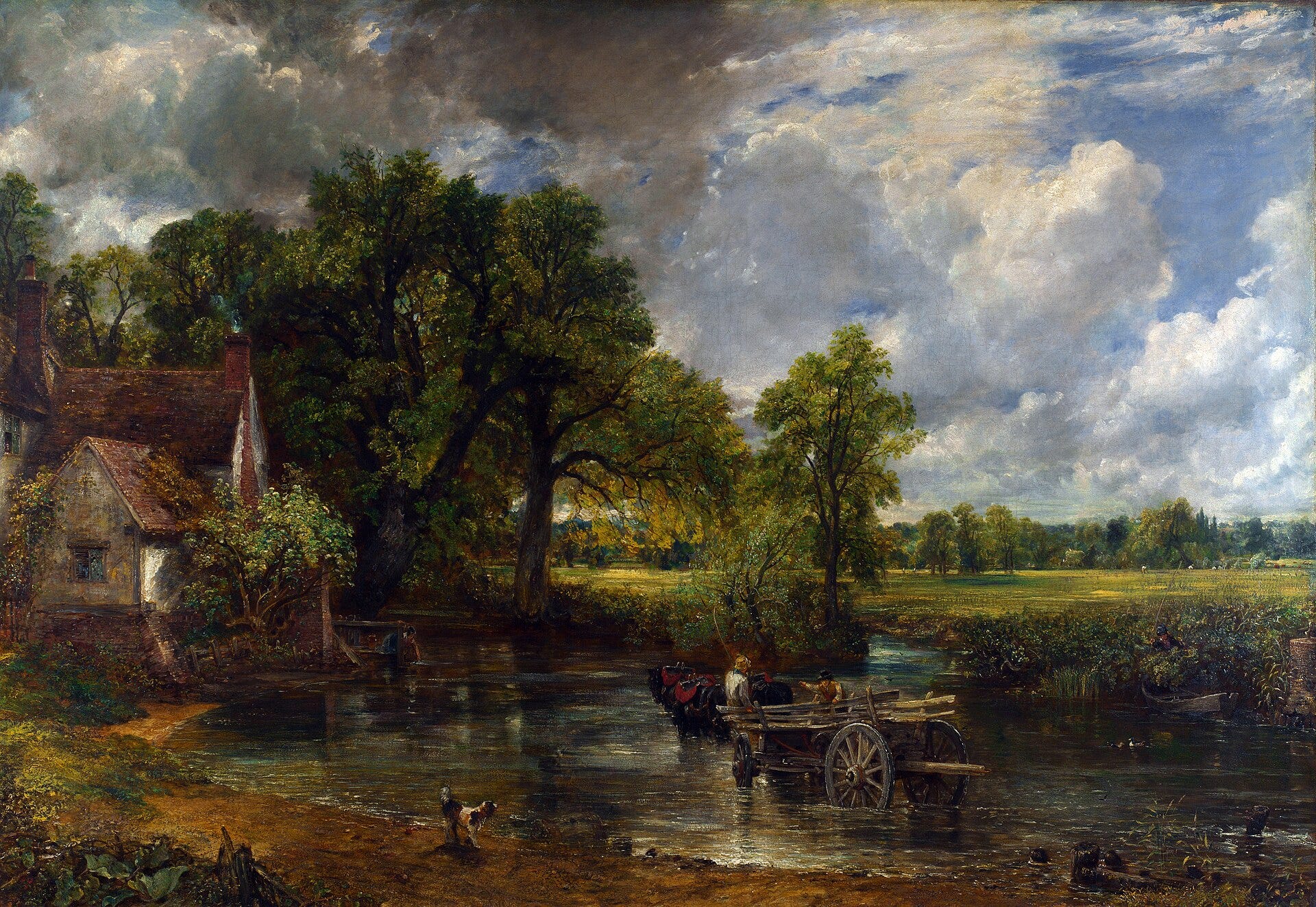
The Hay Wain shows a peaceful scene on the River Stour, with Willy Lott's cottage on the left and a wagon crossing shallow water. John Constable painted an idealized, nostalgic version of the English countryside.

Largely ignored in Britain, it became a sensation at the 1824 Paris Salon and influenced French Romantic painters.

It is strange that a scene this calm caused this much noise. Nobody in England cared much when Constable painted it. Then Paris saw it in 1824 and could not stop talking about it. Delacroix went back to his studio and changed how he used color because of what he saw in this quiet cart crossing a river.

A wooden hay wagon crossing a shallow river beside a thatched cottage in the English countryside
The full painting, shown at the Paris Salon of 1824 where it won a gold medal.

Learn art the fun way. Free stories every week, no boring lectures.


A Quiet Crossing

The painting shows a wooden hay wagon pulled by two horses, crossing a shallow stretch of the River Stour.

A thatched cottage sits at the water's edge on the left, with open fields and trees stretching into the distance behind it.

Almost nothing happens in the scene. That stillness, rather than any dramatic event, is the entire point of the composition.

Close view of Willy Lott's thatched cottage beside the River Stour in The Hay Wain
Willy Lott's cottage, which still stands near Flatford Mill today.

Willy Lott's Real Cottage

The cottage on the left belonged to Willy Lott, a farmer who lived in it for most of his adult life.

Constable knew the building well. It stood close to his father's mill in East Bergholt, Suffolk, on land the painter grew up around.

The cottage still stands today near Flatford Mill, managed by the National Trust and largely unchanged from how Constable painted it.

An Idealized Countryside

Constable was not documenting the countryside exactly as it stood in 1821.

Rural England at the time was going through enclosure, mechanization, and real hardship for agricultural workers, including unrest that would later erupt into riots.

The painting leaves all of that out. It offers a settled, nostalgic version of rural life rather than a record of the pressures actually affecting it.

Even the wagon crossing the water is a minor detail, described by some historians as barely more than a pretext for painting the landscape itself.


More Stories Like The Hay Wain


Ignored at Home

When first shown in London in 1821, the painting did not sell and drew little excitement from critics or buyers.

English taste at the time favored history painting and portraiture over quiet rural landscapes without a dramatic subject.

Constable kept working in the same style anyway, largely without the recognition in England that the painting would eventually earn abroad.

A Sensation in Paris

In 1824, the painting was shown at the Paris Salon alongside other works by Constable and won a gold medal, awarded on behalf of Charles X.

French audiences and painters had not seen landscape handled quite this way, with visible brushwork and close attention to shifting light and weather.

The reaction in Paris was far stronger and faster than anything the painting had received back in England.

Portrait of the English landscape painter John Constable
John Constable, whose loose brushwork impressed French painters more than English ones.

Cool Stories About Art is a free newsletter. The stories behind the paintings, straight to your inbox.


Delacroix Takes Notice

Eugene Delacroix saw Constable's paintings at the Salon and returned to view them more than once before they closed.

He went back to his own studio and reworked his painting Massacre at Chios, adding broken touches of color influenced by what he had studied.

That visit helped push French Romantic painting toward looser brushwork and closer observation of natural light.

Some art historians consider this one of the clearest documented cases of one painter's brushwork directly changing another's technique.

Flecks of light on the water surface in The Hay Wain, an example of Constable's loose brushwork
The small white flecks of paint, later nicknamed Constable's snow, used to catch shifting light.

Constable's Technique

Constable worked from oil sketches made outdoors, then built the finished, larger canvas back in his London studio.

He used small flecks of white paint, later nicknamed Constable's snow, to catch the flicker of light on water, leaves, and wet ground.

That loose technique looked unfinished to some English critics at the time, but it is exactly what French painters found compelling.

Why the Title Is Easy to Misread

The word wain simply means a farm cart, so the title only describes a wagon used to carry hay.

Some readers expect a grand historical subject given the painting's fame, but the title is intentionally plain and functional.

That plainness matches Constable's approach. He wanted the landscape itself to carry the painting, not a dramatic or symbolic title.


Keep exploring Cool Stories About Art


Questions About The Hay Wain

  • What does The Hay Wain mean?
    It shows an idealized, nostalgic scene of English rural life on the River Stour, built more around mood and memory than a specific historical event or story.

  • Who owned the cottage in The Hay Wain?
    Willy Lott, a farmer who lived in it for most of his life. The cottage still stands near Flatford Mill in Suffolk.

  • Why was The Hay Wain ignored in England at first?
    English taste in the early 1820s favored history painting and portraiture. Quiet rural landscapes without a dramatic subject drew little attention or sales.

  • Why did The Hay Wain succeed in Paris?
    It was shown at the 1824 Paris Salon, where its visible brushwork and attention to natural light impressed French audiences and painters, earning a gold medal.

  • Did The Hay Wain influence Delacroix?
    Yes. Delacroix studied it at the Salon and reworked his own painting Massacre at Chios afterward, adding broken touches of color influenced by what he saw.

  • What does the word wain mean?
    Wain is an old word for a farm cart. A hay wain is simply a wagon built to carry hay.

  • Where is The Hay Wain today?
    It hangs in the National Gallery in London, where it has been since 1886.

  • Is The Hay Wain a realistic depiction of rural England?
    Not entirely. It leaves out the enclosure, mechanization, and hardship affecting rural workers at the time, offering a calmer version of the countryside instead.


Join 170,000 readers learning art the fun way. Free stories every week, no boring lectures.