What Does The Kiss by Klimt Mean? Full Guide

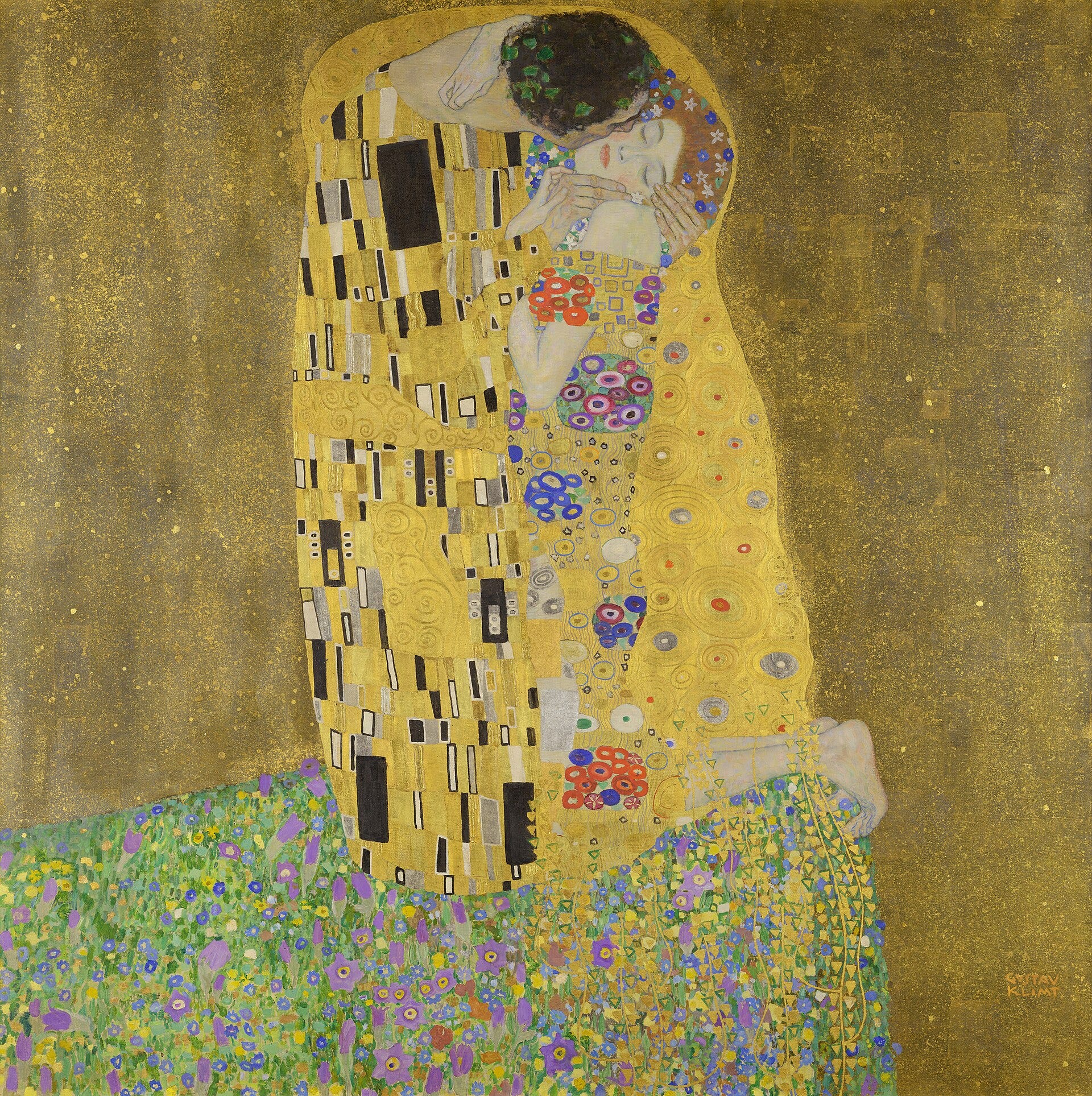
The Kiss shows love as fusion and risk at once. Klimt built the man from rectangles, the woman from circles, then wrapped both in gold borrowed from Byzantine mosaics. He set them on the edge of a flowered cliff.

The gold signals transcendence. The cliff edge signals the danger inside real intimacy.

Most captions call this painting romantic and stop there, which undersells it. Look at the man's block pattern against the woman's circles and it reads less like harmony and more like two different vocabularies forced into the same frame. That tension, not the gold, is what makes the embrace feel earned instead of decorative.

The Kiss by Gustav Klimt, 1908, oil and gold leaf on canvas
The Kiss, Gustav Klimt, 1908, oil and gold leaf on canvas, Belvedere, Vienna.

Learn art the fun way. Free stories every week, no boring lectures.


What The Kiss Actually Shows

A man and a woman kneel together on a bed of flowers, both wrapped inside a single sheet of gold. His face turns toward hers, his hand cradling her jaw.

Her face turns away from his. Her eyes are closed. This is not a mutual gaze between equals, it is one person leaning in and another giving way to it.

Klimt painted the scene in 1908, at the height of the Vienna Secession, and gave it the plainest title possible: The Kiss. He never named the two people in it.

The painting is nearly square, about 180 by 180 centimeters, oil and gold leaf on canvas. That format was unusual for a romantic subject at the time, closer to the proportions used for religious icons.

Byzantine gold mosaic inside the Basilica of San Vitale in Ravenna
Byzantine mosaics inside the Basilica of San Vitale in Ravenna, the gold technique Klimt studied in 1903.

Where The Gold Comes From

In 1903, Klimt traveled to Ravenna and stood inside the Basilica of San Vitale, where Byzantine mosaics cover the walls in gold leaf and flat, stylized figures.

He brought that visual language home to Vienna and applied it to a subject the mosaics never touched: two ordinary bodies locked in a private embrace.

The gold does real work here. It borrows the authority that Byzantine art gave to saints and emperors, then hands that same authority to a couple kissing on a hillside.

Klimt used real gold leaf, not paint mixed to look gold, hammered thin and applied directly to the canvas alongside the oil paint.

Detail of the robe patterns in The Kiss, rectangles on the man's side and circles on the woman's side
Detail of The Kiss showing the split pattern: rectangles on his side, circles on hers.

Rectangles For Him, Circles For Her

Look at the robe covering both bodies and it splits into two separate patterns. His half is built from dark rectangles and straight vertical bands, stacked like armor.

Her half is built from circles, ovals, and rounded floral shapes in softer color. The two vocabularies never blend into each other.

Historians read this as Klimt encoding masculine and feminine as distinct visual languages, then fusing the two bodies into one golden shape while keeping their patterns separate. Union without erasing difference.


Where To Go Next With Klimt


The Cliff Edge Nobody Mentions

The couple kneels at the very edge of a flowered outcrop above a dark drop. Her toes curl over the line where the grass ends and empty space starts.

Most short explanations of this painting skip straight to the gold and the tenderness. The placement of the ledge gets left out.

It should not be. A fall is one shift of balance away. Klimt paints total closeness and physical risk in the same few inches of canvas, and the risk is what keeps the image from turning into pure decoration.

The flowers scattered across the ledge read as alpine blooms, the kind found in mountain meadows rather than formal gardens. That detail reinforces the sense that the couple exists outside any specific, mapped location.

Love, Sex, and Something Beyond Both

The painting works on three levels without contradicting itself. It reads as romantic love in the tenderness of the hand against her cheek.

It reads as sex in the pose, the closeness of the two bodies pressed under one covering, her body arched into his.

It also reads as transcendence, because the gold removes the scene from any specific bedroom or hillside and lifts it toward something closer to a religious icon than a genre painting.


Cool Stories About Art is a free newsletter. The stories behind the paintings, straight to your inbox.


Vienna in 1908: Why This Painting Happened

Klimt showed The Kiss at the Kunstschau of 1908, an exhibition he organized after leading a breakaway from Vienna's official art establishment a decade earlier.

The city was wealthy, secular, and openly hungry for art that broke from the stiff, formal portraiture of the previous generation.

The Austrian state bought the painting directly from that exhibition, before it even closed. That kind of institutional purchase was rare for work this experimental in 1908.

Art historians now call this stretch of Klimt's career his Golden Phase, running roughly from 1899 to 1910, with The Kiss as its best known result.

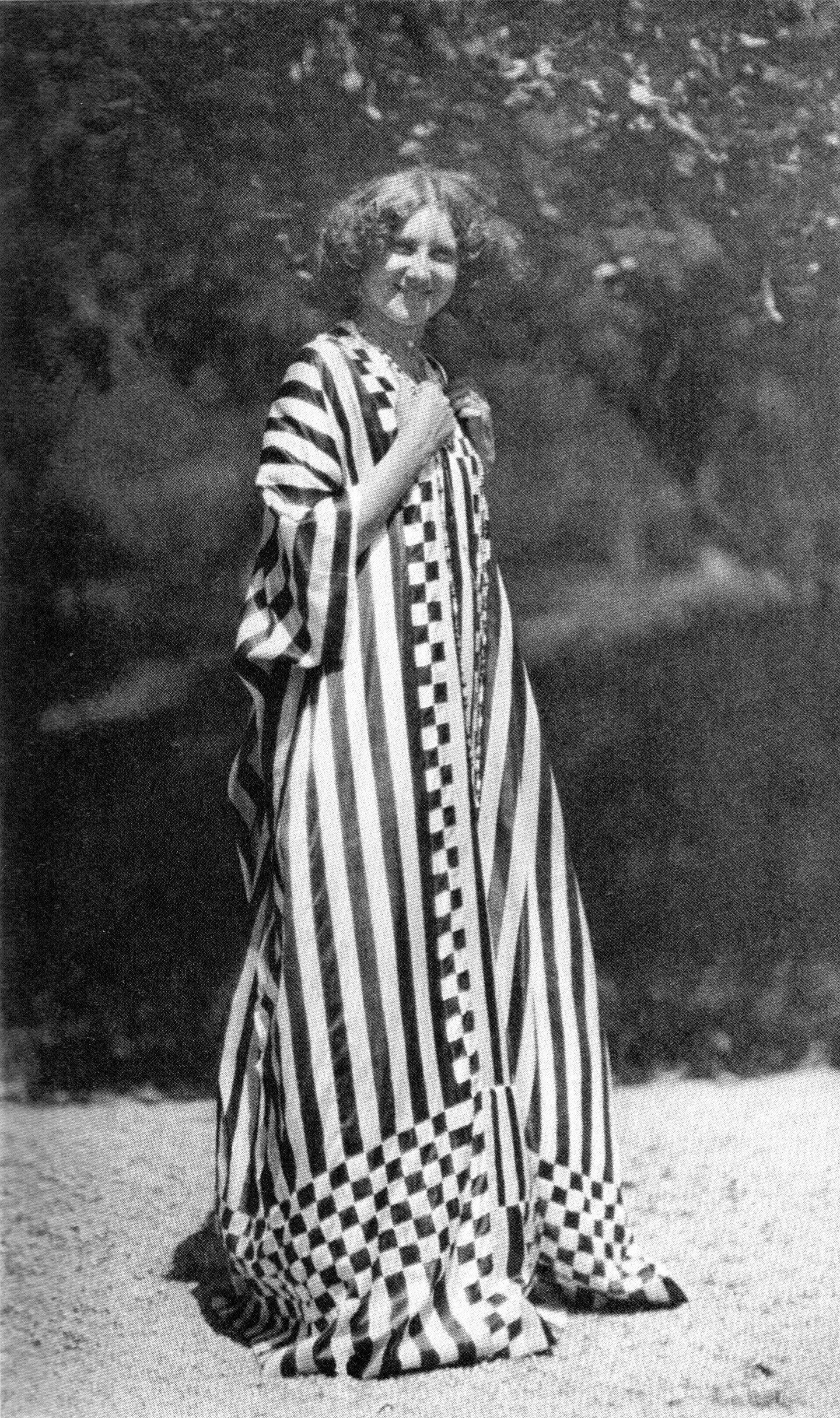
Portrait of Emilie Floge by Gustav Klimt, 1902
Portrait of Emilie Floge, painted by Klimt in 1902, often cited in the theory that she modeled for The Kiss.

Who Are the Two Lovers

Klimt never identified the couple in writing, and no letter or contract names them either.

The most repeated theory names Emilie Floge, Klimt's longtime companion and a fashion designer in her own right, as the model for the woman, based on facial similarities to other portraits he made of her.

Treat that theory as the popular guess it is, not a documented fact. Nothing in the historical record settles it either way.

What Critics Got Wrong

Early Viennese critics dismissed The Kiss as decorative, all surface and no depth, a complaint that followed Klimt through most of his gold period.

That reading misses what is actually built into the composition: the closed eyes, the one sided gaze, the curled toes at the edge of a drop.

The painting is not simply pretty. It stages the exact point where affection tips into total dependence on another person, and it does that with geometry, not sentiment.

That gap between decoration and depth still frames how the painting gets discussed today, more than a century after it was finished.


More from the collection


Common Questions About The Kiss's Meaning

  • What does The Kiss by Klimt symbolize?
    Union and risk together. The gold and the merged bodies symbolize transcendence, while the cliff edge beneath the couple symbolizes the danger inside total intimacy.

  • Why is The Kiss covered in gold?
    Klimt copied the technique from Byzantine mosaics he saw in Ravenna in 1903, using gold leaf to lift a private, physical moment into something closer to sacred art.

  • Who are the two people in The Kiss?
    Klimt never named them. The most common guess identifies the woman as Emilie Floge, his longtime companion, but no document confirms it.

  • What is the real title of The Kiss?
    The Kiss is the actual title Klimt gave the painting in 1908. It has no alternate or hidden name.

  • Where is The Kiss located today?
    The Belvedere museum in Vienna, Austria, which bought the painting directly from the 1908 exhibition where it debuted.

  • What do the rectangles and circles in The Kiss mean?
    The man's robe is built from rectangles, the woman's from circles. Historians read the split as masculine and feminine visual language fused into one shape.

  • Is The Kiss about love or something darker?
    Both. The tenderness is real, but the couple kneels at the edge of a cliff, which most descriptions leave out entirely.

  • When did Klimt paint The Kiss?
    In 1908, during the Vienna Secession, and the state bought it the same year.


Join 170,000 readers learning art the fun way. Free stories every week, no boring lectures.