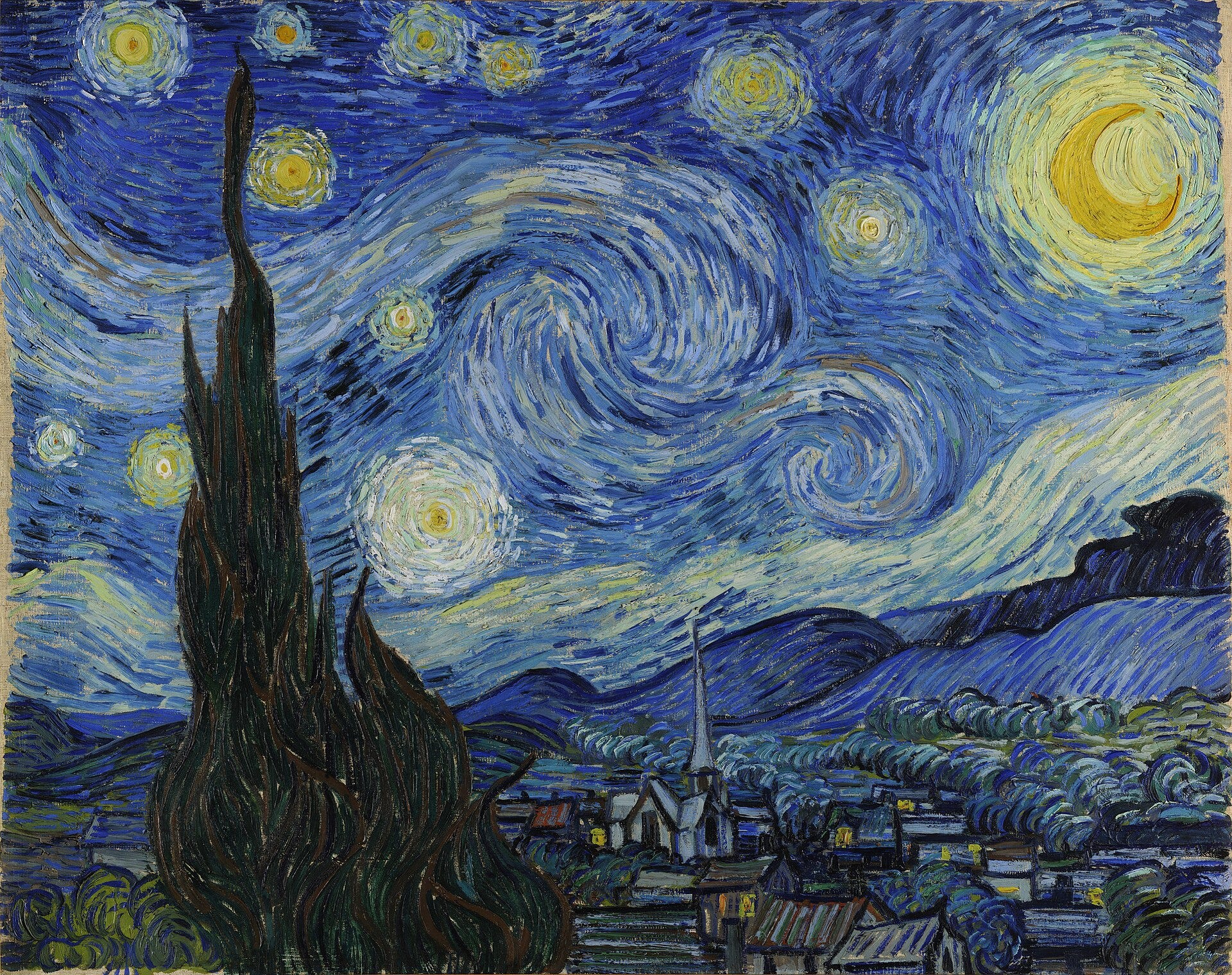
The Starry Night is Vincent van Gogh's June 1889 view of the night sky over an invented village, painted from the asylum at Saint Remy de Provence. Van Gogh combined a real sky with a village he made up from memory.
He privately called the finished painting a failure in a letter to his brother Theo.
My honest reaction to The Starry Night is that its reputation as van Gogh's greatest triumph sits oddly next to what he actually thought of it. He called it a failure to Theo and left it out of a shipment of paintings he considered worth the postage. I do not think that verdict should be dismissed as depression talking. Van Gogh knew his own work, and he clearly valued restraint over spectacle, which is exactly what this canvas does not offer. The myth worth correcting is that the painting is a faithful record of a real view from his window. It is not. The sky may be real, but the village is invented, which makes the whole thing closer to a dream built on top of an observation than a landscape at all.
What you are actually looking at
The Starry Night is Vincent van Gogh's June 1889 view of a swirling night sky over a sleeping village, painted in thick, visible strokes of blue, yellow and white.
A dark cypress tree rises on the left, tall enough to connect the ground to the sky, framed against eleven stars and a bright crescent moon wrapped in its own halo.
Below, a small village sits under the hills, its windows lit, a church spire pushing up higher than anything else in the town.
The sky takes up most of the canvas and does most of the work, with the village reduced to a calm, almost silent band underneath it.
Painted From an Asylum Window
Vincent van Gogh admitted himself to the Saint Paul de Mausole asylum in Saint Remy de Provence in May 1889, months after he injured his own ear during a breakdown in Arles.
Doctors allowed him a small bedroom with bars on the window and, eventually, a studio space to keep painting inside the grounds.
The Starry Night came from that period of forced stillness, painted from memory and observation combined rather than in front of the actual view, as van Gogh usually preferred to work.
The View Was Real, the Village Was Not
Van Gogh's window faced east, and he wrote to Theo about watching the morning star from it before sunrise, which is very likely the bright light near the crescent moon in the finished painting.
The hills and the general shape of the landscape came from that real view outside his room.
The village underneath, though, did not exist where he placed it. It is not visible from his window at Saint Paul de Mausole, and he built it from memory and imagination rather than from anything he could actually see that night.
So the painting mixes a real sky he was watching with a village he invented to sit underneath it, which is a very different process than simply painting what was in front of him.
More Van Gogh, More Secrets
Where the Church Came From
The church spire in the village does not match the architecture of Provence, where roofs and towers look different from northern Europe.
Its shape is closer to the churches van Gogh grew up around in the Netherlands, in towns like Zundert and Nuenen, suggesting he pulled it from childhood memory rather than from anything near Saint Remy.
A painting often described as a document of what van Gogh saw from his window is, in its most prominent building, a memory of a country he had left years earlier.
The Cypress and the Stars
Van Gogh painted cypress trees repeatedly during his time in Provence, and in Mediterranean tradition they were strongly associated with cemeteries, death and mourning.
He also wrote to Theo, more than once, about looking at the stars and wondering whether death might work like a train journey to reach one of them.
Those two details together, the cypress reaching toward the sky and the letters about stars and dying, are why so many readings of the painting land on themes of mortality rather than simple night sky beauty.
Van Gogh Called It a Failure
Most people assume van Gogh loved this painting, since it is now the most famous thing he ever made. His own letters say otherwise.
Writing to Theo, he described reaching for stars that were too big as another failure, and said he had had his fill of that kind of overreaching.
He was comparing The Starry Night unfavorably to his daytime studies of wheat fields and orchards, which he considered more honest and less overworked.
Why He Almost Left It Behind
When van Gogh bundled paintings to send to Theo in Paris to save on shipping costs, The Starry Night was one of the works he left out of the parcel.
He rated it below several other canvases from the same period, including the cafe terrace scenes he painted the year before, treating it as a lesser experiment rather than a centerpiece of his output.
That decision, made by the one person whose opinion should carry the most weight, is the opposite of how the painting has been treated ever since.
How the Public Reversed His Verdict
The Starry Night stayed in relative obscurity for the decades following the last day of Vincent van Gogh's life in 1890, passing through several private collections in Europe.
It reached New York in the 1930s and entered the Museum of Modern Art's collection in 1941, where it became one of the most reproduced images in the history of art.
None of that popularity changes what van Gogh wrote about it at the time. It just means the public's verdict ended up running in the opposite direction from his own.
Where it hangs now
The Starry Night has hung at the Museum of Modern Art in New York since 1941 and is part of its permanent collection.
It remains one of the most visited single paintings in the museum, usually shown alongside other works from van Gogh's final years.
More art, more stories
Frequently Asked Questions About The Starry Night
What does The Starry Night mean?
It is generally read as van Gogh's meditation on night, mortality and the sky, built around a cypress tree linked to death and stars he associated in his letters with dying. He painted it from the asylum at Saint Remy de Provence in June 1889.Is the village in The Starry Night a real place?
No. The hills and sky came from the real view outside van Gogh's asylum window, but the village underneath was invented from memory rather than copied from anything visible that night.Did van Gogh actually like The Starry Night?
No. In a letter to his brother Theo, he called it a failure, saying he had reached for stars that were too big, and he left it out of a bundle of paintings he sent to Theo soon after.Why does the church in the painting look Dutch instead of Provencal?
Its spire resembles churches from van Gogh's childhood in the Netherlands rather than the local architecture around Saint Remy, suggesting he painted it from memory rather than from the view in front of him.What does the cypress tree represent in The Starry Night?
In the Mediterranean tradition van Gogh was painting within, cypress trees were closely associated with cemeteries and mourning, which fits the letters he was writing at the time about stars and death.Where was The Starry Night painted?
Van Gogh painted it in June 1889 at the Saint Paul de Mausole asylum in Saint Remy de Provence, where he had admitted himself after a breakdown in Arles.When did The Starry Night become famous?
It stayed in relative obscurity for decades after van Gogh's death in 1890 before reaching the Museum of Modern Art in New York in 1941, where it became one of the most reproduced paintings in the world.Where can you see The Starry Night today?
The Starry Night is part of the permanent collection of the Museum of Modern Art in New York, where it has hung since 1941.