
Craquelure is the network of fine cracks that covers the surface of an old painting. It runs through the varnish and the paint, and often through the preparation beneath them. No painter puts it there. It forms on its own as the materials of a picture dry, shrink and age, and it is so hard to imitate that experts read it to tell an old master from a fake.
The word is French. It comes from the verb craqueler, which means to crack or to crackle, and English borrowed it without translating it. In painting, it names cracks that no artist planned.
Cool Stories About Art is a newsletter to learn art the fun way.
Join 200,000+ readers and get:
10 new art stories / month
The entire archive of content (1,000+ articles)
Comment, ask questions, and chat with other readers
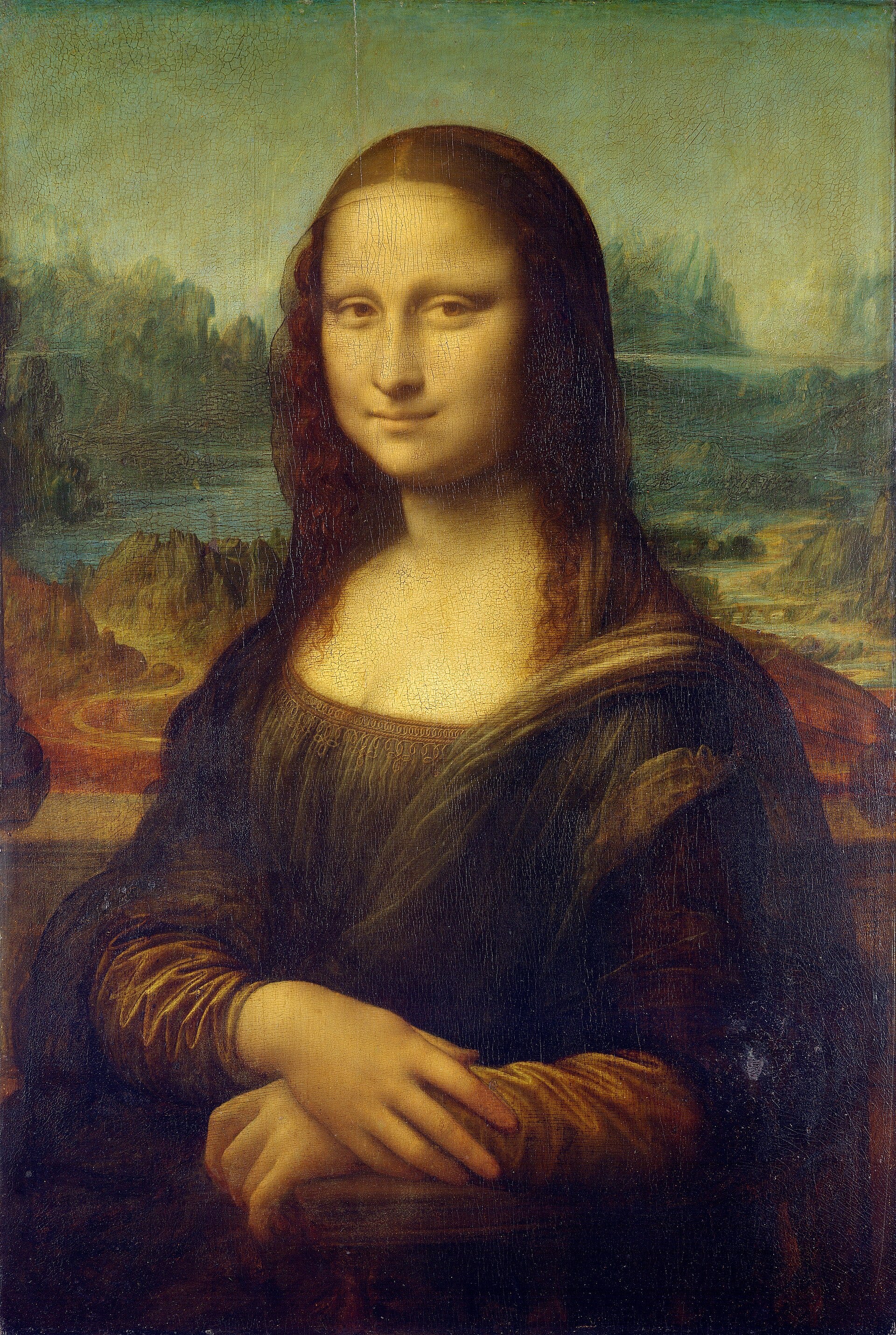
The best-known example hangs in the Louvre. Seen up close, the smooth skin of the Mona Lisa breaks into fine lines. Some run vertically, others cut diagonally across the four corners. Leonardo painted none of them. Each one records something that has happened to the picture since he worked on it.
On the Mona Lisa, much of that network starts in the wood that carries the paint. The picture is painted on a thin poplar panel, and over roughly five hundred years the panel has bowed. Changes in humidity and temperature gave it a slight convex curve, and a split about eleven centimeters long opened in it.
The vertical cracks are linked to that curve and to the split. The fine diagonal cracks in the corners have another cause, the pressure of the frame. Read together, these lines record five centuries of the painting's life, and that record is exactly what a forger has to imitate.
A painting is a stack of layers
Craquelure starts with the way a painting is built. At the bottom lies the support, a wooden panel or a canvas stretched on a frame. On top of it the painter lays a ground, often gesso, a smooth white preparation. Then come the layers of paint, sometimes with an earlier version hidden underneath, a pentimento, and last the varnish that protects them.
Each of these layers reacts to time in its own way. Wood swells and shrinks with the humidity of the air, canvas slackens and tightens, and oil paint keeps hardening for years until it turns brittle. When one layer moves and the layer above it can no longer follow, the surface splits. Some of those movements begin within days of painting, while the paint is still setting.
What You'll Discover
The tar-like paint that never dries.
How crack patterns hint at a painting's origin.
The forger betrayed by his own cracks.
Why a cracked painting is usually a healthy one.