
Dada was an anti art movement launched in Zurich in February 1916 by artists who had fled the First World War, and it attacked the idea that art needed to be beautiful, skilled, handmade or serious at all.
Nonsense was the argument. If reason had produced the trenches, then reason had nothing left to teach anybody.
Here is the part most people get wrong. Dada was not a prank movement made by bored young men with time on their hands.
It was made largely by deserters, draft dodgers and exiles sitting out the war in neutral Switzerland while a generation was fed into the mud a few hundred kilometres north.
The joke had a target. They wanted the culture that had cheered the war to look exactly as ridiculous as it had turned out to be.
Dada in one minute:
The idea: art that mocks art, built from junk, chance and nonsense.
The birth: Zurich, February 1916, in a small nightclub called the Cabaret Voltaire.
The methods: readymade objects, photomontage, collage, sound poems, cut up text.
The names: Marcel Duchamp, Hannah Hoch, Hans Arp, Man Ray, Francis Picabia, Kurt Schwitters, Raoul Hausmann, Tristan Tzara.
The end: Paris, 1923, when the group tore itself apart and Surrealism grew out of the wreckage.
Learn art the fun way


Where the word Dada came from, and why nobody agrees
There are at least three origin stories, and the people who were in the room told different versions of them for the rest of their lives.
Richard Huelsenbeck said the word was found by stabbing a paper knife into a German French dictionary and taking whatever it landed on.
Hugo Ball noted in his diary that dada means yes yes in Romanian, the language Tristan Tzara and Marcel Janco grew up speaking, and hobby horse in French.
The disagreement is the point. A movement built on chance was never going to produce a tidy founding document.
Zurich 1916: a nightclub that lasted five months
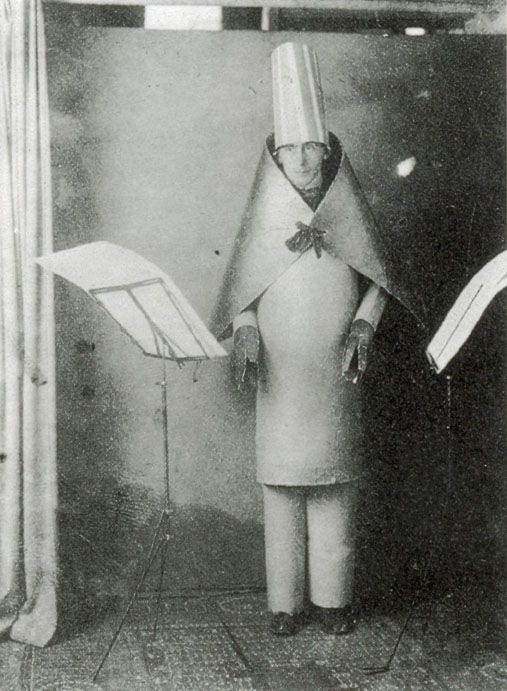
On February 5, 1916, the German poet Hugo Ball and the singer Emmy Hennings opened the Cabaret Voltaire in a back room at Spiegelgasse 1 in Zurich.
Tzara, Janco and Hans Arp turned up in the first days. Within weeks the room was staging poems read aloud in three languages at once, masked dances, and shouting matches with the audience.
In June 1916 Ball had himself carried onto the stage inside a cardboard costume he could not walk in, and recited Karawane, a poem made entirely of invented sounds.
The cabaret shut that summer. It had run for roughly five months, a short life for the birthplace of a movement people are still arguing about a century later.
One detail that keeps getting stretched: Lenin moved into Spiegelgasse 14 on February 21, 1916, about a hundred metres up the same alley. You will often read that he lived directly opposite the Cabaret Voltaire. He did not, and there is no evidence he ever walked in.
The five things Dada artists actually made
Dada had no house style, no shared palette and no manifesto that everybody signed. What it had was a set of methods, and those methods are still in daily use.
Readymades. An ordinary manufactured object, signed and shown as art. Duchamp bought a bottle rack in 1914 and never looked back, and his full story is here: Marcel Duchamp.
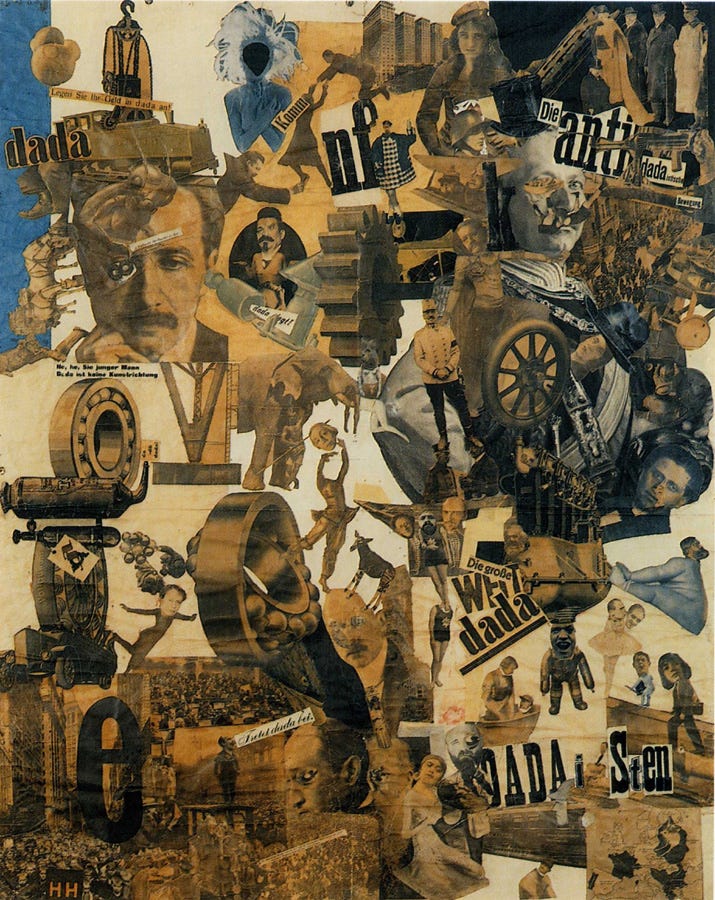
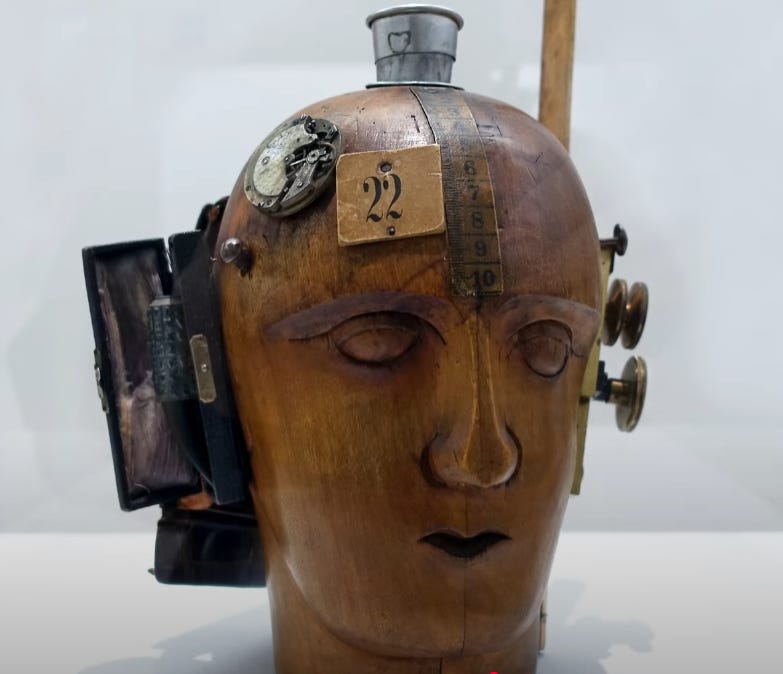
Photomontage. Photographs cut out of magazines and reassembled into scenes that never happened. Hannah Hoch and Raoul Hausmann pushed it furthest in Berlin.
Merz. Kurt Schwitters had his own word for pictures built from tram tickets, wire, buttons and whatever the street had dropped.
Sound poetry. Verse with the meaning taken out, performed for rhythm and noise alone.
Cut up text. Tristan Tzara published the recipe in 1920: cut a newspaper article into single words, shake them in a bag, copy them out in the order they come.
Berlin, Cologne and New York: three Dadas that barely got along
Zurich Dada was playful. Berlin Dada was furious.
The Berlin group worked in a city with street fighting and food queues, and their photomontages named generals and politicians on the page. Hannah Hoch was the only woman in that circle, and her Cut with the Kitchen Knife hung in a prime spot at the First International Dada Fair in 1920.
In Cologne, Max Ernst and Johannes Baargeld staged a show in April 1920 in a brewery courtyard that visitors could only reach by walking through the public men's toilet. An axe was left out so the audience could destroy one of Ernst's sculptures. They used it.
New York Dada ran in parallel and mostly ignored the label, gathering around Duchamp, Picabia, Man Ray and the collector Walter Arensberg from about 1915. The tidy version in which Dada starts in Zurich and radiates outward skips the fact that New York was already at it before the word existed.
How Dada ended, and what walked out of the room
Dada finished itself off in Paris.
By 1922 the Paris group had split between Tzara, who wanted the noise to carry on, and the writer Andre Breton, who wanted a programme. At an evening in July 1923 the argument moved onto the stage and turned physical.
Breton published his Surrealist Manifesto the following year and took most of the artists with him. The dream replaced the joke, and the movement that came out of the fight has its own guide here: Surrealism.
Dada lasted about seven years. Its methods outlived it by a century: collage, sampling, found objects, the readymade, and every gallery piece since that dares you to say it does not count. At the same moment, abstract art was heading the opposite way, toward pure form rather than pure refusal, and Cubism had already handed both of them the broken picture surface they worked on.
What people ask me about Dada
What is Dada in simple terms? An art movement started in 1916 that used nonsense, junk and ordinary objects to attack the idea of art itself.
What is the difference between Dada and Dadaism? Nothing. Dadaism is the same movement with an ism bolted on. The artists themselves mostly just said Dada.
Who founded Dada? Hugo Ball and Emmy Hennings opened the Cabaret Voltaire in Zurich in February 1916. Tristan Tzara became its loudest promoter and took it to Paris.
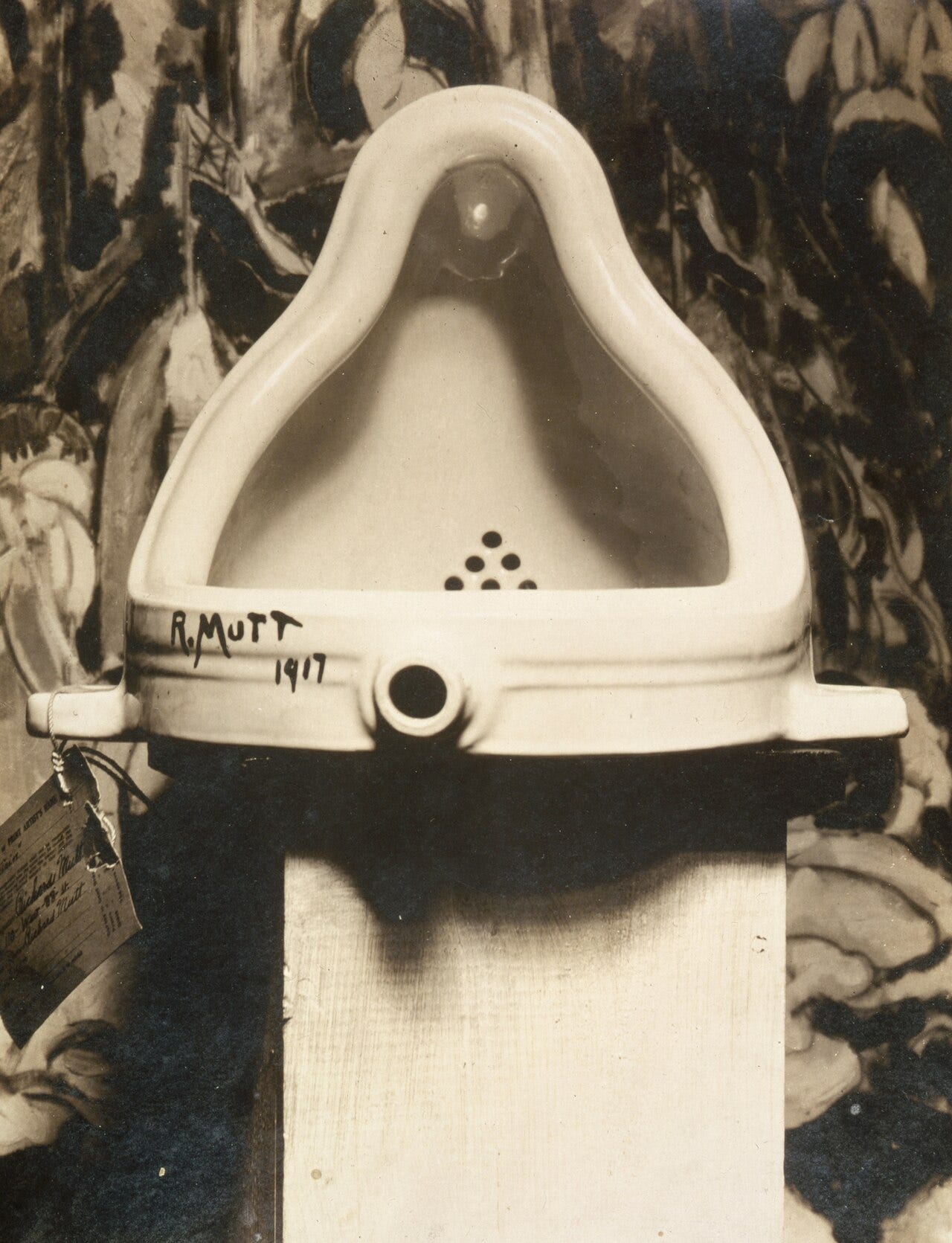
What is the most famous Dada artwork? Marcel Duchamp's Fountain, a porcelain urinal signed R. Mutt and sent to a New York exhibition in 1917.
Why is Dada called anti art? Because it went after the categories the art world lived by: skill, beauty, permanence, and the idea that a work has to be made by hand.
Was Dada political? In Berlin, openly. After the Dada Fair of 1920 the German defence ministry took several of the organizers to court for insulting the army.
What came after Dada? Surrealism took the people. Pop art, conceptual art and performance art took the methods.
You Might Also Like


The man who invented Dada quit it almost at once
Hugo Ball opened the Cabaret Voltaire in February 1916 and had walked away from the movement within roughly a year.
He left Zurich, returned to Catholicism in 1920, and spent his last years in the Ticino hills writing about Byzantine saints.
He died in 1927 at forty one, long before anyone thought to put Dada in a textbook. If you want the objects rather than the history, I have picked twelve of them here: famous Dada artworks.