
Divisionism is a way of painting in which color is not mixed on the palette. The painter splits it into small, separate touches of pure paint and sets them side by side, so that the viewer's eye blends them from a distance. Georges Seurat worked out the method in Paris in the 1880s, and in the 1890s a group of painters in northern Italy took it up and made it their own.
The name comes from this division of color. A green, for example, is not prepared in advance as a single paint. It is built on the canvas from touches of blue and yellow placed next to each other, which merge only in the eye.
Paul Signac, Seurat's closest follower, preferred this word to pointillism, the popular name that refers only to dots. For him, the shape of the touch did not matter. What mattered was that each color stayed pure.
Cool Stories About Art is a newsletter to learn art the fun way.
Join 200,000+ readers and get:
10 new art stories / month
The entire archive of content (1,000+ articles)
Comment, ask questions, and chat with other readers
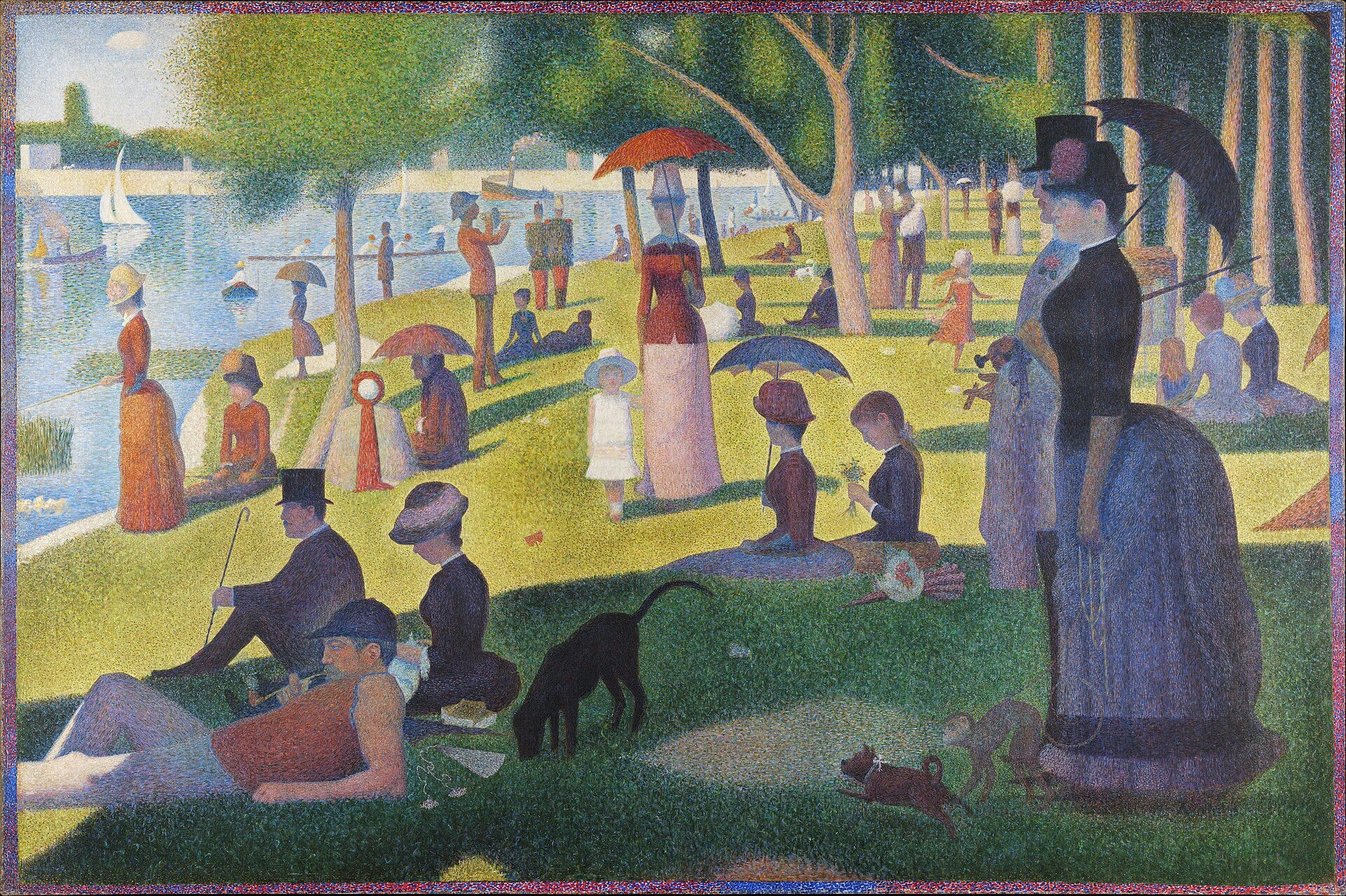
Most people picture divisionism as a field of tiny dots, because that is what La Grande Jatte looks like up close. Yet the painting most Italians think of first when they hear the word divisionismo does not contain a single dot.
It is a crowd of farm workers walking toward the viewer, more than five meters wide. Its painter spent about ten years reaching it, through several earlier versions of the same scene. When he finally showed it, no one bought it.
The method behind it is the same one Seurat used in Paris. The look, the stroke and the subject are different, and that difference is what made divisionism more than a French studio technique.
Seurat and the science of color
Seurat started from a complaint about the Impressionists. Monet and his friends painted fast, often outdoors, mixing colors on the palette or directly on the canvas to catch a passing light. Seurat gave up that spontaneity for a slow, planned technique based on what scientists had written about color and the eye.
He read the French chemist Michel Eugène Chevreul, who had published a book on the contrast of colors in Paris in 1839, and later the American physicist Ogden Rood and the French scientist Charles Henry. Their shared idea was that two pure colors placed side by side look livelier in the eye than the same two pigments blended into one paint.
Seurat put that idea to work on La Grande Jatte, which he painted from 1884 to 1886. Seen from a few steps back, its touches of color merge into grass, water and sunlit dresses. He did not lay the dots on a bare canvas. He began with a layer of small horizontal strokes and added the dots over it. One of the first painters to take up the system, Paul Signac, preferred not to call it pointillism.
What You'll Discover
What the Italians used instead of dots.
The art dealer who brought it to Milan.
How one painting took ten years.
Which movement grew out of it.