
Glazing is a way of building color in layers. The painter lays a thin, transparent film of oil paint, called a glaze, over a layer of paint that has already dried. Light passes through the glaze, reflects off the paint beneath and comes back tinted by both. The result is a color with a depth that a single opaque coat cannot give.
The word comes from glass. In Middle English, to glaze meant to fit a window with glass, and also to make something shine. A glaze on a painting works much like a sheet of tinted glass laid over it: it changes the color underneath without hiding it.
Cool Stories About Art is a newsletter to learn art the fun way.
Join 200,000+ readers and get:
10 new art stories / month
The entire archive of content (1,000+ articles)
Comment, ask questions, and chat with other readers
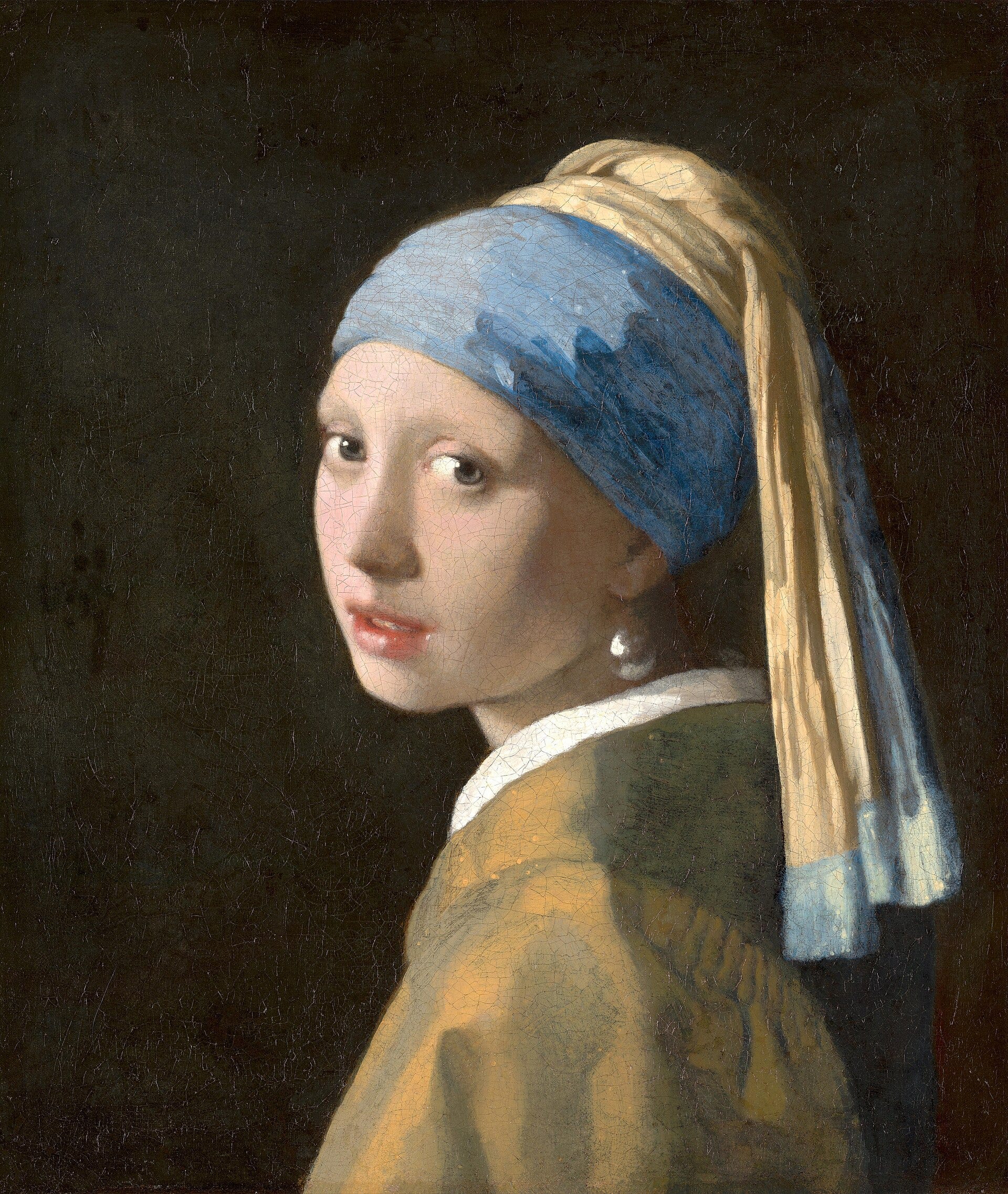
The background of Johannes Vermeer's Girl with a Pearl Earring, painted around 1665, shows what a glaze can do. Vermeer painted it very dark green, in two layers. First came a layer containing charcoal black. Over it he laid a translucent glaze made of two colorants, indigo, which is blue, and weld, which is yellow. The black gave the depth, and the glaze turned it green.
Today the background looks almost black, and patchy. Indigo and weld have both faded with exposure to light, so the green that once covered the black survives only unevenly, and the dark layer beneath shows through.
One small area of the background still keeps more of the green than the rest.
Jan van Eyck and the oil legend
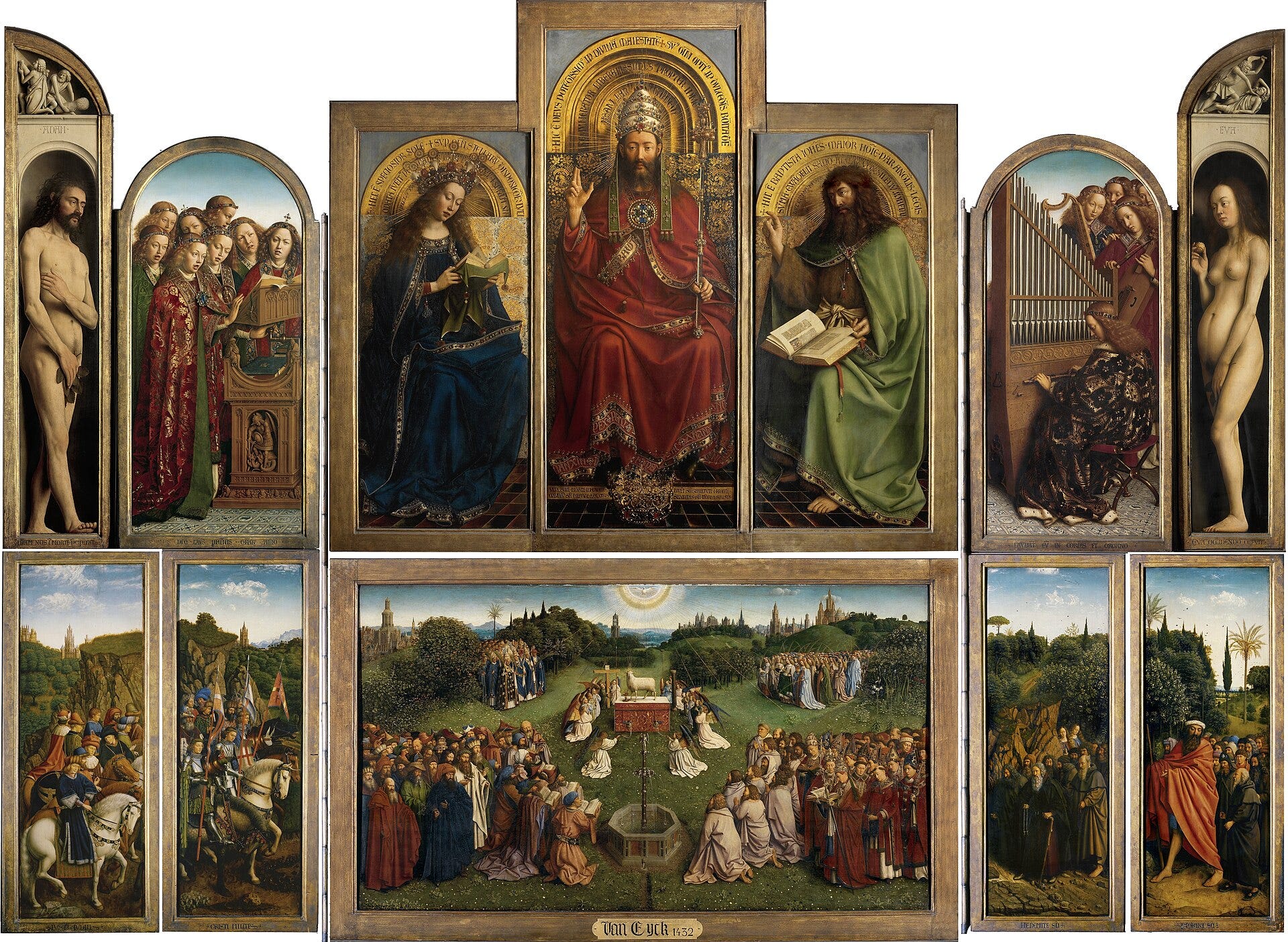
Glazing needs oil, because pigment mixed with oil forms a transparent film. In 1550, the Italian biographer Giorgio Vasari wrote that the van Eyck brothers had invented oil painting. They had not. A handbook of crafts attributed to a monk named Theophilus, written in the early twelfth century, already explains how to paint with linseed oil, as the oil painting page tells.
What Jan van Eyck changed was the way the paint was handled. In a 2013 study of his technique, the art historian Noëlle Streeton concluded that his materials resemble those of other early Netherlandish painters. His colors stand apart for another reason: he built them up in thin, translucent layers of thinned oil paint, one over another.
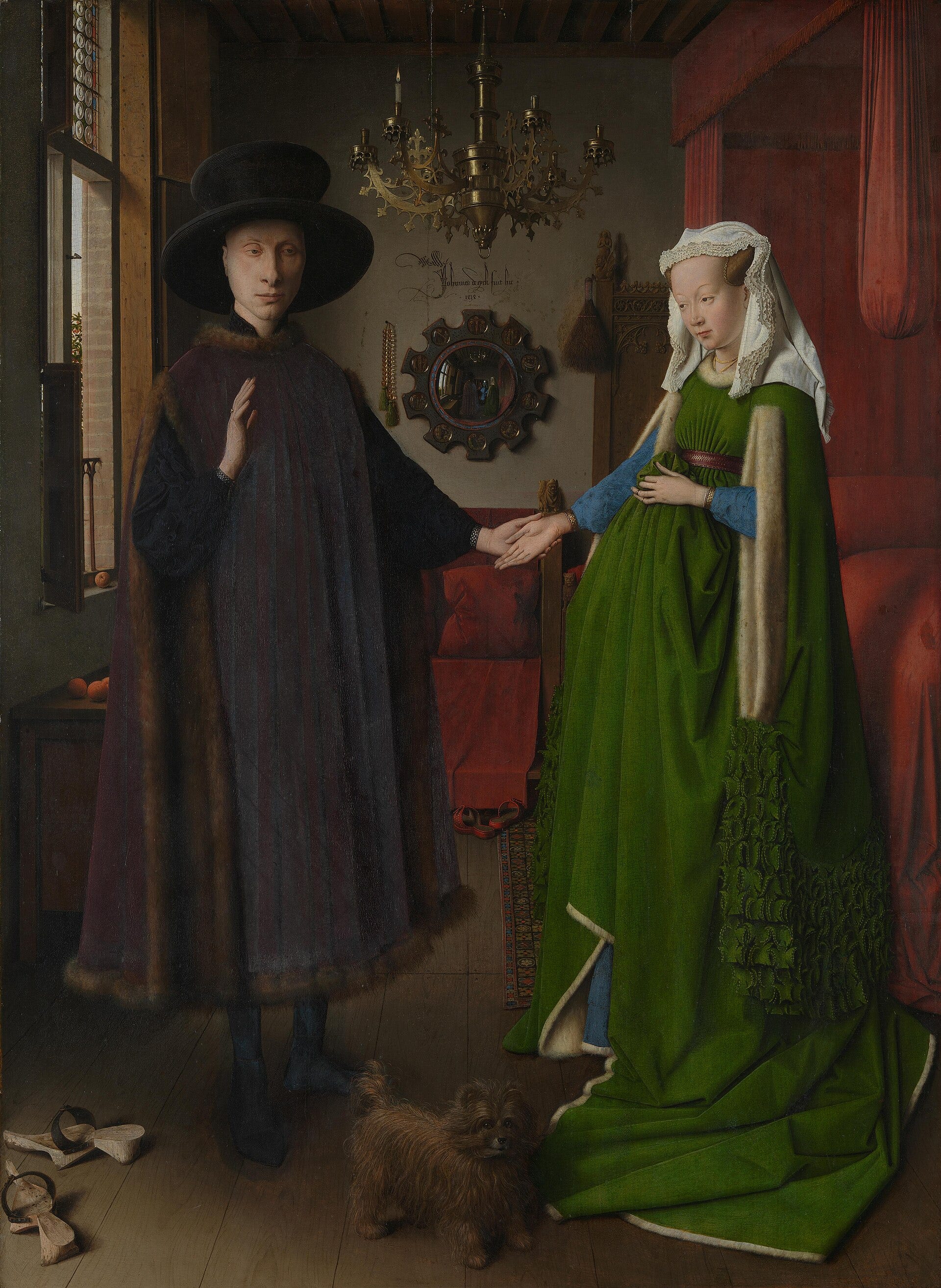
The art historians Steven Zucker and Beth Harris, of Smarthistory, see the result in the Arnolfini Portrait of 1434: a luminous richness of color that tempera, a paint bound with egg yolk and used since antiquity, could not achieve. But not every thin layer of paint is a glaze, and the strict test separates it from its opposite, the scumble.
What You'll Discover
How a glaze differs from a scumble.
What lies under the Girl's red lips.
How thin Leonardo's glazes were.
How many glazes Titian claimed to use.
What became of Vermeer's dark green.